• Skip to primary navigation
  • Skip to main content
  • Skip to primary sidebar
Curious, Healing

Curious, Healing

Books about healing, business, and fun

  • About Sonia Connolly

science

“Atlas of the Heart” by Brene Brown

March 30, 2026 by Sonia Connolly Leave a Comment

book cover
Subtitle: Mapping Meaningful Connection and the Language of Human Experience
Recommended to me by: Brene Brown’s other books, and picking it up at free market

For an atlas of 78 emotions, this book is surprisingly engaging. Brene Brown includes excerpts of past books, current research, and personal stories about the emotions, in a flowing, well-written way. Full page pull quotes with strongly colored backgrounds and full page illustrations add life to the book.

The emotions are collected into related groups like “Places we go when things don’t go as planned,” (boredom, disappointment, expectations, regret, discouragement, resignation, frustration) and “Places we go when the heart is open.” (love, lovelessness, heartbreak, trust, self-trust, betrayal, defensiveness, flooding, hurt).

The debate about whether anger is a primary emotion surprised me. It is a core response to boundary violations, as Karla McLaren says in The Language of Emotions. Yes, a lot of other emotions come along with boundary violations, but that doesn’t change the primal experience of anger.

I read the book in little bits for quite a while, and it lends itself well to that. I ran out of steam toward the end and didn’t finish it. The focus on “objective” research rather than experiences in the body made the book feel too abstract even when the research was interesting.

Recommended if basic information about a variety of emotions is useful to you, and if you like Brene Brown’s research-based approach.
Available at bookshop.org.

Filed Under: nonfiction Tagged With: illustrated, psychology, science

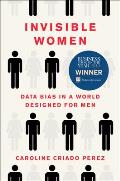
“Invisible Women” by Caroline Criado Perez

November 28, 2020 by Sonia Connolly Leave a Comment

book cover

Subtitle: Data Bias in a World Designed for Men

Recommended to me by: Dave C

This is an engagingly written, data-driven compilation of all the ways women are left out of important scientific and civic decisions, to our serious detriment. Often data isn’t even collected in a way that shows relevant differences between men and women. Men are considered the default, “typical,” “normal” person, while women (51% of the population) are the atypical awkward exceptions. It includes language (does “Man” mean everyone, or not?), budgeting decisions, bathrooms, safety equipment design and size, public transit, cleaning chemicals, medical treatments, political expectations and judgments, etc.

Despite its calm, matter-of-fact tone, it is infuriating to read.

I usually don’t add books here that I haven’t read in full, but I want to keep track of this one as a reference and highly recommend it even though I don’t have the emotional stamina to read it now.

Available at bookshop.org.

Filed Under: nonfiction Tagged With: activism, feminism, science

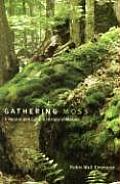
“Gathering Moss” by Robin Wall Kimmerer

July 13, 2020 by Sonia Connolly Leave a Comment

book cover

Subtitle: A Natural and Cultural History of Mosses

Recommended to me by: Reading Braiding Sweetgrass

A lyrical series of essays that weave together fascinating details about mosses and stories about Robin Wall Kimmerer’s life. She is an extraordinary storyteller.

Mosses are the most minimal plants. They survive by carefully funneling and holding onto water when it is available, and drying out without dying to await the next rainfall.

Mosses vary tremendously in shape and habitat. They match at a micro level the macro level of rainforests. Some mosses grow together with the old growth trees they drape along, and will not regrow if the moss is torn away. Some mosses persist along city sidewalks and buildings all over the world. Indigenous people use mosses where water absorbency is needed.

Highly recommended!

Available at bookshop.org.

Filed Under: nonfiction Tagged With: memoir, natural world, science

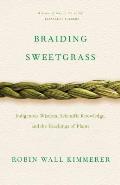
“Braiding Sweetgrass” by Robin Wall Kimmerer

May 6, 2020 by Sonia Connolly 1 Comment

book cover

Subtitle: Indigenous Wisdom, Scientific Knowledge and the Teachings of Plants

Recommended to me by: Amy Bennett

A set of essays loosely tied together in chronological order, with themes of sweetgrass and braiding all the way through. Each essay braids together personal memoir, Native American (specifically Potawatomi) ways of living, and colonialist ways of living.

Potawatomi ways developed over generations as people saw what works to live in balance with nature, as a part of nature. Humans are considered the young ones, the newcomers, learning from their more experienced plant and animal family members.

Sweetgrass is harvested in specific ways. Not the first plant you find, because that might be the only one. Take only what you need, up to half of the plants there, either by cutting half of each bunch, or taking whole bunches. Robin Wall Kimmerer is a Professor of Botany, and one of her PhD students showed in a set of careful experiments that sweetgrass thrives when harvested this way, and fails to propagate if it is left completely unharvested. Humans and sweetgrass have a cooperative, collaborative partnership.

White colonialists disastrously interrupted Native American ways of living by stealing Native Americans’ lands and pushing them into entirely different ecosystems, and by taking their children to residential schools and forcibly preventing them from speaking their own languages or practicing their spirituality. The Potawatomi people and other tribes are gathering together the fragments of what remains, and braiding them together anew.

The book ends on a hopeful note, that perhaps enough of us will turn toward collaborative, cooperative ways of living that we will not entirely destroy the ecosystems of this green earth. Fitting right in with that hope, the current Great Pause of this pandemic gives us time to consider what we want to add back in to our lives, and what we want to leave behind to allow cleaner skies, safer streets, and more sustainable lives.

I read this as an ebook, because that’s what I can get from the library in this time of pandemic. It’s an odd way to read a book so rooted in physical experience, and I would have much preferred to have a physical book in my hands. This is a long book that wants to be appreciated slowly, essay by essay, section by section, exploring how all the parts fit together to support each other.

Highly recommended!

Robin Wall Kimmerer: ‘People can’t understand the world as a gift unless someone shows them how’ interview by James Yeh, May 23, 2020

Available at bookshop.org.

Filed Under: nonfiction Tagged With: activism, food, healing, memoir, natural world, politics, science, spirituality

Primary Sidebar

Recent Books

  • “We Belong to the Drum” by Sandra Lamouche and Azby Whitecalf
  • “Atlas of the Heart” by Brene Brown
  • “Life After Cars” by Sarah Goodyear, Doug Gordon, Aaron Naparstek
  • “Tidy First?” by Kent Beck
  • “When You Had Power” and “You Knew the Price” by Susan Kaye Quinn
  • “Taproot” by Keezy Young
  • “The Tower at Stony Wood” by Patricia A McKillip
  • “Hospicing Modernity” by Vanessa Machado de Oliveira
  • “How We Show Up” by Mia Birdsong
  • “The Enchanted Greenhouse” by Sarah Beth Durst

Tags

activism aging anti-racism bodywork business childhood abuse childrens CivicTech communication disability domestic violence fantasy feminism finance Focusing food fun healing health at any size illustrated Judaism leadership lgbt marketing memoir music natural world neurodiversity politics psychology relationship romance science science fiction software spirituality survival story trauma writing young adult

Categories

Archives

Please note: bookshop.org and Amazon links are affiliate links. Copyright © 2026 · Genesis Sample on · WordPress