• Skip to primary navigation
  • Skip to main content
  • Skip to primary sidebar
Curious, Healing

Curious, Healing

Books about healing, business, and fun

  • About Sonia Connolly

Sonia Connolly

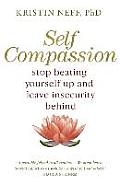
“Self-Compassion” by Kristin Neff, Ph.D.

April 9, 2012 by Sonia Connolly 2 Comments

Subtitle: Stop beating yourself up and leave insecurity behind

Kristin Neff is a psychology professor who focuses on self-compassion. Her book has a lot of helpful information – and also pushed my buttons. I think I’m not in her target audience.

While Kristin Neff talks about some emotional trauma in her life, there is an “us vs. them” feeling when she talks about trauma and mental illness, and an element of blame for self-defeating behaviors that arise from anxiety and self-criticism. It’s hard to read about compassion while feeling the raw edge of judgment.

I think she intentionally simplifies the discussion and examples for her intended audience, and “proves” her ideas by referring to small research studies where she gave questionnaires to college students.

I set the book aside in frustration, but I’m glad I went back to it.

Self-compassion is first compared with self-esteem. Self-esteem is an evaluation of our self-image, where self-compassion is a response to feeling fear, shame, or other painful emotions. Self-esteem depends on comparison and competition with others, where self-compassion reminds us of our common humanity.

To err is human. Better to be human than perfect. Moments of shame and inadequacy feel isolating, but all humans have them. Where do you excel? Where are you average? Where are you less than average?

She suggests gentle caresses, and kind words of acceptance. “Poor darling. This is really hard right now.”

Remember that our actions arise from an interconnected web of genetics, environment, past events, and current resources. Causality and blame are ambiguous. “Judgment defines people as bad vs. good. Discriminating wisdom recognizes complexity and ambiguity.”

Mindfulness helps us notice moments of suffering before (or while) dropping into blame and problem-solving. It helps us respond rather than react. Suffering = pain x resistance.

“One thing we have little power to change is what goes on inside our own heads. […] Thoughts and emotions arise unbidden and often overstay their welcome.”

Notice the experience of painful feelings in the body, and send yourself compassion for feeling that way. “Soften, soothe, allow.”

Three doorways into self-compassion: mindfulness, common humanity, kindness.

“This is a moment of suffering.
Suffering is part of life.
May I be kind to myself in this moment.
May I give myself the compassion I need.
”

Self-compassion can be hard for survivors of childhood abuse because it is sometimes associated with the cycle of alternating kindness and abuse.

Self-compassion doesn’t magically make the negative thoughts and feelings go away.

Self-compassion motivates better than self-criticism, despite what many parents and teachers enact. Love, not fear. “What’s good for you?” instead of “Are you good enough?” Intrinsic vs. extrinsic motivation.

Sympathetic joy – appreciating others’ success and good qualities allows us to appreciate our own as well, and helps us stay aware of the positive in general. Celebrate achievements, which also come from a mix of genetics, environment, etc.

Through the book, Neff talks about how helpful self-compassion has been with her husband Rupert and son Rowan, especially when Rowan was diagnosed with autism. At the end of the book she describes their adventure in Mongolia, combining horseback riding with shamanism to help Rowan, chronicled in the documentary and book, “The Horse Boy.”

Available at bookshop.org.

Filed Under: nonfiction Tagged With: psychology

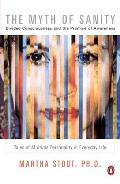
“The Myth of Sanity” by Martha Stout, Ph.D.

April 3, 2012 by Sonia Connolly Leave a Comment

Subtitle: Divided Consciousness and the Promise of Awareness; Tales of Multiple Personality in Everyday Life

Recommended to me by: a client

This book contains a therapist’s compassionate, engaging views on people who have Dissociative Identity Disorder (previously known as Multiple Personality Disorder) and how they can heal. Martha Stout discusses both specific cases and general themes of survival, courage, integrity, and the process of healing.

After trauma, she says the core question is, “Shall I choose to die, or shall I choose to live?” Those who choose to live, live fully, passionately. Anything less would not be worth the struggle and pain of healing.

Healing requires going back and revisiting traumatic memories while the whole nervous system shouts, “No! Danger!” They don’t all have to be revisited, and perfect recall is not required, but at least a few frozen traumatic memories have to be transformed into narrative memory.

The key predictor of healing is a sense of responsibility for one’s actions. Conversely, prioritizing self-protection above responsibility acts to keep dissociative mechanisms in place. A sense of integrity, or the lack of it, shines through all the dissociative fragments of a person.

We see dramatic portrayals of Dissociative Identity Disorder in books and movies and believe it to be very rare, but most people with DID switch quietly, unnoticed, in higher numbers than we believe. Martha Stout says it is because most people aren’t such good actors, and I think people also try to camouflage switching as much as possible. She validates the anger, frustration, and bewilderment of coping with someone’s quicksilver changes and lack of memory for their own recent words and actions.

She also says that we all dissociate to some extent, whether arriving at a destination without remembering the drive, or being absorbed in a movie, or suppressing “inconvenient” emotions.

For trauma survivors she recommends:

  • Find help, a steady witness, whether a therapist or a friend.
  • Be as safe as possible in the present. Provide your nervous system with a calm environment.
  • Buy comforts, keep a pet, fall in love with silence.
  • Separate yourself from difficult, crisis-addicted, rageful, and violent people.
  • Have routines. Make them sacred. Sleep every night.
  • Meditate.
  • Keep a journal. Note your dreams.

This book is unreservedly recommended!

Available at bookshop.org.

Filed Under: nonfiction Tagged With: childhood abuse, healing, psychology, trauma

“Alchemy of Illness” by Kat Duff

March 24, 2012 by Sonia Connolly Leave a Comment

Subtitle: A woman explores the transforming – and, paradoxically, healing – experience of being ill

Recommended to me by: a client

Alchemists strive to turn lead into gold by heating it alone in a sealed container, a crucible. In the crucible of Chronic Fatigue Syndrome, Kat Duff turned inward and found healing in the stillness and isolation forced by her illness.

Weaving together symptoms, dreams, mythology, Jungian psychology, and alchemy along with anthropological research into illness and healing, Duff reveals new perspectives on illness. Instead of being an assault or a punishment, illness can be a natural consequence of our history as individuals and communities. She sees her illness as an agent of healing both for sexual abuse she suffered as an infant, and for the land theft her forebears committed against the Sioux tribe in Minnesota.

Duff is careful to avoid the painful idea that “sick people are personally responsible for creating their illnesses through some kind of wrong-thinking or wrong-doing.” Sickness isn’t bad. It just is.

She relates a story about Nan Shin, a Zen nun diagnosed with cancer and struggling with guilt and remorse.

Then an old friend, who was also a Zen student, visited. He threw his arm around her shoulders and wisecracked, “Good Karma, huh? Brings you close to the Way.” Shin wrote later, “The jolt I felt then showed me very clearly that I had been thinking, Bad Karma. Within a fraction of a second the molecules turned themselves round and reorganized. I am flatly grateful to him forever.”

Unfortunately, Duff conflates illness with disability, and occasionally uses phrases like “confined to a wheelchair.” People are not confined by wheelchairs any more than people are confined by bicycles, cars, or any other device that assists mobility.

I recommend this book for its kaleidoscope of new perspectives about illness.

Available at bookshop.org.

Filed Under: nonfiction Tagged With: disability, memoir, spirituality, survival story, trauma

“Seeking Peace” by Mary Pipher

March 21, 2012 by Sonia Connolly Leave a Comment

Subtitle: Chronicles of the Worst Buddhist in the World

Recommended to me by: Bay Area Spirituality Bookgroup

Mary Pipher didn’t expect to become famous for writing “Reviving Ophelia” and she fell into despair after years of touring and speaking engagements. The book covers her despair, her parents, her childhood, and then her healing. She says she is the worst Buddhist in the world because she has trouble sitting still and paying attention.

In the introduction she apologizes at length for having a crisis as a happily married and successful career woman when other people have real problems and real traumas. Then she describes her childhood family’s real problems and real traumas. She did have a fairly ordinary college career and young adulthood, at which point I put the book aside in frustration at its circular approach to the initially-described crisis.

I did pick it up again and read quickly through her healing approach, which included slowing way down, spending a lot of time in nature, trying yoga and massage for the first time, and meditating. She notices her vicious self-critic who cares about whether she is helping others but not about whether she is happy. With time and attention the critic mellows and she comes to a place of more acceptance for herself as she is.

I wish she had noted in her introduction that comparing our crises and traumas to other people’s is a tool of self-criticism rather than compassion. Swallowing our pain because someone else has been hurt more helps no one.

Available at bookshop.org.

Filed Under: nonfiction Tagged With: memoir, spirituality

“The Bear That Wasn’t” by Frank Tashlin

March 18, 2012 by Sonia Connolly 2 Comments

Recommended to me by: A client.

This children’s book was written in 1946 about a bear who emerges from peaceful hibernation to find that a factory has been built around his cave. The factory managers tell him to get to work. When he protests that he is a bear, one manager after another tells him he is a silly man who needs a shave and wears a fur coat. Eventually they wear him down and he comes to believe them.

This is a classic example of gaslighting – making someone doubt their own reality.

The book is beautifully illustrated with Tashlin’s line drawings. The only downside to the book is blatant sexism in the illustrations. For example, each (male) factory manager has a series of shapely female secretaries. Aside from that, I wholeheartedly recommend the book, which supports the idea of listening to your own truth and not letting yourself be outvoted by other people’s opinions.

Available at bookshop.org.

Filed Under: fiction Tagged With: childrens, fun, illustrated

“The Girls Come Marching Home” by Kirsten Holmstedt

March 1, 2012 by Sonia Connolly 1 Comment

Subtitle: Stories of Women Warriors Returning from the War in Iraq

Recommended to me by: A client.

I learned so much from these detailed descriptions of nearly 20 women soldiers, their deployments, and their returns to the US. What it’s like to be a soldier in a modern war. What it’s like in the war zone in Iraq. What it’s like to be a woman in the military. What it’s like to return from war, changed by becoming a solider, by being wounded, by witnessing and experiencing trauma, to find that home doesn’t fit any more.

Some of the women soldiers were wholly accepted into their units with camaraderie and support. Some experienced sexism and sexual harassment. Women of color experienced racism as well. The ones who were arbitrarily harmed by their fellow soldiers and superiors said that caused them more pain and distress than anything else in their tours of duty.

Many of the soldiers are in their late teens and early twenties. A few are closer to forty, and experience age-related harassment for that difference.

On their returns, the women struggle with distinguishing between “normal” difficulties of reintegration and the more severe difficulties of PTSD and traumatic brain injuries. Some fight being diagnosed with PTSD and some fight for the help they need. They miss the structure, enforced closeness, and clear priorities of military life. The transition from skilled soldier to struggling civilian is a difficult one.

This is not an easy book to read, but I highly recommend its forthright, compassionate look at women returning from the war in Iraq.

Available at bookshop.org.

Filed Under: nonfiction Tagged With: survival story, trauma

  • « Go to Previous Page
  • Page 1
  • Interim pages omitted …
  • Page 50
  • Page 51
  • Page 52
  • Page 53
  • Page 54
  • Interim pages omitted …
  • Page 71
  • Go to Next Page »

Primary Sidebar

Recent Books

  • “We Belong to the Drum” by Sandra Lamouche and Azby Whitecalf
  • “Atlas of the Heart” by Brene Brown
  • “Life After Cars” by Sarah Goodyear, Doug Gordon, Aaron Naparstek
  • “Tidy First?” by Kent Beck
  • “When You Had Power” and “You Knew the Price” by Susan Kaye Quinn
  • “Taproot” by Keezy Young
  • “The Tower at Stony Wood” by Patricia A McKillip
  • “Hospicing Modernity” by Vanessa Machado de Oliveira
  • “How We Show Up” by Mia Birdsong
  • “The Enchanted Greenhouse” by Sarah Beth Durst

Tags

activism aging anti-racism bodywork business childhood abuse childrens CivicTech communication disability domestic violence fantasy feminism finance Focusing food fun healing health at any size illustrated Judaism leadership lgbt marketing memoir music natural world neurodiversity politics psychology relationship romance science science fiction software spirituality survival story trauma writing young adult

Categories

Archives

Please note: bookshop.org and Amazon links are affiliate links. Copyright © 2026 · Genesis Sample on · WordPress