• Skip to primary navigation
  • Skip to main content
  • Skip to primary sidebar
Curious, Healing

Curious, Healing

Books about healing, business, and fun

  • About Sonia Connolly

nonfiction

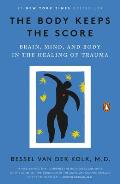
“The Body Keeps the Score” by Bessel van der Kolk

March 7, 2016 by Sonia Connolly Leave a Comment

book cover

Subtitle: Brain, Mind, and Body in the Healing of Trauma

This book is intense to read. I dipped in and out, wanting to read it, but not wanting to get overwhelmed with the dramatic abuse stories that are included. There is a lot of great research on trauma here, lucidly and understandably presented. I was happy to notice that I already knew about most of it, partly because I took a two day seminar with Bessel van der Kolk a few years ago.

The one treatment that was new to me was Albert Pesso’s and Diane Boyden-Pesso’s psychomotor therapy with “structures”, where one person, the protagonist, places other people from the group in a 3-D representation of their internal landscape. It’s reparative, including ideal parents as well as parents as they actually were. The therapist makes witnessing statements and carefully tracks the physical and emotional reactions of the protagonist, helping them feel safe and seen. Pesso Boyden System Psychomotor Therapy

This book talks about the most extreme effects of trauma. Adults who can’t feel their bodies at all. Kids who act out and get treatment rather than quietly going to school. It also talks about intensive interventions by skilled practitioners. It feels both daunting and tantalizing.

At the same time, it’s reassuring in a sense. If I don’t have all those dramatic symptoms, maybe I’m doing something right all this time.

I had Opinions about some of van der Kolk’s statements. His organization focuses on treating traumatized children, because that gives them the most leverage. On the one hand, yes, that makes sense. On the other hand, way to tell a whole lot of traumatized adults that we don’t matter – again. My sense is that both are equally important, even from a leverage point of view. Those healing children need healing adults around them.

He also thinks research is more important than “deep, subjective resonance.” Yes, research is important, and I’m glad he’s doing it. At the same time, my body says deep subjective resonance is more important for healing.

Recommended as an overview of current scientific thinking on trauma mechanisms and healing.

Available at bookshop.org.

Filed Under: nonfiction Tagged With: psychology, trauma

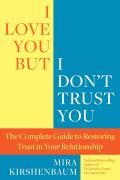
“I Love You But I Don’t Trust You” by Mira Kirshenbaum

March 5, 2016 by Sonia Connolly Leave a Comment

book cover

Subtitle: The Complete Guide to Restoring Trust in Your Relationship

This book really is what it says on the tin. Mira Kirshenbaum is a couple’s therapist who shares both her own and clients’ stories to illustrate the stages of responding to betrayal and rebuilding trust.

  • How to evaluate whether the relationship is worth investing in
  • How to manage the anger which is a natural response to betrayal
  • The need for evidence that the betrayer cares
  • The need for the betrayer to see the situation from the betrayed person’s point of view.
  • Reconnecting with the good aspects of the relationship
  • Discuss root causes without (hearing) blame
  • Discuss needs and how to meet them
  • The (eventual) decision to forgive

The book is compassionate to both sides. Yes, big mistakes happen. They are sometimes not forgivable. The betrayed person naturally feels a strong need to re-establish safety, and may not use the most skilled techniques to achieve that.

There are no “shoulds” about leaving or staying. While the book naturally focuses on relationships that are worth rebuilding, there are also clear call-outs for danger signs, such as people who are power-seeking for its own sake, or people who are suspicious for its own sake, or relationships that don’t have enough good in them to be worth the work.

Small ongoing betrayals such as unreliability are addressed, as well as big betrayals like affairs or squandering shared money. Ongoing power imbalances can also be a source of mistrust. There is an in-depth discussion of differences in being open or hidden causing mistrust.

I winced at the section title, “Sleeping in a Nazi’s bed.” As a grandchild of Holocaust survivors, I am emphatically not a fan of metaphorical Nazis. But the author meant real Nazis! Her mother was a German Jew who survived the Holocaust, and brought her safely out of Germany afterward. When she went back to Germany to visit as a young adult, a sudden illness caused her to accept the hospitality of kind strangers who were admittedly Nazis during the war. She talks about how trust can make sense, even though we have reason to be mistrustful.

Sadly, all the couples in this book are heterosexual, and there’s no indication they’re anything other than white. And it was published in 2012! On the positive side, the men and women are depicted as having a variety of frailties and strengths, and a variety of relationships together.

Recommended for a better understanding of trust, betrayal, and relationship dynamics.

Available at bookshop.org.

Filed Under: nonfiction Tagged With: communication, psychology

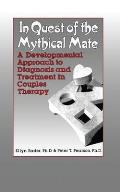
“In Quest of the Mythical Mate” by Ellyn Bader and Peter Pearson

February 18, 2016 by Sonia Connolly Leave a Comment

book cover

Subtitle: A Developmental Approach to Diagnosis and Treatment in Couples Therapy

Recommended to me by: Robyn Posin

This is a carefully crafted book about effective, compassionate couples therapy, including a clear theoretical framework and practical suggestions for diagnosis and treatment. I’m guessing the title was created by a marketing department, because it doesn’t fit the book at all (to my relief).

Their framework is that relationships go through stages just as children do. The stages are named symbiotic (we are so alike), differentiating (how do we work out differences), practicing (turning outward independently), and rapprochement (turning back toward the relationship). The members of a couple can be at different stages, for example symbiotic-differentiating, or symbiotic-practicing. All the stages are important and valuable. The symbiotic stage is expected and helps create a strong foundation for the relationship.

Diagnosis is made through talking with the couple, questionnaires about problems and goals, and through a “paper exercise” – giving a couple a blank piece of paper and telling them, “This represents something very important to each of you. You have 5 minutes to work out who will get to hold it.”

There are a lot of case histories, including one lesbian couple and one couple with a woman of Japanese ancestry. I would have liked to see more diversity, although I suppose this isn’t bad for a book from the 80’s.

The therapists are perceptive, compassionate, and direct. They name inappropriate behavior, and teach their clients healthier alternatives.

Recommended for people interested in couple dynamics and effective therapy.

Available at bookshop.org.

Filed Under: nonfiction Tagged With: communication, psychology

“Crash Course” by Diane Poole Heller, PhD

February 6, 2016 by Sonia Connolly 1 Comment

book cover

Subtitle: A self-healing guide to auto accident trauma & recovery

Recommended to me by: watching Diane Poole Heller’s teaching videos

This is a practical, easy to follow introduction to Somatic Experiencing as it applies to car crashes, with lots of vignettes and gentle exercises. It focuses on bringing in resources and supporting the body to resolve and release trauma. The tone is reassuring and friendly, and normalizes the symptoms and reactions that can result from a car crash.

For example, when did you first realize you were safe? What help did you receive, or what help do you want to bring in now? Even though we can’t change the original event, imagining different scenarios allows the body to release and complete reactions.

Highly recommended.

Available at bookshop.org.

Filed Under: nonfiction Tagged With: healing, psychology, trauma

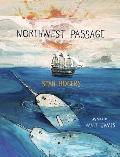
“Northwest Passage” by Stan Rogers as seen by Matt James

January 28, 2016 by Sonia Connolly 1 Comment

book cover

“Northwest Passage” on youtube Go listen!

Stan Rogers was a Canadian folk music luminary, writing and performing songs with wonderful lyrics and harmonies. Sadly, he died back in 1983 in a airplane fire. He got out, but died of smoke inhalation when he went back in to help others. I remember the collective grief at a folk festival when the news first went around.

When I saw a post about a large-format children’s book that illustrates Stan Rogers’ song, I immediately requested it at the library. The colorful, detailed, dramatic paintings illustrate the song line by line.

The book also includes a detailed history of John Franklin’s doomed expedition searching for the Northwest Passage through Arctic waters to the Pacific. The explorers died of an unusually cold winter, and of hubris in thinking they did not need the help of local First Nations people. Instead of foraging locally, they carried canned food brought from England which turned out to have a lot of lead in the cans.

The last page has sheet music for the song, and a fourth verse that was never recorded.

And it will be I’ll come again to loved ones left at home,
Place the journals on the mantel, bake the frost out of my bones,
Leaving memories far behind me, only memories after all,
And hardships then, the hardest to recall

Rest in peace, Stan Rogers. You are not forgotten!

Stan Rogers website with information about his albums and another book about the same song.

Available at bookshop.org.

Filed Under: nonfiction Tagged With: childrens, fun, illustrated, music

“Rising Strong” by Brene Brown

December 7, 2015 by Sonia Connolly 1 Comment

book cover

Subtitle: The Reckoning. The Rumble. The Revolution.
Additional subtitle: If we are brave enough, often enough, we will fall. This is a book about what it takes to get back up.

Recommended to me by: reading Brene Brown’s other books

This book covers a lot of ground I care about – how to recover from failure, how to deal with shame when it gets triggered, how to meet life’s rough spots in an authentic, integrated way. Brene Brown’s catchy phrases and metaphors and TLAs (Three Letter Acronyms) probably help a lot of people and are an authentic expression of her style, and at the same time they aren’t a good fit for me. I felt like I was reading around them to get to the great ideas in the book.

Vulnerability is the only path to more love, belonging, and joy – and it also leads to humiliating falls, failures, and heartbreak.

There is no one way to rise after falling. We each have to feel our way. No one can do it for us, and no one can do it without outside input. (She says without connection. As hard as it is to do without connection, something in me says that’s not a hard and fast rule. Then she says spirituality is required, and spirituality is about connection. So maybe there’s something there.)

We’re wired for story. Questioning and changing our assumptions is a big part of rising after a fall.

We can’t skip the messy middle of the process, where it’s too late to back out, but we can’t yet see your way forward. (This was the bit that rang the most true for me, and yet I hadn’t realized was an intrinsic part of the process. It’s comforting, in a way, to know that. At least I’m lost in good company, and probably going the right way after all.)

The process applies to major life crises, and to individual confrontations, and to both professional and personal life.

  • The Reckoning: Walking into our story
    Recognize emotion, and get curious about our feelings and how they connect with the way we think and behave.

  • The Rumble: Owning our story
    Get honest about the stories we’re making up about our struggle, then challenge these confabulations and assumptions to determine what’s truth, what’s self-protection, and what needs to change if we want to lead more wholehearted lives.

  • The Revolution
    Write a new ending to our story based on the key learnings from our rumble and use this new, braver story to change how we engage with the world.

Ways to avoid emotion/hurt/pain – blame, lashing out, avoidance, numbing, addiction.

Owning the story: “The story I’m making up is…” Writing for 15 minutes can help us find out what our story is.

Living “BIG” – boundaries, integrity, and generosity. Believing that people are doing the best they can (even when they violate our boundaries).

“In order for forgiveness to happen, something has to die. If you make a choice to forgive, you have to face into the pain. You simply have to hurt.” Forgiveness arises out of grief for an ending.

Asking for help might be a lot harder than being the one who has it all together to offer help.

Trust includes: boundaries, reliability, accountability, respecting confidences, integrity, nonjudgment, generosity. Self-trust has these elements, too, and is often a casualty of failure.

Hope is a thought process of goals, pathways and agency. (This does not match my experience at all, or we’re talking about two different things. To me, hope is something completely ungovernable, wordless, primal.)

Recommended! There’s lots of food for thought here.

Available at bookshop.org.

Filed Under: nonfiction Tagged With: healing, psychology

  • « Go to Previous Page
  • Page 1
  • Interim pages omitted …
  • Page 22
  • Page 23
  • Page 24
  • Page 25
  • Page 26
  • Interim pages omitted …
  • Page 48
  • Go to Next Page »

Primary Sidebar

Recent Books

  • “We Belong to the Drum” by Sandra Lamouche and Azby Whitecalf
  • “Atlas of the Heart” by Brene Brown
  • “Life After Cars” by Sarah Goodyear, Doug Gordon, Aaron Naparstek
  • “Tidy First?” by Kent Beck
  • “When You Had Power” and “You Knew the Price” by Susan Kaye Quinn
  • “Taproot” by Keezy Young
  • “The Tower at Stony Wood” by Patricia A McKillip
  • “Hospicing Modernity” by Vanessa Machado de Oliveira
  • “How We Show Up” by Mia Birdsong
  • “The Enchanted Greenhouse” by Sarah Beth Durst

Tags

activism aging anti-racism bodywork business childhood abuse childrens CivicTech communication disability domestic violence fantasy feminism finance Focusing food fun healing health at any size illustrated Judaism leadership lgbt marketing memoir music natural world neurodiversity politics psychology relationship romance science science fiction software spirituality survival story trauma writing young adult

Categories

Archives

Please note: bookshop.org and Amazon links are affiliate links. Copyright © 2026 · Genesis Sample on · WordPress