• Skip to primary navigation
  • Skip to main content
  • Skip to primary sidebar
Curious, Healing

Curious, Healing

Books about healing, business, and fun

  • About Sonia Connolly

nonfiction

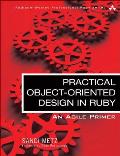
“Practical Object-Oriented Design in Ruby” by Sandi Metz

December 24, 2012 by Sonia Connolly

Subtitle: An Agile Primer

Recommended to me by: Sam Livingston-Gray

While there was a lot of useful information in this book, I kept tripping over basic information presented in what struck me as condescending ways. It is possible to write for novices without assuming they are stupid.

I liked the extended example of planning a bicycle tour, complete with realistic details. It’s easier to read examples where I’m familiar with the domain and get the in-jokes.

I appreciated the emphasis on evaluating costs. If it costs a lot of time and money up front to design carefully, and those costs are never recouped, then the effort spent on design was not cost-effective.

Plan for future changes, but don’t try to anticipate them. Postpone decisions until you have more information, but isolate your assumptions to just one place in the code so you’ll be able to change them later.

The refactoring advice in this book seems targeted at small to medium-sized systems. She suggests that an inheritance hierarchy should be either deep or wide but not both, but does not offer alternatives for managing a system that doesn’t fit within those constraints.

When using inheritance, use hooks called from the parent class so that the child class does not have to call super in just the right way.

She advocates for composition over inheritance, using Forwardable to let an object respond to a contained object’s methods.

The patterns for reusing tests to match reused code look very useful. When you include a module in a class, include a test for that module in the test for the class. Test only the public interface of a class – its private methods are its own business. Test the state changes caused by incoming messages. Test outgoing commands with mocks of their recipients.

Recommended if you’re new to object-oriented design, or if you want to learn about some Ruby-specific design patterns, or if your coworkers quote heavily from this book.

Available at bookshop.org.

Filed Under: nonfiction Tagged With: software

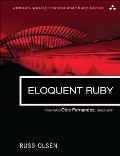
“Eloquent Ruby” by Russ Olsen

December 24, 2012 by Sonia Connolly Leave a Comment

Recommended to me by: Sam Livingston-Gray

This book conveys tips, tricks, and cautions in a conversational style without talking down to the reader. Several topics became immediately useful when I recognized them in the code at work the next day.

Some of Ruby’s oddities, I mean special features, are:

  • No static type-checking. Pass any object as an argument to a method, and if it answers to the methods called on it, all is well. This is formally known as “duck typing,” as in “if it looks like a duck, and quacks like a duck…”
  • Pass anonymous blocks to functions. For example Array.each will call a block on each element of an array.
  • Add/change/delete methods in classes at runtime.
  • Mix in new functionality by including modules in a class.
  • Override method_missing to extend a class on the fly. This is considered a “standard” trick.

Highly recommended if you’re programming in Ruby. I’d read Russ Olsen’s writing on any topic based on the quality of this book.

Available at bookshop.org.

Filed Under: nonfiction Tagged With: software

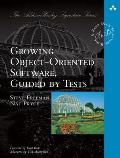
“Growing Object-Oriented Software, Guided by Tests” by Steve Freeman and Nat Pryce

November 8, 2012 by Sonia Connolly Leave a Comment

Recommended to me by: Sam Livingston-Gray

This book is written in a more formal, technical style than Test-Driven Design by Example. I’m glad I read the latter book first.

The main new idea I learned from this book is to set up a testable skeleton of a new application at the beginning. This involves researching infrastructure decisions up front, as well as dealing with the thorny issue of installation. The authors’ point is that this work has to be done at some point, and it makes project schedules a lot more reliable in the long run when it is done first.

The authors advocate for making software objects small and shifting emphasis to the communication between them.

Available at bookshop.org.

Filed Under: nonfiction Tagged With: software

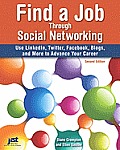
“Find a Job Through Social Networking” by Diane Crompton

October 8, 2012 by Sonia Connolly Leave a Comment

Subtitle: Use Linkedin, Twitter, Facebook, Blogs and More to Advance Your Career

Recommended to me by: Nancy Hyde

A practical guide to networking online. Details about how to use LinkedIn, Facebook, and Twitter, as well as more general networking tips on “building one’s brand.”

I read this a little at a time over a few months. The first few chapters were too basic for me, since I’ve had an online presence for 20 years. Then I got stuck on the exercises to develop one’s message and tagline, since it didn’t feel like the right time to do that work in relation to finding a software job. I skimmed through the rest, which has specific details on different online networks.

Useful tips: there are networks based in Europe, like xing.com. Groups on LinkedIn help raise one’s visibility. Facebook is being used more for business networking.

This book has good, basic advice for networking and job hunting. The examples are a little too cheerily positive for my taste, but of course they’re going to use successful examples. Recommended if you want to learn more about this topic.

Available at biblio.com.

Filed Under: nonfiction Tagged With: business

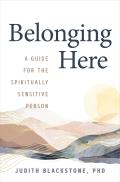
“Belonging Here” by Judith Blackstone, Ph.D.

October 6, 2012 by Sonia Connolly Leave a Comment

Subtitle: A Guide for the Spiritually Sensitive Person

Judith Blackstone helps people get more present in their bodies to realize their spiritual goals. She specifically helps spiritually sensitive people. I hadn’t encountered that phrase before, but it fits with my ideas about sensitivity in general: permeability and attentiveness to the environment and surrounding people.

Her emphasis on lived experience rather than imagined visualizations resonates for me. Her process matches my intuition about going “down and in” rather than “up and out” to meet my spiritual self. She writes that the answer to permeability is to inhabit ourselves more fully, not attempt to wall ourselves off. “When we experience life from within the body rather than from its surface, we find that we can relax our protective vigilance to the world around us.”

She describes a set of exercises called the Realization Process and gives several examples of assisting people to do them.

The exercises start with getting present in one’s feet. Not just aware, but present. When I do that, it feels wonderfully like being a gorilla, walking around on my hands. I can get present in my legs while biking, and feel them alternately rising and pushing down.

Recommended for anyone who feels they don’t quite belong here and would like to feel more connected to their body and their life.

Available at bookshop.org.

Filed Under: nonfiction Tagged With: psychology, spirituality

“Test-Driven Development By Example” by Kent Beck

October 6, 2012 by Sonia Connolly 2 Comments

Recommended to me by: Sam Livingston-Gray

Test-Driven Development (TDD) is a tool to manage the complexity and difficulty of writing software. It offers an alternative to the “waterfall” approach: design specification, functional specification, implementation, testing, release. In theory each step is finished before going on to the next. The problem is that there is a whole lot of debugging during and after implementation, testing, and release.

In TDD, the programmer writes a test for one small aspect of a program, then implements the minimum code required to satisfy that test. Once the new test passes, the code is refactored to remove duplication while still passing all tests. Repeat as needed. In this way, designs evolve to satisfy existing conditions rather than guessing about what’s needed months or years in advance. In addition, the code is always in a working state.

This is the most conversational software book I’ve read. It’s like having the author next to you at a computer, explaining the steps as you type. After years of battling waterfall development cycles, I’m convinced TDD is a useful approach, and I’m eager to try it.

Available at bookshop.org.

Filed Under: nonfiction Tagged With: software

  • « Go to Previous Page
  • Page 1
  • Interim pages omitted …
  • Page 31
  • Page 32
  • Page 33
  • Page 34
  • Page 35
  • Interim pages omitted …
  • Page 48
  • Go to Next Page »

Primary Sidebar

Recent Books

  • “We Belong to the Drum” by Sandra Lamouche and Azby Whitecalf
  • “Atlas of the Heart” by Brene Brown
  • “Life After Cars” by Sarah Goodyear, Doug Gordon, Aaron Naparstek
  • “Tidy First?” by Kent Beck
  • “When You Had Power” and “You Knew the Price” by Susan Kaye Quinn
  • “Taproot” by Keezy Young
  • “The Tower at Stony Wood” by Patricia A McKillip
  • “Hospicing Modernity” by Vanessa Machado de Oliveira
  • “How We Show Up” by Mia Birdsong
  • “The Enchanted Greenhouse” by Sarah Beth Durst

Tags

activism aging anti-racism bodywork business childhood abuse childrens CivicTech communication disability domestic violence fantasy feminism finance Focusing food fun healing health at any size illustrated Judaism leadership lgbt marketing memoir music natural world neurodiversity politics psychology relationship romance science science fiction software spirituality survival story trauma writing young adult

Categories

Archives

Please note: bookshop.org and Amazon links are affiliate links. Copyright © 2026 · Genesis Sample on · WordPress