• Skip to primary navigation
  • Skip to main content
  • Skip to primary sidebar
Curious, Healing

Curious, Healing

Books about healing, business, and fun

  • About Sonia Connolly

nonfiction

“Rethinking Thin – The New Science of Weight Loss – and the Myths and Realities of Dieting” by Gina Kolata

June 1, 2009 by Sonia Connolly Leave a Comment

This dry, technical book provides a much-needed survey of scientific results about weight-loss dieting, most of which don’t make it to mainstream media nor public consciousness. Vignettes about the participants in a 2 year dieting study add a veneer of characterization and plot.

Scientifically shown in controlled and reviewed studies:

  • Every body has a preferred weight, within about a 20 pound range.
  • Bodies already at their preferred weight react radically differently to extra calories than bodies below their preferred weight. This is a strong reason for the rebound effect after a weight-loss diet. It is also a refutation of “a calorie is a calorie is a calorie” which is often used to judge people’s food choices and body sizes.
  • Most people find it physically impossible to lose more than 10% of their body weight and keep it off. This is not the result of a character flaw, nor “not trying hard enough.”
  • On average, people who are moderately “overweight” by current standards are healthier and live longer than people who are at or under currently recommended weights. These studies were intensely challenged by many people invested in the obesity “epidemic.”
  • Both increasing height and increasing weight are correlated with more prosperous societies. Perhaps plentiful food allows people to reach the high end of their genetic range for height and weight.

Any book where I start skimming rather than reading doesn’t get posted to this blog. This book narrowly escaped that fate. I did skim a couple of chapters about the history of weight-loss dieting, but the careful scientific reporting drew me back in.

I highly recommend reading this book if you need support to accept your body as it is rather than battling yourself with weight-loss diets.

Available at bookshop.org.

Filed Under: nonfiction Tagged With: health at any size

“Tales from Rhapsody Home – Or, What They Don’t Tell You about Senior Living” by John Gould

April 29, 2009 by Sonia Connolly Leave a Comment

John Gould, prolific columnist and writer from small-town Maine, expounds on his life in a retirement home as a nonagenarian.

The textured Maine vocabulary and speech rhythms come through clearly, whether he is documenting his efforts to get some fresh air at night in his new home, or recounting stories from his childhood.

The sense of times gone by is supported by frequent price quotes. 7 cents for a fresh loaf of bread, 6 cents for a stale one for stuffing. An elegant horse-drawn buggy, said to have been custom-built for $700, bought by John Gould’s grandfather for $3 at an estate auction.

Present-day costs at the Rhapsody Home are “steep” and subject to unexpected surcharges. The staff makes no effort to accomodate the elderly residents.

The book is a quick read, funny and bitter by turns. The underlying theme of adjusting to change can apply at any age.

Available at biblio.com.

Filed Under: nonfiction Tagged With: fun, memoir

“Legacy of the Heart – the spiritual advantages of a painful childhood” by Wayne Muller

April 15, 2009 by Sonia Connolly 2 Comments

Recommended to me by: Emma McCreary

With warmth and care, Muller describes some of the outcomes of an abusive childhood, or “family of sorrow,” and some spiritual tools that can bring healing.

Near the beginning of the book, he proposes an exercise that resonated deeply with me. (Emphasis added.)

[F]or a single day: Resolve to go through an entire day assuming that you are trustworthy, that all your feelings are accurate, that all your perceptions and intuitions are reliable. As you approach each person or situation, ask yourself the questions, If I knew that I was absolutely trustworthy, how would I handle this moment? What would I do? What could I say that would be true? What would be the right action to settle this situation with safety and clarity?

I wish this exercise had been proposed to me by every healer I’ve seen. I wish everyone in confusion, doubt, and pain could be encouraged to try this, and begin to find their center again.

He takes spiritual insights from Christianity, Judaism, Sufism, Buddhism, and other faiths. As an ordained minister, he is clearly most familiar with Christianity, awkwardly referring to Jews as “Hebrews.”

Each chapter covers a different effect of a difficult childhood, including Pain and Forgiveness, Fear and Faith, Grandiosity and Humility, etc. Some chapters spoke to me more than others, despite his assumption that everyone would have all the issues he mentions.

He can also be prescriptive in some of his exercises, for example suggesting that one speak the words of forgiveness whether one feels them or not. While forgiveness can be powerfully healing, I believe that it cannot be rushed, and forcing the process only prolongs the pain.

Overall, I recommend this book to anyone who is struggling with creating meaning from a painful childhood. As the quote above recommends, keep a careful eye on what resonates for you, and skip over what does not. Different chapters may speak to you at different times.

Available at bookshop.org.

Filed Under: nonfiction Tagged With: childhood abuse, healing, psychology, spirituality, trauma

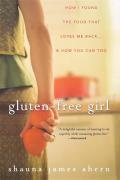
“Gluten-free girl – How I found the food that loves me back… & how you can too” by Shauna James Ahern

April 14, 2009 by Sonia Connolly Leave a Comment

Recommended to me by: Shauna James Ahern’s blog

Ahern describes a childhood filled with packaged and processed foods, and increasing problems with digestion and energy. She forges a new relationship with food as an adult, and finally realizes that she has celiac disease. Whenever she eats wheat or any other food containing gluten, her digestive system attacks itself, causing a multitude of symptoms, including severe lack of energy and digestive distress.

The richly detailed prose glows with her enthusiasm for food and for life. The only downside of the book is that it repeats background material, more like a collection of essays than a single narrative.

I appreciated learning that celiac disease can be present even if the symptoms are not yet at crisis level. I also appreciated the descriptions of gluten-free grains. The warnings about where gluten can hide motivated me to take more care in my kitchen, including replacing my wooden spoons.

I bought this book in hopes of finding a recipe for flourless cake. It has a lot of great gluten-free recipes, but not that one, alas. I ended up using this chocolate decadence recipe instead (with high-quality chocolate) to great acclaim. I do plan to try some of her recipes.

Available at bookshop.org.

Filed Under: nonfiction Tagged With: healing, memoir

“Not Even My Name – From a Death March in Turkey to a New Home in America, a Young Girl’s True Story of Genocide and Survival” by Thea Halo

March 13, 2009 by Sonia Connolly Leave a Comment

Recommended to me by: Joe Graziosi in a East European Folklife Center (EEFC) mailing list post Re: Books on Pontos/Pontian People?

Thea Halo and her mother Sano Themia Halo present a gorgeously detailed first-person account of the countryside, daily life, and people living in a tiny village in the Pontic mountains of Turkey south of the Black Sea in the early 20th century. Equally vividly, they describes the end of that way of life as ten-year-old Themia, her family, and everyone else around them are forced away from their homes on a months-long, heartbreaking death march.

I found myself skipping over the occasional departures from a personal account into paragraphs of historical numbers and dates, and Joe Graziosi notes that these history lessons are “biased and often incorrect“.

I learned about the Pontic people and their peaceful village life. I learned about the little-known genocide of Pontic Greeks, Armenians, and Assyrians in Turkey after World War I. I learned that the Assyrians are a living people, not just a shape on a map in Ancient World History class.

I learned about one girl’s survival, and her decision to act in kindness rather than meanness throughout her life. When she had finally come to relative safety after her horrific journey, I recognized a trauma response in her daily bouts of shivering. I’m glad she finally reached a place where she could receive caring and warmth.

Available at bookshop.org.

Filed Under: nonfiction Tagged With: memoir, survival story, trauma

“Learned Optimism – How to Change Your Mind and Your Life” by Martin Seligman

January 22, 2009 by Sonia Connolly 1 Comment

Recommended to me by: Molly Gordon’s Biznik article When the Going Gets Tough, Think Smarter

In a book that combines psychological research and self-help suggestions, Seligman correlates optimism with health and happiness, and pessimism with learned helplessness and depression.

Explanatory styles for positive and negative events are analyzed for being permanent, pervasive, and personal.

Optimists tend to think negative events are temporary, restricted in scope, and externally caused, while positive events are permanent, global in scope, and internally caused. Pessimists tend to think the reverse. Seligman does note that pessimists’ explanations are more accurate, on average.

He recommends ABCDE cognitive therapy to correct explanatory styles. For every Adverse event, notice pessimistic Beliefs, observe Consequences, Distract from or Dispute the beliefs, and observe the Energization that occurs. Techniques for disputing beliefs include evidence, alternatives, implications, and usefulness.

While the ideas are useful, and the scientific research he describes was ground-breaking, the glib, salesman style of the book left me wondering what caveats, limitations, and assumptions were glossed over.

Noticing and questioning beliefs is a powerful technique which has been recommended by many people, framed in many ways. I prefer less confrontational ways of interacting with my own thoughts. The most useful part of this book for me is the new language for analyzing explanatory styles.

While Seligman emphasizes optimism vs. pessimism, I think the big news is his early research on learned helplessness. Once overcome, learned helplessness does not return. For survivors of any kind of abuse of power, this can be the key to recovery.

Available at bookshop.org.

Filed Under: nonfiction Tagged With: psychology

  • « Go to Previous Page
  • Page 1
  • Interim pages omitted …
  • Page 45
  • Page 46
  • Page 47
  • Page 48
  • Go to Next Page »

Primary Sidebar

Recent Books

  • “Tidy First?” by Kent Beck
  • “When You Had Power” and “You Knew the Price” by Susan Kaye Quinn
  • “Taproot” by Keezy Young
  • “The Tower at Stony Wood” by Patricia A McKillip
  • “Hospicing Modernity” by Vanessa Machado de Oliveira
  • “How We Show Up” by Mia Birdsong
  • “The Enchanted Greenhouse” by Sarah Beth Durst
  • “What It Takes to Heal” by Prentis Hemphill
  • Kitchens of Hope by Linda S. Svitak and Christin Jaye Eaton with Lee Svitak Dean
  • “Very Far Away From Anywhere Else” by Ursula K Le Guin

Tags

activism aging anti-racism bodywork business childhood abuse childrens CivicTech communication disability domestic violence fantasy feminism finance Focusing food fun healing health at any size illustrated Judaism leadership lgbt marketing memoir music natural world neurodiversity politics psychology relationship romance science science fiction software spirituality survival story trauma writing young adult

Categories

Archives

Please note: bookshop.org and Amazon links are affiliate links. Copyright © 2026 · Genesis Sample on · WordPress