• Skip to primary navigation
  • Skip to main content
  • Skip to primary sidebar
Curious, Healing

Curious, Healing

Books about healing, business, and fun

  • About Sonia Connolly

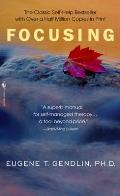
“Let Your Body Interpret Your Dreams” by Eugene T. Gendlin, Ph.D.

May 8, 2021 by Sonia Connolly Leave a Comment

book cover

Eugene Gendlin did research into what makes psychotherapy effective, and distilled what he found into Focusing. The client/Focuser pays attention to what is unclear but present inside, and the therapist/Companion facilitates that.

In this book, he applies Focusing to interpreting dreams. You get a sense inside of the dream, and then ask one or more of the following questions and feel for a bodily response.

First, love and enjoy the dream, whether interpreted or not. The next one may be clearer if dreams feel welcomed. Only the dreamer can interpret a dream. An outsider can offer questions, but the dreamer is the one who knows.

(Associations)
1: What comes to you?
2: Feeling of the dream?
3: What happened yesterday?
(Place, Story, Characters)
4: Visualize the place or setting of your dream. What does it remind you of?
5: Summarize the story in a general way.
6: What/who do the important characters remind you of?
(More with characters)
7: What part of you is that?
8: Be that person? Let your body respond like a character in the dream.
9: Allow the dream to continue
(Decoding)
10: Symbols? “Standard” symbols, or “What kind of thing is that?” For example a bridge crosses from one side to the other.
11: Body analogy? High up in your head, lower down in your body, underground unconscious.
12: Counterfactual: What in the dream is different from reality?
(Growth and development)
13: Childhood associations?
14: Personal growth? Where is your growing edge, your stuck place, your struggle?
15: Sexuality? How might the dream apply to how you express yourself sexually?
16: Spirituality? How does the dream relate to the numinous?

There is a whole chapter on question 10, symbols, and it dates the book, with references to Indians in stereotypical roles rather than respectfully referring to Native Americans, and what is now a slur to refer to someone with developmental disabilities.

Bias control: Listen inside in a friendly way, rather than arguing with or criticizing what comes. Notice if you are reflexively interpreting a dream to agree with what you already believe and ignoring parts that disagree with that.

Invite a growth direction from the dream by noticing what is new, different, unaccustomed for you. Consider small actions that move in that direction.

Dreams, especially over time, can give a sense of where we are with a longer process or issue.

Grounding dreams are a special case of this. Many people have dreams of being above ground level, which can correspond with not being connected with the body and the physical sense of being supported by the ground. “The ground holds you with ease, solidly, as an adult can hold a child. You can exhale all the way, stop being careful, let go, just be.” Our capacities are more available to us when we trust we are solidly held by the ground, like a strong person who can move things by pushing off the ground.

Recommended as a compassionate set of tools for interpreting dreams and listening to yourself and your body.

Available at bookshop.org.

Filed Under: nonfiction Tagged With: Focusing, psychology

“Mindful of Race” by Ruth King

April 30, 2021 by Sonia Connolly Leave a Comment

book cover

Subtitle: Transforming Racism from the Inside Out

In the Introduction, Ruth King shares the effects of race on her own body and her own family as a Black woman living in the south of the US. Insight meditation has helped her manage the effects of racism, and she has created trainings that help others cure the heart disease of racism.

Part 1, Diagnosis, analyzes racism. Her writing is direct and clear. Here is how racism affects Black people. Here is how it affects white people. We have dominant and subordinated identities, like a white woman who is also chronically ill, or a Jewish person who passes as white. Here is how we can begin to get honest with ourselves and others about race.

Part 2, Heart Surgery, teaches the basics of mindfulness meditation. Here is how to invite the body to settle. Here are many specific phrases to say silently to ourselves or others in metta (kindness) meditation. For example, “When you feel deep sorrow, hopelessness, and despair, I will stay with you. I will breathe with you.”

Part 3, Recovery, gives tools for creating racial affinity discussion groups and making progress in dislodging racism from our hearts. Throughout the book, she gives examples of how listening deeply and making time for our emotional responses allows us to move through them and reach our vulnerable hearts.

Unlike The Inner Work of Racial Justice by Rhonda Magee which moves very slowly and seems to be trying to convince skeptical white people, this book lays out the truth and assumes people will do the work to absorb it.

Highly recommended.

Ruth King’s website with more about her Mindful of Race training program.

Available at bookshop.org.

Filed Under: nonfiction Tagged With: anti-racism, memoir, spirituality

“Across the Green Grass Fields” by Seanan McGuire

January 30, 2021 by Sonia Connolly Leave a Comment

book cover

Recommended to me by: Reading Every Heart a Doorway

This is book 6 in the Wayward Children series. Young Regan ends up in the Hooflands world, and has adventures. The book starts out full of drama, and also has quiet parts full of good fellowship. It seemed all too predictable for a while, but the ending was unexpected. I liked how Regan handled it.

Highly recommended.

Available at bookshop.org.

Filed Under: fiction Tagged With: fun, lgbt, young adult

“A Wizard’s Guide to Defensive Baking” by T. Kingfisher

January 10, 2021 by Sonia Connolly Leave a Comment

book cover

This is young adult book with a fourteen-year-old protagonist opens with a dead body on the bakery’s floor. Young Mona is a baker with an ability to magically affect dough, and her power becomes crucial to save her city. The book is plot-driven, and also emphasizes Mona’s relationships with others (without a romance!) and her embodied experience.

This quick read resonates with current events and also provides a satisfying distraction. Recommended!

Available at bookshop.org.

Filed Under: fiction Tagged With: fun, young adult

“The Politics of Trauma” by Staci K. Haines

December 26, 2020 by Sonia Connolly Leave a Comment

book cover

Subtitle: Somatics, Healing, and Social Justice

Recommended to me by: Darryl C.

This book rang true to me from beginning to end. Staci Haines combines embodied trauma work with social justice, and everything she says fits with what I already know and takes it further.

Many healing modalities view trauma and abuse as individual problems. Instead, Haines puts trauma and abuse in the context of our abusive social structures that put individuals in harm’s way. White supremacy, patriarchy, capitalism, and environmental destruction divide us from one another and keep us from learning the skills we need to treat each other with care. They keep us divided from ourselves as we try to heal.

Safety, belonging, and dignity are core needs that should be met together for everyone. Traumatic and abusive situations put one in conflict with another – we can choose either safety or dignity, either dignity or belonging. Our bodies deeply learn traumatized ways of responding to the world.

We can form declarations and commitments: statements about our core beliefs and goals that guide our healing. For example, “I am a commitment to be in my skin without apology.” (Lisa Thomas-Adeyemo) We can discover what commitments and declarations we have unconsciously adopted or had imposed upon us. Declarations can be personal or community-oriented or both.

We can find what supports us and practice resilience, reminding ourselves to come out of trauma mode. Social justice organizations can also collectively practice resilience. We can rebuild safety and trust at the embodied, physical level. We can relearn boundaries and requests.

To help someone heal, we blend with the patterns that are already true for them, and help them notice what the pattern has been taking care of for them. As the body is supported and honored, the underlying physical and emotional memories and holding patterns can be released. We can help someone feel allied with, exactly as their body needs to feel it.

For example, make a fist with one hand. With the other hand, try to pry it open. How does that feel? Instead, let your other hand support the fist with curiosity and kindness. How does that feel? What happens with your fist? With the rest of your body?

Trauma is held in the body through bands of tension, or absent slackness. A healthy body has relaxed presence. Somatic opening is encouraged by blending with what is there and allowing it to release and transform. While emotions often arise during a release, cathartic emotion is not the goal.

We can discern what shame is ours and what belongs to others. We can blend with shame, hearing its messages, and look underneath to what it is hiding or protecting. Often shame is preferable to feeling powerless, helpless, or abandoned. We can learn to take centered accountability rather than being over- or under-accountable for our actions. We can sit with the complex questions around our responsibilities. We can learn about forgiveness of others and self-forgiveness. “Even if … [shameful act or belief], I am forgivable.”

We can learn to be present with ourselves and with others at the same time. We can learn to hold contradictions and conflict. We can learn how to have generative rather than destructive conflicts.

Personal healing and social justice organizing can support and serve each other.

I loved this quote at the beginning.

The Church says: The body is a sin.
Science says: The body is a machine.
Advertising says: The body is a business.
The body says: I am a fiesta.
—Eduardo Galeano, from “Window on the Body”

In the original Spanish:

La Iglesia dice: El cuerpo es una culpa.
La ciencia dice: El cuerpo es una máquina.
La publicidad dice: El cuerpo es un negocio.
El cuerpo dice: Yo soy una fiesta.

Highly recommended for activists and healers!

Available at bookshop.org.

Filed Under: nonfiction Tagged With: activism, anti-racism, bodywork, domestic violence, feminism, healing, politics, psychology, trauma

“In an Absent Dream” by Seanan McGuire

December 26, 2020 by Sonia Connolly Leave a Comment

book cover

Recommended to me by: Reading Every Heart a Doorway

This is book 4 in the Wayward Children series, and it stuck with me more than the others. Katherine Lundy finds a doorway to the Goblin Market world, where everything has its price, but unlike in our capitalism, the Market ensures that the bargains are fair. Children find their way in, and the rules are more gentle for the younger ones.

To me, the ending does not seem fair. Of course, a lot of things happen to children and young adults in this world that are horrifically unfair, and sometimes we also make it look like the children had a free choice, when they did not fully understand the consequences of their choices.

Thought-provoking. Highly recommended.

I also read “Beneath the Sugar Sky” and “Come Tumbling Down” in this series. They were more plot-driven.

Available at bookshop.org.

Filed Under: fiction Tagged With: fun, young adult

  • « Go to Previous Page
  • Page 1
  • Interim pages omitted …
  • Page 13
  • Page 14
  • Page 15
  • Page 16
  • Page 17
  • Interim pages omitted …
  • Page 70
  • Go to Next Page »

Primary Sidebar

Recent Books

  • “How We Show Up” by Mia Birdsong
  • “The Enchanted Greenhouse” by Sarah Beth Durst
  • “What It Takes to Heal” by Prentis Hemphill
  • Kitchens of Hope by Linda S. Svitak and Christin Jaye Eaton with Lee Svitak Dean
  • “Very Far Away From Anywhere Else” by Ursula K Le Guin
  • “Seaward” by Susan Cooper
  • “Surviving Domestic Violence” by Elaine Weiss
  • “The Book of Love” by Kelly Link
  • “Alexandra’s Riddle” by Elisa Keyston
  • “Weaving Hope” by Celia Lake

Tags

activism aging anti-racism bodywork business childhood abuse childrens CivicTech communication disability domestic violence fantasy feminism finance Focusing food fun healing health at any size illustrated Judaism leadership lgbt marketing memoir music natural world neurodiversity politics psychology relationship romance science science fiction software spirituality survival story trauma writing young adult

Categories

Archives

Please note: bookshop.org and Amazon links are affiliate links. Copyright © 2025 · Genesis Sample on · WordPress