• Skip to primary navigation
  • Skip to main content
  • Skip to primary sidebar
Curious, Healing

Curious, Healing

Books about healing, business, and fun

  • About Sonia Connolly

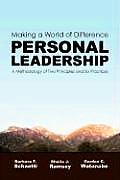
“Making a World of Difference: Personal Leadership” by Barbara Schaetti, Sheila Ramsey, Gordon Watanabe

September 29, 2013 by Sonia Connolly Leave a Comment

Subtitle: A Methodology of Two Principles and Six Practices

Recommended to me by: a client

The goal of Personal Leadership is to improve intercultural relations in business and personal settings.

The two principles are mindfulness and creativity.

The six practices are:

  • attending to judgment
  • attending to emotion
  • attending to physical sensation
  • cultivating stillness
  • engaging ambiguity
  • aligning with vision

In a difficult situation, when we notice that “Something’s up!” a “Critical Moment Dialogue” can help apply the six practices and reach greater clarity about what action to take, if any. The goal is to respond mindfully and creatively to the unique situation rather than continuing on automatic pilot.

On one hand, a lot of what the authors describe aligns with what I practice and aspire to. On the other hand, the book leaves me feeling defensive. Even as it addresses complex multicultural situations, the assertion that we always create our (internal) reality seems too simplistic to me. The proposed techniques look powerfully effective, and at the same time they would be powerful fuel for an Inner Critic at the first hint of failure.

I have witnessed an abuser use similar principles to maintain control over a victim. “You create your reality, so if you’re upset, it’s just your stuff [rather than a valid response to abuse].” A book like this feels incomplete when the downsides of the proposed techniques are not addressed.
Available at bookshop.org.

Filed Under: nonfiction Tagged With: business, communication, psychology

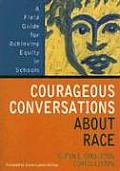
“Courageous Conversations About Race” by Glenn E. Singleton and Curtis Linton

September 16, 2013 by Sonia Connolly 2 Comments

Subtitle: A Field Guide for Achieving Equity in Schools

Recommended to me by: Donna Maxey, at Race Talks.

A carefully crafted, practical how-to manual for school systems to dismantle racism and equitably teach all children well. Co-written by Glenn Singleton, a Black man from Baltimore, and Curtis Linton, a White man from Salt Lake City, this book includes their personal experiences with race and racism as well as materials to implement their program and some historical information on U.S. racism.

Slowly, carefully, clearly, the topic of race and how to talk about it safely is introduced. Each point is supported with studies and stories. Terms are defined and repeated to foster understanding.

Four Agreements:

  1. stay engaged.
  2. speak your truth.
  3. experience discomfort.
  4. expect and accept non-closure.

Six Conditions of Courageous Conversation

  1. Establish a racial context that is personal, local and immediate – speak from your own experience.
  2. Isolate race while acknowledging other factors – don’t avoid the topic of race.
  3. Listen to others’ experiences of race. Expect disagreement in viewpoints.
  4. Notice White Talk vs. Color Commentary. Notice perspective of all participants: intellectual, emotional, moral, or social.
  5. Establish agreement on a contemporary working definition of race.
  6. Examine the presence and role of Whiteness and its impact on the conversation and problem being addressed.

The book advocates passion, practice, and persistence to address the racial achievement gap. It calls on teachers and administrators to take personal responsibility for learning the skills required to reach each student and help them all succeed.

I would love to see this book used in all school systems. The awareness and communication it fosters are healing for the adults involved in the process as well as for the children in their care.

Available at biblio.com.

Filed Under: nonfiction Tagged With: anti-racism, communication

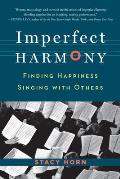
“Imperfect Harmony” by Stacy Horn

August 17, 2013 by Sonia Connolly 2 Comments

Subtitle: Finding Happiness Singing with Others

This book answered exactly the question I had.  What is it about singing that is so compelling for me?  Do other people have the same experience?

Stacy Horn expertly blends personal experience, choir history, music history, and contemporary events into a compelling narrative about her membership in the all-volunteer Choral Society of Grace Church in New York. Each chapter focuses on a musical piece, which I thought would be dull, but she brings carefully researched music history to sparkling life, woven together with the other themes.

She forthrightly acknowledges sexism in choir membership and racism in the Chatham Street Chapel Riot, where a white choir chased out a Black assembly to celebrate Emancipation Day – and then four Black men were arrested. She doesn’t point out that all the composers she highlights are men (except Britlin Losee), and the choir leadership is all men, but she does include women’s voices talking about what singing means to them. Despite being affiliated with Grace Church and performing religious music for Christmas concerts, the choir members have a mix of religions and beliefs.

Singing brings connection. When we sing the same sounds, our brains are in sync. When people sing different parts near each other, their voices mingle in the air and reach warmly back to the singers. Interviewed singers repeatedly speak of choir membership as a balm for loneliness and a source of community. Singing enlivens the body and spirit with joy even with sorrowful songs

Highly recommended if you sing, or if you just want to learn a little more about singing, or music history, or the Grace Church Choral Society.

Book excerpt: Science says singing makes us happier

Book excerpt: What singing in a choir teaches us about teamwork

Youtube videos of all the musical pieces in the book

Available at bookshop.org.

Filed Under: nonfiction Tagged With: memoir, music

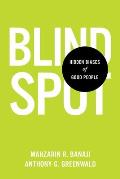
“Blindspot” by Mahzarin Banaji and Anthony Greenwald

July 28, 2013 by Sonia Connolly 1 Comment

Subtitle: Hidden Biases of Good People

Recommended to me by: Patricia Nan Anderson

In clear, accessible language, this book debunks the notion that good people are free of biases. Starting with optical illusions and moving on to creating categories, the authors show that our brains automatically make assumptions about what we perceive based on past input.

We have hidden biases, also called mindbugs, that function like the blind spot in our retinas. We don’t perceive that we are not perceiving accurately.

Implicit associations can reveal some of our biases. You may be surprised, disappointed, or relieved by your results.

The first one, insects and flowers, usually demonstrates a powerful negative association with insects and positive association with flowers. Try the Insects and Flowers Implicit Association Test. I was surprised how much more difficult it was to sort the flowers with the negative words.

I was pleased to get a neutral result for the Race Implicit Association Test but much less happy to see a moderate association between Black people and weapons in the Race and Weapons Implicit Association Test.

I wasn’t happy with my result for the Gender and Career Implicit Association Test either. Relatedly, a 1% difference in the rate of promoting women and men can explain the steep attrition rates of women in technical fields.

More Implicit Association Tests.

Present-day discrimination often takes the form of not helping, rather than actively harming. A woman’s hand was badly cut up in an accident. In the ER, her husband said, “You have to help her, she’s an avid quilter!” The doctor was talking about “quickly stitching her up” until someone greeted her as a Yale professor, whereupon she was whisked off to receive complex hand surgery from an expert in the field. It’s hard to call people out on not helping enough.

There is some discussion of how to circumvent mindbugs and blindspots. Awareness helps. So does exposure to images and ideas that contradict the mindbugs. I think the long-term fix is to change the media, literary, and educational portrayals that continually reinforce discriminatory biases. Without explicitly saying so, the book makes a strong case for affirmative action.

In the appendices, the authors show careful scientific evidence for the effect of present-day racial discrimination, despite the fact that it is less accepted to be overtly prejudiced.

Highly recommended for anyone interested in a readable, in-depth look at social justice and how your brain works.

Available at bookshop.org.

Filed Under: nonfiction Tagged With: anti-racism, feminism, psychology

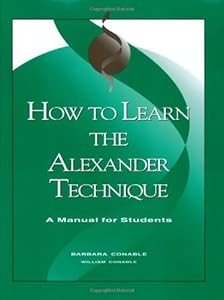
“How to Learn the Alexander Technique” by Barbara Conable

July 20, 2013 by Sonia Connolly 1 Comment

Subtitle: A Manual for Students

Recommended to me by: reading Conable’s previous book, What Every Musician Needs to Know About the Body

This book is less playful and more dense than What Every Musician Needs to Know About the Body, but it is not at all the dry instruction manual I thought it would be. It is full of lucid explanations about how the body really works, along with common errors in how we map our bodies. I think the subtitle should be, “A Manual for Humans.” I long for the freedom of movement and buoyant support she claims is possible for everyone.

There is a section titled “If You Have Suffered Abuse or Violence” which is sensitive, compassionate, and accurate (like the rest of the book).

“Persons who are healing learn to become very skillful inhibitors [an important Alexander Technique concept], not in the sense that they do nothing, but in the sense that they say no to habituated self destruction and wait for the more constructive response that was blocked by the habitual.”

I keep saying that the Alexander teachers I’ve tried don’t acknowledge the work I’ve already done, and I think this is why. Years of practice in stopping and waiting.

Some insights:

  • The weight-bearing part of the spine is inside the body, deep to the knobs we feel along our backs.
  • The pelvis is the lower part of the upper body, part of the torso. There is no internal anatomical structure at the waist.
  • The top of the sacrum transfers the weight of the upper body to the pelvis. The rest of the triangular sacrum and tailbone float free of weight.
  • Flexibility can be increased by putting all the joints gently through their range of motion once a day. The whole routine takes 5 minutes.
  • Give yourself permission to be a “flapdoodle” at night – to move freely in your sleep like a child.

Here is a brief interview with Barbara Conable with a pointed comment about “inhibiting” at the end.

Here’s her page at bodymap.org.

Highly, highly recommended for all humans with an interest in how to move comfortably and well.

Available at biblio.com.

Filed Under: nonfiction Tagged With: bodywork, illustrated, music

“Coping with Trauma-Related Dissociation” by Suzette Boon, Kathy Steele, Onno van der Hart

July 6, 2013 by Sonia Connolly Leave a Comment

Subtitle: Skills training for patients and therapists

Recommended to me by: A client

This is a useful book packed full of detailed, compassionate information on dissociation. Since it is a group training manual, it is divided into short chapters meant for individual class sessions.

The authors often note that each person’s experience of dissociation and healing will be different, and techniques work for different people at different times. At the same time, there is a whiff of condescension in the training, with over-simplified explanations and implications that if you just work hard enough everything will get better. For example, improve your social skills and you won’t be isolated any more.

I’ve noticed that a feeling of loneliness can be a flashback to earlier isolation. This is the first book where I’ve seen that mentioned. The main suggested tools for healing are empathic observation, finding common ground among dissociative parts, taking small steps, and creating internal safety. There are several creative visualization exercises, for example visiting a store that is perfectly comfortable for you and where you can pick up anything you need to feel safer, for free.

I recommend this book for people who experience and/or work with dissociation. At more than 400 pages, it’s a good book to read gradually or dip into for ideas.

Available at bookshop.org.

Filed Under: nonfiction Tagged With: disability, healing, psychology, trauma

  • « Go to Previous Page
  • Page 1
  • Interim pages omitted …
  • Page 43
  • Page 44
  • Page 45
  • Page 46
  • Page 47
  • Interim pages omitted …
  • Page 70
  • Go to Next Page »

Primary Sidebar

Recent Books

  • “How We Show Up” by Mia Birdsong
  • “The Enchanted Greenhouse” by Sarah Beth Durst
  • “What It Takes to Heal” by Prentis Hemphill
  • Kitchens of Hope by Linda S. Svitak and Christin Jaye Eaton with Lee Svitak Dean
  • “Very Far Away From Anywhere Else” by Ursula K Le Guin
  • “Seaward” by Susan Cooper
  • “Surviving Domestic Violence” by Elaine Weiss
  • “The Book of Love” by Kelly Link
  • “Alexandra’s Riddle” by Elisa Keyston
  • “Weaving Hope” by Celia Lake

Tags

activism aging anti-racism bodywork business childhood abuse childrens CivicTech communication disability domestic violence fantasy feminism finance Focusing food fun healing health at any size illustrated Judaism leadership lgbt marketing memoir music natural world neurodiversity politics psychology relationship romance science science fiction software spirituality survival story trauma writing young adult

Categories

Archives

Please note: bookshop.org and Amazon links are affiliate links. Copyright © 2025 · Genesis Sample on · WordPress