• Skip to primary navigation
  • Skip to main content
  • Skip to primary sidebar
Curious, Healing

Curious, Healing

Books about healing, business, and fun

  • About Sonia Connolly

Sonia Connolly

“Journey to the Dark Goddess” by Jane Meredith

August 28, 2017 by Sonia Connolly 1 Comment

book cover

Subtitle: How to Return to Your Soul

Recommended to me by: Mereth

Jane Meredith weaves together research and interpretation about three myths of descent into the underworld with her own experiences of unintentional and intentional descents. The book is divided into sections on Preparation, Descending, In the Underworld, and Coming Back Out.

The three myths are: Inanna as she descends to her sister’s realm, Persephone as she is taken to the underworld and marries there, and Psyche who is sent to the underworld by Aphrodite as part of a series of tasks to win the right to partner with Eros. These myths are maps of what we might encounter in our own descents – times when everything comes apart through illness, loss, or other transformations.

Jane Meredith strongly advocates for descending consciously with rituals, rather than being dragged into descents without preparation or warning. She makes the case that our lives ebb and flow the way the moon does, and contraction is just as valid as expansion. She also advocates for making maps of our journeys, recording our experiences for the benefit of ourselves and others.

I participated in a Descent of Inanna ritual twenty years ago, and still have the plaster mask I made then. I’ve encountered plenty of descents in my life as well. I wanted the book to tell me how to Ascend, how to find that turning point when things start to get better, rather than living in the underworld. She talks about ascending slowly and consciously, integrating new information. Mirroring the descent of Inanna where she gives up seven aspects of her power and self, in an Ascent we reclaim what we gave up, possibly in changed form.

My body sensed the return of the sun after the recent total solar eclipse as a turning point. The light does return! Things do get better! I’ll have to pay attention to what I’m reclaiming.

Overall, these suggestions and rituals are about confronting the raw truths of ourselves and our lives. Descent is about surrendering everything. Choosing to descend is about reclaiming our power to live fully, even in the hardest times.

Highly recommended as a guide for moving consciously through hard times.

Available at bookshop.org.

Filed Under: nonfiction Tagged With: healing, spirituality

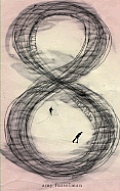
“8” by Amy Fusselman

August 8, 2017 by Sonia Connolly Leave a Comment

book cover

Recommended to me by: a client

This is a book about healing, rather than a book about trauma.

Amy Fusselman layers incidents with “her pedophile” among meditations about the nature of time, parenting, relationships, healing, bodywork, therapy, New York City cab rides, and writing in a coffee shop when celebrities walk by. She loops among the topics gracefully, like the figure skater she was as a girl.

Recommended for one person’s perspective on the effects of childhood sexual abuse, putting it in its (admittedly important) place among the rest of the events in a life. Recommended for touching on the topic of abuse forthrightly, and then going on to something else, rather than sinking into it more and more deeply. This is how healing works.

Available at bookshop.org.

Filed Under: nonfiction Tagged With: childhood abuse, healing, memoir, survival story

“Vision For Life” by Meir Schneider

July 24, 2017 by Sonia Connolly 3 Comments

book cover

Subtitle: Ten Steps to Natural Eyesight Improvement

Recommended to me by: David Mitchell

Meir Schneider tells the story of his own vision improvement starting from near blindness using the Bates Method, and then shares detailed exercises and instructions for vision care and improvement. He founded the School for Self-Healing in San Francisco to share his discoveries.

His 10 steps to improve vision take time and energy. Some can be done along with daily life, like looking into the distance and looking at details. Some are specific exercises, like the long swing. Some require additional equipment and setup to block the stronger eye or use red/green glasses. He recommends integrating the work throughout the day as part of a commitment to better vision.

10 steps:

  1. Long swing: standing, swing the body back and forth with an index finger raised in front of the eyes about a foot away.
  2. Look into the distance
  3. Explore the periphery: wave hands out to the sides while looking in the distance, and block central vision with a small square of stiff paper or cardboard.
  4. Sunning and skying: move head side to side and up and down with closed eyes facing the sun (or sky)
  5. Night walking
  6. Palming: cover the eyes with relaxed hands and visualize darkness or blackness
  7. Shifting: look at details
  8. Block the strong eye
  9. Blink
  10. Vision and body

There are additional exercises for various conditions such as crossed eyes (tape a narrow piece of paper over the center of your face and toss a ball from hand to hand) and glaucoma (lots of exercises to improve blood flow and reduce neck tension).

The writing in the book is warm, encouraging, and carefully detailed. Recommended to learn about how to care for our own vision and our own bodies.

Available at bookshop.org.

Filed Under: nonfiction Tagged With: disability, healing

“Sacred Economics” by Charles Eisenstein

July 15, 2017 by Sonia Connolly Leave a Comment

book cover

Subtitle: Money, Gift & Society in the Age of Transition

Recommended to me by: Tina Tau

This book has a hopeful story about our current disastrous economic and political situation. In reaching for connection rather than separation, we can build a new sustainable world to emerge from the ruins of the old. I love that story, and the support it gives me for the ways I choose to live my life.

The book itself is repetitive, and attempts to convince by comparing an unsubstantiated idyllic past with an admittedly problematic present and attributing the difference to charging interest on money, as well as monetizing the Commons. I’m not convinced that ceasing to charge interest will return us to the idyll, nor am I convinced that it’s possible to wrest the world from the interest-charging people in power.

My doubts were awakened when the author blithely states in passing that poor people are fat because they are addicted to food because of scarcity. When I see such a blatantly false unsubstantiated statement in his book, I start questioning the rest of his narrative.

I also noticed that the book makes no mention of sexism or racism as it describes the appropriation of the commons. I didn’t notice any mention of most of the appropriation being done by white men. Seems like an egregious omission not to have that truth front and center. The Resistance is being led by middle-aged women, many of them of color. It rankles to be erased twice, first in being the ones who are stolen from, and second being the ones who are rebuilding.

I like the impulse to envision what we do want, rather than fighting what we don’t want. We need people to do both, and I am more suited to the former than the latter.

Available at bookshop.org.

Filed Under: nonfiction Tagged With: business, spirituality

“Wired For Love” by Stan Tatkin

June 27, 2017 by Sonia Connolly 2 Comments

book cover

Subtitle: How Understanding Your Partner’s Brain & Attachment Style Can Help You Defuse Conflict & Build a Secure Relationship

Recommended to me by: Nora Samaran

I bounced off this book the first time I tried to read it. The second time, I got past the over-simplified initial examples and cutely simplified brain science to get to some useful relationship suggestions. They boil down to: Make your relationship a priority. Pay attention to what your partner likes, and do that. Pay attention to what upsets your partner, and offer comfort. Negotiate in good faith rather than trying to control them. Be aware of attachment styles and threat responses.

I took serious exception to calling the ventral and dorsal vagal nerves the “smart vagus” and “dumb vagus.” That’s just plain inaccurate, and has all sorts of ableist implications that don’t belong in a relationship book (or anywhere).

As frequently happens, the disorganized attachment style is left out. He uses the metaphors of anchor (secure), wave (anxious), and island (avoidant).

There are some same-sex couples in the examples, and the genders are not painfully stereotyped in the heterosexual couples. The names even have a bit of cultural variability. Yay.

Recommended for the relationship advice, but not the brain science.

Available at bookshop.org.

Filed Under: nonfiction Tagged With: communication, psychology, relationship

“An Emotionally Focused Workbook for Couples” by Veronica Kallos-Lilly and Jennifer Fitzgerald

June 1, 2017 by Sonia Connolly Leave a Comment

book cover

Subtitle: The Two of Us

Recommended by: David Mitchell

I love the diverse couples on the cover of this book. They create a sense of inclusion and emotional safety right away.

Sue Johnson introduces Emotionally Focused Therapy (EFT) in “Hold Me Tight.” EFT assumes that adult attachment is natural and normal, and that it makes sense that we feel terrible and protest loudly when our attachment bonds feel threatened.

This workbook kindly and carefully works through the steps of creating emotional safety in a relationship. Clear explanations alternate with questions that invite self-reflection and partner communication. Topics include: cycles of relationship distress, attachment bonds, past influences, emotions, how we feel now, more about difficult emotions, security, rebuilding our bond, repairing relationship injury, stories of change, maintaining intimacy and revitalizing your sex life.

For example, the chapter on emotions asks, “In my family or previous relationships… What messages did I get about experiencing and expressing emotions?” In my family, emotions were never a topic of discussion. I hadn’t consciously noticed that before.

Highly recommended! Useful as an adjunct to couples therapy, or on its own. Each question takes time to answer and process, so this is a workbook to go through slowly and gently.

Available at bookshop.org.

Filed Under: nonfiction Tagged With: communication, psychology, relationship

  • « Go to Previous Page
  • Page 1
  • Interim pages omitted …
  • Page 30
  • Page 31
  • Page 32
  • Page 33
  • Page 34
  • Interim pages omitted …
  • Page 71
  • Go to Next Page »

Primary Sidebar

Recent Books

  • “We Belong to the Drum” by Sandra Lamouche and Azby Whitecalf
  • “Atlas of the Heart” by Brene Brown
  • “Life After Cars” by Sarah Goodyear, Doug Gordon, Aaron Naparstek
  • “Tidy First?” by Kent Beck
  • “When You Had Power” and “You Knew the Price” by Susan Kaye Quinn
  • “Taproot” by Keezy Young
  • “The Tower at Stony Wood” by Patricia A McKillip
  • “Hospicing Modernity” by Vanessa Machado de Oliveira
  • “How We Show Up” by Mia Birdsong
  • “The Enchanted Greenhouse” by Sarah Beth Durst

Tags

activism aging anti-racism bodywork business childhood abuse childrens CivicTech communication disability domestic violence fantasy feminism finance Focusing food fun healing health at any size illustrated Judaism leadership lgbt marketing memoir music natural world neurodiversity politics psychology relationship romance science science fiction software spirituality survival story trauma writing young adult

Categories

Archives

Please note: bookshop.org and Amazon links are affiliate links. Copyright © 2026 · Genesis Sample on · WordPress