• Skip to primary navigation
  • Skip to main content
  • Skip to primary sidebar
Curious, Healing

Curious, Healing

Books about healing, business, and fun

  • About Sonia Connolly

nonfiction

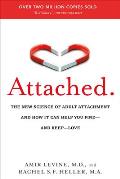
“Attached” by Amir Levine MD and Rachel S.F. Heller MA

January 9, 2018 by Sonia Connolly Leave a Comment

book cover

Subtitle: The New Science of Adult Attachment and How It Can Help You Find and Keep Love

This book was published in 2010, and is still fully relevant – except the “new!” around attachment theory. Once you get past the initial “amazing!” hype, this book is practical, encouraging, accepting and compassionate.

While I’m talking about downsides, all the example couples are heterosexual (except possibly one brief negative vignette) and almost all have Anglo names. On the upside, there aren’t overt sexist stereotypes. On the downside, gender-related differences in emotional labor are not mentioned at all.

I was uncomfortable with referring to people as “avoidants” and “secures.” Sure, it gets awkward to keep saying, “People with an avoidant attachment style,” but respect is important, especially when attachment styles are “stable but plastic” – they tend to stay the same, but can change over time.

They emphasize up front that attachment is a primal survival system in the body. We need other people. Our nervous systems like to attune with others to help us feel calm and handle stress. “Needy” is a statement of fact, not an insult or a weakness.

People with a secure style accept their own needs and those of others calmly. People with an anxious style feel ashamed of their needs, but feel them strongly. People with an avoidant style suppress their needs, but still have them.

The disorganized attachment style (traumatized by attachment figures) gets short shrift once again. They call it anxious-avoidant and say that only 3-5% of the population have this style. Their advice for non-secure folks does still apply.

They also say that 50% of people are secure, which seems surprisingly high to me. They do say that people with an avoidant style are over-represented in the dating pool because they successfully avoid ongoing relationships, and people with a secure style are under-represented because they find someone and settle down for the long term.

For people with an anxious attachment style, they recommend filtering potential partners by asking, “How much is this person capable of intimacy? Are they sending mixed messages or are they genuinely interested in being close?” People with a secure attachment style intuitively do this, knowing they deserve love and care.

They also recommend distinguishing between an activated attachment system (alternately panicked and euphoric) and the calm safety of a secure connection.

The main antidote to attachment-related struggles is effective communication. Calmly say what you need and ask about confusing signals in a non-accusatory way, and then pay attention to how the other person responds and follows through. Do they avoid, deflect, defend, or repeat troubling behaviors? Or do they listen, care, and repair issues in a collaborative way?

When you become part of someone’s inner circle, do they treat you like an enemy, or like royalty? In the inner circle of a secure relationship

  • Your well-being comes second to none
  • You are confided in first
  • Your opinion matters most
  • You feel admired and protected
  • Your need for closeness is rewarded with even more closeness

To move toward a secure attachment style, accept your current needs for closeness or distance, practice effective communication, don’t take other people’s bad behavior personally (but do get out of range!), and find secure role models. In conflicts, assume the best and also pay attention to how you are treated. They suggest that pets can be great role models for secure relationships.

It is very hard to leave an attached relationship, even when it is destructive and painful. We can only gradually deactivate the attachment system, and tough out the primal panic of being without an attachment figure. Building a support network can help a lot with reality checks about the relationship and soothing for the internal attachment system.

Highly recommended for people who want to understand past relationship catastrophes and get better results in the future, without blame or shame.
Available at bookshop.org.

Filed Under: nonfiction Tagged With: communication, psychology, relationship

“Trauma Is Really Strange” by Steve Haines, art by Sophie Standing

December 24, 2017 by Sonia Connolly 2 Comments

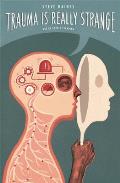
book cover

Recommended to me by: boxofdelights

This is a graphic “novel” (although it’s non-fiction) or comic, or graphic medicine book. Each page is divided into panels with drawings and word bubbles, sometimes with additional explanations in tiny red print at the bottom of the page.

This is a solid introduction to the nervous system and how it responds to stress, including the sympathetic and parasympathetic nervous systems and Porges’ polyvagal theory, all in a friendly reassuring format. Trauma is defined as events that exceed our ability to cope with them. Healing is focused on being present and tolerating intense internal sensations, rather than reworking the past or experiencing big emotional catharsis. The goal is to tone down the reflexes of fight-or-flight and dissociation.

“Healing trauma is about meeting the body. In trauma, old parts of the brain change how the body works. By paying attention to feelings in the body and learning to self-regulate we can reboot the brain.”

The material is familiar to me, with a different emphasis than I’m used to, perhaps because the book is British.

The people in the drawings almost all come across as male. A few have more detail and come across as female. The people do have a wide range of skin colors, which is great. There is a drawing of a baby being born out of a disembodied blob – apparently it was too hard to draw a whole person giving birth. There was a surprisingly ableist use of “blindly” that brought me up short.

The book covers a lot of ground in a clear way. Of course it can’t cover everything. At the same time, I would have liked to see a disclaimer that everyone’s experience with trauma is different, and everyone’s healing path is different. Near the end, there is an entire page dedicated to Trauma Release Exercises (TRE), and the whole book feels skewed toward people for whom that’s the answer.

Yes, it’s less neat and reassuring to say, “This works for some people, not all,” but it is more honest, and more kind to those for whom it is all more complicated.  The last thing a traumatized person needs is to hear, “This works for everyone,” when that thing doesn’t work for them.

Available at bookshop.org.

Filed Under: nonfiction Tagged With: healing, illustrated, psychology, trauma

“That’s Funny, You Don’t Look Buddhist” by Sylvia Boorstein

December 12, 2017 by Sonia Connolly Leave a Comment

book cover

Subtitle: On Being a Faithful Jew and a Passionate Buddhist

Recommended to me by: a friend

Sylvia Boorstein is a Buddhist meditation teacher who grew up Jewish and who came to keep kosher and belong to a synagogue as an adult in addition to her Buddhist practice. As a secular Jew who meditates every morning, I was very interested to see how she mixes the two paths. The book shares how she came to each aspect of her faiths, and how they nourish her.

She likes Buddhism for its practical tools to manage anxiety and grief. She says repeatedly that a calm mind is a compassionate one, and greed and anger melt away. She likes Judaism for its ties to her roots, for community, and for the comfort she finds in its forms of prayer. She ties them together by interpreting Jewish scripture as carrying the same messages as Buddhist thought.

She addresses one of my main objections to Jewish services – the patriarchy embedded in the stories of the Torah – by saying it doesn’t bother her. She just reads around it. Glad that works for her.

Overall, an interesting overview of Buddhism, Judaism, and Sylvia Boorstein’s journey with both.

Available at bookshop.org.

Filed Under: nonfiction Tagged With: memoir, spirituality

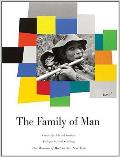
“The Family of Man” by Edward Steichen

November 24, 2017 by Sonia Connolly Leave a Comment

book cover

Recommended to me by: Asakiyume

A photo book from an exhibition in 1955 showing 503 photographs of people from around the world living their lives.

The use of “Man” for people bothered me at the outset, and I grumpily examined the book through the lens of inclusion and exclusion. There are women and people of color pictured, and the women get to be strong and active too. The places where men predominate, in suits in a courtroom for example, they predominated in 1955. There were many photos from the USA, where the exhibit was originally held.

This is a great book for children, to show them that people are essentially the same everywhere, and also that people and cultures have infinite variation. Also a great book to find prompts for stories. I wanted to know more about the people in each photo, to get to know a few of them in depth rather than move through the teeming crowd of them.

Asakiyume’s post has a great sampling of photos.

Available at bookshop.org.

Filed Under: nonfiction Tagged With: illustrated

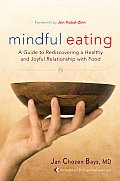
“mindful eating” by Jan Chozen Bays, MD

November 24, 2017 by Sonia Connolly Leave a Comment

book cover

Subtitle: A Guide to Rediscovering a Healthy and Joyful Relationship with Food

Recommended to me by: a client

Unlike the deep compassion and acceptance for how things are right now that I found in Cheri Huber’s books, this book is judgmental, directive, and critical. It recommends mindfulness as a method to restrict food and lose weight, even though it has been repeatedly scientifically shown that 95% of people regain weight lost through dieting no matter what the dieting method.

At the same time, mindfulness about eating is useful, as long as it is done with kindness. Eating is central to our existence, nourishing body and soul.

Jan Chozen Bays is both a Western medical doctor and a Zen teacher. She identifies 7 kinds of hunger: eye hunger, nose hunger, mouth hunger, stomach hunger, cell hunger, and heart hunger. We can check in with ourselves about what level of hunger we are experiencing in each channel, and what would nourish us via that channel.

We can pause before, during, and after meals to invite awareness of our physical sensations in the mouth and belly. We can experiment with chewing a bite thoroughly. We can pay attention to the first three bites. We can try stopping eating when we are no longer hungry, rather than full. We can bring awareness to emptiness.

We can do body scans and send kindness and gratitude to all our parts. Hakuin Zenji’s soft butter meditation: Imagine a lump of soft butter the size and shape of a duck egg on the crown of your head. As it melts and trickles down inside and outside you, it permeates you with warmth and good feelings. Feel it trickle through you all the way to your feet.

We can give ourselves boundless permission to eat exactly the way we eat right now.

This book is not recommended for anyone who is prone to self-judgment about weight and eating habits.

Available at bookshop.org.

Filed Under: nonfiction Tagged With: food

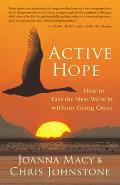
“Active Hope” by Joanna Macy & Chris Johnstone

November 13, 2017 by Sonia Connolly 2 Comments

book cover

Subtitle: How to Face the Mess We’re in without Going Crazy

This book, published in 2012, is a practical manual on how to live in challenging times. It has only become more necessary since it first came out.

It starts with three stories of our times, Business As Usual, the Great Unraveling, and the Great Turning. The book is written to those with enough privilege to choose Business As Usual, with encouragement to avoid the despair of staying in the Great Unraveling of runaway climate change, and choose the Great Turning toward sustainable lifestyles instead. Oddly, the book does not address privilege directly at all. It does look like they’re moving toward more awareness of oppression.

Joanna Macy leads workshops in the Work That Reconnects, a four step process. It is rooted in gratitude, grows into honoring our pain, blooms into seeing with new eyes, and creates seeds of going forth, taking action. These steps can happen in the span of a lifetime, and in the span of a few minutes. We go around the steps repeatedly, in a spiral. More about the spiral, with a great image.

Gratitude reconnects us with the web of life that supports us, and reminds us that we do not live in isolation. We are part of that interconnected web, part of the living Earth.

Honoring our pain and the pain of the earth allows that energy to move through us, and to move us toward action. It also gives permission to those around us to acknowledge their own pain, and connects us with each other in witnessing and giving/receiving support.

When we shift into gratitude and acknowledge our pain, we can shift to a larger perspective and connect both with our inner witness self, and with the voice of our community and the earth. We can start to see our power-within and power-with, instead of staying in hopelessness or power-over.

The seeds of action come from that wider perspective, and from opening to visions of how we want to live and how we can get there. We ask what wants to move through us. We move in the direction of our strengths, and treat our enthusiasm as a renewable resource that needs maintenance. We reach out for support.

We live with uncertainty. We don’t know whether things will turn toward being better or worse, so we lean our small weight in the direction of better. We gradually (or suddenly) move toward living more sustainably and happily.

Recommended for finding a way forward in these difficult times. This book is based in environmental activism, but is more generally applicable. It does point out that anyone living in the story of the Great Turning is an activist, whether we go to protests or not. No matter what the ultimate outcome is, I’d rather live day to day incrementally supporting the world I want to see, rather than contributing to the disaster by ignoring it or despairing.

Available at bookshop.org.

Filed Under: nonfiction Tagged With: activism, spirituality

  • « Go to Previous Page
  • Page 1
  • Interim pages omitted …
  • Page 16
  • Page 17
  • Page 18
  • Page 19
  • Page 20
  • Interim pages omitted …
  • Page 48
  • Go to Next Page »

Primary Sidebar

Recent Books

  • “How We Show Up” by Mia Birdsong
  • “The Enchanted Greenhouse” by Sarah Beth Durst
  • “What It Takes to Heal” by Prentis Hemphill
  • Kitchens of Hope by Linda S. Svitak and Christin Jaye Eaton with Lee Svitak Dean
  • “Very Far Away From Anywhere Else” by Ursula K Le Guin
  • “Seaward” by Susan Cooper
  • “Surviving Domestic Violence” by Elaine Weiss
  • “The Book of Love” by Kelly Link
  • “Alexandra’s Riddle” by Elisa Keyston
  • “Weaving Hope” by Celia Lake

Tags

activism aging anti-racism bodywork business childhood abuse childrens CivicTech communication disability domestic violence fantasy feminism finance Focusing food fun healing health at any size illustrated Judaism leadership lgbt marketing memoir music natural world neurodiversity politics psychology relationship romance science science fiction software spirituality survival story trauma writing young adult

Categories

Archives

Please note: bookshop.org and Amazon links are affiliate links. Copyright © 2025 · Genesis Sample on · WordPress