• Skip to primary navigation
  • Skip to main content
  • Skip to primary sidebar
Curious, Healing

Curious, Healing

Books about healing, business, and fun

  • About Sonia Connolly

nonfiction

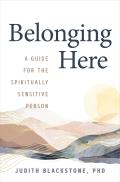
“Belonging Here” by Judith Blackstone, Ph.D.

October 6, 2012 by Sonia Connolly Leave a Comment

Subtitle: A Guide for the Spiritually Sensitive Person

Judith Blackstone helps people get more present in their bodies to realize their spiritual goals. She specifically helps spiritually sensitive people. I hadn’t encountered that phrase before, but it fits with my ideas about sensitivity in general: permeability and attentiveness to the environment and surrounding people.

Her emphasis on lived experience rather than imagined visualizations resonates for me. Her process matches my intuition about going “down and in” rather than “up and out” to meet my spiritual self. She writes that the answer to permeability is to inhabit ourselves more fully, not attempt to wall ourselves off. “When we experience life from within the body rather than from its surface, we find that we can relax our protective vigilance to the world around us.”

She describes a set of exercises called the Realization Process and gives several examples of assisting people to do them.

The exercises start with getting present in one’s feet. Not just aware, but present. When I do that, it feels wonderfully like being a gorilla, walking around on my hands. I can get present in my legs while biking, and feel them alternately rising and pushing down.

Recommended for anyone who feels they don’t quite belong here and would like to feel more connected to their body and their life.
Available at bookshop.org.

Filed Under: nonfiction Tagged With: psychology, spirituality

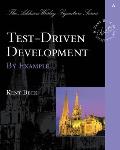
“Test-Driven Development By Example” by Kent Beck

October 6, 2012 by Sonia Connolly 1 Comment

Recommended to me by: Sam Livingston-Gray

Test-Driven Development (TDD) is a tool to manage the complexity and difficulty of writing software. It offers an alternative to the “waterfall” approach: design specification, functional specification, implementation, testing, release. In theory each step is finished before going on to the next. The problem is that there is a whole lot of debugging during and after implementation, testing, and release.

In TDD, the programmer writes a test for one small aspect of a program, then implements the minimum code required to satisfy that test. Once the new test passes, the code is refactored to remove duplication while still passing all tests. Repeat as needed. In this way, designs evolve to satisfy existing conditions rather than guessing about what’s needed months or years in advance. In addition, the code is always in a working state.

This is the most conversational software book I’ve read. It’s like having the author next to you at a computer, explaining the steps as you type. After years of battling waterfall development cycles, I’m convinced TDD is a useful approach, and I’m eager to try it.

Available at bookshop.org.

Filed Under: nonfiction Tagged With: software

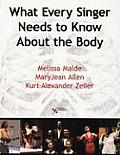
“What Every Singer Needs to Know About the Body” by Malde, Allen, Zeller

September 21, 2012 by Sonia Connolly 2 Comments

Authors: Melissa Malde, MaryJean Allen, Kurt-Alexander Zeller

I read this as a followup to What Every Musician Needs to Know About the Body, since I’m a singer, not a musician. I expected it to be similarly playful and filled with illustrations more than words. I also expected it to cover very similar material.

I was wrong on both counts. In careful detail, this book covers the anatomy and mechanics of breathing, phonation (making sound with the vocal cords), articulation (forming words with the mouth and tongue), and stage presence. Even the general material on the body is covered in more detail than in the Musician book.

Did you know that your tongue is rooted far below your teeth, extends to the back of your throat, and is much larger than that part you can see? It’s made up of many muscle fibers that can act independently of each other.

Did you know that if a letter sounds different in another language, it is made with different movements of the tongue and mouth? It makes sense, but I had never thought about it. The American English ‘T’ sound is made with the tongue touching the upper teeth. In Spanish (and other Romance languages), ‘T’ is made with the tongue touching farther back on the hard palate. I speak both languages, and had never been aware of that.

Did you know that your ribs are attached in back at your spine, and in front at your sternum, and move up and out as you breathe in, like bucket handles? I had heard that many times, but hadn’t felt the movement clearly.

Did you know that your ankle is in front of your heel, not right over it? Your heel forms part of a triangle that supports your weight, and your leg bones come down inside the triangle, not on the back point. Check your own foot and see. I’ve worked on a lot of feet, and never consciously noticed that.

This book is amazing. Highly recommended for anyone who wants to understand their body better from the inside and improve their singing along the way.

Available at biblio.com.

Filed Under: nonfiction Tagged With: fun, illustrated, music

“Saber es Poder” by Maxine Harris, Fabiana Wallis, Hortensia Amaro

September 2, 2012 by Sonia Connolly 2 Comments

Subtitle: Modelo de Trauma y Recuperación para Mujeres Latinas

Translation: Knowledge is Power: Model of Trauma and Recovery for Latina Women

Recommended to me by: Fabiana Wallis’ bio at Conexiones

This book is a curriculum for a 25-session trauma recovery support group for Latina women. Since I hope to work with Conexiones Center for Trauma Recovery as a practitioner, my goal was to refresh my Spanish language skills and learn the vocabulary associated with trauma and recovery. It served that goal well.

The book also included specific information about Latino/a culture and issues for immigrants.

I read this book as both a practitioner helping people recover from trauma, and as a daughter of immigrants from Latin America who experienced trauma. I fit the target reader in some ways and not in others, especially since the book assumes a sharp separation between facilitators and group members.

The information was very basic, aimed at group participants who had never thought about trauma and its connection to present behaviors. There was recurring emphasis on the issues of drug use, prostitution, and unprotected sex. There was no discussion of the mechanisms of PTSD in the body.

In the various units, I saw identification of the damage wrought by trauma, but less help in building new skills than I expected. I imagine a woman reaching the end of the support group and thinking, “Now what?!” At the same time, I imagine that the opportunity to speak about past trauma and receive support would be healing in itself.

When used by knowledgeable and compassionate group facilitators, I think this book would form the basis for a useful, culturally aware support group for Latina survivors of abuse.

Filed Under: nonfiction Tagged With: anti-racism, domestic violence, feminism, psychology, trauma

“Poppies on the Rubbish Heap” by Madge Bray

September 1, 2012 by Sonia Connolly Leave a Comment

Subtitle: Sexual Abuse, The Child’s Voice

Madge Bray shares her journey as a child advocate social worker, along with several abused children’s case histories. Woven through the book is the history of recognition and backlash around the sexual abuse of children. Madge Bray pioneered the use of toys and play therapy to elicit children’s stories and help them heal.

The toys include anatomically correct dolls, angry puppets, and a battery-operated rabbit that trembles silently. Madge Bray offers a neutral, welcoming space for the children to interact with the toys and find self-expression. She enters into their world rather than demanding that they communicate in adult ways.

The book is intense and riveting. It tells of catastrophic abuse from the wounded child’s perspective, as the child is heard and helped. It tells of victorious court battles as well as one story about a child whose parents withdrew him from therapy before he could tell his story.

Recommended as a look into social work with children in England, the realities of child sexual abuse, and the healing power of deep listening.

Available at bookshop.org.

Filed Under: nonfiction Tagged With: childhood abuse, domestic violence, healing, memoir, psychology, trauma

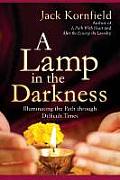
“A Lamp in the Darkness” by Jack Kornfield

August 18, 2012 by Sonia Connolly 2 Comments

I remember a feeling of exclusion when I read Kornfield’s The Wise Heart, so I read this one warily, and indeed, it did not resonate with me.

Perhaps it’s a target market problem. The writing is clear and kind and detailed, aimed at someone who has never thought about these issues before. I’ve been meditating daily for 9 years. I’m searching for spiritual assistance at a deeper level than (paraphrased), “Yup, we all have problems. Let’s sit with them awhile.”

The writing is gender-neutral and does not focus on class or race. In only one quote is “man” on the Way, but that gender exclusion is not footnoted. Subtly, through the examples and stories, I get the impression that Kornfield is speaking primarily to other white men like himself, wealthy enough to see the Dalai Lama’s personal physician for an ailment.

I feel uneasy when I see “My teacher Sri Nisargadatta explained …” and “My teacher Ajahn Chah said …” mixed with quotes from the Dalai Lama and Black Elk. I’d like to learn about a teacher’s culture and context in detail rather than hearing a mix of pull quotes from around the world.

I also recognized several of the anecdotes from the prior book.

I might have tried the included CD of meditations, but a previous library borrower had replaced it with an old Loreena McKennitt CD.

Available at bookshop.org.

Filed Under: nonfiction Tagged With: spirituality

  • « Go to Previous Page
  • Page 1
  • Interim pages omitted …
  • Page 31
  • Page 32
  • Page 33
  • Page 34
  • Page 35
  • Interim pages omitted …
  • Page 48
  • Go to Next Page »

Primary Sidebar

Recent Books

  • “How We Show Up” by Mia Birdsong
  • “The Enchanted Greenhouse” by Sarah Beth Durst
  • “What It Takes to Heal” by Prentis Hemphill
  • Kitchens of Hope by Linda S. Svitak and Christin Jaye Eaton with Lee Svitak Dean
  • “Very Far Away From Anywhere Else” by Ursula K Le Guin
  • “Seaward” by Susan Cooper
  • “Surviving Domestic Violence” by Elaine Weiss
  • “The Book of Love” by Kelly Link
  • “Alexandra’s Riddle” by Elisa Keyston
  • “Weaving Hope” by Celia Lake

Tags

activism aging anti-racism bodywork business childhood abuse childrens CivicTech communication disability domestic violence fantasy feminism finance Focusing food fun healing health at any size illustrated Judaism leadership lgbt marketing memoir music natural world neurodiversity politics psychology relationship romance science science fiction software spirituality survival story trauma writing young adult

Categories

Archives

Please note: bookshop.org and Amazon links are affiliate links. Copyright © 2025 · Genesis Sample on · WordPress