• Skip to primary navigation
  • Skip to main content
  • Skip to primary sidebar
Curious, Healing

Curious, Healing

Books about healing, business, and fun

  • About Sonia Connolly

“Death Without Denial Grief Without Apology” by Barbara K. Roberts

March 18, 2017 by Sonia Connolly 1 Comment

book cover

Subtitle: A Guide for Facing Death and Loss

This is a loving clear-eyed unflinchingly personal look at terminal illness, death, and grief by Oregon’s former governor Barbara Roberts. Her husband Frank Roberts died of cancer during her governorship. From the introduction:

I hope for a culture of loving openness in every medical office, hospital room, health care clinic, and emergency room where news of life’s limitations and death’s impending arrival are discussed openly and compassionately. People who are dying and their families and loved ones must be prepared to create such a culture for themselves.

Frank was a state senator during his last year, and there are some mentions of both of their political work in their choice to keep his terminal illness private for some time. I can only imagine the strength it took to continue to govern through illness and grief.

She tells the story of his diagnosis, their decision process together, their choice of hospice rather than further treatment, his quiet death, and her grief afterward. Emotions are included, but the story is calmly told. She shares the practical steps of planning for death. She talks openly about her own and others’ private rituals of grief, such as bringing flowers to a recently dead wife on an anniversary, or talking to the urn containing Frank’s ashes.

Highly recommended!

Wikipedia page about Oregon Democratic governor Barbara Roberts. Her term was from 1991-1995. She was the first woman Oregon governor. The second was just elected in 2016, our current governor Kate Brown.
Available at bookshop.org.

Filed Under: nonfiction Tagged With: disability, healing, memoir, psychology, spirituality, survival story

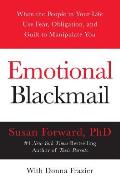
“Emotional Blackmail” by Susan Forward, Ph.D.

March 13, 2017 by Sonia Connolly 1 Comment

book cover

Subtitle: When the People in Your Life Use Fear, Obligation, and Guilt to Manipulate You

Recommended to me by: looking up FOG: Fear, Obligation, and Guilt

Susan Forward clearly analyzes emotional blackmail and blackmailers in relationships, as well as the characteristics of people who become targets of blackmail. At the end, she has suggestions for reclaiming integrity and communicating assertively with blackmailers to give them the opportunity to reform.

Emotional blackmail steps: Demand, Resistance, Pressure, Threats, Compliance, Repetition.

By contrast, setting limits involves defining a position, stating what one needs, saying what one will and won’t accept, and giving the other person a chance to say yes or no.

Blackmailers are divided into categories: Punishers (“Do it or else I’ll hurt you”), Self-Punishers (“… or else I’ll hurt myself”), Sufferers (“You know how much I’ve been through”), and Tantalizers (“I could help you”).

FOG (Fear, Obligation, and Guilt) keep blackmail targets from thinking clearly. The blackmailer skillfully pushes buttons to make the target react rather than stop and think.

Traits that make targets vulnerable to FOG and emotional blackmail: an excessive need for approval, an intense fear of anger, a need for peace at any price, a tendency to take too much responsibility for other people’s lives, a high level of self-doubt. These are survival skills that may be out of date, and cause problems when they run the show.

Suggestions: Make a contract with yourself to restore integrity and take action. Repeat your power statement, “I CAN STAND IT.” Reverse statements such as “I tell myself what I want is wrong” into “I ask for what I want, even when it upsets the blackmailer.”

Send up an SOS: Stop (“I need time to think about it”), Observe (one’s own reactions, thoughts, emotions, flashpoints), Strategize (analyze demands). Demands might be minor, partly okay, open to compromise, or non-negotiable. List what you need, and expand your options. Decide what the bottom line is to leave.

Interestingly, the book uses the phrase “powerful non-defensive communication” and its publication date (1997) predates Sharon Ellison’s book on that topic (2002). Don’t take up the bait of attacks, but clearly and consistently stay on-message. “This is who I am. This is what I want.”

To disconnect from fear, she suggests thought-stopping. To disconnect from obligation, add “WHERE IS IT WRITTEN” to one’s obligatory rules. To disconnect from guilt, write a fairy tale in third person about what’s going on.

Her suggestions are based on the idea that our emotions follow our thoughts. She explicitly excludes seriously abusive relationships, and people who have experienced serious trauma and abuse. She also elides any discussion of racism, sexism, classism, or other power dynamics at work that might put someone down and out for resisting a blackmailer.

While she discusses attempts at resistance that get squashed, she still seems to be saying that the blackmail targets just didn’t resist the right way. According to her, blackmail targets train their blackmailers by acquiescing. As someone who actively resists guilt and doesn’t acquiesce much, I’m here to say that path has negative consequences too.

She states that blackmailers themselves are frightened and unaware of their tactics’ effects on the target. In the cases where this is true, her suggestions will be useful. In the cases where blackmailers are simply indifferent, or coldly aware of the efficacy of their tactics, these suggestions inappropriately suggest that the target is at fault.

This is a great first book about manipulation and assertiveness. It is clearly written with lots of anecdotes threaded through the book. If it isn’t your first introduction to these ideas, it feels somewhat shallow, like it sidesteps the hard parts.

Available at bookshop.org.

Filed Under: nonfiction Tagged With: communication, psychology

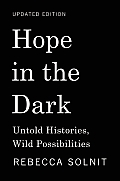
“Hope in the Dark” by Rebecca Solnit

February 28, 2017 by Sonia Connolly 2 Comments

book cover

Subtitle: Untold Histories, Wild Possibilities

Recommended to me by: reading Rebecca Solnit’s essay “Men Explain Things to Me”, and also Haymarket Books was giving away free copies of the ebook on the occasion of the November 2016 election results

I rarely read ebooks. I prefer to hold the book in my hands and have a physical context for what I’m reading and how much is left. Ebooks feel disorientingly abstract. I put this one on my phone and have been reading it in little bits when I wait for an appointment or ride a bus. The book is a series of short chapters and essays, linked together.

Oddly (for a professional publisher) Haymarket Books used an irritating variable font so that letter size and style varies within words, and they also tagged the book repeatedly with my name and email address. I guess they wanted to make really sure I didn’t share the book with anyone, but what they did is distract me while I was reading and repeatedly remind me not to buy any ebooks from Haymarket Books.

Format issues aside, “Hope in the Dark” is an affirming, well-researched, engagingly written anodyne for the current political situation. It was written on the occasion of Bush’s contested election in 2004, and the problems and dynamics then sound remarkably like the current disasters (except Bush wasn’t, as far as we know, in league with a foreign government).

Solnit talks about how powerful entities in the limelight look immovable, but ideas and movements at the edges, on the margins, in the shadows engender change. We forget our victories because they look like they’ve always been that way, and also because those in power want us to forget and despair. Victories build slowly, happen partially, arise suddenly from years of background work.

Activist movements that practice what they want to see in the world (consensus, equity, respect for all) are already winning even if the current battle is lost. Living the way we want to live *is* activism. Distributed movements that share strategies globally but meet and act locally are finding more and more success.

I found support here for living the way I want to live. I also found urging to reach out, connect with local groups, act! The last essay is about climate change and its urgency. Hope is the determination to keep working toward the world we want to live in, non-violently, non-idealogically, peacefully, cooperatively, joyously.

Highly recommended for anyone distressed by current politics.

Available at bookshop.org.

Filed Under: nonfiction Tagged With: anti-racism, feminism

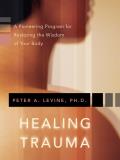
“Healing Trauma” by Peter A. Levine, PhD.

January 5, 2017 by Sonia Connolly Leave a Comment

book cover

Subtitle: A Pioneering Program for Restoring the Wisdom of Your Body

Recommended to me by: a client

This is a practical, applied introduction to Peter Levine’s Somatic Experiencing work. After an introductory summary, he presents 12 exercises, starting with body awareness and grounding, continuing with awareness of felt senses in the body, and then moving into completion of fight, flight, and freeze responses. He includes orienting to a sense of normalcy and balance that may be new and unfamiliar. The approach is gentle, accepting, and warm.

A CD is included where he reads the exercises. It’s not really a guided meditation, because, for example, he says, “Tap your left hand … (notice, etc.), okay now move through the rest of the body.”

The exercises aren’t quite in the order I would present them, since starting with body awareness might be challenging for many people. I would start with grounding and resources first.

Recommended for people who want to tools to work with their own trauma, and/or who want to understand the nuts and bolts of Somatic Experiencing.

Available at bookshop.org.

Filed Under: nonfiction Tagged With: bodywork, healing, psychology, trauma

“EPUB Straight to the Point” by Elizabeth Castro

January 3, 2017 by Sonia Connolly Leave a Comment

book cover

Subtitle: Creating ebooks for the Apple iPad and other ereaders

Recommended to me by: Finding it at the library

Creating an epub ebook from an InDesign print book file involves a whole lot of hidden settings and mysterious outcomes. I read a lot of blog posts, and this book was also helpful in getting the details squared away. It has step by step instructions for creating an epub ebook from Word and InDesign, and then further step by step instructions for editing the epub directly to refine the results. Since I learned HTML before CSS was a thing, and epub uses CSS, this was helpful to get oriented. It’s from 2011, but still useful.

It has some iPad-specific details, like a list of the fonts it supports and previews of each.

Available at bookshop.org in a newer edition.

Filed Under: nonfiction Tagged With: software, writing

“The Thirteen Clocks” by James Thurber

November 22, 2016 by Sonia Connolly Leave a Comment

book cover

Recommended to me by: My college roommate

In times of extreme stress, my college roommate gathered a group of us together and read aloud this delightful, illustrated, untraditional fairytale. She tracked down a used copy for me, and it is one of my treasured possessions.

As an antidote to extreme election anxiety, I read the story aloud recently over a couple of evenings. The lyrical language and satisfying conclusion are still soothing all these years later.

I would like a Golux to fix the election please.

Back in print! Available at bookshop.org.

Filed Under: fiction Tagged With: childrens, fun, illustrated

  • « Go to Previous Page
  • Page 1
  • Interim pages omitted …
  • Page 30
  • Page 31
  • Page 32
  • Page 33
  • Page 34
  • Interim pages omitted …
  • Page 70
  • Go to Next Page »

Primary Sidebar

Recent Books

  • “How We Show Up” by Mia Birdsong
  • “The Enchanted Greenhouse” by Sarah Beth Durst
  • “What It Takes to Heal” by Prentis Hemphill
  • Kitchens of Hope by Linda S. Svitak and Christin Jaye Eaton with Lee Svitak Dean
  • “Very Far Away From Anywhere Else” by Ursula K Le Guin
  • “Seaward” by Susan Cooper
  • “Surviving Domestic Violence” by Elaine Weiss
  • “The Book of Love” by Kelly Link
  • “Alexandra’s Riddle” by Elisa Keyston
  • “Weaving Hope” by Celia Lake

Tags

activism aging anti-racism bodywork business childhood abuse childrens CivicTech communication disability domestic violence fantasy feminism finance Focusing food fun healing health at any size illustrated Judaism leadership lgbt marketing memoir music natural world neurodiversity politics psychology relationship romance science science fiction software spirituality survival story trauma writing young adult

Categories

Archives

Please note: bookshop.org and Amazon links are affiliate links. Copyright © 2025 · Genesis Sample on · WordPress