• Skip to primary navigation
  • Skip to main content
  • Skip to primary sidebar
Curious, Healing

Curious, Healing

Books about healing, business, and fun

  • About Sonia Connolly

politics

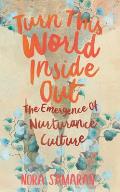
“Turn This World Inside Out” by Nora Samaran

July 2, 2019 by Sonia Connolly Leave a Comment

book cover

Subtitle: The Emergence of Nurturance Culture

Recommended to me by: Nora Samaran’s online essay The Opposite of Rape Culture is Nurturance Culture

This book contains three of Nora Samaran’s powerful essays (also available on her blog) and dialogues with other writers that expand on the themes of nurturance, attachment, shame, gaslighting, gendered violence, and repairing harm.

It is a short book that can be read quickly, and at the same time there are a lot of chewy ideas to take in over time. There are also references to more reading on these topics by people who are one or more of trans, Indigenous, and Black who have developed skills of sustainable, relational living. The book holds the question: how do we best move forward from and heal from white supremacy, colonialism, capitalism, and patriarchy.

What would it be like to live in a culture where we all could be socially embraced in this way, where we could speak up about harm, could say not to it, without fear, because we know without question that no one in our community will dehumanize another?

I admire Nora Samaran’s insights, and I long for the kinds of communities and relationships she describes. This book brings in more voices to deepen and expand the conversation. Highly recommended.
Available at bookshop.org.

Filed Under: nonfiction Tagged With: activism, anti-racism, communication, domestic violence, feminism, healing, politics, relationship

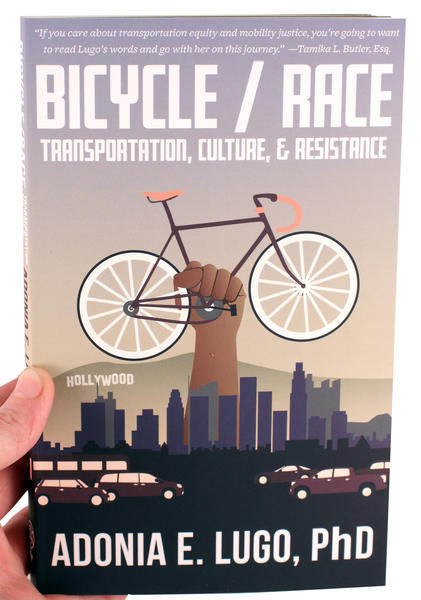
“Bicycle/Race” by Adonia E. Lugo, Phd

May 27, 2019 by Sonia Connolly Leave a Comment

book cover

Subtitle: Transportation, Culture, & Resistance

Recommended to me by: Elly Blue

Adonia Lugo gives us both a warm memoir and a carefully researched overview of her anthropological study of racism in bicycling activism. She shares her background as a half-Mexican, half-white girl growing up in San Juan Capistrano in Southern California, her joyful involvement with bicycling as transportation while studying in Portland, and her direct experiences of racism and resistance as she pursued her PhD research. As part of it, she helped create the first cicLAvia in LA, where streets are closed to cars and opened to bicyclists and pedestrians.

Race and mobility are intertwined because we designed segregation into our built environments and how we police them, and racial equity in the distribution of public money isn’t a metaphor or a goal you opt into; it’s a legal obligation, thanks to the civil rights movement. I wasn’t pointing to the culture of white supremacy embedded in bike advocacy, policy, and planning because I wanted to cause trouble; it was about fulfilling the promise of our shared democracy.

She writes about the successive waves of colonization and conquest that shaped Southern California, the role of racism in people’s preference for private cars, selective police enforcement against people of color, and the reinforcement of white supremacy in the networks of people who set public policy. She writes about how her family’s loving support gave her the confidence to try to create change, and how she realized that entrenched systems were resisting her efforts.

Highly recommended! I read it a chapter or two at a time, with pauses to digest the information about the racist underpinnings of US culture and transportation.

Available at Microcosm Publishing.

Filed Under: nonfiction Tagged With: activism, anti-racism, feminism, illustrated, memoir, politics

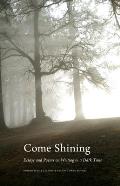
“Come Shining” edited by Jill Elliott & Alison Towle Moore

December 25, 2018 by Sonia Connolly Leave a Comment

book cover

Recommended to me by: Tina Tau

I bought this book to read Tina Tau’s essay about going to sea on a sailing ship in 2016 with an international group of novice sailors. Her essay is a meditation on what it means to be American and how we look to the rest of the world, watching our political disarray and increasing gun violence with compassionate eyes.

The book grew out of a writing group “On Writing in a Dark Time,” with additional poems and essays from all over the country. The sections are “Facing the Darkness,” “Reflection in the Dark,” and “Finding Our Way Forward.”

I liked the individual essays and poems in the book, and each one does not feel depressing on its own, but collectively they weighed me down. I kept wandering away from the book and then finding it again and reading a few more, which is why I’m only posting about it now at the end of 2018.

I’ve found that in conversations with people about the dark times we are in, we naturally find an alternation between worry about ongoing disasters, and appreciation of the small details of the present. I wish this book had more of that alternation.

Recommended in small bites for its lively personal essays and poems, many anchored here in Portland.

Available at Amazon.

Filed Under: nonfiction, poetry Tagged With: activism, memoir, politics

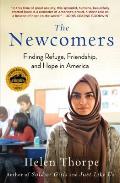
“The Newcomers” by Helen Thorpe

November 13, 2018 by Sonia Connolly Leave a Comment

book coverSubtitle: Finding Refuge, Friendship, and Hope in an American Classroom

Recommended to me by: My friend Linda K.

Helen Thorpe spent a year and a half observing and helping in an ELA (English Language Acquisition) class at South High School in Denver Colorado. Her journalist’s eye is both clear and compassionate as she watches a classroom of newly arrived teen refugees from around the world learn English basics.

I remember when ELA used to be called ESL, English as a Second Language, but it is an apt name change since some of these kids already speak three or four languages, and maybe read and write in three or four alphabets.

Both the school as a whole and the beginning ELA teacher Mr. Williams in particular are dedicated to welcoming kids from around the world and helping them succeed.

I was worried that the book would focus on the tragedy of young refugee lives, or look down on the kids, but the book celebrates them as strong, determined, resilient young people. Difficult circumstances and traumatic stories are described with a light touch, clearly and with compassion.

Helen Thorpe gets to know the kids by interacting with them in class (with the help of Google translate on their phones), interviewing them with hired translators, and visiting a few of them at home to talk with their parents. She also learns about the history of war and oppression that has caused these families (and some unaccompanied minors) to flee their homes, sometimes multiple times.

After the school year, she visits the Democratic Republic of Congo, which is still in crisis, and meets some relatives of one of the families she got to know.

The book was written in 2016. It shows both the dedication of the people who help refugees get oriented and settled in the US, and the worsening effect of Trump’s rhetoric on students who are harassed on city buses for wearing hijab or having dark skin. It ends with Trump’s election and the shock of knowing that refugees need help more than ever, but not having an incoming caseload because of Trump’s Muslim Ban.

Highly recommended! Learn about what refugees’ lives are really like, and how hard the lucky ones who make it into the US work to become established here, while enjoying getting to know this group of teens and the people around them.

Population Mountains – a way to visualize the population and surroundings of some of the cities the immigrants came from (not affiliated with the book).

Available at bookshop.org.

Filed Under: nonfiction Tagged With: activism, anti-racism, childhood abuse, domestic violence, healing, memoir, politics, survival story, trauma

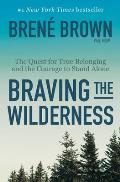
“Braving the Wilderness” by Brene Brown

June 26, 2018 by Sonia Connolly 1 Comment

book coverSubtitle: The Quest for True Belonging and the Courage to Stand Alone

Recommended to me by: reading Brene Brown’s other books

I liked this book a lot better than I liked Rising Strong. There is less material, but it is more coherent, and it directly addresses crucial tools we need for the current political situation.

There is only one cutesy acronym, which was also in Rising Strong. It repeats as a theme through the book and is even included in the title.

The seven elements of trust:
B – boundaries
R – reliability
A – accountability
V – vault (confidentiality)
I – integrity
N – needs, non-judgmental about needing help
G – generosity, ascribing good intentions

Brene Brown addresses the harm being done as we fracture into more and more homogeneous groups both in person and online. Homogeneity increases isolation, and loneliness is on the rise. Homogeneity also supports acrimony and hating the Other.

She also addresses the longing to belong in her own life. She has always forged her own path. With the exploration and research around this book, she realizes that belonging is an internal quality, not dependent on outside approval. We are beholden to Spirit and our shared humanity, not to the rules of one particular social group.

Her suggestions for finding belonging inside ourselves:

  1. People are hard to hate close up. Move in.
  2. Speak truth to bullshit. Be civil.
  3. Hold hands. With strangers.
  4. Strong back, soft front, wild heart

She includes Dr. Michelle Buck’s suggestions for conflict transformation (rather than resolution). Stay in the conversation. Look for underlying intentions. Why is the topic so important to each person. Focus on the present and the future, rather than the past and who said what when. Have the goals to learn more about the other person and find new possibilities. Hold both-and rather than either-or. Listen!

The prerequisites for staying in conversation with someone we disagree with: no threats to physical safety, and no dehumanization. We do not have to tolerate being erased and dehumanized in the name of tolerance.

I disagree with her assertion that face-to-face connection is key, and the internet is only useful to find new people to connect with in person. I agree that in-person connection is lovely, but connection over the internet also has value, especially for people with limited ability to get together in person.

Highly recommended as a thoughtful approach to the unfolding catastrophe of disconnection in modern life.

A worksheet on Brene Brown’s website that contains the main points from Braving the Wilderness.

Available at bookshop.org.

Filed Under: nonfiction Tagged With: communication, politics, relationship

  • « Go to Previous Page
  • Page 1
  • Page 2
  • Page 3

Primary Sidebar

Recent Books

  • “How We Show Up” by Mia Birdsong
  • “The Enchanted Greenhouse” by Sarah Beth Durst
  • “What It Takes to Heal” by Prentis Hemphill
  • Kitchens of Hope by Linda S. Svitak and Christin Jaye Eaton with Lee Svitak Dean
  • “Very Far Away From Anywhere Else” by Ursula K Le Guin
  • “Seaward” by Susan Cooper
  • “Surviving Domestic Violence” by Elaine Weiss
  • “The Book of Love” by Kelly Link
  • “Alexandra’s Riddle” by Elisa Keyston
  • “Weaving Hope” by Celia Lake

Tags

activism aging anti-racism bodywork business childhood abuse childrens CivicTech communication disability domestic violence fantasy feminism finance Focusing food fun healing health at any size illustrated Judaism leadership lgbt marketing memoir music natural world neurodiversity politics psychology relationship romance science science fiction software spirituality survival story trauma writing young adult

Categories

Archives

Please note: bookshop.org and Amazon links are affiliate links. Copyright © 2026 · Genesis Sample on · WordPress