• Skip to primary navigation
  • Skip to main content
  • Skip to primary sidebar
Curious, Healing

Curious, Healing

Books about healing, business, and fun

  • About Sonia Connolly

psychology

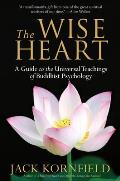
“The Wise Heart – A Guide to the Universal Teachings of Buddhist Psychology” by Jack Kornfield

August 5, 2009 by Sonia Connolly 2 Comments

Jack Kornfield, an experienced American meditation teacher, combines Buddhist philosophy, meditation exercises, and stories about his students and himself into a thorough introduction to Buddhist psychology.

The Buddhist therapeutic techniques for resolving trauma are strikingly similar to Somatic Experiencing techniques. One comes from self-observation, and one comes from observation of other animals. Perhaps it’s unsurprising that they have converged on a similar set of gentle, effective techniques.

I had a lot of reactions while reading the 400 pages of this book. Interest in people’s experiences with meditation and transformation. Boredom with the more esoteric details about Buddhism. Self-judgment about my own meditation experiences. Longing for the support of a meditative community. Relief when reading about self-acceptance.

One section describes the three personality types that cause suffering: grasping, aversive, and deluded. We all have elements of these types, and may lean strongly toward one of them. Fortunately, awareness and acceptance can mitigate the suffering they cause, and even bring positive benefits.

I felt defensive about recognizing the aversive type in myself. Yeah, okay, so I have a strong judgmental voice. At the same time, it’s a relief to realize that lots of people struggle with this. It’s normal, acceptable. The positive side of aversion is discernment.

I recommend this book if you’re interested in a warm, accessible, occasionally dry introduction to Buddhist thought. It can be fascinating to observe your reactions as you read!

Available at bookshop.org.

Filed Under: nonfiction Tagged With: memoir, psychology, spirituality

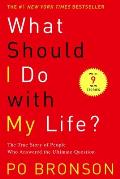
“What Should I Do with My Life?” by Po Bronson

June 2, 2009 by Sonia Connolly Leave a Comment

Po Bronson sought out hundreds of people’s true stories about answering the question, “What should I do with my life?” He tells 55 of these stories in detail, loosely organized by the issues they were confronting.

I was drawn in by each person’s richly described story, as well as by the underlying story of Po Bronson’s own journey. Rather than providing answers, the book provides a glimpse of how each person approached the question and the process.

From the conclusion:

“Now I know passion is rooted in deeply-felt experiences […] Now I think the choice is in whether to be honest, to ourselves and others, and the rest is more of an uncovering, a peeling away of layers, discovering talents we assumed we didn’t have.”

An enjoyable read, recommended to anyone who is interested in authenticity, transformation, and living well.

Sample chapters at Po Bronson’s website.

Available at bookshop.org.

Filed Under: nonfiction Tagged With: memoir, psychology

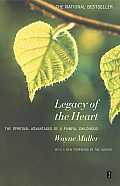
“Legacy of the Heart – the spiritual advantages of a painful childhood” by Wayne Muller

April 15, 2009 by Sonia Connolly 2 Comments

Recommended to me by: Emma McCreary

With warmth and care, Muller describes some of the outcomes of an abusive childhood, or “family of sorrow,” and some spiritual tools that can bring healing.

Near the beginning of the book, he proposes an exercise that resonated deeply with me. (Emphasis added.)

[F]or a single day: Resolve to go through an entire day assuming that you are trustworthy, that all your feelings are accurate, that all your perceptions and intuitions are reliable. As you approach each person or situation, ask yourself the questions, If I knew that I was absolutely trustworthy, how would I handle this moment? What would I do? What could I say that would be true? What would be the right action to settle this situation with safety and clarity?

I wish this exercise had been proposed to me by every healer I’ve seen. I wish everyone in confusion, doubt, and pain could be encouraged to try this, and begin to find their center again.

He takes spiritual insights from Christianity, Judaism, Sufism, Buddhism, and other faiths. As an ordained minister, he is clearly most familiar with Christianity, awkwardly referring to Jews as “Hebrews.”

Each chapter covers a different effect of a difficult childhood, including Pain and Forgiveness, Fear and Faith, Grandiosity and Humility, etc. Some chapters spoke to me more than others, despite his assumption that everyone would have all the issues he mentions.

He can also be prescriptive in some of his exercises, for example suggesting that one speak the words of forgiveness whether one feels them or not. While forgiveness can be powerfully healing, I believe that it cannot be rushed, and forcing the process only prolongs the pain.

Overall, I recommend this book to anyone who is struggling with creating meaning from a painful childhood. As the quote above recommends, keep a careful eye on what resonates for you, and skip over what does not. Different chapters may speak to you at different times.

Available at bookshop.org.

Filed Under: nonfiction Tagged With: childhood abuse, healing, psychology, spirituality, trauma

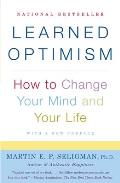
“Learned Optimism – How to Change Your Mind and Your Life” by Martin Seligman

January 22, 2009 by Sonia Connolly 1 Comment

Recommended to me by: Molly Gordon’s Biznik article When the Going Gets Tough, Think Smarter

In a book that combines psychological research and self-help suggestions, Seligman correlates optimism with health and happiness, and pessimism with learned helplessness and depression.

Explanatory styles for positive and negative events are analyzed for being permanent, pervasive, and personal.

Optimists tend to think negative events are temporary, restricted in scope, and externally caused, while positive events are permanent, global in scope, and internally caused. Pessimists tend to think the reverse. Seligman does note that pessimists’ explanations are more accurate, on average.

He recommends ABCDE cognitive therapy to correct explanatory styles. For every Adverse event, notice pessimistic Beliefs, observe Consequences, Distract from or Dispute the beliefs, and observe the Energization that occurs. Techniques for disputing beliefs include evidence, alternatives, implications, and usefulness.

While the ideas are useful, and the scientific research he describes was ground-breaking, the glib, salesman style of the book left me wondering what caveats, limitations, and assumptions were glossed over.

Noticing and questioning beliefs is a powerful technique which has been recommended by many people, framed in many ways. I prefer less confrontational ways of interacting with my own thoughts. The most useful part of this book for me is the new language for analyzing explanatory styles.

While Seligman emphasizes optimism vs. pessimism, I think the big news is his early research on learned helplessness. Once overcome, learned helplessness does not return. For survivors of any kind of abuse of power, this can be the key to recovery.

Available at bookshop.org.

Filed Under: nonfiction Tagged With: psychology

  • « Go to Previous Page
  • Page 1
  • Interim pages omitted …
  • Page 20
  • Page 21
  • Page 22

Primary Sidebar

Recent Books

  • “We Belong to the Drum” by Sandra Lamouche and Azby Whitecalf
  • “Atlas of the Heart” by Brene Brown
  • “Life After Cars” by Sarah Goodyear, Doug Gordon, Aaron Naparstek
  • “Tidy First?” by Kent Beck
  • “When You Had Power” and “You Knew the Price” by Susan Kaye Quinn
  • “Taproot” by Keezy Young
  • “The Tower at Stony Wood” by Patricia A McKillip
  • “Hospicing Modernity” by Vanessa Machado de Oliveira
  • “How We Show Up” by Mia Birdsong
  • “The Enchanted Greenhouse” by Sarah Beth Durst

Tags

activism aging anti-racism bodywork business childhood abuse childrens CivicTech communication disability domestic violence fantasy feminism finance Focusing food fun healing health at any size illustrated Judaism leadership lgbt marketing memoir music natural world neurodiversity politics psychology relationship romance science science fiction software spirituality survival story trauma writing young adult

Categories

Archives

Please note: bookshop.org and Amazon links are affiliate links. Copyright © 2026 · Genesis Sample on · WordPress