• Skip to primary navigation
  • Skip to main content
  • Skip to primary sidebar
Curious, Healing

Curious, Healing

Books about healing, business, and fun

  • About Sonia Connolly

spirituality

“Braiding Sweetgrass” by Robin Wall Kimmerer

May 6, 2020 by Sonia Connolly 1 Comment

book cover

Subtitle: Indigenous Wisdom, Scientific Knowledge and the Teachings of Plants

Recommended to me by: Amy Bennett

A set of essays loosely tied together in chronological order, with themes of sweetgrass and braiding all the way through. Each essay braids together personal memoir, Native American (specifically Potawatomi) ways of living, and colonialist ways of living.

Potawatomi ways developed over generations as people saw what works to live in balance with nature, as a part of nature. Humans are considered the young ones, the newcomers, learning from their more experienced plant and animal family members.

Sweetgrass is harvested in specific ways. Not the first plant you find, because that might be the only one. Take only what you need, up to half of the plants there, either by cutting half of each bunch, or taking whole bunches. Robin Wall Kimmerer is a Professor of Botany, and one of her PhD students showed in a set of careful experiments that sweetgrass thrives when harvested this way, and fails to propagate if it is left completely unharvested. Humans and sweetgrass have a cooperative, collaborative partnership.

White colonialists disastrously interrupted Native American ways of living by stealing Native Americans’ lands and pushing them into entirely different ecosystems, and by taking their children to residential schools and forcibly preventing them from speaking their own languages or practicing their spirituality. The Potawatomi people and other tribes are gathering together the fragments of what remains, and braiding them together anew.

The book ends on a hopeful note, that perhaps enough of us will turn toward collaborative, cooperative ways of living that we will not entirely destroy the ecosystems of this green earth. Fitting right in with that hope, the current Great Pause of this pandemic gives us time to consider what we want to add back in to our lives, and what we want to leave behind to allow cleaner skies, safer streets, and more sustainable lives.

I read this as an ebook, because that’s what I can get from the library in this time of pandemic. It’s an odd way to read a book so rooted in physical experience, and I would have much preferred to have a physical book in my hands. This is a long book that wants to be appreciated slowly, essay by essay, section by section, exploring how all the parts fit together to support each other.

Highly recommended!

Robin Wall Kimmerer: ‘People can’t understand the world as a gift unless someone shows them how’ interview by James Yeh, May 23, 2020
Available at bookshop.org.

Filed Under: nonfiction Tagged With: activism, food, healing, memoir, natural world, politics, science, spirituality

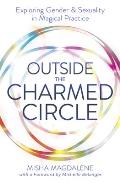
“Outside the Charmed Circle” by Misha Magdalene

March 24, 2020 by Sonia Connolly Leave a Comment

book cover

Subtitle: Exploring Gender & Sexuality in Magical Practice

Recommended to me by: Sam L-G

Misha Magdalene (they/them pronouns) asserts that magic is queer. In writing by turns academic and conversational, they explore viewing magic through the lenses of gender and sexuality.

They describe their experience with growing up queer, as well as their gradual introduction to magical practice, including the whisper networks that say, “Avoid this established teacher, he’s creepy.” Of course Misha went and found out for themselves, fortunately without being harmed.

They talk about consent, and how important it is in matters both sexual and magical, and definitely in the mix of both. As a practitioner of the Feri tradition, they directly address some of the deep issues with consent in that tradition.

They list some gender-queer and non-heterosexual gods and goddesses in various flavors of paganism.

In the end, magic is queer because it is non-mainstream, not the default religion, outside a lot of people’s lived experiences.

The book includes practical writing and magical exercises to explore the covered topics.

Highly recommended as an interesting, eclectic, and principled exploration of gender, sexuality, and magical practice.

Misha Magdalene’s blog at Patheos, Outside the Charmed Circle explores some of the same ideas. There are posts that forthrightly challenge the pagan community to address its problems with racism, homophobia, and lack of consent, sexual predation and abuse.

Available at bookshop.org.

Filed Under: nonfiction Tagged With: anti-racism, feminism, lgbt, spirituality

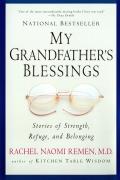
“My Grandfather’s Blessings” by Rachel Naomi Remen, M.D.

September 16, 2019 by Sonia Connolly Leave a Comment

book cover

Subtitle: Stories of Strength, Refuge, and Belonging

Recommended to me by: Robyn Posin

Rachel Naomi Remen writes about wisdom, meaning, connection, grief, compassion, and how to live with authenticity in a series of vignettes from her life and the lives of her patients. She works with people dying of cancer, and their grieving survivors. Some stories are about her childhood conversations with her Orthodox Rabbi grandfather, a wise and gentle man. Some are about her own struggle with Crohn’s disease. She was a pioneer in medical school and in practice as a woman and someone living with chronic illness. She was a pioneer again talking about the mind/body connection and the need for healing rather than (or in addition to) curing people.

Many of the stories touched something in me and made me cry, perhaps out of longing for the kinds of connection and meaning she describes. I like that she says service is between equals, people recognizing and supporting the wholeness in each other, as opposed to helping or fixing, which requires one person to be less than another.

Recommended as a dose of wisdom and hope.

Available at bookshop.org.

Filed Under: nonfiction Tagged With: healing, memoir, spirituality

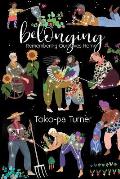
“Belonging” by Toko-pa Turner

October 7, 2018 by Sonia Connolly 4 Comments

book cover
Subtitle: Remembering Ourselves Home

The gorgeous, inclusive cover and introduction/dedication to this book grabbed me.

For the rebels and the misfits, the black sheep and the outsiders. For the refugees, the orphans, the scapegoats, and the weirdos. For the uprooted, the abandoned, the shunned and invisible ones.

May you recognize with increasing vividness that you know what you know.

May you give up your allegiances to self-doubt, meekness, and hesitation.

May you be willing to be unlikeable, and in the process be utterly loved.

May you be impervious to the wrongful projections of others, and may you deliver your disagreements with precision and grace.

May you see, with the consummate clarity of nature moving through you, that your voice is not only necessary, but desperately needed to sing us out of this muddle.

May you feel shored up, supported, entwined, and reassured as you offer yourself and your gifts to the world.

May you know for certain that even as you stand by yourself, you are not alone.

With poetic language and myths and Jungian dreamwork, Toko-pa Turner tells her own story of not-belonging and weaves a wider net of strategies to belong better. There is an Outcast archetype who can visit our dreams, and whose patterns we can follow. We can open our hearts to our own pain, and be willing to be more vulnerable (“woundable”) to others.

Her Black Sheep Gospel resonated for me. Adopt your rejected qualities. Venerate your too-muchness. Send out your signals of originality. Go it alone until you are alone with others.

In a lot of this book, I heard, “Try harder! Work harder! Get out of your own way!” While that may be valid advice, I’ve tried a lot of things it advises. It does also touch on fallow time and letting go of connections that no longer work well.

The author is writing from a place when things are going well for her, so she describes her steps in that direction and then prescribes them for others. While I’m glad she landed where she did, I’m not sure it’s so deterministic as all that. She talks both about divine guidance and about taking action on your own behalf. Yes, when things go well, it looks like a mix of those things led you there. A mix of those things can lead people to any number of places, not all of them positive.

The book was published in 2017, so she does acknowledge increasing environmental and political disaster throughout the book. She advises living closer to the earth, returning to more indigenous ways, without noting that all 7.6 billion of us can’t do that at the same time.

Her description of the problem resonated with me. Her solutions, not as much. Recommended especially if you already do dreamwork.

Available at bookshop.org.

Filed Under: nonfiction Tagged With: activism, disability, healing, memoir, relationship, spirituality

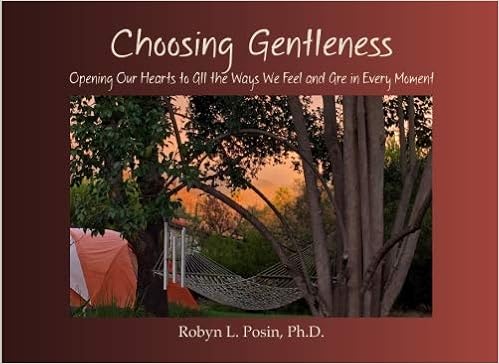
“Choosing Gentleness” by Robyn L. Posin, Ph.D.

September 3, 2018 by Sonia Connolly 1 Comment

book cover

Subtitle: Opening Our Hearts to All the Ways We Feel and Are in Every Moment

Recommended to me by: reading Robyn Posin’s website for the last 15+ years. Also I was an advance reviewer for this book.

This is a collection of line drawings and wise words that have appeared on Robyn Posin’s website over the years, along with some more recent essays. It was lovely to see the vibrant drawings of dancing, struggling, resting women and the encouraging words gathered in one place.

Robyn Posin’s work has been a big inspiration and support over the years. Most of her messages resonate powerfully for me. At the same time, I’m still arguing with a few of them.

The idea that our love-starved little ones inside can only get love from us, not from anyone outside us now that we are no longer children makes a lot of sense, and I still have a “Yes, but…” response. What about adult attachment? What about friendship, and care? I’m not saying she’s wrong, but something in me is still hoping.

I love the parts about accepting all our feelings, not just the warm fuzzy ones, and the firm rejection of the idea that acknowledging our anger just brings more of the same into our lives. Feelings are meant to live and move through, not be shoved down and frozen in place.

In this book, I found a message that I had remembered all this time, but not been able to find again on her website: “It does not matter whether how we are in the moment is born from our woundings or our wholeness.” What a revolutionary, liberating message! Even if we are “broken” in some way because of abuse or trauma, that’s how it is. We still have to exist in the world, with both our damage and our wholeness.

Living in the thinnest slice of now and trusting that my future self will be able to handle my future circumstances has also been a liberating idea.

Another idea I struggle with is that the Grandmothers (or other higher/deeper powers) are guiding my life. I’d love to feel so cherished and protected, but life seems too random, and too catastrophic for a lot of people, to believe that someone is in charge of what happens to each individual.

Highly recommended as a comforting and thought-provoking compilation of Robyn Posin’s many years of healing and helping others heal.

Available at Amazon.

Filed Under: nonfiction Tagged With: feminism, healing, illustrated, psychology, spirituality

“The Wild Edge of Sorrow” by Francis Weller

July 21, 2018 by Sonia Connolly 1 Comment

book cover

Subtitle: Rituals of Renewal and the Sacred Work of Grief

Recommended to me by: Kristin

This is a wise, kind, perceptive, affirming, healing book about grief. It warmly includes childhood triggering, shame, and shared grief for the planet among the burdens that we all carry. It emphasizes the importance of both a village to share our grief, and the capacity to turn toward our grief with compassion when we are alone.

“Turning toward the suffering and into the marrow of our grief with the attention and attunement of a caring adult helps to dilute and transmute the trauma and shame into the kind of sensitivity that can inform our compassion for others.”

The writing is lyrical, poetic, and includes well-chosen poems sprinkled through the book.

Francis Weller recommends group rituals, or perhaps solitary ones, as an anodyne for grief. One simple one is to put a small stone for each grief into a large bowl of water. When everyone is done, the water is given to a plant for nourishment, and the stones are returned to a river or lake or ocean, or buried in the earth, to be washed clean again.

A central part of grief work is to have a daily practice in meditation or something similar that allows us to hold space with ourselves rather than becoming overwhelmed.

Highly recommended.

Available at bookshop.org.

Filed Under: nonfiction Tagged With: healing, psychology, spirituality

  • « Go to Previous Page
  • Page 1
  • Page 2
  • Page 3
  • Page 4
  • Page 5
  • Interim pages omitted …
  • Page 10
  • Go to Next Page »

Primary Sidebar

Recent Books

  • “How We Show Up” by Mia Birdsong
  • “The Enchanted Greenhouse” by Sarah Beth Durst
  • “What It Takes to Heal” by Prentis Hemphill
  • Kitchens of Hope by Linda S. Svitak and Christin Jaye Eaton with Lee Svitak Dean
  • “Very Far Away From Anywhere Else” by Ursula K Le Guin
  • “Seaward” by Susan Cooper
  • “Surviving Domestic Violence” by Elaine Weiss
  • “The Book of Love” by Kelly Link
  • “Alexandra’s Riddle” by Elisa Keyston
  • “Weaving Hope” by Celia Lake

Tags

activism aging anti-racism bodywork business childhood abuse childrens CivicTech communication disability domestic violence fantasy feminism finance Focusing food fun healing health at any size illustrated Judaism leadership lgbt marketing memoir music natural world neurodiversity politics psychology relationship romance science science fiction software spirituality survival story trauma writing young adult

Categories

Archives

Please note: bookshop.org and Amazon links are affiliate links. Copyright © 2026 · Genesis Sample on · WordPress