• Skip to primary navigation
  • Skip to main content
  • Skip to primary sidebar
Curious, Healing

Curious, Healing

Books about healing, business, and fun

  • About Sonia Connolly

nonfiction

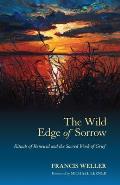
“The Wild Edge of Sorrow” by Francis Weller

July 21, 2018 by Sonia Connolly 1 Comment

book cover

Subtitle: Rituals of Renewal and the Sacred Work of Grief

Recommended to me by: Kristin

This is a wise, kind, perceptive, affirming, healing book about grief. It warmly includes childhood triggering, shame, and shared grief for the planet among the burdens that we all carry. It emphasizes the importance of both a village to share our grief, and the capacity to turn toward our grief with compassion when we are alone.

“Turning toward the suffering and into the marrow of our grief with the attention and attunement of a caring adult helps to dilute and transmute the trauma and shame into the kind of sensitivity that can inform our compassion for others.”

The writing is lyrical, poetic, and includes well-chosen poems sprinkled through the book.

Francis Weller recommends group rituals, or perhaps solitary ones, as an anodyne for grief. One simple one is to put a small stone for each grief into a large bowl of water. When everyone is done, the water is given to a plant for nourishment, and the stones are returned to a river or lake or ocean, or buried in the earth, to be washed clean again.

A central part of grief work is to have a daily practice in meditation or something similar that allows us to hold space with ourselves rather than becoming overwhelmed.

Highly recommended.
Available at bookshop.org.

Filed Under: nonfiction Tagged With: healing, psychology, spirituality

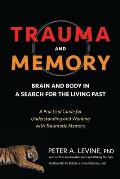
“Trauma and Memory” by Peter Levine

July 15, 2018 by Sonia Connolly 4 Comments

book cover

Subtitle: Brain and Body in a Search for the Living Past. A Practical Guide for Understanding & Working with Traumatic Memory

The first part of this book is a thorough introduction to different kinds of memories. There are explicit and implicit memories. Explicit (conscious) memories include declarative (like the times table) and episodic (stories with emotional content). Implicit (subconscious) memories include emotional and procedural memories. Implicit emotional memories are “flags.” Procedural memories are impulses, movements, and internal body sensations. Procedural memories can be further divided into skills like riding a bike, hardwired emergency responses, and basic approach/avoidance.

The writing is warm, engaging, informal, and filled with anecdotes.

The second part is an introduction to Levine’s trauma healing method of Somatic Experiencing, with several case studies, some including stills from videos of the sessions.

The third part is rants against more cathartic modalities of trauma healing, including support for the idea of false memories being induced by the “wrong” kind of trauma healing. I have only tentatively recommended Levine’s first book “Waking the Tiger” because it includes a section about false memories, and unfortunately I have to make the same caveat here.

Yes, false memories occur, just like false accusations of rape occur. Neither occur with enough frequency to deserve being addressed at length in a healing book, and both topics do a great deal of harm by undermining survivors’ already fragile hold on their truth.

Levine’s deeper point is to support trauma survivors to listen to their own bodies, and that is a message I can get behind.

Available at bookshop.org.

Filed Under: nonfiction Tagged With: healing, illustrated, psychology, trauma

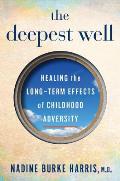
“The Deepest Well” by Nadine Burke Harris, MD

July 10, 2018 by Sonia Connolly Leave a Comment

book cover

Subtitle: Healing the Long-Term Effects of Childhood Adversity

Recommended to me by: listening to Nadine Burke Harris’s TED talk

This is a skillful blend of memoir and scientific information about the effects of trauma, presented for the layperson. Nadine Burke Harris shares how as a newly licensed doctor she founded a pediatric clinic in Bayview, the poorest section of San Francisco with the most at-risk patients, and how that clinic came to focus on trauma as the underlying cause of a lot of medical issues, especially for children. Later she founded the Center for Youth Wellness, also in San Francisco.

She does not dwell on the effects of being a Black woman, but she does not skip over them either. She notes the benefits of networking with other women and offering each other support. While marginalization and racism contribute to people’s load of trauma, trauma is not only a “poor, Black issue.” Privilege does not exempt people from trauma or its long-term effects.

There is a strong correlation between Adverse Childhood Experiences (ACEs) and health issues caused by the body’s ongoing stress response. The stress response can be buffered by strong relationships with caring adults.

Nadine Burke Harris developed a screening tool that asks a parent about the number of a child’s ACEs, but does not ask them to disclose the stories involved. She advocates for this screening tool to be used everywhere, just as infants are now universally screened for hypothyroid and jaundice.

The treatments for a body dysregulated by trauma are sleep, mental health, healthy relationships, exercise, nutrition, and meditation. Schools that help children regulate their nervous systems rather than punishing them for “acting out” enjoy both a more peaceful atmosphere and higher success rates by every measure.

(While screening is catching on in medical offices, I hear from nurses that treatment is catching on less quickly, leaving them in the frustrating position of knowing that people’s issues are caused by trauma, but not having the time and resources to help them.)

Highly recommended both for the information about the effects on trauma, and the memoir of a groundbreaking scientist and doctor who is radically improving how we care for both children and adults affected by trauma.

Available at bookshop.org.

Filed Under: nonfiction Tagged With: activism, anti-racism, childhood abuse, feminism, healing, memoir, psychology, survival story, trauma

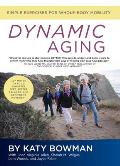
“Dynamic Aging” by Katy Bowman

July 10, 2018 by Sonia Connolly Leave a Comment

book cover

With: Joan Viginia Allen, Shelah M. Wilgus, Lora Woods, and Joyce Faber
Subtitle: Simple Exercises for Whole-Body Mobility

Recommended to me by: Amy Bennett

This is a kind, gentle book aimed at “goldeners” – also known as senior citizens – who don’t move much (anymore, or yet) but it can apply to any of us, since we’re all aging, and few of us move fluidly in all our joints. Katy Bowman is the teacher and main author, and four of her longtime class members, all in their seventies, contribute their experiences.

The first lesson is that fear and negative expectations can contribute to stiffness and immobility, which is why the people in Katy Bowman’s class choose to step away from the usual language for their age group and invent the new term “goldeners.” If we can’t imagine ourselves in motion, or we expect that motion leads to pain and injury, then we don’t move.

The book has easy, gentle exercises for each part of the body, starting at the feet, moving through knee and hip alignment and hip mobility, rib alignment and shoulder mobility. Balance, rising from a chair, confident walking, and movements needed for driving are emphasized. Line drawings help clarify each movement.

A note: Just because these exercises are simple and gentle, doesn’t mean you can’t overdo it. Start a little at a time!

The book is set in larger than usual type, double spaced, for ease of reading by older eyes. First the exercises are presented as part of a narrative about how they can fit into your life. Then a whole exercise routine is shown. Then each exercise is illustrated and described in a reference section. It’s a quick, enjoyable read, and has a lot of material for further exploration.

Recommended for anyone who wants to move more easily for more years, and especially for older people who need a reassuring re-introduction to movement.

Available at bookshop.org.

Filed Under: nonfiction Tagged With: aging, bodywork, healing, illustrated

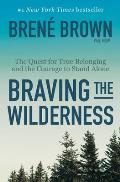
“Braving the Wilderness” by Brene Brown

June 26, 2018 by Sonia Connolly 1 Comment

book coverSubtitle: The Quest for True Belonging and the Courage to Stand Alone

Recommended to me by: reading Brene Brown’s other books

I liked this book a lot better than I liked Rising Strong. There is less material, but it is more coherent, and it directly addresses crucial tools we need for the current political situation.

There is only one cutesy acronym, which was also in Rising Strong. It repeats as a theme through the book and is even included in the title.

The seven elements of trust:
B – boundaries
R – reliability
A – accountability
V – vault (confidentiality)
I – integrity
N – needs, non-judgmental about needing help
G – generosity, ascribing good intentions

Brene Brown addresses the harm being done as we fracture into more and more homogeneous groups both in person and online. Homogeneity increases isolation, and loneliness is on the rise. Homogeneity also supports acrimony and hating the Other.

She also addresses the longing to belong in her own life. She has always forged her own path. With the exploration and research around this book, she realizes that belonging is an internal quality, not dependent on outside approval. We are beholden to Spirit and our shared humanity, not to the rules of one particular social group.

Her suggestions for finding belonging inside ourselves:

  1. People are hard to hate close up. Move in.
  2. Speak truth to bullshit. Be civil.
  3. Hold hands. With strangers.
  4. Strong back, soft front, wild heart

She includes Dr. Michelle Buck’s suggestions for conflict transformation (rather than resolution). Stay in the conversation. Look for underlying intentions. Why is the topic so important to each person. Focus on the present and the future, rather than the past and who said what when. Have the goals to learn more about the other person and find new possibilities. Hold both-and rather than either-or. Listen!

The prerequisites for staying in conversation with someone we disagree with: no threats to physical safety, and no dehumanization. We do not have to tolerate being erased and dehumanized in the name of tolerance.

I disagree with her assertion that face-to-face connection is key, and the internet is only useful to find new people to connect with in person. I agree that in-person connection is lovely, but connection over the internet also has value, especially for people with limited ability to get together in person.

Highly recommended as a thoughtful approach to the unfolding catastrophe of disconnection in modern life.

A worksheet on Brene Brown’s website that contains the main points from Braving the Wilderness.

Available at bookshop.org.

Filed Under: nonfiction Tagged With: communication, politics, relationship

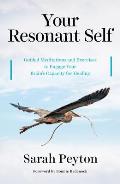
“Your Resonant Self” by Sarah Peyton

May 24, 2018 by Sonia Connolly 5 Comments

book cover

Subtitle: Guided Meditations and Exercises to Engage Your Brain’s Capacity for Healing

Recommended to me by: Amy Bennett

This book hooked me with, “The inner voice can be a constant flow of emotional warmth.” Yes please! Where do I sign up? It did take me a couple of months to get all the way through it, and would have taken longer if I hadn’t decided to finish reading it and write an article about it for May.

The book has a lot of detailed information about different parts of the brain, how they work together, and how trauma isolates them from each other. It’s not clear which parts of this are Interpersonal Neurobiology, but that’s in there. There are lots of TLAs (Three Letter Acronyms). Also lots of NVC (Non-Violent Communication), guessing about feelings and needs, which is one way to express empathy, but not the only way.

Emotional warmth is defined as being met or meeting others with affection and welcome, with a feeling of being cared for, nourished, and nurtured.

Resonance is defined as sensing that another being fully understands us and sees us with emotional warmth and generosity. Resonance is a two-person relational experience, being a “we.”

“We are social animals created to live in groups, like honey bees, ant colonies, or parades of elephants. Our brains are meant to be soothed by other human brains.”

The Default Mode Network (DMN) is the part of our brain that talks to us when we’re idle. It can be warmly kind, neutrally factual, or viciously negative.

We can choose to speak warmly to our attention as we watch it in meditation. We can begin to be warm toward parts of ourselves. We can find a part called Resonating Self Witness (RSW), and have that part resonate with other parts that need hearing and healing.

There are chapters on the inner critic, anxiety, editing old trauma narratives, anger, fears, dissociation, attachment, self-hate, depression, addiction, and community. There is a huge amount of material in the book, and I’m barely touching on what’s there and my responses to it.

The guided meditations that go with the chapters can be downloaded from yourresonantself.com. You get added to a marketing-heavy mailing list, but it’s easy to unsubscribe.

The way that criminality is associated with disorganized attachment sounds like the way some people say abusers abuse because they were abused themselves. No, plenty of us were abused and don’t go on to abuse anyone. Plenty of us had disorganized or disorganizing attachment and don’t end up in prison.

The Resonating Self Witness is similar to Self In Presence from Inner Relationship Focusing. That system’s way of listening and reflecting feels like a better fit for me than the questions about feelings and needs that this book suggests. Perhaps for people who do not yet have words for their emotions and needs, the NVC approach is more helpful.

I like the model that healing from trauma is about getting isolated parts of the brain back into connection. After working through all the guided meditations, I feel like I did learn more about how to be warm in relation to myself. I like the idea that resonance is available inside us rather than being dependent on finding it externally. I continue to be suspicious of the idea that internal resonance is just as good as interpersonal resonance, or even good enough, but I’m sure it’s better than nothing.

Recommended if you’re curious about interpersonal neurobiology and want to spend some quality time investigating and changing how you relate with yourself.

Available at bookshop.org.

Filed Under: nonfiction Tagged With: healing, illustrated, psychology

  • « Go to Previous Page
  • Page 1
  • Interim pages omitted …
  • Page 14
  • Page 15
  • Page 16
  • Page 17
  • Page 18
  • Interim pages omitted …
  • Page 48
  • Go to Next Page »

Primary Sidebar

Recent Books

  • “How We Show Up” by Mia Birdsong
  • “The Enchanted Greenhouse” by Sarah Beth Durst
  • “What It Takes to Heal” by Prentis Hemphill
  • Kitchens of Hope by Linda S. Svitak and Christin Jaye Eaton with Lee Svitak Dean
  • “Very Far Away From Anywhere Else” by Ursula K Le Guin
  • “Seaward” by Susan Cooper
  • “Surviving Domestic Violence” by Elaine Weiss
  • “The Book of Love” by Kelly Link
  • “Alexandra’s Riddle” by Elisa Keyston
  • “Weaving Hope” by Celia Lake

Tags

activism aging anti-racism bodywork business childhood abuse childrens CivicTech communication disability domestic violence fantasy feminism finance Focusing food fun healing health at any size illustrated Judaism leadership lgbt marketing memoir music natural world neurodiversity politics psychology relationship romance science science fiction software spirituality survival story trauma writing young adult

Categories

Archives

Please note: bookshop.org and Amazon links are affiliate links. Copyright © 2025 · Genesis Sample on · WordPress