• Skip to primary navigation
  • Skip to main content
  • Skip to primary sidebar
Curious, Healing

Curious, Healing

Books about healing, business, and fun

  • About Sonia Connolly

nonfiction

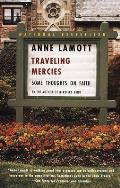
“Traveling Mercies” by Anne Lamott

August 19, 2011 by Sonia Connolly Leave a Comment

Subtitle: Some thoughts on faith

I stumbled across this book while looking for a quote about forgiveness. I usually find Anne Lamott’s books laugh-out-loud funny, reassuringly insightful, or disturbingly insightful. This book, a series of autobiographical essays about faith and religion, left me cold.

Maybe it was the large daily consumption of alcohol and other drugs she reports before she got sober. I can’t tell if she’s exaggerating or not!

Maybe it was the pretend conversion to Judaism in college, where one of the questions was “Do Jews camp?” The response was, “No, we should be at home where it’s comfortable.” She has to memorize a recipe for “Candle Salad” which includes an upright banana with a maraschino cherry on top. The vignette screeches right past funny into ugly stereotypes and cultural appropriation.

Maybe it was the later conversion to Christianity, where she describes Jesus following her everywhere like “a little cat running along at my heels.” I’m glad she found a spiritual home at St. Andrew Presbyterian Church, and at the same time the description sounds a little too much like spiritual stalking to me.

Reading this book felt like having tea with a distraught, judgmental friend who is telling me every little detail of her troubles, including mean physical descriptions of the people involved, without pausing to ask how I’m doing.
Available at bookshop.org.

Filed Under: nonfiction Tagged With: memoir, spirituality

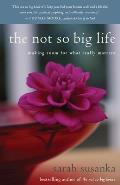
“The Not So Big Life” by Sarah Susanka

August 2, 2011 by Sonia Connolly Leave a Comment

Subtitle: Making Room For What Really Matters

Sarah Susanka is a renowned architect, author of the “Not So Big House” series. This book is beautifully architected with parallels between life remodeling and house remodeling. For the target audience of people with plenty of money and a shortage of time, the book offers substantial, detailed advice on how to make satisfying life choices.

The topics include, among others, noticing inspiration, removing clutter, meditation, dream analysis, and maintenance of your newly remodeled life.

Susanka uses a Jungian approach to dreams where every element of the dream represents the dreamer in some way. She also espouses the Jungian belief that the external world is a perfect mirror of the internal world. I am wary of Jungian psychology since a session with a Jungian therapist whose only tool was to ask me how the abuse I received had benefited me.

I read this book because I have already chosen to lead a “not so big life” and I was looking for validation of my choices. Since I’m not in the target market for the book, I was left with the feeling that it is more valid to be wealthy, overwhelmed, and in need of life-downsizing than it is to have already chosen a less lucrative, more meditative path.

One thing I did get from the book is the idea that whatever I’m doing now is my life. I don’t have to keep looking around to check if I’m doing the right thing or not.

In summary, if you’re in the target audience of this book, I think you’ll get a lot out of it.

A typographical note: Since I’m designing my own book, I’ve been paying close attention to book typesetting. Oddly, this book is set in a sans serif font, Quadraat Sans. It grabs my attention every time I open the book (although I had to look at the colophon for the name of the font).

Available at bookshop.org.

Filed Under: nonfiction Tagged With: psychology, spirituality

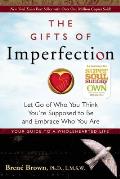
“The Gifts of Imperfection” by Brene Brown

July 13, 2011 by Sonia Connolly 3 Comments

Subtitle: Let Go of Who You Think You’re Supposed to Be and Embrace Who You Are

Addtional subtitle: Your guide to a wholehearted life

Recommended to me by: Brene Brown’s Ted talk on vulnerability

Brene Brown studies shame resilience and wholehearted living by collecting people’s stories and searching for patterns of what works and what doesn’t. It turns out that perfectionism doesn’t work. Neither does changing ourselves to fit in. Nor seeking certainty.

What does work? Worthiness, rest, play, trust, faith, intuition, hope, authenticity, love, belonging, joy, gratitude, creativity. Embracing tenderness and vulnerability.

The four elements of shame resilience: Name it. Talk about it. Own your story. Tell your story. But only to someone who has earned the right to hear it and won’t shame you further.

The gifts of imperfection: courage, compassion, and connection. Courage – originally “speaking one’s mind by telling all of one’s heart.” Compassionate boundaries and accountability. “Compassionate people are boundaried people.” “Love and belonging are always uncertain.”

“Revolution might sound a little dramatic, but in this world, choosing authenticity and worthiness is an absolute act of resistance. Choosing to live and love with our whole hearts is an act of defiance. You’re going to confuse, piss off, and terrify a lot of people – including yourself.”

This book went by too fast. I wanted more of the validation and relief I felt as I read.

Available at bookshop.org.

Filed Under: nonfiction Tagged With: healing, psychology

“Tiger, Tiger” by Margaux Fragoso

June 14, 2011 by Sonia Connolly Leave a Comment

Recommended to me by: rushthatspeaks

This is Margaux Fragoso’s matter-of-fact memoir of growing up in Union City, New Jersey with an angry father who is a jeweler, a mentally ill mother who is often hospitalized, and a very complicated relationship with a pedophile, Peter.

I skipped whole chapters in the middle of this book, unable to read the detailed, oily dishonesty that twists a child’s desire to be pleasing and pleasant against herself, eventually manipulating her into holding still for rape.

Over the fourteen years that Margaux Fragoso was enmeshed with Peter, she continued to express her spirit and her boundaries as well. The story of her entrapment is also the story of how she survived and eventually flourished.

In the afterword, she notes, “that a sexual predator looks for children from troubled homes like mine, but that he can also trick average families into thinking he’s ordinary of even an upstanding member of the community.” If you have been the victim of such a predator’s deceit, this book is immensely validating.

Highly recommended for detailed, clear depictions of complex relationships, with a huge trigger warning for manipulation and sexual abuse.

Available at bookshop.org.

Filed Under: nonfiction Tagged With: childhood abuse, memoir

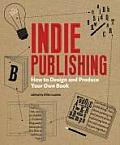
“Indie Publishing” edited by Ellen Lupton

May 27, 2011 by Sonia Connolly Leave a Comment

Subtitle: How to Design and Produce Your Own Book

Recommended to me by: Found on the library shelf in the self-publishing section, and renewed several times.

This is a quirky book with practical, detailed advice about self-publishing and designing books. I appreciate the information on choosing a page layout and some good typographical options.

I’m less enthusiastic about their choices for book examples, which tend toward the erotic. They also mention a specific print on demand company often enough to make me wonder if they get a kickback. Still, well worth reading for the design advice.

Available at biblio.com.

Filed Under: nonfiction Tagged With: illustrated, writing

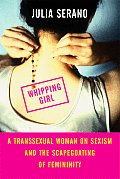
“Whipping Girl” by Julia Serano

May 13, 2011 by Sonia Connolly 1 Comment

Subtitle: A transsexual woman on sexism and the scapegoating of femininity

An illuminating book. Julia Serano describes her own experience as a transsexual woman, including the identities she explored before deciding to transition, and the internal and external changes she noticed during transition. She uses her experiences, carefully supported with research, to call out some of our societal assumptions and prejudices about gender.

She proposes that we all have a subconscious sex from birth. For people in whom it matches the body’s sex, it remains unnoticed, and leads to the assumption that it matches for everyone. For people in whom it does not match, it causes ongoing deep pain and sadness. Changing the body’s sex and gender presentation relieves the pain and leads to a sense of rightness instead.

She argues that rather than being marginal in feminism, the treatment of transsexual women is a central issue. Transsexual women are discriminated against because they have chosen to move from a societally more valued class – men – to a societally less valued class – women. She sees transsexual men receiving much less discrimination because they don’t violate the societal preference for maleness.

She notes in the introduction that her biggest challenge in writing the book is addressing several audiences: transsexual people, non-trans academics in women’s, queer, and gender studies, and those who want to learn more about transsexuality and feminism. I fall in the third camp, and found myself less engaged by detailed discussions of academic framing of transsexuality, or interpersonal politics in LGBT groups.

At the same time, I’m glad the material was there. Now I’m aware that many academics view gender as entirely socially constructed, and that transsexuals tend to be marginalized in LGBT groups because many of them express gender in a more stereotypically masculine or feminine way.

She argues that it is femininity itself which is devalued and under attack, being equated with weakness, passivity, and artifice. I see her point that she became more connected with her emotions when she started taking estrogen, and that emotions are devalued in our culture. I also see that women (and men) can enjoy dressing up to please themselves.

At the same time, I struggled with her assertion that femininity is natural. Many attributes I associate with femininity (rather than femaleness) are artificial and mandated by the patriarchy: dieting, makeup to appear youthful, hair sculpted with toxic chemicals, high heels, uncomfortable movement-impairing clothing, etc.

I agree that we need to accept each person’s gender expression as equally valuable, while also working to remove patriarchal manipulations of the expression of femininity (and masculinity as well).

Highly recommended to anyone interested in better understanding feminism, sexism, and transsexuality.

Available at bookshop.org.

Filed Under: nonfiction Tagged With: feminism, lgbt, memoir

  • « Go to Previous Page
  • Page 1
  • Interim pages omitted …
  • Page 37
  • Page 38
  • Page 39
  • Page 40
  • Page 41
  • Interim pages omitted …
  • Page 49
  • Go to Next Page »

Primary Sidebar

Recent Books

  • “Untangling” by Barbara McGavin and Ann Weiser Cornell
  • “After Hours at Dooryard Books” by Cat Sebastian
  • “We Belong to the Drum” by Sandra Lamouche and Azby Whitecalf
  • “Atlas of the Heart” by Brene Brown
  • “Life After Cars” by Sarah Goodyear, Doug Gordon, Aaron Naparstek
  • “Tidy First?” by Kent Beck
  • “When You Had Power” and “You Knew the Price” by Susan Kaye Quinn
  • “Taproot” by Keezy Young
  • “The Tower at Stony Wood” by Patricia A McKillip
  • “Hospicing Modernity” by Vanessa Machado de Oliveira

Tags

activism aging anti-racism bodywork business childhood abuse childrens CivicTech communication disability domestic violence fantasy feminism finance Focusing food fun healing health at any size illustrated Judaism leadership lgbt marketing memoir music natural world neurodiversity politics psychology relationship romance science science fiction software spirituality survival story trauma writing young adult

Categories

Archives

Please note: bookshop.org and Amazon links are affiliate links. Copyright © 2026 · Genesis Sample on · WordPress