• Skip to primary navigation
  • Skip to main content
  • Skip to primary sidebar
Curious, Healing

Curious, Healing

Books about healing, business, and fun

  • About Sonia Connolly

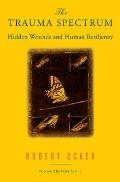
“The Trauma Spectrum” by Robert Scaer

June 23, 2013 by Sonia Connolly Leave a Comment

Subtitle: Hidden Wounds and Human Resiliency

This book is a frustrating mix of interesting theories, solid information, and bigoted rants.

The author leads with some encouraging words about intersectionality and noticing how society’s defaults harm some people, but then devolves into “women returning to work after childbirth causes harm because babies need maternal care” and “fast-food advertising causes harm because traumatized morbidly obese people get triggered into eating even more.”

I am pro infants receiving attuned care and against subliminal advertising for any product, but his conclusions on these topics lack validity as well as compassion. Infants can receive attuned care from many people, not just the mother. Fat people don’t necessarily eat more than thin people.

There is also a lot of matter-of-fact reporting on cruel animal experiments. Perhaps some animal experiments are necessary, but we can at least regret the harm they do.

On the interesting side, keeping me from just discarding the book, he notices that his clients with whiplash show trauma symptoms and are helped by Somatic Experiencing and other trauma-resolution therapies. That sounds obvious when I type it out, but we think of whiplash as a soft-tissue injury (muscles and tendons) rather than a nervous system injury. He notes that severe whiplash in response to relatively minor motor vehicle crashes correlates with a past history of trauma.

He also talks about nervous system kindling, or neurosensitization, where the sympathetic and parasympathetic nervous systems are out of balance and internal triggering keeps them out of balance. This explains, among other things, Multiple Chemical Sensitivity.

He speculates that fibromyalgia correlates with preverbal trauma, and disregulation of the nervous system.

He talks a lot about the structures in the brain that process trauma, and about the sense of being frozen in time that accompanies PTSD. Approach/avoidance dilemmas (double binds) are an obvious source of trauma. He talks about conditioning and trauma-based learning, and the need to extinguish the connections that get created during trauma to be able to come back into the present.

Robert Scaer has worked with many patients in his career and made careful observations along the way. Unfortunately he mixes them in with his personal biases in this book, so it reads more like someone’s personal blog than a trustworthy scholarly work.
Available at bookshop.org.

Filed Under: nonfiction Tagged With: childhood abuse, disability, healing, psychology, trauma

“Waking” by Matthew Sanford

June 15, 2013 by Sonia Connolly Leave a Comment

Subtitle: A memoir of trauma and transcendence

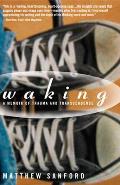
Matt was paralyzed from the chest down at the age of 13 in a winter car crash that also killed his father and older sister. His book chronicles the numbness and dissociation that help him survive his first months and years of recovery, and his later reconnection with his body. The book includes the beautifully functional family relationships that helped sustain him.

The doctors tell him he cannot connect with his legs past his spinal injury. Even though the flesh is connected, with blood circulating in and out of the paralyzed areas, they tell him the energy he senses is just in his imagination, denial, wishful thinking.

He remembers his father doing yoga alone in the basement long before it became popularly accepted in the US. He finds a yoga teacher, Jo Zukovich, with the intuition and imagination to work with him and begins reconnecting with his body. Along the way he experiences the flashbacks and body memories of healing trauma.

He and Jo discover that “alignment and precision increase mind-body integration regardless of paralysis.” Matt writes,

“If I listen inwardly to my whole experience (both my mind’s and my body’s), my mind can feel into my legs. […] It is simply a matter of learning to listen to a different level of presence, to realizing that the silence within my paralysis is not loss. In fact, it is both awake and alive. […] The silence that helped me leave my body and protected me from pain in intensive care is the same silence that helps me energetically connect mind and body.”

Highly recommended for a clear, honest look at trauma, recovery, and living well with disabilities. Prepare to have your unconscious stereotypes about “poor, wheelchair-bound” paraplegics decisively shattered.

Available at bookshop.org.

Filed Under: Uncategorized Tagged With: disability, healing, memoir, survival story, trauma

“Marbles: Mania, Depression, Michelangelo, and Me: A Graphic Memoir” by Ellen Forney

June 3, 2013 by Sonia Connolly Leave a Comment

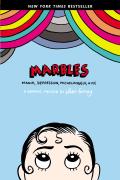
The story and drawings quickly engaged me, despite the author’s sometimes bizarre, sometimes heavy journey through mania, depression, and eventually, balance. She has the fantastic support of her mom, friends, and psychiatrist, but still struggles for years before finding a set of meds that works for her.

In depression, she can barely get out of bed to sit under a blanket on the couch. At the same time, she still swims several times a week, goes to yoga, and draws her weekly comic strip. In mania, she struggles to control her racing thoughts and impulses. Her commitment to self-care is woven through the book, along with disarming candor about her daily experience.

Highly recommended to learn about one woman’s experience with bipolar disorder and creativity.

Available at bookshop.org.

Filed Under: nonfiction Tagged With: disability, illustrated, memoir, psychology

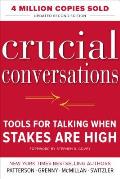
“Crucial Conversations” by Patterson, Grenny, McMillan, Switzler

May 21, 2013 by Sonia Connolly 1 Comment

Subtitle: Tools for talking when stakes are high

Recommended to me by: Pair Programming is Built on Crucial Conversations

The first chapter made me wary, trying too hard to convince me that dialogue is important. I already knew that. But then the book started offering new ideas.

Crucial conversations have opposing opinions, strong emotions, and high stakes. It’s important to notice when one is happening.

We don’t have to accept the Fool’s Choice: stay silent or create a blow up.

The first goal is to fill the pool of shared meaning, encouraging everyone to share their facts and opinions. Important questions:

  • What do I really want for myself?
  • What do I really want for others?
  • What do I really want for the relationship?

When someone becomes silent or violent, they no longer feel safe. The goal changes to increasing safety. Notice how people are responding, not just the content of the conversation. Silence: masking, avoiding, withdrawing. Violence: controlling, labeling, attacking.

Safety requires mutual purpose to start the conversation and mutual respect to continue it.

  • Do others believe I care about their goals in this conversation?
  • Do they trust my motives?
  • Do they believe I respect them? (Look for ways we are similar.)

To fix safety: apologize, contrast misunderstandings with actual purpose, create a mutual purpose.

Question your stories, start with facts, state interpretations tentatively, encourage the other person to add their viewpoint. Ask, mirror, paraphrase, prime/guess. Why would a reasonable, rational, decent person act that way?

Decide how to decide: command, consult, vote, consensus. Who cares? Who knows? Who must agree? How many people is it worth involving? Who does what by when, followup.

Available at bookshop.org.

Filed Under: nonfiction Tagged With: business, communication

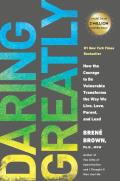
“Daring Greatly” by Brene Brown

December 29, 2012 by Sonia Connolly 3 Comments

Subtitle: How the Courage to Be Vulnerable Transforms the Way We Live, Love, Parent, and Lead

This book recapitulates Brene Brown’s previous books The Gifts of Imperfection and I Thought It Was Just Me (but it isn’t) and adds material on vulnerability and worthiness as it applies to community, work, and parenting. This book feels more complete and at the same time less academic than the prior books. Her research supports her points rather than distancing from them.

Those who feel lovable, who love, and who experience belonging simply believe they are worthy of love and belonging. They don’t have better or easier lives, they don’t have fewer struggles with addiction or depression, and they haven’t survived fewer traumas or bankruptcies or divorces. (emphasis in the original)

The opposite of scarcity is enough, and we are already enough. Wholehearted living includes showing up and being vulnerable. Vulnerability is not weakness. There is no “get out of vulnerability free” card. Vulnerability is not the same as letting it all hang out.

The Viking-or-Victim worldview divides the world into winners and losers, and has very little room for vulnerability. The worldview is useful in life-threatening or traumatic situations, but prevents connection when the emergency is over.

The book touches on cruelty, how not to be cruel, and how to respond to cruelty. Our culture of narcissism is fed by shaming each other and avoiding vulnerability. As more of us become willing to be vulnerable and authentic, the hope is that bullying will diminish. I wish there were a more concrete, powerful answer.

The book encourages us to dare greatly and be vulnerable despite the fear and shame that arises. Vulnerability is the gateway to joy.

Available at bookshop.org.

Filed Under: nonfiction Tagged With: healing, psychology

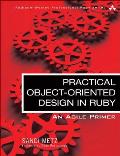
“Practical Object-Oriented Design in Ruby” by Sandi Metz

December 24, 2012 by Sonia Connolly

Subtitle: An Agile Primer

Recommended to me by: Sam Livingston-Gray

While there was a lot of useful information in this book, I kept tripping over basic information presented in what struck me as condescending ways. It is possible to write for novices without assuming they are stupid.

I liked the extended example of planning a bicycle tour, complete with realistic details. It’s easier to read examples where I’m familiar with the domain and get the in-jokes.

I appreciated the emphasis on evaluating costs. If it costs a lot of time and money up front to design carefully, and those costs are never recouped, then the effort spent on design was not cost-effective.

Plan for future changes, but don’t try to anticipate them. Postpone decisions until you have more information, but isolate your assumptions to just one place in the code so you’ll be able to change them later.

The refactoring advice in this book seems targeted at small to medium-sized systems. She suggests that an inheritance hierarchy should be either deep or wide but not both, but does not offer alternatives for managing a system that doesn’t fit within those constraints.

When using inheritance, use hooks called from the parent class so that the child class does not have to call super in just the right way.

She advocates for composition over inheritance, using Forwardable to let an object respond to a contained object’s methods.

The patterns for reusing tests to match reused code look very useful. When you include a module in a class, include a test for that module in the test for the class. Test only the public interface of a class – its private methods are its own business. Test the state changes caused by incoming messages. Test outgoing commands with mocks of their recipients.

Recommended if you’re new to object-oriented design, or if you want to learn about some Ruby-specific design patterns, or if your coworkers quote heavily from this book.

Available at bookshop.org.

Filed Under: nonfiction Tagged With: software

  • « Go to Previous Page
  • Page 1
  • Interim pages omitted …
  • Page 44
  • Page 45
  • Page 46
  • Page 47
  • Page 48
  • Interim pages omitted …
  • Page 70
  • Go to Next Page »

Primary Sidebar

Recent Books

  • “How We Show Up” by Mia Birdsong
  • “The Enchanted Greenhouse” by Sarah Beth Durst
  • “What It Takes to Heal” by Prentis Hemphill
  • Kitchens of Hope by Linda S. Svitak and Christin Jaye Eaton with Lee Svitak Dean
  • “Very Far Away From Anywhere Else” by Ursula K Le Guin
  • “Seaward” by Susan Cooper
  • “Surviving Domestic Violence” by Elaine Weiss
  • “The Book of Love” by Kelly Link
  • “Alexandra’s Riddle” by Elisa Keyston
  • “Weaving Hope” by Celia Lake

Tags

activism aging anti-racism bodywork business childhood abuse childrens CivicTech communication disability domestic violence fantasy feminism finance Focusing food fun healing health at any size illustrated Judaism leadership lgbt marketing memoir music natural world neurodiversity politics psychology relationship romance science science fiction software spirituality survival story trauma writing young adult

Categories

Archives

Please note: bookshop.org and Amazon links are affiliate links. Copyright © 2025 · Genesis Sample on · WordPress