• Skip to primary navigation
  • Skip to main content
  • Skip to primary sidebar
Curious, Healing

Curious, Healing

Books about healing, business, and fun

  • About Sonia Connolly

anti-racism

“Writing the Other” by Nisi Shawl and Cynthia Ward

January 1, 2011 by Sonia Connolly Leave a Comment

Subtitle: A Practical Approach

Recommended to me by: reading Nisi Shawl’s other book “Filter House”

I felt so warmed and included by Nisi Shawl’s writing in “Filter House” that I was eager to read “Writing the Other.” I wanted both to learn how to write inclusively, and to experience more of that included feeling.

This short book includes three essays and an excerpt from Nisi Shawl’s forthcoming novel. The first essay’s full title is “Writing the Other: Bridging Cultural Differences for Successful Fiction.” Aimed specifically at fiction writers from mainstream culture, this essay was informative but did not feel inclusive itself.

The acronym ROAARS covers differences that majority culture recognizes as significant: Race/(sexual) Orientation/Ability/Age/Religion/Sex. Class is mentioned as a difference but intentionally excluded from the acronym.

White privilege, and more generally unmarked privilege, are the hidden, taken-for-granted benefits that come from matching majority culture on the ROAARS characteristics. For example, white heterosexual couples do not worry about being insulted if they publicly hold hands, nor do they notice that they’re not worrying, unless one of them has previously been in a homosexual or mixed-race relationship.

Parallax is the writerly art of showing the world from the character’s point of view, rather than the writer’s.

Both positive and negative examples of inclusive writing are cited. Writing exercises are given for practice.

What I noticed most about the writing exercises is how they didn’t fit me. They assumed a familiarity with writing character vignettes that I don’t have. They assumed a familiarity with majority culture that I also don’t have. When asked to choose a celebrity to write about, I chose a well-known Balkan dance teacher, but the second part of the exercise assumed I had chosen an American celebrity. Several of the exercises required a writing partner.

The most illuminating moment came from an exercise I couldn’t bring myself to do, even though there weren’t any obvious impediments. It asked me to write about myself as if I had one major difference in my ROAARS characteristics. I found myself unwilling to relinquish any of my majority or minority truths, especially the ones that are indeterminate or unclear.

I can’t tell if I’m not advanced enough to benefit from this book, or if I already knew most of the multi-cultural, inclusive lessons it is teaching. Perhaps a mix of both.
Filed Under: nonfiction Tagged With: anti-racism, communication, writing

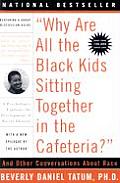
“Why Are All the Black Kids Sitting Together in the Cafeteria” by Beverly Daniel Tatum, Ph.D.

November 25, 2010 by Sonia Connolly Leave a Comment

Subtitle: And Other Conversations About Race

Recommended to me by: Kate Nepveu’s article How to Discuss Race and Racism Without Acting Like a Complete Jerk

Dr. Tatum, a research psychologist and current President of Spellman College, answers the title question compassionately and thoroughly, creating a framework to think and talk constructively about race. She alternates between explanations of academic psychology in clear layperson’s language, engaging personal anecdotes, and stories from her research and teaching experience.

The Black kids are sitting together because being singled out as the representative of one’s race is exhausting. Because they share an understanding of the frequent subtle racist behavior around them. Because they are supporting one another as they develop their internal racial identities.

Psychologist William Cross’ theory of racial identity development:

  • pre-encounter – racial identity unexamined and stereotypes absorbed unquestioned
  • encounter – events force examination of the personal impact of racism
  • immersion/emersion – focus on developing racial identity, socializing with people of the same race
  • internalization – sense of security about one’s racial identity
  • internalization/commitment -taking action in the world to interrupt racism

Dr. Tatum explains:

Sometimes I find it helpful to compare this process to learning another language. The best way to learn a second language is to travel to a place where it is spoken and experience complete immersion. Once you have achieved the level of proficiency you need, you can leave. If you worked hard to become conversant, you will of course take pride in your accomplishment and will not want to spend time with people who disparage your commitment to this endeavor.

Development of a racial identity for Whites, White guilt, and the role of White anti-racist allies are also addressed, as well as racial identiy development for Latinos, biracial people, and others.

Highly recommended for anyone who is frustrated and confused about racism and wants clear, positive, hopeful information.

Available at bookshop.org.

Filed Under: nonfiction Tagged With: anti-racism, communication, psychology

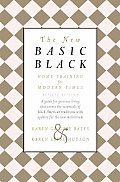
“The New Basic Black: Home Training for Modern Times” by Karen Grigsby Bates and Karen Elyse Hudson

November 22, 2010 by Sonia Connolly Leave a Comment

Subtitle: A guide for gracious living that covers the essentials of black American traditions with updates for the new millennium

Recommended to me by: jesse-the-k on DreamWidth

This is a compendium of traditional etiquette advice (which fork to put where, how to put wedding invitations in the envelope), common sense advice for all (be on time for your restaurant reservations), and advice specifically for African-Americans (what to do when your restaurant reservation isn’t honored, or is dishonored with a poor table, when they see the color of your skin).

The tone is warm, inclusive, direct, and calm.

The feeling may be so subtle it’s hard for you to put a finger on – or so blatant you’re tempted to leave and call the NAACP – but a nagging sense of deja vu tells you you’re not just being paranoid.

If you feel you’ve been given a poor table, or are receiving poor service because you look different from the other diners, speak up. When you’re offered the offensive table, tell the maitre d’ firmly, “I’m sorry; this isn’t acceptable. We’d rather sit somewhere over there, please.” … If the matter isn’t resolved to your satisfaction, you may choose to leave and take your business elsewhere.

As a white daughter of an immigrant family, I noticed differences from my own “home training” with interest. More emphasis on “proper” clothing, and responsibility to extended family. A heartbreaking focus on how to behave at funerals for both elders and youth.

I also noticed where my unconscious stereotypes crept in. A small voice in the back of my mind was surprised at the section on how to treat household help, but of course busy African-Americans hire help!

There were parts of the book I skipped or skimmed (how to behave at church, how to dress for a formal wedding).

Recommended for people of any race who want to learn more about being a considerate, respected, respectful member of society. I think of etiquette in terms of keeping other people comfortable, but this book includes advice about expressing clear boundaries as well.

Available at biblio.com.

Filed Under: nonfiction Tagged With: anti-racism

“Totally Tolerant” by Diane Webber and Laurie Mandel

October 31, 2010 by Sonia Connolly Leave a Comment

Subtitle: Spotting and stopping prejudice

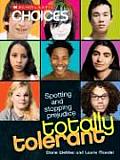
A brief, photo-filled book with concrete advice for teens on embracing diversity and overcoming prejudice.  Adults can benefit from this book as well.

As you can see on the cover, the photos strongly support the book’s message, showing people of a variety of skin colors, genders, and ethnicities.

Diversity is defined as difference.  Tolerance is defined as “respect for everyone’s religion, gender, race, ethnicity, sexual orientation, and social class.”  Stories about students from different backgrounds illustrate positive and negative experiences with tolerance and the effects they had.

From the back cover: “Everyone should at least make an attempt to stop bigotry.  Otherwise, other people suffer because you don’t have the guts to stand up for what you believe in.”  — Kevin, 14.

I’m encouraged to see the clear, positive approach this book takes toward spotting and stopping prejudice.  It addresses bullying as well.  I wish every teen (and every adult) would read and absorb its wisdom.

Available at biblio.com.

Filed Under: nonfiction Tagged With: anti-racism, communication, disability, illustrated, lgbt, psychology

  • « Go to Previous Page
  • Page 1
  • Interim pages omitted …
  • Page 5
  • Page 6
  • Page 7

Primary Sidebar

Recent Books

  • “How We Show Up” by Mia Birdsong
  • “The Enchanted Greenhouse” by Sarah Beth Durst
  • “What It Takes to Heal” by Prentis Hemphill
  • Kitchens of Hope by Linda S. Svitak and Christin Jaye Eaton with Lee Svitak Dean
  • “Very Far Away From Anywhere Else” by Ursula K Le Guin
  • “Seaward” by Susan Cooper
  • “Surviving Domestic Violence” by Elaine Weiss
  • “The Book of Love” by Kelly Link
  • “Alexandra’s Riddle” by Elisa Keyston
  • “Weaving Hope” by Celia Lake

Tags

activism aging anti-racism bodywork business childhood abuse childrens CivicTech communication disability domestic violence fantasy feminism finance Focusing food fun healing health at any size illustrated Judaism leadership lgbt marketing memoir music natural world neurodiversity politics psychology relationship romance science science fiction software spirituality survival story trauma writing young adult

Categories

Archives

Please note: bookshop.org and Amazon links are affiliate links. Copyright © 2026 · Genesis Sample on · WordPress