• Skip to primary navigation
  • Skip to main content
  • Skip to primary sidebar
Curious, Healing

Curious, Healing

Books about healing, business, and fun

  • About Sonia Connolly

psychology

“Trauma Is Really Strange” by Steve Haines, art by Sophie Standing

December 24, 2017 by Sonia Connolly 2 Comments

book cover

Recommended to me by: boxofdelights

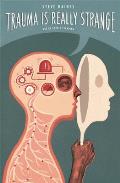
This is a graphic “novel” (although it’s non-fiction) or comic, or graphic medicine book. Each page is divided into panels with drawings and word bubbles, sometimes with additional explanations in tiny red print at the bottom of the page.

This is a solid introduction to the nervous system and how it responds to stress, including the sympathetic and parasympathetic nervous systems and Porges’ polyvagal theory, all in a friendly reassuring format. Trauma is defined as events that exceed our ability to cope with them. Healing is focused on being present and tolerating intense internal sensations, rather than reworking the past or experiencing big emotional catharsis. The goal is to tone down the reflexes of fight-or-flight and dissociation.

“Healing trauma is about meeting the body. In trauma, old parts of the brain change how the body works. By paying attention to feelings in the body and learning to self-regulate we can reboot the brain.”

The material is familiar to me, with a different emphasis than I’m used to, perhaps because the book is British.

The people in the drawings almost all come across as male. A few have more detail and come across as female. The people do have a wide range of skin colors, which is great. There is a drawing of a baby being born out of a disembodied blob – apparently it was too hard to draw a whole person giving birth. There was a surprisingly ableist use of “blindly” that brought me up short.

The book covers a lot of ground in a clear way. Of course it can’t cover everything. At the same time, I would have liked to see a disclaimer that everyone’s experience with trauma is different, and everyone’s healing path is different. Near the end, there is an entire page dedicated to Trauma Release Exercises (TRE), and the whole book feels skewed toward people for whom that’s the answer.

Yes, it’s less neat and reassuring to say, “This works for some people, not all,” but it is more honest, and more kind to those for whom it is all more complicated.  The last thing a traumatized person needs is to hear, “This works for everyone,” when that thing doesn’t work for them.
Available at bookshop.org.

Filed Under: nonfiction Tagged With: healing, illustrated, psychology, trauma

“Taming Your Gremlin” by Rick Carson

October 1, 2017 by Sonia Connolly 2 Comments

book cover

Subtitle: A Surprisingly Simple Method for Getting Out of Your Own Way

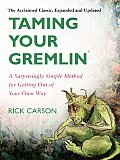
The first time I got laid off, back in 1998, we were given day passes to a career center. I dutifully leafed through binders of possible jobs, until a slim book caught my eye. I sat and read all of the first edition of Taming Your Gremlin, enticed by the playful illustrations and clear writing. “Simply noticing” and “playing with options” were exactly the tools I needed.

I ran across it again later and got my own copy, eventually joined by the expanded edition published in 2003. I’ve recommended it a lot since then.

I dug it out recently because I was writing about being nice, and I remembered the “nice person act” in this book. It turns out to be called the “pleasant person act,” but it’s still relevant. We mask our essential selves by acting the way we think we should.

The gremlin is the Inner Critic, the one who tells us that we are unlovable, unworthy, and need to work on ourselves all the time. We can’t get rid of it, but we can tame it by simply noticing, playing with options, and being in process.

Highly recommended!

Available at bookshop.org.

Filed Under: nonfiction Tagged With: illustrated, psychology

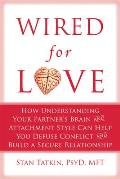
“Wired For Love” by Stan Tatkin

June 27, 2017 by Sonia Connolly 2 Comments

book cover

Subtitle: How Understanding Your Partner’s Brain & Attachment Style Can Help You Defuse Conflict & Build a Secure Relationship

Recommended to me by: Nora Samaran

I bounced off this book the first time I tried to read it. The second time, I got past the over-simplified initial examples and cutely simplified brain science to get to some useful relationship suggestions. They boil down to: Make your relationship a priority. Pay attention to what your partner likes, and do that. Pay attention to what upsets your partner, and offer comfort. Negotiate in good faith rather than trying to control them. Be aware of attachment styles and threat responses.

I took serious exception to calling the ventral and dorsal vagal nerves the “smart vagus” and “dumb vagus.” That’s just plain inaccurate, and has all sorts of ableist implications that don’t belong in a relationship book (or anywhere).

As frequently happens, the disorganized attachment style is left out. He uses the metaphors of anchor (secure), wave (anxious), and island (avoidant).

There are some same-sex couples in the examples, and the genders are not painfully stereotyped in the heterosexual couples. The names even have a bit of cultural variability. Yay.

Recommended for the relationship advice, but not the brain science.

Available at bookshop.org.

Filed Under: nonfiction Tagged With: communication, psychology, relationship

“An Emotionally Focused Workbook for Couples” by Veronica Kallos-Lilly and Jennifer Fitzgerald

June 1, 2017 by Sonia Connolly Leave a Comment

book cover

Subtitle: The Two of Us

Recommended by: David Mitchell

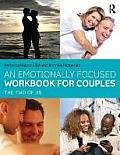
I love the diverse couples on the cover of this book. They create a sense of inclusion and emotional safety right away.

Sue Johnson introduces Emotionally Focused Therapy (EFT) in “Hold Me Tight.” EFT assumes that adult attachment is natural and normal, and that it makes sense that we feel terrible and protest loudly when our attachment bonds feel threatened.

This workbook kindly and carefully works through the steps of creating emotional safety in a relationship. Clear explanations alternate with questions that invite self-reflection and partner communication. Topics include: cycles of relationship distress, attachment bonds, past influences, emotions, how we feel now, more about difficult emotions, security, rebuilding our bond, repairing relationship injury, stories of change, maintaining intimacy and revitalizing your sex life.

For example, the chapter on emotions asks, “In my family or previous relationships… What messages did I get about experiencing and expressing emotions?” In my family, emotions were never a topic of discussion. I hadn’t consciously noticed that before.

Highly recommended! Useful as an adjunct to couples therapy, or on its own. Each question takes time to answer and process, so this is a workbook to go through slowly and gently.

Available at bookshop.org.

Filed Under: nonfiction Tagged With: communication, psychology, relationship

“Death Without Denial Grief Without Apology” by Barbara K. Roberts

March 18, 2017 by Sonia Connolly 1 Comment

book cover

Subtitle: A Guide for Facing Death and Loss

This is a loving clear-eyed unflinchingly personal look at terminal illness, death, and grief by Oregon’s former governor Barbara Roberts. Her husband Frank Roberts died of cancer during her governorship. From the introduction:

I hope for a culture of loving openness in every medical office, hospital room, health care clinic, and emergency room where news of life’s limitations and death’s impending arrival are discussed openly and compassionately. People who are dying and their families and loved ones must be prepared to create such a culture for themselves.

Frank was a state senator during his last year, and there are some mentions of both of their political work in their choice to keep his terminal illness private for some time. I can only imagine the strength it took to continue to govern through illness and grief.

She tells the story of his diagnosis, their decision process together, their choice of hospice rather than further treatment, his quiet death, and her grief afterward. Emotions are included, but the story is calmly told. She shares the practical steps of planning for death. She talks openly about her own and others’ private rituals of grief, such as bringing flowers to a recently dead wife on an anniversary, or talking to the urn containing Frank’s ashes.

Highly recommended!

Wikipedia page about Oregon Democratic governor Barbara Roberts. Her term was from 1991-1995. She was the first woman Oregon governor. The second was just elected in 2016, our current governor Kate Brown.

Available at bookshop.org.

Filed Under: nonfiction Tagged With: disability, healing, memoir, psychology, spirituality, survival story

“Emotional Blackmail” by Susan Forward, Ph.D.

March 13, 2017 by Sonia Connolly 1 Comment

book cover

Subtitle: When the People in Your Life Use Fear, Obligation, and Guilt to Manipulate You

Recommended to me by: looking up FOG: Fear, Obligation, and Guilt

Susan Forward clearly analyzes emotional blackmail and blackmailers in relationships, as well as the characteristics of people who become targets of blackmail. At the end, she has suggestions for reclaiming integrity and communicating assertively with blackmailers to give them the opportunity to reform.

Emotional blackmail steps: Demand, Resistance, Pressure, Threats, Compliance, Repetition.

By contrast, setting limits involves defining a position, stating what one needs, saying what one will and won’t accept, and giving the other person a chance to say yes or no.

Blackmailers are divided into categories: Punishers (“Do it or else I’ll hurt you”), Self-Punishers (“… or else I’ll hurt myself”), Sufferers (“You know how much I’ve been through”), and Tantalizers (“I could help you”).

FOG (Fear, Obligation, and Guilt) keep blackmail targets from thinking clearly. The blackmailer skillfully pushes buttons to make the target react rather than stop and think.

Traits that make targets vulnerable to FOG and emotional blackmail: an excessive need for approval, an intense fear of anger, a need for peace at any price, a tendency to take too much responsibility for other people’s lives, a high level of self-doubt. These are survival skills that may be out of date, and cause problems when they run the show.

Suggestions: Make a contract with yourself to restore integrity and take action. Repeat your power statement, “I CAN STAND IT.” Reverse statements such as “I tell myself what I want is wrong” into “I ask for what I want, even when it upsets the blackmailer.”

Send up an SOS: Stop (“I need time to think about it”), Observe (one’s own reactions, thoughts, emotions, flashpoints), Strategize (analyze demands). Demands might be minor, partly okay, open to compromise, or non-negotiable. List what you need, and expand your options. Decide what the bottom line is to leave.

Interestingly, the book uses the phrase “powerful non-defensive communication” and its publication date (1997) predates Sharon Ellison’s book on that topic (2002). Don’t take up the bait of attacks, but clearly and consistently stay on-message. “This is who I am. This is what I want.”

To disconnect from fear, she suggests thought-stopping. To disconnect from obligation, add “WHERE IS IT WRITTEN” to one’s obligatory rules. To disconnect from guilt, write a fairy tale in third person about what’s going on.

Her suggestions are based on the idea that our emotions follow our thoughts. She explicitly excludes seriously abusive relationships, and people who have experienced serious trauma and abuse. She also elides any discussion of racism, sexism, classism, or other power dynamics at work that might put someone down and out for resisting a blackmailer.

While she discusses attempts at resistance that get squashed, she still seems to be saying that the blackmail targets just didn’t resist the right way. According to her, blackmail targets train their blackmailers by acquiescing. As someone who actively resists guilt and doesn’t acquiesce much, I’m here to say that path has negative consequences too.

She states that blackmailers themselves are frightened and unaware of their tactics’ effects on the target. In the cases where this is true, her suggestions will be useful. In the cases where blackmailers are simply indifferent, or coldly aware of the efficacy of their tactics, these suggestions inappropriately suggest that the target is at fault.

This is a great first book about manipulation and assertiveness. It is clearly written with lots of anecdotes threaded through the book. If it isn’t your first introduction to these ideas, it feels somewhat shallow, like it sidesteps the hard parts.

Available at bookshop.org.

Filed Under: nonfiction Tagged With: communication, psychology

  • « Go to Previous Page
  • Page 1
  • Interim pages omitted …
  • Page 6
  • Page 7
  • Page 8
  • Page 9
  • Page 10
  • Interim pages omitted …
  • Page 22
  • Go to Next Page »

Primary Sidebar

Recent Books

  • “How We Show Up” by Mia Birdsong
  • “The Enchanted Greenhouse” by Sarah Beth Durst
  • “What It Takes to Heal” by Prentis Hemphill
  • Kitchens of Hope by Linda S. Svitak and Christin Jaye Eaton with Lee Svitak Dean
  • “Very Far Away From Anywhere Else” by Ursula K Le Guin
  • “Seaward” by Susan Cooper
  • “Surviving Domestic Violence” by Elaine Weiss
  • “The Book of Love” by Kelly Link
  • “Alexandra’s Riddle” by Elisa Keyston
  • “Weaving Hope” by Celia Lake

Tags

activism aging anti-racism bodywork business childhood abuse childrens CivicTech communication disability domestic violence fantasy feminism finance Focusing food fun healing health at any size illustrated Judaism leadership lgbt marketing memoir music natural world neurodiversity politics psychology relationship romance science science fiction software spirituality survival story trauma writing young adult

Categories

Archives

Please note: bookshop.org and Amazon links are affiliate links. Copyright © 2026 · Genesis Sample on · WordPress