• Skip to primary navigation
  • Skip to main content
  • Skip to primary sidebar
Curious, Healing

Curious, Healing

Books about healing, business, and fun

  • About Sonia Connolly

psychology

“Death Without Denial Grief Without Apology” by Barbara K. Roberts

March 18, 2017 by Sonia Connolly 1 Comment

book cover

Subtitle: A Guide for Facing Death and Loss

This is a loving clear-eyed unflinchingly personal look at terminal illness, death, and grief by Oregon’s former governor Barbara Roberts. Her husband Frank Roberts died of cancer during her governorship. From the introduction:

I hope for a culture of loving openness in every medical office, hospital room, health care clinic, and emergency room where news of life’s limitations and death’s impending arrival are discussed openly and compassionately. People who are dying and their families and loved ones must be prepared to create such a culture for themselves.

Frank was a state senator during his last year, and there are some mentions of both of their political work in their choice to keep his terminal illness private for some time. I can only imagine the strength it took to continue to govern through illness and grief.

She tells the story of his diagnosis, their decision process together, their choice of hospice rather than further treatment, his quiet death, and her grief afterward. Emotions are included, but the story is calmly told. She shares the practical steps of planning for death. She talks openly about her own and others’ private rituals of grief, such as bringing flowers to a recently dead wife on an anniversary, or talking to the urn containing Frank’s ashes.

Highly recommended!

Wikipedia page about Oregon Democratic governor Barbara Roberts. Her term was from 1991-1995. She was the first woman Oregon governor. The second was just elected in 2016, our current governor Kate Brown.

Available at bookshop.org.

Filed Under: nonfiction Tagged With: disability, healing, memoir, psychology, spirituality, survival story

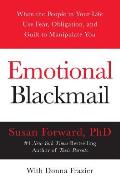
“Emotional Blackmail” by Susan Forward, Ph.D.

March 13, 2017 by Sonia Connolly 1 Comment

book cover

Subtitle: When the People in Your Life Use Fear, Obligation, and Guilt to Manipulate You

Recommended to me by: looking up FOG: Fear, Obligation, and Guilt

Susan Forward clearly analyzes emotional blackmail and blackmailers in relationships, as well as the characteristics of people who become targets of blackmail. At the end, she has suggestions for reclaiming integrity and communicating assertively with blackmailers to give them the opportunity to reform.

Emotional blackmail steps: Demand, Resistance, Pressure, Threats, Compliance, Repetition.

By contrast, setting limits involves defining a position, stating what one needs, saying what one will and won’t accept, and giving the other person a chance to say yes or no.

Blackmailers are divided into categories: Punishers (“Do it or else I’ll hurt you”), Self-Punishers (“… or else I’ll hurt myself”), Sufferers (“You know how much I’ve been through”), and Tantalizers (“I could help you”).

FOG (Fear, Obligation, and Guilt) keep blackmail targets from thinking clearly. The blackmailer skillfully pushes buttons to make the target react rather than stop and think.

Traits that make targets vulnerable to FOG and emotional blackmail: an excessive need for approval, an intense fear of anger, a need for peace at any price, a tendency to take too much responsibility for other people’s lives, a high level of self-doubt. These are survival skills that may be out of date, and cause problems when they run the show.

Suggestions: Make a contract with yourself to restore integrity and take action. Repeat your power statement, “I CAN STAND IT.” Reverse statements such as “I tell myself what I want is wrong” into “I ask for what I want, even when it upsets the blackmailer.”

Send up an SOS: Stop (“I need time to think about it”), Observe (one’s own reactions, thoughts, emotions, flashpoints), Strategize (analyze demands). Demands might be minor, partly okay, open to compromise, or non-negotiable. List what you need, and expand your options. Decide what the bottom line is to leave.

Interestingly, the book uses the phrase “powerful non-defensive communication” and its publication date (1997) predates Sharon Ellison’s book on that topic (2002). Don’t take up the bait of attacks, but clearly and consistently stay on-message. “This is who I am. This is what I want.”

To disconnect from fear, she suggests thought-stopping. To disconnect from obligation, add “WHERE IS IT WRITTEN” to one’s obligatory rules. To disconnect from guilt, write a fairy tale in third person about what’s going on.

Her suggestions are based on the idea that our emotions follow our thoughts. She explicitly excludes seriously abusive relationships, and people who have experienced serious trauma and abuse. She also elides any discussion of racism, sexism, classism, or other power dynamics at work that might put someone down and out for resisting a blackmailer.

While she discusses attempts at resistance that get squashed, she still seems to be saying that the blackmail targets just didn’t resist the right way. According to her, blackmail targets train their blackmailers by acquiescing. As someone who actively resists guilt and doesn’t acquiesce much, I’m here to say that path has negative consequences too.

She states that blackmailers themselves are frightened and unaware of their tactics’ effects on the target. In the cases where this is true, her suggestions will be useful. In the cases where blackmailers are simply indifferent, or coldly aware of the efficacy of their tactics, these suggestions inappropriately suggest that the target is at fault.

This is a great first book about manipulation and assertiveness. It is clearly written with lots of anecdotes threaded through the book. If it isn’t your first introduction to these ideas, it feels somewhat shallow, like it sidesteps the hard parts.

Available at bookshop.org.

Filed Under: nonfiction Tagged With: communication, psychology

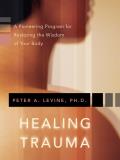
“Healing Trauma” by Peter A. Levine, PhD.

January 5, 2017 by Sonia Connolly Leave a Comment

book cover

Subtitle: A Pioneering Program for Restoring the Wisdom of Your Body

Recommended to me by: a client

This is a practical, applied introduction to Peter Levine’s Somatic Experiencing work. After an introductory summary, he presents 12 exercises, starting with body awareness and grounding, continuing with awareness of felt senses in the body, and then moving into completion of fight, flight, and freeze responses. He includes orienting to a sense of normalcy and balance that may be new and unfamiliar. The approach is gentle, accepting, and warm.

A CD is included where he reads the exercises. It’s not really a guided meditation, because, for example, he says, “Tap your left hand … (notice, etc.), okay now move through the rest of the body.”

The exercises aren’t quite in the order I would present them, since starting with body awareness might be challenging for many people. I would start with grounding and resources first.

Recommended for people who want to tools to work with their own trauma, and/or who want to understand the nuts and bolts of Somatic Experiencing.

Available at bookshop.org.

Filed Under: nonfiction Tagged With: bodywork, healing, psychology, trauma

“The Spell of the Sensuous” by David Abram

September 10, 2016 by Sonia Connolly Leave a Comment

book cover

Subtitle: Perception and Language in a More-Than-Human World

Recommended to me by: David Mitchell

David Abram is both a sleight-of-hand magician, concerned with perception and connection, and a philosopher, concerned with insubstantial ideas. Traveling as a sleight-of-hand magician, he got to know indigenous magicians in Indonesia, Nepal, and the Americas. With them, he learned to pay attention to the immediate world of the senses.

This book is a mix of sumptuous sensuous tangible descriptions, and poorly supported abstract ideas. I loved the former, and grumpily argued with the latter as I read. He claims that the alphabet divided us from our immediate participation in the natural world. In the coda, he says that even he doesn’t really believe that; it was just a starting point for discussion.

Yes, we humans are part of the world, not divided from it. Attending to our senses, to the wide, breathing present, nourishes us. Everything is equally alive, equally valid and valuable. Indigenous ways integrate with the world in a sustainable way. Each community’s stories convey urgently useful information about how to thrive in their specific place and time.

This book bridges the abstract world of philosophy with the sensuous world that indigenous peoples have inhabited all along. It casually elides all mention of privilege based on gender, race, wealth, and power. Published in 1996, it changed the conversation about ecology and sustainability.

Recommended as food for thought about how you want to connect with the world around you.

Book excerpt.

Available at bookshop.org.

Filed Under: nonfiction Tagged With: psychology, spirituality

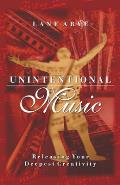
“Unintentional Music” by Lane Arye

August 23, 2016 by Sonia Connolly Leave a Comment

book cover

Subtitle: Releasing Your Deepest Creativity

Recommended to me by: a friend

This is a wonderful introduction to Process Work via making music.

There is the primary signal – the music we want to make – and the secondary signals – all the mistakes, hesitations, and imperfections that pop up despite our best efforts. Lane Arye recommends emphasizing a secondary signal and seeing what happens. Probably, another secondary signal will emerge.

Following the chain of secondary signals can lead directly to core issues and allow them to change. It can lead organically to more effective technique. It can connect us to what our spirit wants to express.

Highly recommended if you make music or art or want to learn about Process Work in a playful way.

The introduction and first chapter are available on Lane Arye’s website.

Available at bookshop.org.

Filed Under: nonfiction Tagged With: music, psychology

“Understanding and Treating Chronic Shame” by Patricia A. DeYoung

May 23, 2016 by Sonia Connolly 1 Comment

book cover

Subtitle: A Relational/Neurobiological Approach

Recommended to me by: Ani Rose Whaleswan

Patricia DeYoung says that although shame feels like a one-person problem, believing “There is something terribly wrong with me,” she defines it as a relational problem: Shame is an experience of our felt sense of self disintegrating in relation to a dysregulating other. Expecting attunement or regulation, we experience fragmentation instead, and immediately push that intolerable experience out of consciousness.

Shame is healed by right-brain connection, not left-brain reasoning and affirmations.

The book is filled with both lively client stories and technical psychological theory. It’s validating to know that researchers are beginning to understand relational trauma at a neurological level. It’s even better to know that relational therapists are holding this information about shame compassionately in mind while creating a healing space for their clients.

When our clients are able to feel their shame, letting the light and air get at it, we must stay honestly present with them. We have to encourage them to feel this most difficult emotion when what we want to say is: No, you are not ugly or worthless. No, I have never experienced you as selfish or stupid. Of course we would like to convince them that they are worthy, lovable persons. Instead, we must help them push through the language of ugly, stupid and worthless to the even more painful feelings of deep shame, feelings of not mattering at all to anyone, feelings of needing someone and finding no one, and feelings of disintegration and annihilation.

(Italics in original)

There is procedural advice for therapists: how to create a non-shaming environment, how to co-create narratives that include right-brain processing, how to discuss shame directly. Oddly, for a book about right-brain healing, touch is not mentioned anywhere.

Unlike many books that skip over the disorganized attachment style, this book addresses it and its “fearful chaos” directly.

The book also discusses mutual enactment, when client and therapist trigger each other’s deep shame, and yet keep working together with underlying good intentions. The mutually stuck pattern shifts not with dramatic insights, but incrementally, yielding little by little to moments of seeing each other more as whole people rather than just threats.

Highly recommended for therapists and others willing to wade through sections of psychological theory.

Available at bookshop.org.

Filed Under: nonfiction Tagged With: psychology, trauma

  • « Go to Previous Page
  • Page 1
  • Interim pages omitted …
  • Page 7
  • Page 8
  • Page 9
  • Page 10
  • Page 11
  • Interim pages omitted …
  • Page 22
  • Go to Next Page »

Primary Sidebar

Recent Books

  • “We Belong to the Drum” by Sandra Lamouche and Azby Whitecalf
  • “Atlas of the Heart” by Brene Brown
  • “Life After Cars” by Sarah Goodyear, Doug Gordon, Aaron Naparstek
  • “Tidy First?” by Kent Beck
  • “When You Had Power” and “You Knew the Price” by Susan Kaye Quinn
  • “Taproot” by Keezy Young
  • “The Tower at Stony Wood” by Patricia A McKillip
  • “Hospicing Modernity” by Vanessa Machado de Oliveira
  • “How We Show Up” by Mia Birdsong
  • “The Enchanted Greenhouse” by Sarah Beth Durst

Tags

activism aging anti-racism bodywork business childhood abuse childrens CivicTech communication disability domestic violence fantasy feminism finance Focusing food fun healing health at any size illustrated Judaism leadership lgbt marketing memoir music natural world neurodiversity politics psychology relationship romance science science fiction software spirituality survival story trauma writing young adult

Categories

Archives

Please note: bookshop.org and Amazon links are affiliate links. Copyright © 2026 · Genesis Sample on · WordPress