• Skip to primary navigation
  • Skip to main content
  • Skip to primary sidebar
Curious, Healing

Curious, Healing

Books about healing, business, and fun

  • About Sonia Connolly

psychology

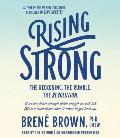
“Rising Strong” by Brene Brown

December 7, 2015 by Sonia Connolly 1 Comment

book cover

Subtitle: The Reckoning. The Rumble. The Revolution.
Additional subtitle: If we are brave enough, often enough, we will fall. This is a book about what it takes to get back up.

Recommended to me by: reading Brene Brown’s other books

This book covers a lot of ground I care about – how to recover from failure, how to deal with shame when it gets triggered, how to meet life’s rough spots in an authentic, integrated way. Brene Brown’s catchy phrases and metaphors and TLAs (Three Letter Acronyms) probably help a lot of people and are an authentic expression of her style, and at the same time they aren’t a good fit for me. I felt like I was reading around them to get to the great ideas in the book.

Vulnerability is the only path to more love, belonging, and joy – and it also leads to humiliating falls, failures, and heartbreak.

There is no one way to rise after falling. We each have to feel our way. No one can do it for us, and no one can do it without outside input. (She says without connection. As hard as it is to do without connection, something in me says that’s not a hard and fast rule. Then she says spirituality is required, and spirituality is about connection. So maybe there’s something there.)

We’re wired for story. Questioning and changing our assumptions is a big part of rising after a fall.

We can’t skip the messy middle of the process, where it’s too late to back out, but we can’t yet see your way forward. (This was the bit that rang the most true for me, and yet I hadn’t realized was an intrinsic part of the process. It’s comforting, in a way, to know that. At least I’m lost in good company, and probably going the right way after all.)

The process applies to major life crises, and to individual confrontations, and to both professional and personal life.

  • The Reckoning: Walking into our story
    Recognize emotion, and get curious about our feelings and how they connect with the way we think and behave.

  • The Rumble: Owning our story
    Get honest about the stories we’re making up about our struggle, then challenge these confabulations and assumptions to determine what’s truth, what’s self-protection, and what needs to change if we want to lead more wholehearted lives.

  • The Revolution
    Write a new ending to our story based on the key learnings from our rumble and use this new, braver story to change how we engage with the world.

Ways to avoid emotion/hurt/pain – blame, lashing out, avoidance, numbing, addiction.

Owning the story: “The story I’m making up is…” Writing for 15 minutes can help us find out what our story is.

Living “BIG” – boundaries, integrity, and generosity. Believing that people are doing the best they can (even when they violate our boundaries).

“In order for forgiveness to happen, something has to die. If you make a choice to forgive, you have to face into the pain. You simply have to hurt.” Forgiveness arises out of grief for an ending.

Asking for help might be a lot harder than being the one who has it all together to offer help.

Trust includes: boundaries, reliability, accountability, respecting confidences, integrity, nonjudgment, generosity. Self-trust has these elements, too, and is often a casualty of failure.

Hope is a thought process of goals, pathways and agency. (This does not match my experience at all, or we’re talking about two different things. To me, hope is something completely ungovernable, wordless, primal.)

Recommended! There’s lots of food for thought here.

Available at bookshop.org.

Filed Under: nonfiction Tagged With: healing, psychology

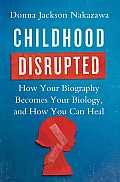
“Childhood Disrupted” by Donna Jackson Nakazawa

November 27, 2015 by Sonia Connolly 1 Comment

book cover

Subtitle: How Your Biography Becomes Your Biology, and How You Can Heal

Recommended to me by: a friend

Science journalist Donna Jackson Nakazawa carefully researches and clearly describes how Chronic Unpredictable Toxic Stress changes the growing brain of a child, pruning neurons and stunting growth in some areas. Because the toxic stress is unpredictable, the fight or flight response remains activated, bathing the body in an ongoing soup of inflammatory chemicals. She covers research that says girls’ brains are more susceptible, although I suspect correlation rather than causation at work there.

Adverse Childhood Experiences (ACEs) are linked as strongly with later auto-immune diseases and other health issues as smoking is linked with cancer, or unprotected sex is linked with pregnancy. Here is the original ACE study. You can go ahead and take the 10-question ACE questionnaire. There is also a resilience questionnaire with some factors that can shield a child from the negative effects of chronic unpredictable toxic stress.

The book contains many people’s stories, and some suggestions for healing as well. Fortunately the brain is plastic, and at least some of the negative effects can be reversed.

The briefly covered suggestions for healing are: take the ACE questionnaire and resilience questionnaire, write to heal, draw it, mindfulness meditation, tai chi and qigong, mindsight (self-awareness/empathy/integration), loving-kindness, forgiveness, mending the body/moving the body (yoga, trauma release exercises, bodywork), managing the mind through the gut, and only connect (supportive relationships).

Professional help is also recommended, with therapy, somatic experiencing, guided imagery and hypnosis, neurofeedback, and EMDR.

For parents who want to protect and help their children as best they can, suggestions include: manage your own “baggage”, look into your child’s eyes, validate and normalize their experience, apologize as needed, amplify the good feelings, name emotions, hug them, have safe and open conversations about what’s happening, bring more safe adults into their lives, teach them mindfulness.

Highly recommended book! The section on trauma’s specific effects was depressingly long, and had a lot of sense of inevitability in it. The “how to heal” section was shorter and less specific. I was both reassured and disappointed to see that I’m doing a lot of the recommendations already. Being on the right track is good, and I guess there’s no magic wand to speed up the process.

Available at bookshop.org.

Filed Under: nonfiction Tagged With: childhood abuse, healing, psychology

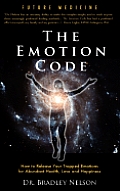
“The Emotion Code” by Dr. Bradley Nelson

November 17, 2015 by Sonia Connolly Leave a Comment

book cover

Subtitle: How to Release Your Trapped Emotions for Abundant Health, Love, and Happiness

Recommended to me by: a client

This is a marketing book for Dr. Nelson’s chiropractic and emotion-clearing practice, with lots of dramatically successful case studies, most of which I skimmed. It also includes some interesting self-help techniques.

The “sway test” is a form of muscle testing. Standing in a relaxed, stable position, say something obviously true, like, “My name is (your correct name)”, and wait to see how your body reacts. Then try it with something obviously false. “My name is Donald Duck.” The idea is that we sway forward for truth and things we like, and sway back for falsehoods and things we don’t like. It did seem to work this way for me.

Once you have a clear Yes and a clear No, you can use it to inquire into your subconscious.

The book recommends using it to find specific trapped emotions, possibly trapped in a wall around the heart, and clear them by passing a magnet over your head three times. I haven’t been convinced of the efficacy of treatment with magnets, but I tried it anyway. We’ll see if I get dramatically positive results over time!

Recommended if this level of “woo-woo” works for you, and you don’t mind (or enjoy) lots of dramatic success stories.

Available at bookshop.org.

Filed Under: Uncategorized Tagged With: healing, psychology

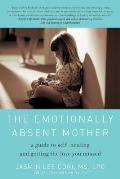
“The Emotionally Absent Mother” by Jasmin Lee Cori, MS, LPC

November 17, 2015 by Sonia Connolly 2 Comments

book cover

Subtitle: a guide to self-healing and getting the love you missed

Recommended to me by: a client

This is a gently enlightening book. It talks about all the different roles a Good Mother plays (“yeah, yeah, I know”) and all the holes that result when those roles are missing (“yeah, yeah, I know”) … “Wait, those holes I’ve been managing all this time?!”

The ten facets of a Good Mother: source, place of attachment, first responder, modulator, nurturer, cheerleader, mentor, protector, home base.

The holes are left behind from missing one or more of these messages: I’m glad you’re here, I see you, you’re special to me, I respect you, I love you, your needs are important to me/I’m here for you, I’ll keep you safe, you can rest in me, I enjoy you/you brighten my heart.

The book has a clear, accessible discussion of attachment styles and attachment wounds. It was odd to see Disorganized Attachment passed over, possibly because this book is written for children of neglectful rather than abusive mothers.

Recommended healing techniques include psychotherapy, archetypes, romantic relationships, and inner child work. One suggested exercise is to trade safe, nonsexual holding with a friend. Just hold the other person for a set time, perhaps as long as 20 minutes, and then swap roles.

There is carefully inclusive language around “mothers and other caretakers (of any gender)”, although it is also clear that this is primarily about mothers.

I’ve recommended this book to a lot of clients in the last couple of weeks! I think it’s an enlightening read for anyone. Even if you had a great mother, odds are some of the people close to you didn’t, and this will help make sense of their experience.

Available at bookshop.org.

Filed Under: nonfiction Tagged With: childhood abuse, healing, psychology, trauma

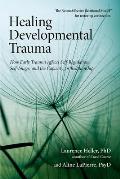
“Healing Developmental Trauma” by Laurence Heller, PhD and Aline LaPierre, PsyD

March 17, 2015 by Sonia Connolly Leave a Comment

book cover

Subtitle: How Early Trauma Affects Self-Regulation, Self-Image, and the Capacity for Relationship

The first section of this book is focused on analysis and categorization. It describes five adaptive survival styles in response to developmental ruptures in connection, attunement, trust, autonomy, and love and sexuality. I found this part dry and off-putting, and skimmed through it.

The second section narrows the focus to the connection adaptive style in response to very early trauma, abuse, and neglect. It describes physiological responses to trauma and shares several transcripts of therapy sessions. This section was much more engaging and useful. The therapeutic style is named NeuroAffective Relational Model, abbreviated NARM throughout.

Therapists are recommended to be non-judgmental, present, authentic, gentle, and attuned with the client. Careful tracking of the client’s responses allows alternation between expansion and contraction, with emphasis on positive expansion. Anger and aggression are recognized as natural, necessary responses to trauma. Unresolved defensive-orienting responses to trauma linger in tension around the eyes and narrowed field of vision, so working with eyes and gaze is useful. Therapeutic touch is a resource to repair early neglect.

Recommended as an introduction to the differences between shock trauma and developmental trauma, with some body-centered and client-centered techniques to help.

Available at bookshop.org.

Filed Under: nonfiction Tagged With: childhood abuse, healing, psychology, trauma

“Overcoming Trauma Through Yoga” by David Emerson and Elizabeth Hopper

February 12, 2015 by Sonia Connolly 1 Comment

Subtitle: Reclaiming Your Body

Recommended to me by: a client

This book is divided into three parts: a general introduction to the history of trauma treatment and PTSD, a suggested yoga practice for traumatized people, illustrated with photographs, and suggestions for offering trauma-sensitive yoga for clinicians and yoga teachers.

Throughout the book, it is clear that these people get it. They emphasize choice, empowerment, and reconnecting with the body. From Stephen Cope’s foreword: “Sometimes we encounter experiences that so violate our sense of safety, order, predictability, and right, that we feel utterly overwhelmed […]. Unable to bear reality. We have come to call these shattering experiences trauma.”

Trauma involves being helpless to avoid pain. In trauma-sensitive yoga, students are repeatedly encouraged to change postures if they are painful, and instructions emphasize choice and control over their own bodies. Students are encouraged to attend to their own experience, rather than trying to get postures “right”.

There were two instructions in the book that seemed less well-attuned to traumatized yoga students. One is to “lift the crown of the head,” without explaining how to find a balanced upright posture for the head. The other is to “hug in and around the lower belly” to activate core muscles. Many traumatized people chronically clench their bellies already.

Trauma-sensitive yoga classes move slowly to give students time to connect with their physical experience. “Physical assists” (touching students) is done rarely, with permission, and with careful attention to possible triggering effects. Thought is given to the props available – many trauma survivors find straps triggering because of having been restrained, so the book suggests not having straps in the room.

“In teaching trauma-sensitive yoga, the job of the yoga teacher is not to create artificial challenges—many of our students have already challenged themselves more than we may ever know just by showing up. The work of the teacher is to cultivate enough safety so that students can challenge themselves as they are ready, and in ways they feel safe.”

Highly recommended for its compassionate approach to anyone dealing with trauma or traumatized people.

Available at bookshop.org.

Filed Under: nonfiction Tagged With: bodywork, healing, illustrated, psychology, trauma

  • « Go to Previous Page
  • Page 1
  • Interim pages omitted …
  • Page 9
  • Page 10
  • Page 11
  • Page 12
  • Page 13
  • Interim pages omitted …
  • Page 22
  • Go to Next Page »

Primary Sidebar

Recent Books

  • “We Belong to the Drum” by Sandra Lamouche and Azby Whitecalf
  • “Atlas of the Heart” by Brene Brown
  • “Life After Cars” by Sarah Goodyear, Doug Gordon, Aaron Naparstek
  • “Tidy First?” by Kent Beck
  • “When You Had Power” and “You Knew the Price” by Susan Kaye Quinn
  • “Taproot” by Keezy Young
  • “The Tower at Stony Wood” by Patricia A McKillip
  • “Hospicing Modernity” by Vanessa Machado de Oliveira
  • “How We Show Up” by Mia Birdsong
  • “The Enchanted Greenhouse” by Sarah Beth Durst

Tags

activism aging anti-racism bodywork business childhood abuse childrens CivicTech communication disability domestic violence fantasy feminism finance Focusing food fun healing health at any size illustrated Judaism leadership lgbt marketing memoir music natural world neurodiversity politics psychology relationship romance science science fiction software spirituality survival story trauma writing young adult

Categories

Archives

Please note: bookshop.org and Amazon links are affiliate links. Copyright © 2026 · Genesis Sample on · WordPress