• Skip to primary navigation
  • Skip to main content
  • Skip to primary sidebar
Curious, Healing

Curious, Healing

Books about healing, business, and fun

  • About Sonia Connolly

psychology

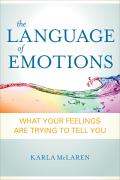
“The Language of Emotions” by Karla McLaren

July 22, 2014 by Sonia Connolly 3 Comments

Subtitle: What Your Feelings are Trying to Tell You

Recommended to me by: a client

I read a couple of books lately that had their good points, but I only got half way through them, and when I started to post about them I had more negative thoughts than positive ones, so I deleted the drafts.

This book was the opposite experience. When it came due at the library and I was only half way through, I went out and bought a copy. While there were aspects that didn’t work for me, overall I encountered a lot of solid, useful insights.

Karla McLaren shares her history as an abuse survivor and an empath, offers simple practices to work skillfully with emotions, and then analyzes how each emotion fits into her framework. All emotions are equally valid, from anger to joy to suicidal urges. Trauma recovery is woven through the book.

Emotions (corresponding with water) are seen as part of an inner village with the intellect (air), body (earth), and spirit/vision (fire). Health is a village in dynamic balance, responding with agility to ongoing events.

The practices she recommends are grounding, defining boundaries, burning contracts, conscious complaining, and rejuvenation.

I’ve found that visualization is a superficial activity for me, so visualizing a grounding cord descending into the earth does not substantially change my energy. Visualizing the destruction of my “contracts” with old behaviors and memories sounds wonderful, but I haven’t seen much effect from cutting cords and similar rituals.

She suggests sending anger into one’s boundary, which sounds like great advice, although I’m not quite sure how to do it. She also says, “People won’t know you’re angry,” which sounds like a bit of judgment about anger sneaking in.

Since these practices form the core of McLaren’s work with emotions, I wish I resonated better with them. I suspect I do some form of them in a more wordless way, sensing rather than visualizing.

The detailed analysis of each emotion includes associated questions to ask or statements to make when the emotion arises, along with gifts the emotion brings and advice on how to integrate the emotion honorably into one’s life.

Emotion Purpose Questions/Statements
Anger Protection and Restoration What must be protected? What must be restored?
Apathy and Boredom The Mask for Anger What is being avoided? What must be made conscious?
Guilt and Shame Restoring Integrity Who has been hurt? What must be made right?
Hatred The Profound Mirror What has fallen into my shadow? What must be reintegrated?
Fear Intuition and Action What action must be taken?
Confusion The Mask for Fear What is my intention? What action should be taken?
Jealousy and Envy Relational Radar What has been betrayed? What must be healed and restored?
Panic and Terror Frozen Fire What has been frozen in time? What healing action must be taken?
Sadness Release and Rejuvenation What must be released? What must be rejuvenated?
Grief The Deep River of the Soul What must be mourned? What must be released completely?
Depression Ingenious Stagnation Where has my energy gone? Why was it sent away?
Suicidal Urges The Darkness Before Dawn What idea or behavior must end now? What can no longer be tolerated in my soul?
Happiness Amusement and Anticipation Thank you for this lively celebration!
Contentment Appreciation and Recognition Thank you for renewing my faith in myself!
Joy Affinity and Communion Thank you for this radiant moment!

There is much more information in the book than I have covered here. Highly recommended!

Available at bookshop.org.

Filed Under: nonfiction Tagged With: childhood abuse, healing, memoir, psychology

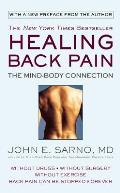
“Healing Back Pain” by John E. Sarno, MD

July 10, 2014 by Sonia Connolly Leave a Comment

Subtitle: The Mind-Body Connection

Recommended to me by: Amy Bennett

What Dr. Sarno tells his TMS patients:

  • Resume physical activity. It won’t hurt you.
  • Talk to your brain: tell it you won’t take it anymore.
  • Stop all physical treatments for your back—they may be blocking your recovery.

DON’T

  • Repress your anger or emotions—they can give you a pain in the back.
  • Think of yourself as being injured. Psychological conditioning contributes to ongoing back pain.
  • Be intimidated by back pain. You have the power to overcome it.

Dr. Sarno defines Tension Myositis Syndrome (TMS) as chronic pain in muscles and tendons of the back, neck, buttocks, and limbs. He asserts that most back pain is not caused by muscle strain or ruptured disks or past car accidents, but rather by the brain depriving an area of sufficient oxygen for the purpose of distraction from anger or other unpalatable emotions.

The book describes his theory and includes many case histories of people who fully recovered from debilitating pain once they understood that it was caused by repressing emotions. In Dr. Sarno’s experience, most people improve simply by achieving that understanding.

Unfortunately, the book doesn’t contain any suggestions for other ways to deal with emotions, although it does strongly imply that acknowledging them and setting clear boundaries can be helpful.

I think the mechanism is slightly different, tension and pain as a result of suppressing emotions rather than as a subconscious distraction. I still highly recommend this book for a refreshing perspective on chronic pain.

Available at bookshop.org.

Filed Under: nonfiction Tagged With: bodywork, disability, healing, psychology

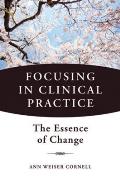
“Focusing in Clinical Practice” by Ann Weiser Cornell

April 19, 2014 by Sonia Connolly Leave a Comment

Subtitle: The Essence of Change

Recommended to me by: Ann Weiser Cornell’s other books

As a bodyworker who integrated Focusing into my work, it seems that I would be the perfect reader for this book. It contained useful bits of information about Focusing, but my primary experience while reading it was a sense of exclusion.

When I try to put that sense into words, what comes is, “There is a Right Way to do Focusing, and you’re not doing it,” despite disclaimers throughout the book saying that Focusing does not stand alone and each form of therapy has its applications. In the chapter showing how to integrate Focusing with specific types of therapy, the author carefully states that there is nothing wrong with the examples as they stand, before adding Focusing to them.

Ann Weiser Cornell’s first two books emphasize equal partnership in Focusing and acknowledgement of the Focuser’s resilience and resources. That essential respect does not come through when she discusses Focusing in the unequal relationship between therapist and client.

At the same time, Focusing continues to be tremendously useful in my bodywork practice, and I picked up new phrases and understanding of “felt sense” from this book. “How does that whole issue feel now?” “Check in with your body about all of that.” I appreciated the client vignettes and information about types of therapy related to Focusing.

Available at bookshop.org.

Filed Under: nonfiction Tagged With: Focusing, psychology

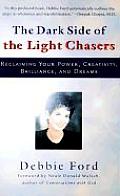
“The Dark Side of the Light Chasers” by Debbie Ford

December 21, 2013 by Sonia Connolly 1 Comment

Subtitle: Reclaiming Your Power, Creativity, Brilliance, and Dreams

I first read this book at least 10 years ago and found it life-changing in both positive and negative ways. Yes, it’s useful to look within myself for qualities I struggle with in others. Yes, it’s useful to acknowledge that we include all qualities, both wanted and unwanted.

No, it’s not useful to believe that I can control others through that process. The author says, “We must choose interpretations that move our lives forward rather than leave us feeling alone and helpless.” Years ago, I read that as a command, as well as self-blame if I felt alone and helpless. Now I see the author’s avoidance of the qualities of aloneness and helplessness, as well as the effects of her privilege and wealth, insulating her from events she truly does not control.

This book contains a lot of practical information and exercises about projection. It’s worth reading with caution to see which ideas work for you. The point of acknowledging projection is to reduce internal pain and suffering, not add more because you don’t get the magical external results the author describes.

Available at bookshop.org.

Filed Under: nonfiction Tagged With: healing, psychology

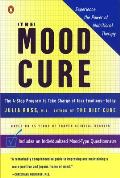
“The Mood Cure” by Julia Ross

October 7, 2013 by Sonia Connolly Leave a Comment

Julia Ross theorizes that deficiencies in certain amino acids cause emotional symptoms, and taking supplements, as well as generally eating more protein, can quickly and completely resolve most mood problems.

The book is clearly and carefully written, with a lot of “if you experience this, try that” advice. It starts with a Mood-Type questionnaire, and continues with a chapter on each type and what helps.

  1. Under a dark cloud: low in antidepressant serotonin
      main solution: 5-HTP in the afternoon and evening

  2. Suffering from the blahs: low in stimulating catecholemines or thyroid
      main solution: L-tyrosine between meals

  3. Overwhelmed by stress: Low in tranquilizing GABA
      main solution: GABA when stressed

  4. Too sensitive to life’s pain: low in pain-killing endorphins
      main solution: DLPA, D- and L-phenylalanine

Julia Ross recommends a hearty serving of protein for each meal: 3 eggs, or 3-4 ounces of meat, or 1.5 cups of beans. Plus plenty of fats and vegetables. She says several times that weight-loss diets do damage, and has a section headed, “Eat Enough.” There is a section of Good-Mood menus and recipes.

There is far more information in this book than I can even summarize here. It seems worth reading it and trying some of the recommended supplements, although I doubt the results are as consistent and dramatic as claimed.

Available at bookshop.org.

Filed Under: nonfiction Tagged With: healing, psychology

“Taking the War Out of Our Words” by Sharon Ellison

October 3, 2013 by Sonia Connolly 2 Comments

Subtitle: The Art of Powerful Non-Defensive Communication

A decade ago, this book, and a one-day workshop on Powerful Non-Defensive Communication (PNDC), helped me get out of an abusive relationship. My copy disappeared, probably on loan to someone, and I just replaced it. This is an edited review I wrote for Survivorship back then.

This communication technique focuses on good boundaries, emphasizing that we can only control our own words and actions, not anyone else’s. On each re-reading, I notice different helpful details. The book is carefully and clearly organized, with section headings for each new idea, lots of example stories, and a review of key points at the end of each chapter.

Part I describes the “War Model,” Sharon Ellison’s name for the combative communication style we learn to call “normal” in our culture. Defensiveness is a natural outgrowth of war-like communication. Six defensive modes are described – the three main strategies of surrender, flight, and fight, with passive and active sub-strategies for each. The passive modes seek to protect oneself, while the active modes seek to damage the other person. The six modes are

  • Surrender-Betray (passive)
  • Surrender-Sabotage (active)
  • Withdraw-Escape (passive)
  • Withdraw-Entrap (active)
  • Counterattack-Justify (passive)
  • Counterattack-Blame (active).

Part II describes the three primary conversational tools of Powerful Non-Defensive Communication (PNDC): curious and innocent Questions, open and direct Statements, and protective and firm Predictions. Each tool is described in detail, with many suggested formats and examples.

Questions
Non-defensive questions are used to clarify assumptions, and to learn information about the other person’s position. They also ask the other person to stop and think. Sometimes a single neutral, gentle, curious question can shift years of negative interactions.

One example tells about a couple where the man repeatedly accused the woman of being late, even though she was generally ready on time and met her commitments. They had fought about this for years. One day, the woman asked, “Is it my pacing that leads you to think I’ll be late?” The man stopped, blinked, and said, “You know, you are usually on time.” She tended to get ready at the last minute, while he tended to prepare in advance, and this was the first time the man had noticed that she did regularly succeed in pulling it all together.

Statements
Non-defensive statements are vulnerable, direct, subjective, and descriptive. They include all relevant elements of one’s own experience, even when some of the elements are contradictory.

One example tells of a divorced woman who no longer wished to invite her ex-husband to Thanksgiving dinner, but continued to do so because he had a tendency to withhold her alimony check whenever there was a conflict. One year, she chose to state to him that she did not want to invite him, and that she had continued to invite him through fear of the consequences, and that she did not want her alimony check to be delayed. Much to her surprise, he did not show up for dinner, and the next alimony check was on time.

Predictions
Non-defensive predictions are protective, foretelling, neutral, definitive and double-sided. The intent is to communicate the consequences of both sides of a choice, rather than to coerce one side or the other. Two types of predictions are described in detail: Limit-Setting Predictions, which identify one’s own responses based on the other person’s choices, and Challenge-Choice predictions, which identify outside consequences to the other person’s choices.

An example of a limit-setting prediction is “If you are not ready when it is time to leave for the play, I will drive my own car, and you can join me later. If you are ready on time, we can drive together and enjoy each other’s company.”

An example of a challenge-choice prediction comes from the owner of a printing company, who found that customers often argued with him about color choices, and then blamed him when the results were poor. He started making the prediction, “If you use too many colors, then, based on my experience, this logo will be less crisp and you will not be satisfied with the outcome. If you use fewer colors, it will be more crisp, and I think you will be pleased.”

The section on predictions includes a detailed discussion about how to devise and implement predictions, including strategies for handling negative reactions from people unaccustomed to encountering clear boundaries.

Highly recommended if you want new tools to communicate well.

Available at bookshop.org.

Filed Under: nonfiction Tagged With: communication, psychology

  • « Go to Previous Page
  • Page 1
  • Interim pages omitted …
  • Page 11
  • Page 12
  • Page 13
  • Page 14
  • Page 15
  • Interim pages omitted …
  • Page 22
  • Go to Next Page »

Primary Sidebar

Recent Books

  • “We Belong to the Drum” by Sandra Lamouche and Azby Whitecalf
  • “Atlas of the Heart” by Brene Brown
  • “Life After Cars” by Sarah Goodyear, Doug Gordon, Aaron Naparstek
  • “Tidy First?” by Kent Beck
  • “When You Had Power” and “You Knew the Price” by Susan Kaye Quinn
  • “Taproot” by Keezy Young
  • “The Tower at Stony Wood” by Patricia A McKillip
  • “Hospicing Modernity” by Vanessa Machado de Oliveira
  • “How We Show Up” by Mia Birdsong
  • “The Enchanted Greenhouse” by Sarah Beth Durst

Tags

activism aging anti-racism bodywork business childhood abuse childrens CivicTech communication disability domestic violence fantasy feminism finance Focusing food fun healing health at any size illustrated Judaism leadership lgbt marketing memoir music natural world neurodiversity politics psychology relationship romance science science fiction software spirituality survival story trauma writing young adult

Categories

Archives

Please note: bookshop.org and Amazon links are affiliate links. Copyright © 2026 · Genesis Sample on · WordPress