• Skip to primary navigation
  • Skip to main content
  • Skip to primary sidebar
Curious, Healing

Curious, Healing

Books about healing, business, and fun

  • About Sonia Connolly

psychology

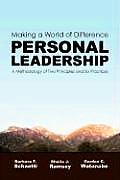
“Making a World of Difference: Personal Leadership” by Barbara Schaetti, Sheila Ramsey, Gordon Watanabe

September 29, 2013 by Sonia Connolly Leave a Comment

Subtitle: A Methodology of Two Principles and Six Practices

Recommended to me by: a client

The goal of Personal Leadership is to improve intercultural relations in business and personal settings.

The two principles are mindfulness and creativity.

The six practices are:

  • attending to judgment
  • attending to emotion
  • attending to physical sensation
  • cultivating stillness
  • engaging ambiguity
  • aligning with vision

In a difficult situation, when we notice that “Something’s up!” a “Critical Moment Dialogue” can help apply the six practices and reach greater clarity about what action to take, if any. The goal is to respond mindfully and creatively to the unique situation rather than continuing on automatic pilot.

On one hand, a lot of what the authors describe aligns with what I practice and aspire to. On the other hand, the book leaves me feeling defensive. Even as it addresses complex multicultural situations, the assertion that we always create our (internal) reality seems too simplistic to me. The proposed techniques look powerfully effective, and at the same time they would be powerful fuel for an Inner Critic at the first hint of failure.

I have witnessed an abuser use similar principles to maintain control over a victim. “You create your reality, so if you’re upset, it’s just your stuff [rather than a valid response to abuse].” A book like this feels incomplete when the downsides of the proposed techniques are not addressed.

Available at bookshop.org.

Filed Under: nonfiction Tagged With: business, communication, psychology

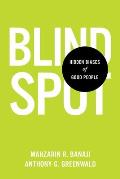
“Blindspot” by Mahzarin Banaji and Anthony Greenwald

July 28, 2013 by Sonia Connolly 1 Comment

Subtitle: Hidden Biases of Good People

Recommended to me by: Patricia Nan Anderson

In clear, accessible language, this book debunks the notion that good people are free of biases. Starting with optical illusions and moving on to creating categories, the authors show that our brains automatically make assumptions about what we perceive based on past input.

We have hidden biases, also called mindbugs, that function like the blind spot in our retinas. We don’t perceive that we are not perceiving accurately.

Implicit associations can reveal some of our biases. You may be surprised, disappointed, or relieved by your results.

The first one, insects and flowers, usually demonstrates a powerful negative association with insects and positive association with flowers. Try the Insects and Flowers Implicit Association Test. I was surprised how much more difficult it was to sort the flowers with the negative words.

I was pleased to get a neutral result for the Race Implicit Association Test but much less happy to see a moderate association between Black people and weapons in the Race and Weapons Implicit Association Test.

I wasn’t happy with my result for the Gender and Career Implicit Association Test either. Relatedly, a 1% difference in the rate of promoting women and men can explain the steep attrition rates of women in technical fields.

More Implicit Association Tests.

Present-day discrimination often takes the form of not helping, rather than actively harming. A woman’s hand was badly cut up in an accident. In the ER, her husband said, “You have to help her, she’s an avid quilter!” The doctor was talking about “quickly stitching her up” until someone greeted her as a Yale professor, whereupon she was whisked off to receive complex hand surgery from an expert in the field. It’s hard to call people out on not helping enough.

There is some discussion of how to circumvent mindbugs and blindspots. Awareness helps. So does exposure to images and ideas that contradict the mindbugs. I think the long-term fix is to change the media, literary, and educational portrayals that continually reinforce discriminatory biases. Without explicitly saying so, the book makes a strong case for affirmative action.

In the appendices, the authors show careful scientific evidence for the effect of present-day racial discrimination, despite the fact that it is less accepted to be overtly prejudiced.

Highly recommended for anyone interested in a readable, in-depth look at social justice and how your brain works.

Available at bookshop.org.

Filed Under: nonfiction Tagged With: anti-racism, feminism, psychology

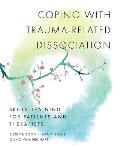
“Coping with Trauma-Related Dissociation” by Suzette Boon, Kathy Steele, Onno van der Hart

July 6, 2013 by Sonia Connolly Leave a Comment

Subtitle: Skills training for patients and therapists

Recommended to me by: A client

This is a useful book packed full of detailed, compassionate information on dissociation. Since it is a group training manual, it is divided into short chapters meant for individual class sessions.

The authors often note that each person’s experience of dissociation and healing will be different, and techniques work for different people at different times. At the same time, there is a whiff of condescension in the training, with over-simplified explanations and implications that if you just work hard enough everything will get better. For example, improve your social skills and you won’t be isolated any more.

I’ve noticed that a feeling of loneliness can be a flashback to earlier isolation. This is the first book where I’ve seen that mentioned. The main suggested tools for healing are empathic observation, finding common ground among dissociative parts, taking small steps, and creating internal safety. There are several creative visualization exercises, for example visiting a store that is perfectly comfortable for you and where you can pick up anything you need to feel safer, for free.

I recommend this book for people who experience and/or work with dissociation. At more than 400 pages, it’s a good book to read gradually or dip into for ideas.

Available at bookshop.org.

Filed Under: nonfiction Tagged With: disability, healing, psychology, trauma

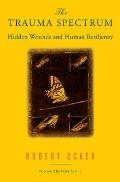
“The Trauma Spectrum” by Robert Scaer

June 23, 2013 by Sonia Connolly Leave a Comment

Subtitle: Hidden Wounds and Human Resiliency

This book is a frustrating mix of interesting theories, solid information, and bigoted rants.

The author leads with some encouraging words about intersectionality and noticing how society’s defaults harm some people, but then devolves into “women returning to work after childbirth causes harm because babies need maternal care” and “fast-food advertising causes harm because traumatized morbidly obese people get triggered into eating even more.”

I am pro infants receiving attuned care and against subliminal advertising for any product, but his conclusions on these topics lack validity as well as compassion. Infants can receive attuned care from many people, not just the mother. Fat people don’t necessarily eat more than thin people.

There is also a lot of matter-of-fact reporting on cruel animal experiments. Perhaps some animal experiments are necessary, but we can at least regret the harm they do.

On the interesting side, keeping me from just discarding the book, he notices that his clients with whiplash show trauma symptoms and are helped by Somatic Experiencing and other trauma-resolution therapies. That sounds obvious when I type it out, but we think of whiplash as a soft-tissue injury (muscles and tendons) rather than a nervous system injury. He notes that severe whiplash in response to relatively minor motor vehicle crashes correlates with a past history of trauma.

He also talks about nervous system kindling, or neurosensitization, where the sympathetic and parasympathetic nervous systems are out of balance and internal triggering keeps them out of balance. This explains, among other things, Multiple Chemical Sensitivity.

He speculates that fibromyalgia correlates with preverbal trauma, and disregulation of the nervous system.

He talks a lot about the structures in the brain that process trauma, and about the sense of being frozen in time that accompanies PTSD. Approach/avoidance dilemmas (double binds) are an obvious source of trauma. He talks about conditioning and trauma-based learning, and the need to extinguish the connections that get created during trauma to be able to come back into the present.

Robert Scaer has worked with many patients in his career and made careful observations along the way. Unfortunately he mixes them in with his personal biases in this book, so it reads more like someone’s personal blog than a trustworthy scholarly work.

Available at bookshop.org.

Filed Under: nonfiction Tagged With: childhood abuse, disability, healing, psychology, trauma

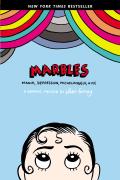
“Marbles: Mania, Depression, Michelangelo, and Me: A Graphic Memoir” by Ellen Forney

June 3, 2013 by Sonia Connolly Leave a Comment

The story and drawings quickly engaged me, despite the author’s sometimes bizarre, sometimes heavy journey through mania, depression, and eventually, balance. She has the fantastic support of her mom, friends, and psychiatrist, but still struggles for years before finding a set of meds that works for her.

In depression, she can barely get out of bed to sit under a blanket on the couch. At the same time, she still swims several times a week, goes to yoga, and draws her weekly comic strip. In mania, she struggles to control her racing thoughts and impulses. Her commitment to self-care is woven through the book, along with disarming candor about her daily experience.

Highly recommended to learn about one woman’s experience with bipolar disorder and creativity.

Available at bookshop.org.

Filed Under: nonfiction Tagged With: disability, illustrated, memoir, psychology

“Daring Greatly” by Brene Brown

December 29, 2012 by Sonia Connolly 3 Comments

Subtitle: How the Courage to Be Vulnerable Transforms the Way We Live, Love, Parent, and Lead

This book recapitulates Brene Brown’s previous books The Gifts of Imperfection and I Thought It Was Just Me (but it isn’t) and adds material on vulnerability and worthiness as it applies to community, work, and parenting. This book feels more complete and at the same time less academic than the prior books. Her research supports her points rather than distancing from them.

Those who feel lovable, who love, and who experience belonging simply believe they are worthy of love and belonging. They don’t have better or easier lives, they don’t have fewer struggles with addiction or depression, and they haven’t survived fewer traumas or bankruptcies or divorces. (emphasis in the original)

The opposite of scarcity is enough, and we are already enough. Wholehearted living includes showing up and being vulnerable. Vulnerability is not weakness. There is no “get out of vulnerability free” card. Vulnerability is not the same as letting it all hang out.

The Viking-or-Victim worldview divides the world into winners and losers, and has very little room for vulnerability. The worldview is useful in life-threatening or traumatic situations, but prevents connection when the emergency is over.

The book touches on cruelty, how not to be cruel, and how to respond to cruelty. Our culture of narcissism is fed by shaming each other and avoiding vulnerability. As more of us become willing to be vulnerable and authentic, the hope is that bullying will diminish. I wish there were a more concrete, powerful answer.

The book encourages us to dare greatly and be vulnerable despite the fear and shame that arises. Vulnerability is the gateway to joy.

Available at bookshop.org.

Filed Under: nonfiction Tagged With: healing, psychology

  • « Go to Previous Page
  • Page 1
  • Interim pages omitted …
  • Page 12
  • Page 13
  • Page 14
  • Page 15
  • Page 16
  • Interim pages omitted …
  • Page 22
  • Go to Next Page »

Primary Sidebar

Recent Books

  • “We Belong to the Drum” by Sandra Lamouche and Azby Whitecalf
  • “Atlas of the Heart” by Brene Brown
  • “Life After Cars” by Sarah Goodyear, Doug Gordon, Aaron Naparstek
  • “Tidy First?” by Kent Beck
  • “When You Had Power” and “You Knew the Price” by Susan Kaye Quinn
  • “Taproot” by Keezy Young
  • “The Tower at Stony Wood” by Patricia A McKillip
  • “Hospicing Modernity” by Vanessa Machado de Oliveira
  • “How We Show Up” by Mia Birdsong
  • “The Enchanted Greenhouse” by Sarah Beth Durst

Tags

activism aging anti-racism bodywork business childhood abuse childrens CivicTech communication disability domestic violence fantasy feminism finance Focusing food fun healing health at any size illustrated Judaism leadership lgbt marketing memoir music natural world neurodiversity politics psychology relationship romance science science fiction software spirituality survival story trauma writing young adult

Categories

Archives

Please note: bookshop.org and Amazon links are affiliate links. Copyright © 2026 · Genesis Sample on · WordPress