• Skip to primary navigation
  • Skip to main content
  • Skip to primary sidebar
Curious, Healing

Curious, Healing

Books about healing, business, and fun

  • About Sonia Connolly

psychology

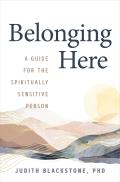
“Belonging Here” by Judith Blackstone, Ph.D.

October 6, 2012 by Sonia Connolly Leave a Comment

Subtitle: A Guide for the Spiritually Sensitive Person

Judith Blackstone helps people get more present in their bodies to realize their spiritual goals. She specifically helps spiritually sensitive people. I hadn’t encountered that phrase before, but it fits with my ideas about sensitivity in general: permeability and attentiveness to the environment and surrounding people.

Her emphasis on lived experience rather than imagined visualizations resonates for me. Her process matches my intuition about going “down and in” rather than “up and out” to meet my spiritual self. She writes that the answer to permeability is to inhabit ourselves more fully, not attempt to wall ourselves off. “When we experience life from within the body rather than from its surface, we find that we can relax our protective vigilance to the world around us.”

She describes a set of exercises called the Realization Process and gives several examples of assisting people to do them.

The exercises start with getting present in one’s feet. Not just aware, but present. When I do that, it feels wonderfully like being a gorilla, walking around on my hands. I can get present in my legs while biking, and feel them alternately rising and pushing down.

Recommended for anyone who feels they don’t quite belong here and would like to feel more connected to their body and their life.

Available at bookshop.org.

Filed Under: nonfiction Tagged With: psychology, spirituality

“Saber es Poder” by Maxine Harris, Fabiana Wallis, Hortensia Amaro

September 2, 2012 by Sonia Connolly 2 Comments

Subtitle: Modelo de Trauma y Recuperación para Mujeres Latinas

Translation: Knowledge is Power: Model of Trauma and Recovery for Latina Women

Recommended to me by: Fabiana Wallis’ bio at Conexiones

This book is a curriculum for a 25-session trauma recovery support group for Latina women. Since I hope to work with Conexiones Center for Trauma Recovery as a practitioner, my goal was to refresh my Spanish language skills and learn the vocabulary associated with trauma and recovery. It served that goal well.

The book also included specific information about Latino/a culture and issues for immigrants.

I read this book as both a practitioner helping people recover from trauma, and as a daughter of immigrants from Latin America who experienced trauma. I fit the target reader in some ways and not in others, especially since the book assumes a sharp separation between facilitators and group members.

The information was very basic, aimed at group participants who had never thought about trauma and its connection to present behaviors. There was recurring emphasis on the issues of drug use, prostitution, and unprotected sex. There was no discussion of the mechanisms of PTSD in the body.

In the various units, I saw identification of the damage wrought by trauma, but less help in building new skills than I expected. I imagine a woman reaching the end of the support group and thinking, “Now what?!” At the same time, I imagine that the opportunity to speak about past trauma and receive support would be healing in itself.

When used by knowledgeable and compassionate group facilitators, I think this book would form the basis for a useful, culturally aware support group for Latina survivors of abuse.

Filed Under: nonfiction Tagged With: anti-racism, domestic violence, feminism, psychology, trauma

“Poppies on the Rubbish Heap” by Madge Bray

September 1, 2012 by Sonia Connolly Leave a Comment

Subtitle: Sexual Abuse, The Child’s Voice

Madge Bray shares her journey as a child advocate social worker, along with several abused children’s case histories. Woven through the book is the history of recognition and backlash around the sexual abuse of children. Madge Bray pioneered the use of toys and play therapy to elicit children’s stories and help them heal.

The toys include anatomically correct dolls, angry puppets, and a battery-operated rabbit that trembles silently. Madge Bray offers a neutral, welcoming space for the children to interact with the toys and find self-expression. She enters into their world rather than demanding that they communicate in adult ways.

The book is intense and riveting. It tells of catastrophic abuse from the wounded child’s perspective, as the child is heard and helped. It tells of victorious court battles as well as one story about a child whose parents withdrew him from therapy before he could tell his story.

Recommended as a look into social work with children in England, the realities of child sexual abuse, and the healing power of deep listening.

Available at bookshop.org.

Filed Under: nonfiction Tagged With: childhood abuse, domestic violence, healing, memoir, psychology, trauma

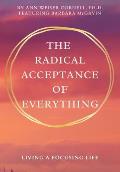
“The Radical Acceptance of Everything” by Ann Weiser Cornell

June 30, 2012 by Sonia Connolly 1 Comment

Subtitle: Living a Focusing Life

Recommended to me by: Ann Weiser Cornell’s website

I bought this book because of my excitement about The Power of Focusing. I was not disappointed.

These essays by Ann Weiser Cornell and her working partner Barbara McGavin describe both the theory and practice of Inner Relationship Focusing, as well as some of the history behind its development. They show specific, concrete ways to radically accept everything, including Inner Critics, exiled parts, internal conflicts, and non-response.

I started reading the book on the train, but stopped because I was embarrassed to cry next to my seatmate. The tears came from recognition and longing. This is how I want to be heard, and how I want to hear others. This is how I want exiled parts of me to be welcomed home.

Highly recommended.

Available at bookshop.org.

Filed Under: nonfiction Tagged With: communication, Focusing, healing, psychology

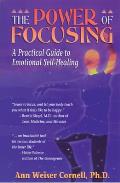
“The Power of Focusing” by Ann Weiser Cornell, Ph.D.

June 2, 2012 by Sonia Connolly 4 Comments

Subtitle: A practical guide to emotional self-healing

Recommended to me by: Nancy Lebovitz

Eugene Gendlin discovered that the difference between successful and unsuccessful therapy lies in the client’s ability to pause and attend to something wordless inside, and get to know it better. He named this skill Focusing and began teaching it, developing a protocol of six steps.

Ann Weiser Cornell learned from Eugene Gendlin and began teaching workshops. She developed a variation called Inner Relationship Focusing which still has steps, but is less concerned with a strict protocol.

In this book, she introduces Focusing through client stories and teaches the skills involved with analogies and detailed instructions. The body’s felt sense is like a shy animal at the edge of the woods. We say hello, and wait. As trust is built, the felt sense comes closer and reveals more information. As it is heard, without judgment, it can change and release.

Focusing can be done alone, or with a Focusing partner who reflects back discoveries with gentle neutrality.
Focuser: “I don’t know what to call this feeling in my throat.”
Listener: “You’re feeling something in your throat.”

When there is a negative reaction to the felt-sense, attention turns to that reaction with interested curiosity.
Focuser: “I’d like to push this away.”
Listener: “Maybe you could say hello to that feeling of wanting to push this away.”

This book and the articles on Ann Weiser Cornell’s website are both highly recommended. This is the work I try to do, and the work I want others to do with me.

One of many articles on Ann Weiser Cornell’s website: The Radical Acceptance of Everything.

Available at bookshop.org.

Filed Under: nonfiction Tagged With: Focusing, psychology

“The Gift of Therapy” by Irvin Yalom, MD

April 14, 2012 by Sonia Connolly Leave a Comment

Subtitle: An Open Letter to a New Generation of Therapists and Their Patients

Recommended to me by: Rachel Manija

This is a collection of short tips about psychotherapy from a longtime practitioner. I loved his tips about creating a warm, safe, positive relationship with the client and processing the here-and-now of the relationship for clues about how to help the client with external relationships. I loved that he starts with the assumption that he is helping to remove obstacles, because everyone naturally grows and develops given the chance. I loved that he sees himself as a fellow traveler with his clients.

This quote early in the book of German philosopher Arthur Schopenhauer expresses our common expectations that life should go well, and that we’ve done something wrong if it doesn’t, and yet it so often doesn’t.

In early youth, as we contemplate our coming life, we are like children in a theater before the curtain is raised, sitting there in high spirits and eagerly waiting for the play to begin. It is a blessing that we do not know what is really going to happen. Could we foresee it, there are times when children might seem like condemned prisoners, condemned, not to death, but to life, and as yet all uncounscious of what their sentence means.

I found the stated assumption that clients are causing their own problems frustrating and condescending. He overtly says he makes that assumption because that is how he can be effective in helping the client. Reminds me of someone looking for lost keys under the streetlight because they can see better there.

Of course it’s true in many cases, and looking at one’s role in a recurring problem can be a fruitful exploration. He seems to say that it is universally true, and does not acknowledge the work a client may already have done in that arena. Some clients need help to stop blaming themselves. I hear an underlying assumption that clients are broken, despite his starting assertion that growth simply requires the removal of blocks.

I think as a white male doctor he has a lot more experience of agency in his life than a lot of his clients, and he would also naturally discuss in his book the clients who benefited most from his approach. It makes me angry that the book made me question myself again on the topic, and I imagine he had that effect on some clients as well.

He repeatedly brings up the damaging effect on psychotherapy of insurance, “managed care,” lower compensation, less training, and “evidence-based” treatments. This book is a defense of long-term therapy toward profound change.

The book is a quick read. I recommend it as a tool to learn about psychotherapy, although I would not personally benefit from a therapist who followed all these practices.

Available at bookshop.org.

Filed Under: nonfiction Tagged With: healing, psychology

  • « Go to Previous Page
  • Page 1
  • Interim pages omitted …
  • Page 13
  • Page 14
  • Page 15
  • Page 16
  • Page 17
  • Interim pages omitted …
  • Page 22
  • Go to Next Page »

Primary Sidebar

Recent Books

  • “We Belong to the Drum” by Sandra Lamouche and Azby Whitecalf
  • “Atlas of the Heart” by Brene Brown
  • “Life After Cars” by Sarah Goodyear, Doug Gordon, Aaron Naparstek
  • “Tidy First?” by Kent Beck
  • “When You Had Power” and “You Knew the Price” by Susan Kaye Quinn
  • “Taproot” by Keezy Young
  • “The Tower at Stony Wood” by Patricia A McKillip
  • “Hospicing Modernity” by Vanessa Machado de Oliveira
  • “How We Show Up” by Mia Birdsong
  • “The Enchanted Greenhouse” by Sarah Beth Durst

Tags

activism aging anti-racism bodywork business childhood abuse childrens CivicTech communication disability domestic violence fantasy feminism finance Focusing food fun healing health at any size illustrated Judaism leadership lgbt marketing memoir music natural world neurodiversity politics psychology relationship romance science science fiction software spirituality survival story trauma writing young adult

Categories

Archives

Please note: bookshop.org and Amazon links are affiliate links. Copyright © 2026 · Genesis Sample on · WordPress