• Skip to primary navigation
  • Skip to main content
  • Skip to primary sidebar
Curious, Healing

Curious, Healing

Books about healing, business, and fun

  • About Sonia Connolly

psychology

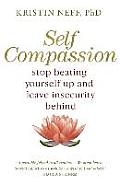
“Self-Compassion” by Kristin Neff, Ph.D.

April 9, 2012 by Sonia Connolly 2 Comments

Subtitle: Stop beating yourself up and leave insecurity behind

Kristin Neff is a psychology professor who focuses on self-compassion. Her book has a lot of helpful information – and also pushed my buttons. I think I’m not in her target audience.

While Kristin Neff talks about some emotional trauma in her life, there is an “us vs. them” feeling when she talks about trauma and mental illness, and an element of blame for self-defeating behaviors that arise from anxiety and self-criticism. It’s hard to read about compassion while feeling the raw edge of judgment.

I think she intentionally simplifies the discussion and examples for her intended audience, and “proves” her ideas by referring to small research studies where she gave questionnaires to college students.

I set the book aside in frustration, but I’m glad I went back to it.

Self-compassion is first compared with self-esteem. Self-esteem is an evaluation of our self-image, where self-compassion is a response to feeling fear, shame, or other painful emotions. Self-esteem depends on comparison and competition with others, where self-compassion reminds us of our common humanity.

To err is human. Better to be human than perfect. Moments of shame and inadequacy feel isolating, but all humans have them. Where do you excel? Where are you average? Where are you less than average?

She suggests gentle caresses, and kind words of acceptance. “Poor darling. This is really hard right now.”

Remember that our actions arise from an interconnected web of genetics, environment, past events, and current resources. Causality and blame are ambiguous. “Judgment defines people as bad vs. good. Discriminating wisdom recognizes complexity and ambiguity.”

Mindfulness helps us notice moments of suffering before (or while) dropping into blame and problem-solving. It helps us respond rather than react. Suffering = pain x resistance.

“One thing we have little power to change is what goes on inside our own heads. […] Thoughts and emotions arise unbidden and often overstay their welcome.”

Notice the experience of painful feelings in the body, and send yourself compassion for feeling that way. “Soften, soothe, allow.”

Three doorways into self-compassion: mindfulness, common humanity, kindness.

“This is a moment of suffering.
Suffering is part of life.
May I be kind to myself in this moment.
May I give myself the compassion I need.
”

Self-compassion can be hard for survivors of childhood abuse because it is sometimes associated with the cycle of alternating kindness and abuse.

Self-compassion doesn’t magically make the negative thoughts and feelings go away.

Self-compassion motivates better than self-criticism, despite what many parents and teachers enact. Love, not fear. “What’s good for you?” instead of “Are you good enough?” Intrinsic vs. extrinsic motivation.

Sympathetic joy – appreciating others’ success and good qualities allows us to appreciate our own as well, and helps us stay aware of the positive in general. Celebrate achievements, which also come from a mix of genetics, environment, etc.

Through the book, Neff talks about how helpful self-compassion has been with her husband Rupert and son Rowan, especially when Rowan was diagnosed with autism. At the end of the book she describes their adventure in Mongolia, combining horseback riding with shamanism to help Rowan, chronicled in the documentary and book, “The Horse Boy.”

Available at bookshop.org.

Filed Under: nonfiction Tagged With: psychology

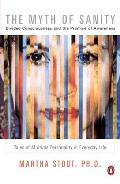
“The Myth of Sanity” by Martha Stout, Ph.D.

April 3, 2012 by Sonia Connolly Leave a Comment

Subtitle: Divided Consciousness and the Promise of Awareness; Tales of Multiple Personality in Everyday Life

Recommended to me by: a client

This book contains a therapist’s compassionate, engaging views on people who have Dissociative Identity Disorder (previously known as Multiple Personality Disorder) and how they can heal. Martha Stout discusses both specific cases and general themes of survival, courage, integrity, and the process of healing.

After trauma, she says the core question is, “Shall I choose to die, or shall I choose to live?” Those who choose to live, live fully, passionately. Anything less would not be worth the struggle and pain of healing.

Healing requires going back and revisiting traumatic memories while the whole nervous system shouts, “No! Danger!” They don’t all have to be revisited, and perfect recall is not required, but at least a few frozen traumatic memories have to be transformed into narrative memory.

The key predictor of healing is a sense of responsibility for one’s actions. Conversely, prioritizing self-protection above responsibility acts to keep dissociative mechanisms in place. A sense of integrity, or the lack of it, shines through all the dissociative fragments of a person.

We see dramatic portrayals of Dissociative Identity Disorder in books and movies and believe it to be very rare, but most people with DID switch quietly, unnoticed, in higher numbers than we believe. Martha Stout says it is because most people aren’t such good actors, and I think people also try to camouflage switching as much as possible. She validates the anger, frustration, and bewilderment of coping with someone’s quicksilver changes and lack of memory for their own recent words and actions.

She also says that we all dissociate to some extent, whether arriving at a destination without remembering the drive, or being absorbed in a movie, or suppressing “inconvenient” emotions.

For trauma survivors she recommends:

  • Find help, a steady witness, whether a therapist or a friend.
  • Be as safe as possible in the present. Provide your nervous system with a calm environment.
  • Buy comforts, keep a pet, fall in love with silence.
  • Separate yourself from difficult, crisis-addicted, rageful, and violent people.
  • Have routines. Make them sacred. Sleep every night.
  • Meditate.
  • Keep a journal. Note your dreams.

This book is unreservedly recommended!

Available at bookshop.org.

Filed Under: nonfiction Tagged With: childhood abuse, healing, psychology, trauma

“Embracing Your Subconscious” by Jenny Davidow

February 11, 2012 by Sonia Connolly Leave a Comment

Subtitle: Bringing All Parts of You Into Creative Partnership: Conscious & Subconscious, Head & Heart, Masculine & Feminine, Adult & Child, Waking & Dreaming

Recommended to me by: Jenny Davidow

Jenny Davidow’s clear, practical, non-judgmental book covers a surprising array of techniques to make friends with your subconscious. Learn to decode your dream symbols, negotiate inner alliances, create positive endings, take fantasy vacations, transform outdated beliefs, heal your inner child, dream lucidly, connect with your creativity, and widen your choices in your waking life. Vivid examples and detailed exercises encourage you to make these techniques your own.

As seen in the parallel paired contrasts in the subtitle, the book emphasizes stereotypical, Jungian ideas about masculine and feminine attributes. In addition to being passive and receptive, femininity is paired with childhood and innocence. In several examples, women resolve relationship issues, while men resolve career issues.

Both outer relationships and the “inner marriage” between (stereotypical) masculine and feminine aspects are heterosexual, with no discussion of other possibilities.

This book safely skirts the realm of “you control external reality with your thoughts” while offering practical tools to negotiate improvements in your internal reality. Recommended, with the noted caveats.

Available at biblio.com.

Filed Under: nonfiction Tagged With: healing, illustrated, psychology

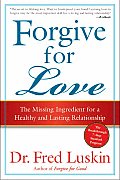
“Forgive for Love” by Dr. Fred Luskin

January 26, 2012 by Sonia Connolly Leave a Comment

Subtitle: The Missing Ingredient for a Healthy and Lasting Relationship

Recommended to me by: my sister

There are some good ideas in this book, delivered in a patronizing, lecturing tone with a lot of repetition. Yes, people choose each other for a reason, and it’s useful to remember that when times get hard. No, staying with someone when pregnant and later having more children with them is not always an uncomplicated free choice in our misogynist society.

One of the recommended techniques is deep breathing to calm the nervous system. I liked the explicit tie from nervous system activation (stress) to continued struggles, and from nervous system calming to forgiveness. The more we can calm our nervous systems, the better we feel, regardless of how others behave.

I also liked the repeated statement that forgiveness and acceptance are two different things. One can forgive someone for behaving badly, and still get out of range of their bad behavior.

Being forgiving means understanding that you can’t force your lover to change just because you are uncomfortable, inconvenienced, or disturbed. It is up to you to manage your emotional reactions, not the responsibility of your partner. Once you are able to forgive, you can deal with the [original] problem with dignity and openness, not blame.”

Other good advice: Notice what does work, since our attention is often drawn to what doesn’t work. Be grateful for the blessing of being loved. Change “You must …” to “I wish…” and drop unenforceable rules. Grieve the losses when you don’t get what you want. Both recognize that you are flawed, and give yourself a break. Forgive yourself.

Sadly, the example couples are all heterosexual and all painfully adherent to their stereotypical gender roles, except in two examples where the roles are still stereotypical but it looks like the names have been swapped.

Race, ethnicity, and income are not mentioned, but all the names and stories read as white, European-American, and middle class.

There was one great example where, early in Dr. Luskin’s couple’s therapy career, a man came in with a long list of complaints about his wife. The therapist sat stunned, thinking that the wife deserved combat pay for putting up with this, and finally responded, “If she met your standards, why would this superwoman hang out with you?” His main point was that the wife forgave the husband for being critical. To me, that highlights the difficult line between forgiving people for having human failings, and tolerating abuse.

Recommended as a first book about forgiveness for heterosexual gender-role compliant white people in monogamous couples, or for anyone else who can be forgiving of the book’s weak points.

Available at bookshop.org.

Filed Under: nonfiction Tagged With: psychology

“Transition and Beyond” by Reid Vanderburgh

January 16, 2012 by Sonia Connolly Leave a Comment

Transition and Beyond

Subtitle: Observations on Gender Identity

Recommended to me by: Reid Vanderburgh, MA, LMFT

Speaking as both a trans man and a psychotherapist, Vanderburgh provides a compassionate, detailed tour through all the aspects of gender transition, from contemplation to completion. Client vignettes provide real-world examples.

The book candidly addresses every question I had about gender transition as well as many I had never considered. It does leave lingering differences to grow up socialized as one gender and transition to another. Conscious resocialization is needed. People transitioning male to female learn about losing male privilege and taking up less conversational and physical space to fit in with other women.

People with DID (multiple personalities) can be transgender, and at the same time a history of abuse is a complicating factor. In abusive families, children may desire to be a different gender to feel less vulnerable or identify with a less abusive parent.

Throughout, the book emphasizes the physically dissonant aspects of having the wrong hormones for one’s gender identity.

If a person is capable of developing truly intimate, honest, fulfilling adult relationships in the gender assigned to them at birth—they’re probably not trans. Part of what it means to be trans is an inability to truly mature into adulthood in one’s birth gender assignment.

Vanderburgh advocates a slow, self-observant approach to hormone therapy to help adult clients confirm that they are on the right path. Some transgender children are certain of their identity from toddlerhood and should be fully supported in social and physical transition when they are ready.

Recommended for anyone who is interested in learning in more depth about what it means to be transgender and how to help make transition easier.

Vanderburgh recently announced the closure of his therapeutic practice to pursue teaching and writing opportunities.

Available at Vanderburgh’s website.

Filed Under: nonfiction Tagged With: lgbt, psychology

“The Mother’s Voice” by Kathy Weingarten

November 12, 2011 by Sonia Connolly Leave a Comment


Subtitle: Strengthening Intimacy in Families

I read this by coincidence, and it fits perfectly with themes I’ve been thinking about lately. Kathy Weingarten, a family therapist, addresses double binds that society creates for women around acceptable roles and definitions of success. She talks about dominating behaviors in men and how to address them. She weaves her personal story of motherhood, illness, and family together with societal trends. Throughout, she maintains awareness of intersectional issues of race, class, sexual orientation, and gender.

When she was diagnosed with breast cancer, she realized that her need to focus on her health conflicted directly with her need to be a “good mother” by focusing wholly on her pre-adolescent children. This contrast brought to light the invisible constraints society placed on her thoughts about mothering. She includes thoughts about the roles of wives and fathers as well.

At age 7, her son bullied her daughter, then 3 years old. She withdrew from his dominating behavior, and had to consciously reconnect with him. As she connects with him as “like her” rather than disconnecting as “alien, unlike her,” she has leverage to change the roles society prescribes for boys, sons, and men, as well as for mothers.

When she shares her true feelings and thoughts with her children in age-appropriate ways rather than maintaining a perfectly serene front, she builds real connections with them and allows them to see her as a separate person.

I appreciate how much consciousness and intention Weingarten brings to her mothering.

Some passages become repetitive, perhaps in an attempt to convince the reader, but that is a minor flaw. Overall, this is a beautifully written, carefully thought out, intimate gift of a book. Highly recommended.

Available at biblio.com

Filed Under: nonfiction Tagged With: communication, feminism, memoir, psychology

  • « Go to Previous Page
  • Page 1
  • Interim pages omitted …
  • Page 14
  • Page 15
  • Page 16
  • Page 17
  • Page 18
  • Interim pages omitted …
  • Page 22
  • Go to Next Page »

Primary Sidebar

Recent Books

  • “We Belong to the Drum” by Sandra Lamouche and Azby Whitecalf
  • “Atlas of the Heart” by Brene Brown
  • “Life After Cars” by Sarah Goodyear, Doug Gordon, Aaron Naparstek
  • “Tidy First?” by Kent Beck
  • “When You Had Power” and “You Knew the Price” by Susan Kaye Quinn
  • “Taproot” by Keezy Young
  • “The Tower at Stony Wood” by Patricia A McKillip
  • “Hospicing Modernity” by Vanessa Machado de Oliveira
  • “How We Show Up” by Mia Birdsong
  • “The Enchanted Greenhouse” by Sarah Beth Durst

Tags

activism aging anti-racism bodywork business childhood abuse childrens CivicTech communication disability domestic violence fantasy feminism finance Focusing food fun healing health at any size illustrated Judaism leadership lgbt marketing memoir music natural world neurodiversity politics psychology relationship romance science science fiction software spirituality survival story trauma writing young adult

Categories

Archives

Please note: bookshop.org and Amazon links are affiliate links. Copyright © 2026 · Genesis Sample on · WordPress