• Skip to primary navigation
  • Skip to main content
  • Skip to primary sidebar
Curious, Healing

Curious, Healing

Books about healing, business, and fun

  • About Sonia Connolly

psychology

“I Am Not Sick I Don’t Need Help!” by Xavier Amador, PhD

December 25, 2014 by Sonia Connolly Leave a Comment

Subtitle: How to Help Someone with Mental Illness Accept Treatment

Recommended to me by: a friend with a mentally ill relative

This is a book about how to communicate better with people with mental illnesses involving psychosis like schizophrenia or bipolar disorder. The focus is on getting people to accept psychoactive drugs when they don’t believe they are ill.

Rather than assuming non-compliant patients are immature, defensive, stubborn, or oppositional, Xavier Amador documents that poor insight into being mentally ill is a symptom of being ill itself. People carry their self-image from before becoming ill and don’t update it to match their new reality. Anosognosia is the official diagnosis for lacking self-awareness of a disability.

He also presents research that early and consistent use of medications leads to better long-term outcomes than longer periods of untreated psychosis. My intuition says that there may be correlation rather than causation there.

Rather than arguing with someone about whether they are ill and need medications, Amador proposes the LEAP protocol: Listen, Empathize, Agree, Partner. Listen to what the person has to say, ask questions to clarify, and reflect it back, even if it is delusional. Empathize with the underlying emotions. Find places of agreement. Partner to meet common goals, such as avoiding repeated hospitalizations. Be an ally rather than an adversary. Recognize the person’s autonomy.

Reflective listening can be difficult when we have an urgent agenda, especially when we believe someone is delusional. It’s easy to believe we are listening reflectively while being patronizing instead, which undermines all attempts at creating an alliance.

  1. Make it safe – Apologize for past attempts at coercion and indicate an intention to listen. It will take time to rebuild trust.
  2. Know your fears – Many people fear worsening or joining in delusions if they are not immediately contradicted.
  3. Stop pushing your agenda – Drop attempts to be in control. The agenda is to listen and learn.
  4. Let it be – Don’t fan the flames of conflict. Don’t try to impose order on disordered thinking.
  5. Respect what you’ve heard – Reflect back without comment or criticism.
  6. Find workable problems – Find out how they see their problems, and help them address them.
  7. Write the headlines – Listen for what is most important, and underlying themes.

Delay giving opinions, especially about whether the person has a mental illness and needs drugs. Say things like, “I’ll answer that, but first I want to hear more about how you’re feeling.” When giving an opinion, Apologize, Acknowledge, Agree. Apologize for having an opinion that may be hurtful to hear. Acknowledge that it is only an opinion and could be wrong. Agree to disagree. Above all, acknowledge that the person is in charge of their own body and will be making the final decisions about taking meds when not in the hospital.

Recommended for the respectful communication skills, with the caveat that this book emphatically advocates for meds, with one brief paragraph about the benefits of intensive therapy instead.

Available at biblio.com.

Filed Under: nonfiction Tagged With: communication, psychology

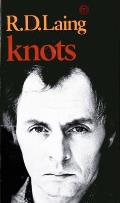
“Knots” by R.D. Laing

December 14, 2014 by Sonia Connolly Leave a Comment

Recommended to me by: David Mitchell

These are the knots of human relationships, stripped down to their raw bones, layered like acrostic puzzles into brief poems. It starts with parent-child relationships, and moves on to (presumably) romantic relationships, indicated by dialogues between Jack and Jill.

There is no untangling in this little book; just knots. I’m not sure these are the sort of knots that are helped by awareness. They may just be pulled tighter. The book came up in the context of complementary schismogenesis, when two people (or groups) get more and more polarized in their roles. That can sometimes be interrupted with awareness and consciously adopting the opposite qualities.

Jill I’m ridiculous
Jack No you are not
Jill I’m ridiculous to feel ridiculous when I’m not.
You must
    be laughing at me
for feeling you are laughing at me
    if you are not laughing at me

Available at bookshop.org.

Filed Under: poetry Tagged With: psychology

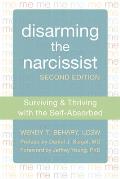
“Disarming the Narcissist” by Wendy T. Behary, LCSW

November 3, 2014 by Sonia Connolly 2 Comments

Subtitle: Surviving and Thriving with the Self-Absorbed

Recommended to me by: Focusing-discussion list

The person recommending this book spoke of narcissistic wounds rather than narcissistic people. I think it’s useful to have compassion, and at the same time it is easy to lose sight of the people hurt by narcissistic behavior.

The author is a therapist who works a lot with narcissists and couples containing a narcissist. She classifies narcissists as spoiled, deprived, dependent, or combinations of these. She describes abusive childhoods which can sometimes lead to narcissistic behavior. She distinguishes between “moderate” narcissists who might reform after a great deal of work, and “perilous” narcissists who are abusive and unreachable.

The reader, assumed to be in a relationship with a narcissist, is encouraged to hold boundaries more strongly, and be more present and aware. On the one hand the author wants to be helpful and give concrete advice, and on the other hand the most helpful advice I’ve found around narcissists is, “You’re already good enough. You’re already trying hard enough. There is nothing wrong with you.”

If the following sounds like new and useful advice, you might want to read this book.

“Putting yourself in the narcissist’s shoes means trying to sense and genuinely feel his inner world. Specific techniques can help you do this. For example, when the narcissist begins to address you sharply, you could superimpose the face of a lonely and unloved little boy over that of the grown man before you.”

Available at bookshop.org.

Filed Under: nonfiction Tagged With: childhood abuse, communication, psychology

“The Art of Empathy” by Karla McLaren

November 3, 2014 by Sonia Connolly Leave a Comment

Subtitle: A Complete Guide to Life’s Most Essential Skill

Recommended to me by: Reading The Language of Emotions

The first part of this book analyzes the six components of empathy, including the ability to sense emotions internally, sense emotions of others, and manage emotions. It continues with a recap of the material in The Language of Emotions, including the recommended skills of burning contracts, conscious complaining, and rejuvenation.

It’s a dense book, and I did not have time to continue before returning it to the library. I’m noting it here because I do want to get back to it eventually, and I think it can be useful for people who are curious about empathy.

Available at bookshop.org.

Filed Under: nonfiction Tagged With: healing, psychology

“The Focusing Student’s and Companion’s Manual” by Barbara McGavin and Ann Weiser Cornell

September 21, 2014 by Sonia Connolly Leave a Comment

Recommended to me by: Jael Emberley

I took Focusing classes I and II from Jael Emberley, and bought both parts of the manual, even though the second part is for classes III and IV. Both parts are written in clear, friendly language, and delightfully illustrated by Mary Ferris. Her expressive line drawings of anthropomorphized hares capture the subtleties and humor of Focusing.

Focusing is paying attention inside to an unfolding felt sense about an issue or situation. Somatic Experiencing includes a lot of Focusing. I read Part Two now to learn more about how to be present with merging and exiling of internal “something”s. Suggestions include

  • Use presence language. “I sense something in me that feels overwhelmed.”
  • Turn toward the Something that has Feelings about the Feeling, and might be saying things like, “I don’t want to be scared!” “It’s bad to be angry.”
  • Notice behaviors that come out of Feelings about Feelings, like rushing the process, forcing a choice, analyzing, diagnosing, deciding, fixing, doubting, arguing, and especially criticizing.
  • For critics, sense for what they’re not wanting.
  • Acknowledge parts that are trying to force other parts to Do It Right.
  • Exiling – something is judged as so bad and dangerous it is removed from awareness. As it comes back, the symbols for it might move from inanimate to animate.
  • Exiles need a lot of time and safety to gain trust and come back into inner relationship.

Recommended for learning about Focusing and being amused and touched by the line drawings.

Part One and Part Two are available from FocusingResources.com

Filed Under: nonfiction Tagged With: communication, Focusing, healing, illustrated, psychology

“The Anatomy of Self” by Takeo Doi, MD

August 29, 2014 by Sonia Connolly Leave a Comment

Subtitle: The Individual vs. Society

Recommended to me by: David Mitchell

David and I were discussing disclosure vs. silence, and he recommended this book. Rather than addressing the issue in a personal way, the book analyzes Japanese language and culture to address it in a more global way. None of it was immediately applicable, although it is validating to read that everyone struggles with the same issues, across cultures.

The first section analyzes Japanese word pairs that are essential to that culture. Omote and ura mean public, open, or spoken vs. private, hidden, or unspoken. They require each other, the way words require silence to surround them.

Tatamae and honne refer to the formal rules and public face of a group, vs. the unspoken rules and private opinions. Again, there must always be both, public harmony and private dissent. Even when someone intends to fully disclose their heart, the essence remains unspoken.

The second section addresses humans in society and analyzes several different stories.

The third section addresses secrets in the context of mental illness, charm, and love.

I was taken aback by the gratuitous subtle (all stories center on men) and overt (“effeminate” as an insult) sexism in a book published in 1986.

At the end of the book, my sense was that most of the message was unspoken, and I would have to study it in depth to understand the underlying points.

Available at biblio.com.

Filed Under: nonfiction Tagged With: communication, psychology

  • « Go to Previous Page
  • Page 1
  • Interim pages omitted …
  • Page 10
  • Page 11
  • Page 12
  • Page 13
  • Page 14
  • Interim pages omitted …
  • Page 22
  • Go to Next Page »

Primary Sidebar

Recent Books

  • “We Belong to the Drum” by Sandra Lamouche and Azby Whitecalf
  • “Atlas of the Heart” by Brene Brown
  • “Life After Cars” by Sarah Goodyear, Doug Gordon, Aaron Naparstek
  • “Tidy First?” by Kent Beck
  • “When You Had Power” and “You Knew the Price” by Susan Kaye Quinn
  • “Taproot” by Keezy Young
  • “The Tower at Stony Wood” by Patricia A McKillip
  • “Hospicing Modernity” by Vanessa Machado de Oliveira
  • “How We Show Up” by Mia Birdsong
  • “The Enchanted Greenhouse” by Sarah Beth Durst

Tags

activism aging anti-racism bodywork business childhood abuse childrens CivicTech communication disability domestic violence fantasy feminism finance Focusing food fun healing health at any size illustrated Judaism leadership lgbt marketing memoir music natural world neurodiversity politics psychology relationship romance science science fiction software spirituality survival story trauma writing young adult

Categories

Archives

Please note: bookshop.org and Amazon links are affiliate links. Copyright © 2026 · Genesis Sample on · WordPress