• Skip to primary navigation
  • Skip to main content
  • Skip to primary sidebar
Curious, Healing

Curious, Healing

Books about healing, business, and fun

  • About Sonia Connolly

trauma

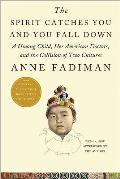
“The Spirit Catches You and You Fall Down” by Anne Fadiman

March 31, 2011 by Sonia Connolly Leave a Comment

Subtitle: A Hmong child, her American doctors, and the collision of two cultures

Recommended to me by: Emily Ross

This is a beautifully written history of the Hmong people from Laos in the 20th century, interwoven with the story of one Hmong family who took refuge in Merced, California. Their daughter Lia Lee had her first epileptic seizure at age 4 months. Both the family and Lia’s doctors struggle with her illness and with the communication barriers between their cultures.

The Lees are frustrated because Lia continues to have seizures, and her prescribed medicines cause side-effects they don’t expect. The doctors are frustrated because the Lees don’t speak English and “aren’t compliant” with the medicine schedule. Also, the Lees have very little money.

Dr. Arthur Kleinman, a psychiatrist and medical anthropologist at Harvard Medical School, developed a set of eight questions to elicit a patient’s “explanatory model.” After getting to know the Lees, Anne Fadiman answers the eight questions from their perspective. The American doctors continue full-tilt in their own medical explanatory model, unable to consider a different model.

  1. What do you call the problem?
    Qaug dab peg. That means the spirit catches you and you fall down.
  2. What do you think has caused the problem?
    Soul loss.
  3. Why do you think it started when it did?
    Lia’s sister Yer slammed the door and Lia’s soul was frightened out of her body.
  4. What do you think the sickness does? How does it work?
    It makes Lia shake and fall down. It works because a spirit called a dab is catching her.
  5. How severe is the sickness? Will it have a short or long course?
    Why are you asking us those questions? If you are a good doctor, you should know the answers yourself.
  6. What kind of treatment do you think the patient should receive? What are the most important results you hope she receives from this treatment?
    You should give Lia medicine to take for a week but no longer. After she is well, she should stop taking the medicine. […]
  7. What are the chief problems the sickness has caused?
    It has made us sad to see Lia hurt, and it has made us angry at Yer.
  8. What do you fear most about the sickness?
    That Lia’s soul will never return.

My only issue with the book is that chapters about Hmong history are inserted at cliff-hanger portions of Lia’s story, causing me to flip ahead and find out what happens to her. The history is worth reading in its own right and doesn’t need manufactured suspense to pull the reader through it.

Recommended to anyone who wants to learn about Hmong culture and history, medical communication at its worst and best, and the story of one much-loved child.

Available at bookshop.org.

Filed Under: nonfiction Tagged With: communication, disability, spirituality, trauma

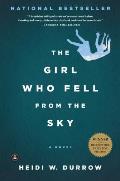
“The Girl Who Fell from the Sky” by Heidi W. Durrow

January 12, 2011 by Sonia Connolly Leave a Comment

I wanted to love and learn from this book, but there were too many jarring inconsistencies with my own knowledge.

As a child, Rachel falls 9 stories and her only lasting injury is to the hearing in one ear. With everything I know about physical and psychological trauma, I wanted at least one sentence explaining that one. Even her hearing disability is only mentioned in passing, as if an editor said, “Hey, whatever happened to that?”

So much trauma and loss, some of it arbitrary and unlikely, and no one in the book grieves. Some of the characters drink, but no one talks about grieving.

I live very near where this book is set, walking distance from Irving Park and its tennis courts, biking distance from Laurelhurst park and its duck pond.

Rachel’s grandma neglects her garden, and the only green is under the bird feeder from fallen seeds. This is Portland. Some plants may die, but any unattended earth is guaranteed to be overrun by verdant weeds.

I wanted to learn about being biracial in Portland in 1982, about racism and anti-racism and one girl’s experience. I wish I trusted the information I received.

Available at bookshop.org.

Filed Under: fiction Tagged With: anti-racism, trauma

“Not Trauma Alone” by Steven N. Gold

December 5, 2010 by Sonia Connolly 3 Comments

book cover
Subtitle: Therapy for Child Abuse Survivors in Family and Social Context

Recommended to me by: Dr. Kathleen Young

This is an academic book, written in precise psychological language, containing enough material for a semester course. Startlingly compassionate insights into complex trauma and prolonged childhood abuse (abbreviated PCA) are built into a treatment model that focuses on the family context rather than individual traumatic events. It is evidence-based, building the case for its treatment model with a thorough survey of existing research. This is a profoundly respectful book, well worth the effort of reading it.

Part 1
The first section distinguishes prolonged childhood abuse from single-incident adult trauma. An abused child in an “ineffective family” is focused on survival and misses out on learning skills for effective living, as well as missing the love needed to thrive.

A quote from a research paper:

“Some of the most painful stories I have heard – from survivors of even the most brutal and unremitting sexual abuse in childhood, as well as people who have had the good luck not to have been subjected to this kind of horror as children – had to do with other ways in which they were not heard, seen, respected, or loved….children who lived in a home that looked OK, with parents who seemed OK and had a life that appeared fine and even privileged, but who never felt special, never felt cherished, never in their whole lives ran in the door knowing someone was waiting there who thought they were the most wonderful precious child in the world.” [Rivera, 1996]

“People who grow up abused, neglected, disregarded and abandoned as children are as adults at extreme risk for continued invalidation and mistreatment by society at large.” This is not only because of individual missing skills, but because of a cascade of consequences making people more vulnerable to revictimization.

“Paradoxically, our society’s emphasis on self-reliance, coupled with the propagation of inequities based on gender, ethnic background, financial status, and other social classifications, converge to restrict the access of already deprived and maltreated individuals to resources that would help them attain effective self-sufficient functioning.”

“The overriding objective of this form of treatment is teaching clients adaptive living skills for moderating distress and enhancing daily functioning.”

Part 2
The second section describes forming a collaborative therapeutic alliance and is full of insights I haven’t seen elsewhere. People who were extensively abused as children expect disdain and abandonment. Many survivors interpret questions as commands, and comply with the therapist’s implicit expectations of them to avoid conflict. There is both intense longing for connection and extreme guardedness born of painful experience.

“What these clients need is to be treated not as helpless children, but as adults who by surviving extraordinarily adverse circumstances, have already demonstrated the potential to endure the stresses and challenges of daily living. […] Recognition, acceptance, and validation of survivors’ feelings, experiences, and longings is a helpful and essential aspect of treatment.”

“[R]emember that actions speak louder than words, and that subtle, guileless, spontaneous responses that implicitly communicate respect and regard for the personhood of the client speak the loudest of all.”

“[E]xploration of experience of child abuse in PCA survivors is most likely to be productive when it occurs under the initiation, direction, and guidance of the client. This material is highly charged, and strongly associated with a sense of helplessness and being controlled. It is usually best to leave it up to the client to determine whether and when to acknowledge and address it.”

The distinction is made between helping someone recover from a traumatic event and reconnect with existing skills and resources, and helping someone recover from a traumatic childhood where those skills and resources were never acquired, and need to be learned as an adult.

Part 3
The third part gives prioritized goals for the treatment process and strategies for how to achieve them. The collaborative therapeutic alliance is still the highest priority.

The first goal is the ability to manage and modulate distress. Anxiety-reduction methods are introduced, and a practice schedule is set up so that the client can practice the skills when they’re not immediately necessary. One technique is inviting the client to remember or create a safe place, and return there in imagination to reduce stress. Activity routines to interrupt depression are also proposed.

Dissociation is also addressed. Disconnection from the present moment is distinguished from internal fragmentation.

This goal is focused on adaptive functioning, rather than on exploring or reducing dissociation for its own sake. Grounding techniques are covered to anchor the client in the here-and-now.

While it is known that extreme trauma leads to dissociation, it may be that lack of attunement with family members may predispose a child to dissociation. “In this type of interpersonal context, where the attributions and appraisals of a child made by the people closest to her or him vary wildly, more or less independently of the behavior displayed, it is easy to imagine that the experience and perception of self would be similarly confused, mercurial, and disjointed.”

“[T]his approach encourages the practitioner to recognize the importance of being able to maintain a cohesive perception of the survivor despite the client’s own subjective experience of being fractured.” For the client, internal cooperation rather than integration is the goal.

The next goal is learning to exercise critical thinking and judgment. The capricious abusive environment may not have taught reasoning skills, and the survivor learns negative and detrimental beliefs, supported by adverse experiences.

“Familial relationships characterized by neglect and emotional detachment, domination, and criticism, and erratic and unpredictable behavior powerfully instill convictions in the survivor that she or he is unworthy and inept, and that others are malicious and unreliable.”

“Just as the unassertiveness and emotional dependency engendered by the family context renders a child more susceptible to abuse, the exacerbation of these characteristics by explicit abuse magnifies survivors’ risk of being abandoned, taken advantage of, and re-victimized.”

“The survivor ends up being blamed for what is actually the failure of the family and society to adequately equip her or him with the resources required for effective functioning as an adult. It is as if someone has tied the laces of child’s two shoes together, and then, when she or he inevitably trips and falls, berates her or him for being clumsy.”

It’s a good thing I don’t highlight books, or this one would glow yellow on every page. I wish every practitioner working with traumatized people would read and absorb this book. I would love to take a seminar from Steven Gold!

Available at bookshop.org

Filed Under: nonfiction Tagged With: childhood abuse, healing, psychology, trauma

“Finding Life Beyond Trauma” by Victoria Follette, Ph.D. and Jacqueline Pistorello, Ph.D.

April 24, 2010 by Sonia Connolly 3 Comments

Subtitle: Using Acceptance and Commitment Therapy to Heal from Post-Traumatic Stress and Trauma-Related Problems

Acceptance and Commitment Therapy (abbreviated ACT, and pronounced as a whole word) invites clients to observe their own behaviors and let go of strategies which might be keeping them from living their most valued life. It includes a strong emphasis on mindfulness and compassion.

ACT assumes that trying to suppress or escape pain can generate more suffering. Paradoxically, facing pain and accepting it can be the best strategy to ease the pain.

This substantial workbook offers theory, illustrations, stories, metaphors, and exercises to help the reader observe existing strategies around pain, establish values, and choose strategies that move toward those values.

The book assumes that the reader is highly avoidant. Since we all use avoidance in overt or covert ways, it can be helpful for many of us.

My favorite metaphor from the book: You’re blindfolded, and one day you fall in a deep hole. All you have is a shovel, so you start digging. You dig to the right, to the left, and even under your feet, but you’re still in the (enlarged) hole. Eventually, even if someone brought you a ladder, you would think it was a different sort of shovel. Suggestion: put down the shovel and just stop digging.

Putting down the shovel looks different for each person. We all have our favorite strategies that work up to a point, but then we keep depending on them long after they’re just making things worse. The shovel contains all our current working assumptions. Putting down the shovel is a leap of faith into new assumptions.

One of my shovels is wondering what I’m doing wrong in any given situation. Before I put it down, it feels like a radical, risky act. After I put it down, it’s a huge relief.

Another useful metaphor: willingness is like jumping. We can say we’re jumping, we can think about jumping, we can try to jump, but either we’re jumping or we’re not. We can’t half-jump.

Willingness to change is similar. It is important to check whether we’re actually willing to make a change, and choose changes that are small enough that we are willing to risk them.

The book describes unwillingness in willingness’s clothing. One of many examples: “After experiencing a loss, I tried to accept it so that I could stop feeling so sad.”

There are many more useful metaphors and exercises in this book. I highly recommend it for anyone healing from trauma, or helping others heal.

Available at bookshop.org.

Filed Under: nonfiction Tagged With: healing, illustrated, psychology, trauma

“We Are All in Shock” by Stephanie Mines, Ph.D.

April 1, 2010 by Sonia Connolly Leave a Comment

Subtitle: How Overwhelming Experience Shatter You… And What You Can Do About It

Recommended to me by: Larisa Koehn

In this book, Stephanie Mines introduces and advocates for her approach to healing named Jin Shin Tara. It is derived from Jin Shin Jyutso, a gentle form of acupressure.

She defines shock as severe trauma, and then claims that from conception onward, we are all exposed to shocks (severe traumas). She separates sympathetic shock (stuck in activity) from parasympathetic shock (stuck in passivity).

Anecdotes from her own life and from clients demonstrate dramatic, immediate results from Jin Shin Tara.

Detailed instructions are given for applying Jin Shin Tara to oneself and others. There are correspondences between points on the body and emotional states, chakras, and seasons of the year. Specific points are also recommended for each month of gestation during a pregnancy.

Stephanie Mines’ mission is to increase awareness of the vulnerable time before, during, and just after birth, and minimize shock (severe trauma) at those times in order to reduce the amount of violence in the world.

There is a lot of useful information in this book, and I enthusiastically support the mission of reducing shock and trauma in the world.

At the same time, I am wary of simplified approaches to complex experiences. Jin Shin Tara is presented as being universally applicable with guaranteed results. I prefer a more balanced, nuanced approach. I think it is useful to differentiate between severe trauma and the more daily bumps and shocks we all experience.

Read more about Stephanie Mines’ approach to healing at her website.

Available at bookshop.org.

Filed Under: nonfiction Tagged With: bodywork, healing, illustrated, memoir, trauma

“Staying Fat for Sarah Byrnes” by Chris Crutcher

January 7, 2010 by Sonia Connolly Leave a Comment

Recommended to me by: Tess Alfonsin

A hard-edged book for teens that takes on multiple tough issues:

  • Children’s cruelty to each other for being fat or disfigured
  • What it’s like to grow up fat or disfigured
  • Surviving parental abuse and abandonment
  • Abortion
  • Hypocrisy
  • Religious intolerance by some Christians

While I applaud the author’s courage in addressing all these important issues, I think the book would have been stronger with at least one fewer sub-plot and more attention to characterization. The major teen characters showed some complexity, but the adults were either all-good or all-bad.

I was caught up in the plot and characters until the book suddenly turned into a thriller with a violent climax. I felt tricked into reading something far more violent than I expected or enjoyed.

I’m glad teens are reading and thinking about all the issues in this book.  I wish the issues weren’t packaged with a violent, all-good/all-bad wrapper.

Available at bookshop.org.

Filed Under: fiction Tagged With: childhood abuse, domestic violence, survival story, trauma, young adult

  • « Go to Previous Page
  • Page 1
  • Interim pages omitted …
  • Page 8
  • Page 9
  • Page 10
  • Page 11
  • Go to Next Page »

Primary Sidebar

Recent Books

  • “We Belong to the Drum” by Sandra Lamouche and Azby Whitecalf
  • “Atlas of the Heart” by Brene Brown
  • “Life After Cars” by Sarah Goodyear, Doug Gordon, Aaron Naparstek
  • “Tidy First?” by Kent Beck
  • “When You Had Power” and “You Knew the Price” by Susan Kaye Quinn
  • “Taproot” by Keezy Young
  • “The Tower at Stony Wood” by Patricia A McKillip
  • “Hospicing Modernity” by Vanessa Machado de Oliveira
  • “How We Show Up” by Mia Birdsong
  • “The Enchanted Greenhouse” by Sarah Beth Durst

Tags

activism aging anti-racism bodywork business childhood abuse childrens CivicTech communication disability domestic violence fantasy feminism finance Focusing food fun healing health at any size illustrated Judaism leadership lgbt marketing memoir music natural world neurodiversity politics psychology relationship romance science science fiction software spirituality survival story trauma writing young adult

Categories

Archives

Please note: bookshop.org and Amazon links are affiliate links. Copyright © 2026 · Genesis Sample on · WordPress