• Skip to primary navigation
  • Skip to main content
  • Skip to primary sidebar
Curious, Healing

Curious, Healing

Books about healing, business, and fun

  • About Sonia Connolly

trauma

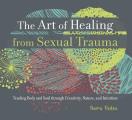
“The Art of Healing from Sexual Trauma” by Naomi Ardea

September 21, 2016 by Sonia Connolly 1 Comment

book cover

Subtitle: Tending Body and Soul through Creativity, Nature, and Intuition

Recommended to me by: Robyn Posin

As I started reading, I was relieved to discover that Naomi Ardea has thoughtfully structured her book so that it is inviting rather than overwhelming. Stories about her healing process are interspersed with her abstract paintings, peaceful nature photographs, and practical healing tools. The book feels spacious, gentle, respectful.

She calls out minimizing language around abuse, strongly naming its destructive effects. She affirms our right to feel all our emotions. She details how we get caught up in self-blame, and offers tools to lift it away. We get glimpses of the hard parts of her process, including healing her sexuality, and the tools she uses to manage difficult times, including time with forests and flowing water. Her healing is body-centered, naming sensations and being with them.

I felt comforted by the parts of her process that are similar to mine – the murky confusion that only slowly yields to clear narratives, the difficulties in finding compassionate practitioners, the sense of having to regrow boundaries from the ground up. I felt curious about the differences – her use of essential oils, and EMDR, and expressive finger painting.

I highly recommend this book for survivors and anyone who works with survivors. It bears witness to the possibility of healing while naming the daily difficult work it requires, and shares practical tools to smooth the reader’s path.

Book excerpt showing the spacious layout and full color photos and paintings.

Available direct from Naomi Ardea.

Filed Under: nonfiction Tagged With: healing, illustrated, memoir, trauma

“The Polyvagal Theory” by Stephen W. Porges

June 21, 2016 by Sonia Connolly 1 Comment

book cover

Subtitle: Neurophysiological Foundations of Emotions, Attachment, Communication, and Self-Regulation

Recommended to me by: Joshua Sylvae

This book is a chronological collection of Stephen Porges’ scientific research papers about vagal nerves and their functions, written in technical, medical language. Later papers summarize earlier research and even define some terms, so the book gets easier to read as it goes along.

The vagal nerve, also known as the tenth cranial nerve, originates in the brainstem and branches to the lungs, heart, digestive system, and face, independent of the spinal cord. It makes up most of the parasympathetic nervous system. It has both efferent (motor, from the brain to the periphery) neurons and afferent (sensory, from the periphery to the brain) neurons, creating a system that tends to stay in a given operating range (homeostasis) via negative feedback.

It is bilateral, one on each side of the body, and the two sides have slightly different functions, since we are not internally symmetrical, with the heart tilted to the left and the stomach on the left, etc.

As well as being bilateral, there are also two separate systems, thus “poly vagal theory”, many vagal nerves: an ancient system that all vertebrates have, and an additional newer system that mammals have. When the newer system is active, it suppresses the older system.

The ancient system is dorsal (originating toward the back of the brainstem) and unmyelinated (not sheathed).

Reptiles have this ancient vagal system, and a sympathetic system. They have a low resting metabolic rate. Under stress, their sympathetic system speeds up heart rate and breathing. If that doesn’t fix the problem, the dorsal vagal system puts them into freeze, dropping heart rate (bradycardia) and breathing rate (apnea). This works well to convince predators they are dead, or extend the time they can stay underwater.

The newer vagal system is ventral (originating toward the front of the brainstem) and myelinated (sheathed). It controls facial expressions, vocalizations (speech, singing, and other sounds), and coordinates breathing with vocalizing and swallowing. It tightens the muscles of the middle ear to filter out low frequency sounds that might drown out speech frequencies.

Mammals have a high resting metabolic rate, and a high requirement for a consistent oxygen supply. The newer vagal system is a “brake” on the sympathetic nervous system, gently reducing heart rate and breathing rate and allowing a focus on social signals. Under stress, the brake is removed, giving control to the sympathetic nervous system and instantaneously raising heart and breathing rate. If that does not take care of the problem, control goes to the ancient vagal system, sharply dropping heart rate (bradycardia) and breathing rate (apnea), which can be fatal for mammals.

The vagal brake can be engaged and disengaged at the speed of thought, unlike the sympathetic nervous system which works via adrenal hormones and other circulating chemicals that take a while to clear out of the body.

When the vagal system is busy telling the diaphragm to breathe in, the heart gets less of a “brake” signal and speeds up slightly. The brake is restored on the out-breath, slowing the heart slightly. This is RSA – Respiratory Sinus Arrhythmia. It can be used as a non-invasive indicator of vagal tone. The greater the difference in heart rate while breathing in versus breathing out, the more vagal tone there is.

The ancient vagal system has been partially recruited for pro-social immobility – accepting an embrace, for example.

The ancient vagal system also explains the immobility many people experience during rape. Understanding the neurological basis helps to reduce shame about not fighting back.

Available at bookshop.org.

Filed Under: nonfiction Tagged With: trauma

“Understanding and Treating Chronic Shame” by Patricia A. DeYoung

May 23, 2016 by Sonia Connolly 1 Comment

book cover

Subtitle: A Relational/Neurobiological Approach

Recommended to me by: Ani Rose Whaleswan

Patricia DeYoung says that although shame feels like a one-person problem, believing “There is something terribly wrong with me,” she defines it as a relational problem: Shame is an experience of our felt sense of self disintegrating in relation to a dysregulating other. Expecting attunement or regulation, we experience fragmentation instead, and immediately push that intolerable experience out of consciousness.

Shame is healed by right-brain connection, not left-brain reasoning and affirmations.

The book is filled with both lively client stories and technical psychological theory. It’s validating to know that researchers are beginning to understand relational trauma at a neurological level. It’s even better to know that relational therapists are holding this information about shame compassionately in mind while creating a healing space for their clients.

When our clients are able to feel their shame, letting the light and air get at it, we must stay honestly present with them. We have to encourage them to feel this most difficult emotion when what we want to say is: No, you are not ugly or worthless. No, I have never experienced you as selfish or stupid. Of course we would like to convince them that they are worthy, lovable persons. Instead, we must help them push through the language of ugly, stupid and worthless to the even more painful feelings of deep shame, feelings of not mattering at all to anyone, feelings of needing someone and finding no one, and feelings of disintegration and annihilation.

(Italics in original)

There is procedural advice for therapists: how to create a non-shaming environment, how to co-create narratives that include right-brain processing, how to discuss shame directly. Oddly, for a book about right-brain healing, touch is not mentioned anywhere.

Unlike many books that skip over the disorganized attachment style, this book addresses it and its “fearful chaos” directly.

The book also discusses mutual enactment, when client and therapist trigger each other’s deep shame, and yet keep working together with underlying good intentions. The mutually stuck pattern shifts not with dramatic insights, but incrementally, yielding little by little to moments of seeing each other more as whole people rather than just threats.

Highly recommended for therapists and others willing to wade through sections of psychological theory.

Available at bookshop.org.

Filed Under: nonfiction Tagged With: psychology, trauma

“The Body Keeps the Score” by Bessel van der Kolk

March 7, 2016 by Sonia Connolly Leave a Comment

book cover

Subtitle: Brain, Mind, and Body in the Healing of Trauma

This book is intense to read. I dipped in and out, wanting to read it, but not wanting to get overwhelmed with the dramatic abuse stories that are included. There is a lot of great research on trauma here, lucidly and understandably presented. I was happy to notice that I already knew about most of it, partly because I took a two day seminar with Bessel van der Kolk a few years ago.

The one treatment that was new to me was Albert Pesso’s and Diane Boyden-Pesso’s psychomotor therapy with “structures”, where one person, the protagonist, places other people from the group in a 3-D representation of their internal landscape. It’s reparative, including ideal parents as well as parents as they actually were. The therapist makes witnessing statements and carefully tracks the physical and emotional reactions of the protagonist, helping them feel safe and seen. Pesso Boyden System Psychomotor Therapy

This book talks about the most extreme effects of trauma. Adults who can’t feel their bodies at all. Kids who act out and get treatment rather than quietly going to school. It also talks about intensive interventions by skilled practitioners. It feels both daunting and tantalizing.

At the same time, it’s reassuring in a sense. If I don’t have all those dramatic symptoms, maybe I’m doing something right all this time.

I had Opinions about some of van der Kolk’s statements. His organization focuses on treating traumatized children, because that gives them the most leverage. On the one hand, yes, that makes sense. On the other hand, way to tell a whole lot of traumatized adults that we don’t matter – again. My sense is that both are equally important, even from a leverage point of view. Those healing children need healing adults around them.

He also thinks research is more important than “deep, subjective resonance.” Yes, research is important, and I’m glad he’s doing it. At the same time, my body says deep subjective resonance is more important for healing.

Recommended as an overview of current scientific thinking on trauma mechanisms and healing.

Available at bookshop.org.

Filed Under: nonfiction Tagged With: psychology, trauma

“Crash Course” by Diane Poole Heller, PhD

February 6, 2016 by Sonia Connolly 1 Comment

book cover

Subtitle: A self-healing guide to auto accident trauma & recovery

Recommended to me by: watching Diane Poole Heller’s teaching videos

This is a practical, easy to follow introduction to Somatic Experiencing as it applies to car crashes, with lots of vignettes and gentle exercises. It focuses on bringing in resources and supporting the body to resolve and release trauma. The tone is reassuring and friendly, and normalizes the symptoms and reactions that can result from a car crash.

For example, when did you first realize you were safe? What help did you receive, or what help do you want to bring in now? Even though we can’t change the original event, imagining different scenarios allows the body to release and complete reactions.

Highly recommended.

Available at bookshop.org.

Filed Under: nonfiction Tagged With: healing, psychology, trauma

“The Emotionally Absent Mother” by Jasmin Lee Cori, MS, LPC

November 17, 2015 by Sonia Connolly 2 Comments

book cover

Subtitle: a guide to self-healing and getting the love you missed

Recommended to me by: a client

This is a gently enlightening book. It talks about all the different roles a Good Mother plays (“yeah, yeah, I know”) and all the holes that result when those roles are missing (“yeah, yeah, I know”) … “Wait, those holes I’ve been managing all this time?!”

The ten facets of a Good Mother: source, place of attachment, first responder, modulator, nurturer, cheerleader, mentor, protector, home base.

The holes are left behind from missing one or more of these messages: I’m glad you’re here, I see you, you’re special to me, I respect you, I love you, your needs are important to me/I’m here for you, I’ll keep you safe, you can rest in me, I enjoy you/you brighten my heart.

The book has a clear, accessible discussion of attachment styles and attachment wounds. It was odd to see Disorganized Attachment passed over, possibly because this book is written for children of neglectful rather than abusive mothers.

Recommended healing techniques include psychotherapy, archetypes, romantic relationships, and inner child work. One suggested exercise is to trade safe, nonsexual holding with a friend. Just hold the other person for a set time, perhaps as long as 20 minutes, and then swap roles.

There is carefully inclusive language around “mothers and other caretakers (of any gender)”, although it is also clear that this is primarily about mothers.

I’ve recommended this book to a lot of clients in the last couple of weeks! I think it’s an enlightening read for anyone. Even if you had a great mother, odds are some of the people close to you didn’t, and this will help make sense of their experience.

Available at bookshop.org.

Filed Under: nonfiction Tagged With: childhood abuse, healing, psychology, trauma

  • « Go to Previous Page
  • Page 1
  • Interim pages omitted …
  • Page 4
  • Page 5
  • Page 6
  • Page 7
  • Page 8
  • Interim pages omitted …
  • Page 11
  • Go to Next Page »

Primary Sidebar

Recent Books

  • “We Belong to the Drum” by Sandra Lamouche and Azby Whitecalf
  • “Atlas of the Heart” by Brene Brown
  • “Life After Cars” by Sarah Goodyear, Doug Gordon, Aaron Naparstek
  • “Tidy First?” by Kent Beck
  • “When You Had Power” and “You Knew the Price” by Susan Kaye Quinn
  • “Taproot” by Keezy Young
  • “The Tower at Stony Wood” by Patricia A McKillip
  • “Hospicing Modernity” by Vanessa Machado de Oliveira
  • “How We Show Up” by Mia Birdsong
  • “The Enchanted Greenhouse” by Sarah Beth Durst

Tags

activism aging anti-racism bodywork business childhood abuse childrens CivicTech communication disability domestic violence fantasy feminism finance Focusing food fun healing health at any size illustrated Judaism leadership lgbt marketing memoir music natural world neurodiversity politics psychology relationship romance science science fiction software spirituality survival story trauma writing young adult

Categories

Archives

Please note: bookshop.org and Amazon links are affiliate links. Copyright © 2026 · Genesis Sample on · WordPress