• Skip to primary navigation
  • Skip to main content
  • Skip to primary sidebar
Curious, Healing

Curious, Healing

Books about healing, business, and fun

  • About Sonia Connolly

trauma

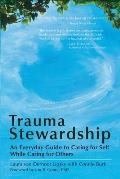
“Trauma Stewardship” by Laura van Dernoot Lipsky with Connie Burk

November 4, 2015 by Sonia Connolly 1 Comment

book cover

Subtitle: An Everyday Guide to Caring for Self While Caring for Others

This book describes and offers solutions for the secondary trauma of working to address trauma and injustice. Laura van Dernoot Lipsky shares her own experiences as a trauma social worker as well as a wide range of detailed profiles of other helping professionals. The writing is empathic, engaging, and perceptive.

A generous sprinkling of cartoons reinforces her point that humor is a survival technique when working with grim material.

The last section contains a lot of specific, useful suggestions for self-inquiry and self-care for trauma healing professionals. It felt validating to notice that over the years I have built a lot of the suggestions into my life, with healthy food, enough sleep, meditation, lots of exercise, singing, dancing, and participation in community. Also, setting limits around the number of hours I work, and holding fast to the belief that my own healing and helping one client at a time is enough in the face of the world’s vast need. Maybe I can trust my body and my instincts to find sustainable habits in this profession.

I did not find the last section’s framing of five directions to be helpful or necessary. Since the directions were matched with the five elements in a different way than I’m used to, it was actively distracting. Fortunately, the framing is simply used to group the very practical, solid advice in each section, rather than devolving into new agey spirituality.

From the conclusion:

By now we know that if we want to decrease the suffering in our world, we will need to learn a behavior that is fundamentally different from the ones that have caused such pain and destruction. We must open ourselves to the suffering that comes with knowing that there are species we can’t bring back from extinction, children we can’t free from their abusive homes, climate changes we can’t reverse, and wounded veterans we can’t immediately heal. We must also open ourselves to the hope that comes with understanding the one thing we can do. We can always be present for our lives, the lives of all other beings, and the life of the planet. Being present is a radical act. It allows us to soften the impact of trauma, interrupt the forces of oppression, and set the stage for healing and transformation. Best of all, our quality of presence is something we can cultivate, moment by moment. It permits us to greet what arises in our lives with our most enlightened selves, thereby allowing us to have the best chance of repairing the world.

Highly recommended for helping professionals and those considering going into the field. I feel very lucky to be self-employed, after reading about the working conditions in a lot of helping agencies!

Available at bookshop.org.

Filed Under: nonfiction Tagged With: healing, illustrated, memoir, trauma

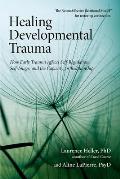
“Healing Developmental Trauma” by Laurence Heller, PhD and Aline LaPierre, PsyD

March 17, 2015 by Sonia Connolly Leave a Comment

book cover

Subtitle: How Early Trauma Affects Self-Regulation, Self-Image, and the Capacity for Relationship

The first section of this book is focused on analysis and categorization. It describes five adaptive survival styles in response to developmental ruptures in connection, attunement, trust, autonomy, and love and sexuality. I found this part dry and off-putting, and skimmed through it.

The second section narrows the focus to the connection adaptive style in response to very early trauma, abuse, and neglect. It describes physiological responses to trauma and shares several transcripts of therapy sessions. This section was much more engaging and useful. The therapeutic style is named NeuroAffective Relational Model, abbreviated NARM throughout.

Therapists are recommended to be non-judgmental, present, authentic, gentle, and attuned with the client. Careful tracking of the client’s responses allows alternation between expansion and contraction, with emphasis on positive expansion. Anger and aggression are recognized as natural, necessary responses to trauma. Unresolved defensive-orienting responses to trauma linger in tension around the eyes and narrowed field of vision, so working with eyes and gaze is useful. Therapeutic touch is a resource to repair early neglect.

Recommended as an introduction to the differences between shock trauma and developmental trauma, with some body-centered and client-centered techniques to help.

Available at bookshop.org.

Filed Under: nonfiction Tagged With: childhood abuse, healing, psychology, trauma

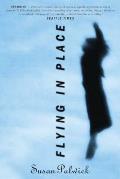
“Flying in Place” by Susan Palwick

February 17, 2015 by Sonia Connolly 1 Comment

book cover

A twelve-year-old girl is being abused by her father, and is ultimately rescued by their next door neighbors. Her older sister had died, and at the end of the book, the neighbor says, “No one can help her. That’s what being dead means.”

Susan Palwick’s blog title is Rickety Contrivances of Doing Good. That does describe this book’s satisfying rescue, and at the same time, the book realistically portrays gaslighting and abuse and the necessary mechanisms for survival.

I’ve had the book long enough that I don’t remember how I first came across it. I went back to it looking for that quote. Highly recommended, if you don’t mind crying at the end.

Available at bookshop.org.

Filed Under: fiction Tagged With: childhood abuse, survival story, trauma

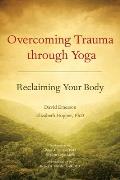
“Overcoming Trauma Through Yoga” by David Emerson and Elizabeth Hopper

February 12, 2015 by Sonia Connolly 1 Comment

Subtitle: Reclaiming Your Body

Recommended to me by: a client

This book is divided into three parts: a general introduction to the history of trauma treatment and PTSD, a suggested yoga practice for traumatized people, illustrated with photographs, and suggestions for offering trauma-sensitive yoga for clinicians and yoga teachers.

Throughout the book, it is clear that these people get it. They emphasize choice, empowerment, and reconnecting with the body. From Stephen Cope’s foreword: “Sometimes we encounter experiences that so violate our sense of safety, order, predictability, and right, that we feel utterly overwhelmed […]. Unable to bear reality. We have come to call these shattering experiences trauma.”

Trauma involves being helpless to avoid pain. In trauma-sensitive yoga, students are repeatedly encouraged to change postures if they are painful, and instructions emphasize choice and control over their own bodies. Students are encouraged to attend to their own experience, rather than trying to get postures “right”.

There were two instructions in the book that seemed less well-attuned to traumatized yoga students. One is to “lift the crown of the head,” without explaining how to find a balanced upright posture for the head. The other is to “hug in and around the lower belly” to activate core muscles. Many traumatized people chronically clench their bellies already.

Trauma-sensitive yoga classes move slowly to give students time to connect with their physical experience. “Physical assists” (touching students) is done rarely, with permission, and with careful attention to possible triggering effects. Thought is given to the props available – many trauma survivors find straps triggering because of having been restrained, so the book suggests not having straps in the room.

“In teaching trauma-sensitive yoga, the job of the yoga teacher is not to create artificial challenges—many of our students have already challenged themselves more than we may ever know just by showing up. The work of the teacher is to cultivate enough safety so that students can challenge themselves as they are ready, and in ways they feel safe.”

Highly recommended for its compassionate approach to anyone dealing with trauma or traumatized people.

Available at bookshop.org.

Filed Under: nonfiction Tagged With: bodywork, healing, illustrated, psychology, trauma

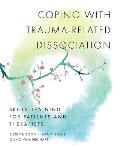
“Coping with Trauma-Related Dissociation” by Suzette Boon, Kathy Steele, Onno van der Hart

July 6, 2013 by Sonia Connolly Leave a Comment

Subtitle: Skills training for patients and therapists

Recommended to me by: A client

This is a useful book packed full of detailed, compassionate information on dissociation. Since it is a group training manual, it is divided into short chapters meant for individual class sessions.

The authors often note that each person’s experience of dissociation and healing will be different, and techniques work for different people at different times. At the same time, there is a whiff of condescension in the training, with over-simplified explanations and implications that if you just work hard enough everything will get better. For example, improve your social skills and you won’t be isolated any more.

I’ve noticed that a feeling of loneliness can be a flashback to earlier isolation. This is the first book where I’ve seen that mentioned. The main suggested tools for healing are empathic observation, finding common ground among dissociative parts, taking small steps, and creating internal safety. There are several creative visualization exercises, for example visiting a store that is perfectly comfortable for you and where you can pick up anything you need to feel safer, for free.

I recommend this book for people who experience and/or work with dissociation. At more than 400 pages, it’s a good book to read gradually or dip into for ideas.

Available at bookshop.org.

Filed Under: nonfiction Tagged With: disability, healing, psychology, trauma

“The Trauma Spectrum” by Robert Scaer

June 23, 2013 by Sonia Connolly Leave a Comment

Subtitle: Hidden Wounds and Human Resiliency

This book is a frustrating mix of interesting theories, solid information, and bigoted rants.

The author leads with some encouraging words about intersectionality and noticing how society’s defaults harm some people, but then devolves into “women returning to work after childbirth causes harm because babies need maternal care” and “fast-food advertising causes harm because traumatized morbidly obese people get triggered into eating even more.”

I am pro infants receiving attuned care and against subliminal advertising for any product, but his conclusions on these topics lack validity as well as compassion. Infants can receive attuned care from many people, not just the mother. Fat people don’t necessarily eat more than thin people.

There is also a lot of matter-of-fact reporting on cruel animal experiments. Perhaps some animal experiments are necessary, but we can at least regret the harm they do.

On the interesting side, keeping me from just discarding the book, he notices that his clients with whiplash show trauma symptoms and are helped by Somatic Experiencing and other trauma-resolution therapies. That sounds obvious when I type it out, but we think of whiplash as a soft-tissue injury (muscles and tendons) rather than a nervous system injury. He notes that severe whiplash in response to relatively minor motor vehicle crashes correlates with a past history of trauma.

He also talks about nervous system kindling, or neurosensitization, where the sympathetic and parasympathetic nervous systems are out of balance and internal triggering keeps them out of balance. This explains, among other things, Multiple Chemical Sensitivity.

He speculates that fibromyalgia correlates with preverbal trauma, and disregulation of the nervous system.

He talks a lot about the structures in the brain that process trauma, and about the sense of being frozen in time that accompanies PTSD. Approach/avoidance dilemmas (double binds) are an obvious source of trauma. He talks about conditioning and trauma-based learning, and the need to extinguish the connections that get created during trauma to be able to come back into the present.

Robert Scaer has worked with many patients in his career and made careful observations along the way. Unfortunately he mixes them in with his personal biases in this book, so it reads more like someone’s personal blog than a trustworthy scholarly work.

Available at bookshop.org.

Filed Under: nonfiction Tagged With: childhood abuse, disability, healing, psychology, trauma

  • « Go to Previous Page
  • Page 1
  • Interim pages omitted …
  • Page 5
  • Page 6
  • Page 7
  • Page 8
  • Page 9
  • Interim pages omitted …
  • Page 11
  • Go to Next Page »

Primary Sidebar

Recent Books

  • “We Belong to the Drum” by Sandra Lamouche and Azby Whitecalf
  • “Atlas of the Heart” by Brene Brown
  • “Life After Cars” by Sarah Goodyear, Doug Gordon, Aaron Naparstek
  • “Tidy First?” by Kent Beck
  • “When You Had Power” and “You Knew the Price” by Susan Kaye Quinn
  • “Taproot” by Keezy Young
  • “The Tower at Stony Wood” by Patricia A McKillip
  • “Hospicing Modernity” by Vanessa Machado de Oliveira
  • “How We Show Up” by Mia Birdsong
  • “The Enchanted Greenhouse” by Sarah Beth Durst

Tags

activism aging anti-racism bodywork business childhood abuse childrens CivicTech communication disability domestic violence fantasy feminism finance Focusing food fun healing health at any size illustrated Judaism leadership lgbt marketing memoir music natural world neurodiversity politics psychology relationship romance science science fiction software spirituality survival story trauma writing young adult

Categories

Archives

Please note: bookshop.org and Amazon links are affiliate links. Copyright © 2026 · Genesis Sample on · WordPress