• Skip to primary navigation
  • Skip to main content
  • Skip to primary sidebar
Curious, Healing

Curious, Healing

Books about healing, business, and fun

  • About Sonia Connolly

trauma

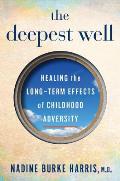
“The Deepest Well” by Nadine Burke Harris, MD

July 10, 2018 by Sonia Connolly Leave a Comment

book cover

Subtitle: Healing the Long-Term Effects of Childhood Adversity

Recommended to me by: listening to Nadine Burke Harris’s TED talk

This is a skillful blend of memoir and scientific information about the effects of trauma, presented for the layperson. Nadine Burke Harris shares how as a newly licensed doctor she founded a pediatric clinic in Bayview, the poorest section of San Francisco with the most at-risk patients, and how that clinic came to focus on trauma as the underlying cause of a lot of medical issues, especially for children. Later she founded the Center for Youth Wellness, also in San Francisco.

She does not dwell on the effects of being a Black woman, but she does not skip over them either. She notes the benefits of networking with other women and offering each other support. While marginalization and racism contribute to people’s load of trauma, trauma is not only a “poor, Black issue.” Privilege does not exempt people from trauma or its long-term effects.

There is a strong correlation between Adverse Childhood Experiences (ACEs) and health issues caused by the body’s ongoing stress response. The stress response can be buffered by strong relationships with caring adults.

Nadine Burke Harris developed a screening tool that asks a parent about the number of a child’s ACEs, but does not ask them to disclose the stories involved. She advocates for this screening tool to be used everywhere, just as infants are now universally screened for hypothyroid and jaundice.

The treatments for a body dysregulated by trauma are sleep, mental health, healthy relationships, exercise, nutrition, and meditation. Schools that help children regulate their nervous systems rather than punishing them for “acting out” enjoy both a more peaceful atmosphere and higher success rates by every measure.

(While screening is catching on in medical offices, I hear from nurses that treatment is catching on less quickly, leaving them in the frustrating position of knowing that people’s issues are caused by trauma, but not having the time and resources to help them.)

Highly recommended both for the information about the effects on trauma, and the memoir of a groundbreaking scientist and doctor who is radically improving how we care for both children and adults affected by trauma.
Available at bookshop.org.

Filed Under: nonfiction Tagged With: activism, anti-racism, childhood abuse, feminism, healing, memoir, psychology, survival story, trauma

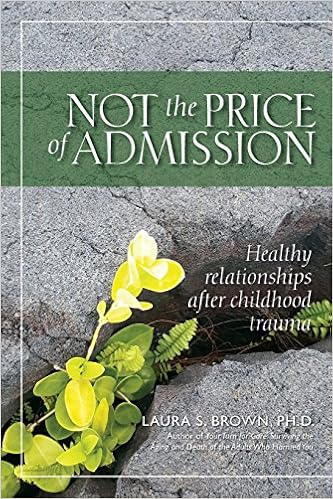
“Not the Price of Admission” by Laura S. Brown PhD

May 8, 2018 by Sonia Connolly Leave a Comment

book cover

Subtitle: Healthy relationships after childhood trauma

Recommended to me by: a client

Relationships are hard for everyone. For people with less-than-adequate caregivers early in life, the difficulty feels personal, a cause for shame as well as sadness. Laura Brown, a feminist psychologist, kindly lays out the likely consequences of early attachment wounds and repeatedly advocates for self-compassion.

Feminist therapy looks at people’s experiences in the context of marginalized identities that often lead to disempowerment and maltreatment, rather than saying that all the problems are inside the individual. The first example in the book is about a same-sex couple. And they’re not the only ones. The book fairly bursts with same-sex couples, as well as emotionally important friendships and work relationships, not just heterosexual romantic partnerships, in a matter-of-fact, “you are all welcome here” way.

I also felt welcomed by seeing quotes from Jewish scholars and traditions. She translates Yom Kippur as “Day of Return,” day of mending connections. And, even though I never watched it, quotes from “Deep Space Nine,” a science-fiction TV show felt welcoming as well.

There is a lot of great material densely packed into this book. It does not skip disorganized attachment like many relationship books do. It shifts the focus to disorganizing caregivers, since the disorganization is not inherent to the child.

Frozen-in-time child states are called EPs, short for Emotional Parts. The book also emphasizes that emotions are positive and useful, so that didn’t seem like the most helpful terminology. EPs are in contrast to ANPs, Apparently Normal Parts that handle day-to-day adult tasks like going to work.

Relationships similar to what we experienced as babies will have limbic resonance and feel “right,” even when they hurt.

The goal is to mindfully notice when a pattern from childhood has taken over, and compassionately self-soothe and notice what is happening in the present, both positive and negative. It’s okay to be imperfect. We don’t have to be abused or used or ignored to be in relationship. We can tolerate conflict that has the goal of reaching better understanding, rather than causing more hurt.

Highly recommended. There is so much more useful material in the book than I can even begin to summarize.

Available at bookshop.org.

Filed Under: nonfiction Tagged With: feminism, healing, psychology, relationship, trauma

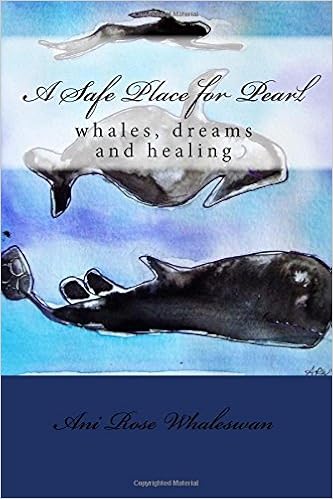
“A Safe Place for Pearl” by Ani Rose Whaleswan

April 27, 2018 by Sonia Connolly Leave a Comment

book cover

Recommended to me by: Ani Rose Whaleswan. I’ve known the author for a long time online, and I contributed an essay to her collection We Have Come Far.

“A Safe Place for Pearl” is a gentle offering of artwork, dreams, and narration, full of hope and inner resources. When there is no human support available, Nature and Spirit step in to support a child going through hard times. (The hard times are not described.) The remembering adult is supported as well. This book powerfully answers the question, “How did you survive? What helped you through?”

Recommended as support for looking inside and trusting what supports you, even if it is not visible to others.

Available at Amazon.

Filed Under: nonfiction Tagged With: healing, memoir, survival story, trauma

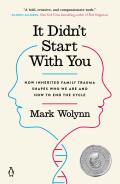
“It Didn’t Start With You” by Mark Wolynn

March 11, 2018 by Sonia Connolly 1 Comment

book cover

Subtitle: How inherited family trauma shapes who we are and how to end the cycle

Recommended to me by: a client

The book starts with Mark Wolynn’s story. He had sudden trouble with an eye and, fearing blindness, traveled in southeast Asia seeking gurus and healers who could help him. Finally, two separate gurus said, “Go home and call your mother and your father.” He went home, healed his relationship with his parents, felt much better, and incidentally his vision returned.

The next section reviews scientific research on epigenetics, how people’s cortisol levels and behaviors are affected by trauma experienced by their parents. When our grandmother is pregnant with our mother, the precursor cell of the egg that will become us is already formed. It makes sense that bodies would be prepared for a dangerous environment if the parents experience danger.

The next section has case histories of how an early break in the maternal relationship can cause ongoing problems. Parents are described as an ongoing source of the flow of life, so being estranged from them interrupts that flow. Since the author solved his problem by reconnecting with his parents, everyone should reconnect with their parents. Bizarrely, for a book about inherited trauma, actively abusive parents are never mentioned.

A person can unconsciously act out a parent’s or other relative’s story, even if they don’t know about the past events. Anything that is hidden can surface inside a relative.

The remedy, in addition to reconciling with your parents “even if you’d rather eat thumbtacks,” is to identify your core sentence and listen for echoes of past stories. Write down your worst fear, and look for phrases that are more intense or resonate with the past. When a family is affected by war or atrocities like the Holocaust, trauma can reverberate through the generations.

We can imagine making contact with past relatives, and respectfully return their feelings to them, and imagine them wishing us well. We can similarly imagine returning parents’ feelings to them if it is not safe to contact them directly.

Accepting our parents is important. As Martha Beck said in (I think) “Leaving the Saints,” it’s possible to accept a rattlesnake exactly as it is and stay respectfully out of range of its fangs.

Recommended as food for thought, as long as you remember that the author’s solution will not be the solution for everyone. Since my family tree has several branches chopped short by the Holocaust, it’s good to see an acknowledgment of the repercussions for later generations.

Available at bookshop.org.

Filed Under: nonfiction Tagged With: healing, memoir, psychology, trauma

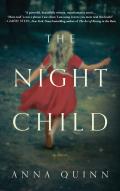
“The Night Child” by Anna Quinn

February 12, 2018 by Sonia Connolly Leave a Comment

book cover

Recommended to me by: Katherine Macomber Millman

A powerful, heartbreaking book about a woman slowly remembering and coming to terms with the childhood abuse she endured.

It reminded me of Susan Palwick’s “Flying In Place” in the way her pain is visible to the people around her, and she receives a lot of skilled, kind help. For many people, the process is less visible and they receive less assistance.

Anna Quinn has skillfully fictionalized her memoir, with lots of present-time sensory details to balance the horror of remembered abuse. The focus is on recovery, not the abuse itself.

Highly recommended if you want to read about an emotionally intense healing process which clearly shows the lasting harm done by abuse and the hard work it takes to recover.

Anna Quinn’s blog post When Your Memoir Wants To Be A Novel

Available at bookshop.org.

Filed Under: fiction Tagged With: childhood abuse, memoir, survival story, trauma

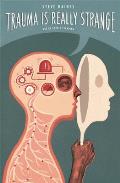
“Trauma Is Really Strange” by Steve Haines, art by Sophie Standing

December 24, 2017 by Sonia Connolly 2 Comments

book cover

Recommended to me by: boxofdelights

This is a graphic “novel” (although it’s non-fiction) or comic, or graphic medicine book. Each page is divided into panels with drawings and word bubbles, sometimes with additional explanations in tiny red print at the bottom of the page.

This is a solid introduction to the nervous system and how it responds to stress, including the sympathetic and parasympathetic nervous systems and Porges’ polyvagal theory, all in a friendly reassuring format. Trauma is defined as events that exceed our ability to cope with them. Healing is focused on being present and tolerating intense internal sensations, rather than reworking the past or experiencing big emotional catharsis. The goal is to tone down the reflexes of fight-or-flight and dissociation.

“Healing trauma is about meeting the body. In trauma, old parts of the brain change how the body works. By paying attention to feelings in the body and learning to self-regulate we can reboot the brain.”

The material is familiar to me, with a different emphasis than I’m used to, perhaps because the book is British.

The people in the drawings almost all come across as male. A few have more detail and come across as female. The people do have a wide range of skin colors, which is great. There is a drawing of a baby being born out of a disembodied blob – apparently it was too hard to draw a whole person giving birth. There was a surprisingly ableist use of “blindly” that brought me up short.

The book covers a lot of ground in a clear way. Of course it can’t cover everything. At the same time, I would have liked to see a disclaimer that everyone’s experience with trauma is different, and everyone’s healing path is different. Near the end, there is an entire page dedicated to Trauma Release Exercises (TRE), and the whole book feels skewed toward people for whom that’s the answer.

Yes, it’s less neat and reassuring to say, “This works for some people, not all,” but it is more honest, and more kind to those for whom it is all more complicated.  The last thing a traumatized person needs is to hear, “This works for everyone,” when that thing doesn’t work for them.

Available at bookshop.org.

Filed Under: nonfiction Tagged With: healing, illustrated, psychology, trauma

  • « Go to Previous Page
  • Page 1
  • Interim pages omitted …
  • Page 3
  • Page 4
  • Page 5
  • Page 6
  • Page 7
  • Interim pages omitted …
  • Page 11
  • Go to Next Page »

Primary Sidebar

Recent Books

  • “Brave Truth” by Celia Lake
  • “Breath, Eyes, Memory” by Edwidge Danticat
  • “Untangling” by Barbara McGavin and Ann Weiser Cornell
  • “After Hours at Dooryard Books” by Cat Sebastian
  • “We Belong to the Drum” by Sandra Lamouche and Azby Whitecalf
  • “Atlas of the Heart” by Brene Brown
  • “Life After Cars” by Sarah Goodyear, Doug Gordon, Aaron Naparstek
  • “Tidy First?” by Kent Beck
  • “When You Had Power” and “You Knew the Price” by Susan Kaye Quinn
  • “Taproot” by Keezy Young

Tags

activism aging anti-racism bodywork business childhood abuse childrens CivicTech communication disability domestic violence fantasy feminism finance Focusing food fun healing health at any size illustrated Judaism leadership lgbt marketing memoir music natural world neurodiversity politics psychology relationship romance science science fiction software spirituality survival story trauma writing young adult

Categories

Archives

Please note: bookshop.org and Amazon links are affiliate links. Copyright © 2026 · Genesis Sample on · WordPress