• Skip to primary navigation
  • Skip to main content
  • Skip to primary sidebar
Curious, Healing

Curious, Healing

Books about healing, business, and fun

  • About Sonia Connolly

Sonia Connolly

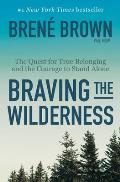
“Braving the Wilderness” by Brene Brown

June 26, 2018 by Sonia Connolly 1 Comment

book coverSubtitle: The Quest for True Belonging and the Courage to Stand Alone

Recommended to me by: reading Brene Brown’s other books

I liked this book a lot better than I liked Rising Strong. There is less material, but it is more coherent, and it directly addresses crucial tools we need for the current political situation.

There is only one cutesy acronym, which was also in Rising Strong. It repeats as a theme through the book and is even included in the title.

The seven elements of trust:
B – boundaries
R – reliability
A – accountability
V – vault (confidentiality)
I – integrity
N – needs, non-judgmental about needing help
G – generosity, ascribing good intentions

Brene Brown addresses the harm being done as we fracture into more and more homogeneous groups both in person and online. Homogeneity increases isolation, and loneliness is on the rise. Homogeneity also supports acrimony and hating the Other.

She also addresses the longing to belong in her own life. She has always forged her own path. With the exploration and research around this book, she realizes that belonging is an internal quality, not dependent on outside approval. We are beholden to Spirit and our shared humanity, not to the rules of one particular social group.

Her suggestions for finding belonging inside ourselves:

  1. People are hard to hate close up. Move in.
  2. Speak truth to bullshit. Be civil.
  3. Hold hands. With strangers.
  4. Strong back, soft front, wild heart

She includes Dr. Michelle Buck’s suggestions for conflict transformation (rather than resolution). Stay in the conversation. Look for underlying intentions. Why is the topic so important to each person. Focus on the present and the future, rather than the past and who said what when. Have the goals to learn more about the other person and find new possibilities. Hold both-and rather than either-or. Listen!

The prerequisites for staying in conversation with someone we disagree with: no threats to physical safety, and no dehumanization. We do not have to tolerate being erased and dehumanized in the name of tolerance.

I disagree with her assertion that face-to-face connection is key, and the internet is only useful to find new people to connect with in person. I agree that in-person connection is lovely, but connection over the internet also has value, especially for people with limited ability to get together in person.

Highly recommended as a thoughtful approach to the unfolding catastrophe of disconnection in modern life.

A worksheet on Brene Brown’s website that contains the main points from Braving the Wilderness.

Available at bookshop.org.

Filed Under: nonfiction Tagged With: communication, politics, relationship

“Redemption in Indigo” by Karen Lord

June 17, 2018 by Sonia Connolly 1 Comment

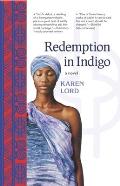
book cover

Recommended to me by: reading Karen Lord’s The Best of All Possible Worlds

I bought an e-book bundle on the strength of this book being included. I tend to read e-books a little at a time while waiting for appointments, so it took me a long time to get through the book.

This is a retelling of a Senegalese folk tale. For once, the cover is not white-washed. I wish I had been reading a physical book so I would have had the ongoing reminder that of course the characters have brown skin. Even with the clearly Senegalese names, I realized after I finished the book that I had vaguely visualized the characters as white by default. I want to change my internal defaults!

I wasn’t sure I would like the book until quite a way into it. At the very beginning, a wife is pursued and appears to be in danger. Then it focuses on ridiculing a man for eating too much, and I’m not interested in watching people be shamed. After a while it focuses on a strong woman (the wife who is well able to take care of herself) and the story hit its stride for me. I loved the epilogue.

Recommended as a thought-provoking story about different angles on duty, where you get to know and appreciate the characters.

Available at bookshop.org.

Filed Under: fiction Tagged With: anti-racism, fun

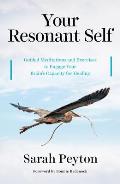
“Your Resonant Self” by Sarah Peyton

May 24, 2018 by Sonia Connolly 5 Comments

book cover

Subtitle: Guided Meditations and Exercises to Engage Your Brain’s Capacity for Healing

Recommended to me by: Amy Bennett

This book hooked me with, “The inner voice can be a constant flow of emotional warmth.” Yes please! Where do I sign up? It did take me a couple of months to get all the way through it, and would have taken longer if I hadn’t decided to finish reading it and write an article about it for May.

The book has a lot of detailed information about different parts of the brain, how they work together, and how trauma isolates them from each other. It’s not clear which parts of this are Interpersonal Neurobiology, but that’s in there. There are lots of TLAs (Three Letter Acronyms). Also lots of NVC (Non-Violent Communication), guessing about feelings and needs, which is one way to express empathy, but not the only way.

Emotional warmth is defined as being met or meeting others with affection and welcome, with a feeling of being cared for, nourished, and nurtured.

Resonance is defined as sensing that another being fully understands us and sees us with emotional warmth and generosity. Resonance is a two-person relational experience, being a “we.”

“We are social animals created to live in groups, like honey bees, ant colonies, or parades of elephants. Our brains are meant to be soothed by other human brains.”

The Default Mode Network (DMN) is the part of our brain that talks to us when we’re idle. It can be warmly kind, neutrally factual, or viciously negative.

We can choose to speak warmly to our attention as we watch it in meditation. We can begin to be warm toward parts of ourselves. We can find a part called Resonating Self Witness (RSW), and have that part resonate with other parts that need hearing and healing.

There are chapters on the inner critic, anxiety, editing old trauma narratives, anger, fears, dissociation, attachment, self-hate, depression, addiction, and community. There is a huge amount of material in the book, and I’m barely touching on what’s there and my responses to it.

The guided meditations that go with the chapters can be downloaded from yourresonantself.com. You get added to a marketing-heavy mailing list, but it’s easy to unsubscribe.

The way that criminality is associated with disorganized attachment sounds like the way some people say abusers abuse because they were abused themselves. No, plenty of us were abused and don’t go on to abuse anyone. Plenty of us had disorganized or disorganizing attachment and don’t end up in prison.

The Resonating Self Witness is similar to Self In Presence from Inner Relationship Focusing. That system’s way of listening and reflecting feels like a better fit for me than the questions about feelings and needs that this book suggests. Perhaps for people who do not yet have words for their emotions and needs, the NVC approach is more helpful.

I like the model that healing from trauma is about getting isolated parts of the brain back into connection. After working through all the guided meditations, I feel like I did learn more about how to be warm in relation to myself. I like the idea that resonance is available inside us rather than being dependent on finding it externally. I continue to be suspicious of the idea that internal resonance is just as good as interpersonal resonance, or even good enough, but I’m sure it’s better than nothing.

Recommended if you’re curious about interpersonal neurobiology and want to spend some quality time investigating and changing how you relate with yourself.

Available at bookshop.org.

Filed Under: nonfiction Tagged With: healing, illustrated, psychology

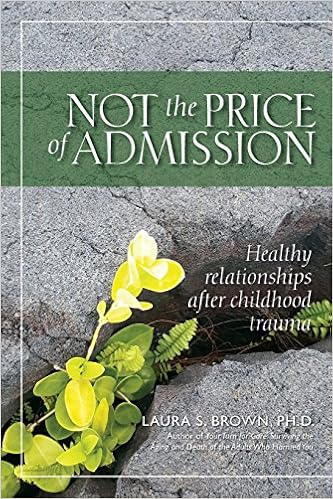
“Not the Price of Admission” by Laura S. Brown PhD

May 8, 2018 by Sonia Connolly Leave a Comment

book cover

Subtitle: Healthy relationships after childhood trauma

Recommended to me by: a client

Relationships are hard for everyone. For people with less-than-adequate caregivers early in life, the difficulty feels personal, a cause for shame as well as sadness. Laura Brown, a feminist psychologist, kindly lays out the likely consequences of early attachment wounds and repeatedly advocates for self-compassion.

Feminist therapy looks at people’s experiences in the context of marginalized identities that often lead to disempowerment and maltreatment, rather than saying that all the problems are inside the individual. The first example in the book is about a same-sex couple. And they’re not the only ones. The book fairly bursts with same-sex couples, as well as emotionally important friendships and work relationships, not just heterosexual romantic partnerships, in a matter-of-fact, “you are all welcome here” way.

I also felt welcomed by seeing quotes from Jewish scholars and traditions. She translates Yom Kippur as “Day of Return,” day of mending connections. And, even though I never watched it, quotes from “Deep Space Nine,” a science-fiction TV show felt welcoming as well.

There is a lot of great material densely packed into this book. It does not skip disorganized attachment like many relationship books do. It shifts the focus to disorganizing caregivers, since the disorganization is not inherent to the child.

Frozen-in-time child states are called EPs, short for Emotional Parts. The book also emphasizes that emotions are positive and useful, so that didn’t seem like the most helpful terminology. EPs are in contrast to ANPs, Apparently Normal Parts that handle day-to-day adult tasks like going to work.

Relationships similar to what we experienced as babies will have limbic resonance and feel “right,” even when they hurt.

The goal is to mindfully notice when a pattern from childhood has taken over, and compassionately self-soothe and notice what is happening in the present, both positive and negative. It’s okay to be imperfect. We don’t have to be abused or used or ignored to be in relationship. We can tolerate conflict that has the goal of reaching better understanding, rather than causing more hurt.

Highly recommended. There is so much more useful material in the book than I can even begin to summarize.

Available at bookshop.org.

Filed Under: nonfiction Tagged With: feminism, healing, psychology, relationship, trauma

“A Safe Place for Pearl” by Ani Rose Whaleswan

April 27, 2018 by Sonia Connolly Leave a Comment

book cover

Recommended to me by: Ani Rose Whaleswan. I’ve known the author for a long time online, and I contributed an essay to her collection We Have Come Far.

“A Safe Place for Pearl” is a gentle offering of artwork, dreams, and narration, full of hope and inner resources. When there is no human support available, Nature and Spirit step in to support a child going through hard times. (The hard times are not described.) The remembering adult is supported as well. This book powerfully answers the question, “How did you survive? What helped you through?”

Recommended as support for looking inside and trusting what supports you, even if it is not visible to others.

Available at Amazon.

Filed Under: nonfiction Tagged With: healing, memoir, survival story, trauma

“Flight Behavior” by Barbara Kingsolver

March 29, 2018 by Sonia Connolly Leave a Comment

book cover

Recommended to me by: Reading Barbara Kingsolver’s other books

This book has Barbara Kingsolver’s trademark combination of vivid characters and complex global issues. The issues in this book are climate change and, relatedly, mass production of cheaply made products that end up in landfills or the ocean. We get a clear picture of rural Appalachian life, including the exposure to unwarranted contempt from wealthier, more educated urban folks. Also including their vulnerability to climate disaster.

I was completely absorbed. Highly recommended.

Available at bookshop.org.

Filed Under: fiction Tagged With: fun

  • « Go to Previous Page
  • Page 1
  • Interim pages omitted …
  • Page 26
  • Page 27
  • Page 28
  • Page 29
  • Page 30
  • Interim pages omitted …
  • Page 72
  • Go to Next Page »

Primary Sidebar

Recent Books

  • “Untangling” by Barbara McGavin and Ann Weiser Cornell
  • “After Hours at Dooryard Books” by Cat Sebastian
  • “We Belong to the Drum” by Sandra Lamouche and Azby Whitecalf
  • “Atlas of the Heart” by Brene Brown
  • “Life After Cars” by Sarah Goodyear, Doug Gordon, Aaron Naparstek
  • “Tidy First?” by Kent Beck
  • “When You Had Power” and “You Knew the Price” by Susan Kaye Quinn
  • “Taproot” by Keezy Young
  • “The Tower at Stony Wood” by Patricia A McKillip
  • “Hospicing Modernity” by Vanessa Machado de Oliveira

Tags

activism aging anti-racism bodywork business childhood abuse childrens CivicTech communication disability domestic violence fantasy feminism finance Focusing food fun healing health at any size illustrated Judaism leadership lgbt marketing memoir music natural world neurodiversity politics psychology relationship romance science science fiction software spirituality survival story trauma writing young adult

Categories

Archives

Please note: bookshop.org and Amazon links are affiliate links. Copyright © 2026 · Genesis Sample on · WordPress