• Skip to primary navigation
  • Skip to main content
  • Skip to primary sidebar
Curious, Healing

Curious, Healing

Books about healing, business, and fun

  • About Sonia Connolly

Sonia Connolly

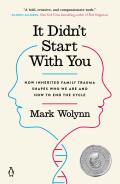
“It Didn’t Start With You” by Mark Wolynn

March 11, 2018 by Sonia Connolly 1 Comment

book cover

Subtitle: How inherited family trauma shapes who we are and how to end the cycle

Recommended to me by: a client

The book starts with Mark Wolynn’s story. He had sudden trouble with an eye and, fearing blindness, traveled in southeast Asia seeking gurus and healers who could help him. Finally, two separate gurus said, “Go home and call your mother and your father.” He went home, healed his relationship with his parents, felt much better, and incidentally his vision returned.

The next section reviews scientific research on epigenetics, how people’s cortisol levels and behaviors are affected by trauma experienced by their parents. When our grandmother is pregnant with our mother, the precursor cell of the egg that will become us is already formed. It makes sense that bodies would be prepared for a dangerous environment if the parents experience danger.

The next section has case histories of how an early break in the maternal relationship can cause ongoing problems. Parents are described as an ongoing source of the flow of life, so being estranged from them interrupts that flow. Since the author solved his problem by reconnecting with his parents, everyone should reconnect with their parents. Bizarrely, for a book about inherited trauma, actively abusive parents are never mentioned.

A person can unconsciously act out a parent’s or other relative’s story, even if they don’t know about the past events. Anything that is hidden can surface inside a relative.

The remedy, in addition to reconciling with your parents “even if you’d rather eat thumbtacks,” is to identify your core sentence and listen for echoes of past stories. Write down your worst fear, and look for phrases that are more intense or resonate with the past. When a family is affected by war or atrocities like the Holocaust, trauma can reverberate through the generations.

We can imagine making contact with past relatives, and respectfully return their feelings to them, and imagine them wishing us well. We can similarly imagine returning parents’ feelings to them if it is not safe to contact them directly.

Accepting our parents is important. As Martha Beck said in (I think) “Leaving the Saints,” it’s possible to accept a rattlesnake exactly as it is and stay respectfully out of range of its fangs.

Recommended as food for thought, as long as you remember that the author’s solution will not be the solution for everyone. Since my family tree has several branches chopped short by the Holocaust, it’s good to see an acknowledgment of the repercussions for later generations.

Available at bookshop.org.

Filed Under: nonfiction Tagged With: healing, memoir, psychology, trauma

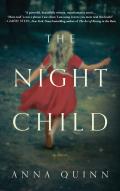
“The Night Child” by Anna Quinn

February 12, 2018 by Sonia Connolly Leave a Comment

book cover

Recommended to me by: Katherine Macomber Millman

A powerful, heartbreaking book about a woman slowly remembering and coming to terms with the childhood abuse she endured.

It reminded me of Susan Palwick’s “Flying In Place” in the way her pain is visible to the people around her, and she receives a lot of skilled, kind help. For many people, the process is less visible and they receive less assistance.

Anna Quinn has skillfully fictionalized her memoir, with lots of present-time sensory details to balance the horror of remembered abuse. The focus is on recovery, not the abuse itself.

Highly recommended if you want to read about an emotionally intense healing process which clearly shows the lasting harm done by abuse and the hard work it takes to recover.

Anna Quinn’s blog post When Your Memoir Wants To Be A Novel

Available at bookshop.org.

Filed Under: fiction Tagged With: childhood abuse, memoir, survival story, trauma

“The Best of All Possible Worlds” by Karen Lord

February 12, 2018 by Sonia Connolly 1 Comment

book cover

Recommended to me by: boxofdelights

From the back cover: “Karen Lord has been a physics teacher, a diplomat, a part-time soldier, and an academic at various times and in various countries. She is now a writer and research consultant in Barbados.”

Like their author, the characters in this science-fiction novel have brown skin, although sadly the cover of the edition I read is white-washed. The main character is a woman, and has a woman boss. Relatedly, this is an emotionally non-violent book. Violence does occur off-screen, but the emphasis is on relating, healing, and grieving, rather than on domination and victory.

I enjoyed the plot, but the reason I kept reading is that I enjoyed watching the characters relate to each other and themselves in a future where we’ve gotten better at not oppressing each other.

Highly recommended.

Available at bookshop.org.

Filed Under: fiction Tagged With: anti-racism, fun

“Lessons from the Fat-o-sphere” by Kate Harding and Marianne Kirby

February 12, 2018 by Sonia Connolly 1 Comment

book cover

Subtitle: Quit Dieting and Declare a Truce With Your Body

Recommended to me by: Kate Harding’s blog post The Fantasy of Being Thin

The introduction begins:

“Did you ever notice that the very same magazines that tell you each and every month how to lose weight, burn more calories, fight the flab! […] will turn right around and tell you to love your body? And then, adding insult to injury, tell you that confidence is the sexiest thing in the world?

And did you ever just want to light every one of those magazines on fire?

We’re right there with you.”

The whole book is like sitting down to tea with chatty, warm, kind friends who eagerly share their smarts and personal stories because they care about you. It’s a delight to read.

First they work through the evidence that diets simply don’t work. Even if you call them “lifestyle changes” or a spiritual practice, food restriction does not result in sustained weight loss over 5 years for 95% of people.

They introduce Health At Every Size (HAES) – making the best choices you can for food and movement at whatever size your body likes to be.

They briefly address depression and its compounding effect on negative body image and advocate for seeking treatment for ongoing depression symptoms.

They encourage finding body-positive doctors because you deserve good healthcare at every size, and “you should lose weight” is not healthcare. Also body-positive friends, because why hang out with people who subtly or overtly put you (or themselves) down all the time.

To find new friends, and replace all the time spent dieting and obsessing about food, try out new hobbies.

And more! Highly recommended for anyone who struggles with body image.

Kate Harding’s blog (archived)

Marianne Kirby’s blog

Available at bookshop.org.

Filed Under: nonfiction Tagged With: health at any size

“Pain Is Really Strange” by Steve Haines, art by Sophie Standing

January 28, 2018 by Sonia Connolly Leave a Comment

book cover

Recommended to me by: reading Trauma Is Really Strange

This is in the same format as “Trauma Is Really Strange,” a graphic “novel” (although it’s non-fiction) or comic, or graphic medicine book. Each page is divided into panels with drawings and word bubbles, sometimes with additional explanations in tiny red print at the bottom of the page.

Most of the book talks about the complex neurology of pain as a lead up to saying that long term chronic pain is almost entirely unrelated to gnarly looking bone bumps or torn muscles on MRIs. Pain is the brain’s way of signaling danger, and our bodies each interpret danger in different ways. Tissue damage usually heals in 3-6 months, so most chronic pain that lasts longer than that is due to a sensitized nervous system.

Cancer pain is an exception, since tumors continue to physically push on body structures. I suspect there are other exceptions for chronic infections, etc.

Telling ourselves stories about pain that allow room for change is more functional than telling ourselves stories that have no hope, like “I’m just getting older,” or “I have arthritis.” Choose metaphors with hope as well. Pain as protective rather than pain as punishment.

Getting in tune with your body, feeling what is happening in this moment, and gradually adding gentle movement can all help the brain feel safer and thus reduce pain.

Paying attention to what feels good not only feels good in the moment, it can reduce overall pain over time.

Much of the information in the book is in tiny red print at the bottom of the pages under the cartoon panels. The cartoon format helps defuse a difficult topic, but also simplifies its complexities. I like the overall message, and at the same time the topic doesn’t quite fit into this format.

Recommended if you need a gentle introduction to the ways chronic pain can improve.

Available at bookshop.org.

Filed Under: nonfiction Tagged With: bodywork

“Attached” by Amir Levine MD and Rachel S.F. Heller MA

January 9, 2018 by Sonia Connolly Leave a Comment

book cover

Subtitle: The New Science of Adult Attachment and How It Can Help You Find and Keep Love

This book was published in 2010, and is still fully relevant – except the “new!” around attachment theory. Once you get past the initial “amazing!” hype, this book is practical, encouraging, accepting and compassionate.

While I’m talking about downsides, all the example couples are heterosexual (except possibly one brief negative vignette) and almost all have Anglo names. On the upside, there aren’t overt sexist stereotypes. On the downside, gender-related differences in emotional labor are not mentioned at all.

I was uncomfortable with referring to people as “avoidants” and “secures.” Sure, it gets awkward to keep saying, “People with an avoidant attachment style,” but respect is important, especially when attachment styles are “stable but plastic” – they tend to stay the same, but can change over time.

They emphasize up front that attachment is a primal survival system in the body. We need other people. Our nervous systems like to attune with others to help us feel calm and handle stress. “Needy” is a statement of fact, not an insult or a weakness.

People with a secure style accept their own needs and those of others calmly. People with an anxious style feel ashamed of their needs, but feel them strongly. People with an avoidant style suppress their needs, but still have them.

The disorganized attachment style (traumatized by attachment figures) gets short shrift once again. They call it anxious-avoidant and say that only 3-5% of the population have this style. Their advice for non-secure folks does still apply.

They also say that 50% of people are secure, which seems surprisingly high to me. They do say that people with an avoidant style are over-represented in the dating pool because they successfully avoid ongoing relationships, and people with a secure style are under-represented because they find someone and settle down for the long term.

For people with an anxious attachment style, they recommend filtering potential partners by asking, “How much is this person capable of intimacy? Are they sending mixed messages or are they genuinely interested in being close?” People with a secure attachment style intuitively do this, knowing they deserve love and care.

They also recommend distinguishing between an activated attachment system (alternately panicked and euphoric) and the calm safety of a secure connection.

The main antidote to attachment-related struggles is effective communication. Calmly say what you need and ask about confusing signals in a non-accusatory way, and then pay attention to how the other person responds and follows through. Do they avoid, deflect, defend, or repeat troubling behaviors? Or do they listen, care, and repair issues in a collaborative way?

When you become part of someone’s inner circle, do they treat you like an enemy, or like royalty? In the inner circle of a secure relationship

  • Your well-being comes second to none
  • You are confided in first
  • Your opinion matters most
  • You feel admired and protected
  • Your need for closeness is rewarded with even more closeness

To move toward a secure attachment style, accept your current needs for closeness or distance, practice effective communication, don’t take other people’s bad behavior personally (but do get out of range!), and find secure role models. In conflicts, assume the best and also pay attention to how you are treated. They suggest that pets can be great role models for secure relationships.

It is very hard to leave an attached relationship, even when it is destructive and painful. We can only gradually deactivate the attachment system, and tough out the primal panic of being without an attachment figure. Building a support network can help a lot with reality checks about the relationship and soothing for the internal attachment system.

Highly recommended for people who want to understand past relationship catastrophes and get better results in the future, without blame or shame.

Available at bookshop.org.

Filed Under: nonfiction Tagged With: communication, psychology, relationship

  • « Go to Previous Page
  • Page 1
  • Interim pages omitted …
  • Page 27
  • Page 28
  • Page 29
  • Page 30
  • Page 31
  • Interim pages omitted …
  • Page 71
  • Go to Next Page »

Primary Sidebar

Recent Books

  • “We Belong to the Drum” by Sandra Lamouche and Azby Whitecalf
  • “Atlas of the Heart” by Brene Brown
  • “Life After Cars” by Sarah Goodyear, Doug Gordon, Aaron Naparstek
  • “Tidy First?” by Kent Beck
  • “When You Had Power” and “You Knew the Price” by Susan Kaye Quinn
  • “Taproot” by Keezy Young
  • “The Tower at Stony Wood” by Patricia A McKillip
  • “Hospicing Modernity” by Vanessa Machado de Oliveira
  • “How We Show Up” by Mia Birdsong
  • “The Enchanted Greenhouse” by Sarah Beth Durst

Tags

activism aging anti-racism bodywork business childhood abuse childrens CivicTech communication disability domestic violence fantasy feminism finance Focusing food fun healing health at any size illustrated Judaism leadership lgbt marketing memoir music natural world neurodiversity politics psychology relationship romance science science fiction software spirituality survival story trauma writing young adult

Categories

Archives

Please note: bookshop.org and Amazon links are affiliate links. Copyright © 2026 · Genesis Sample on · WordPress