• Skip to primary navigation
  • Skip to main content
  • Skip to primary sidebar
Curious, Healing

Curious, Healing

Books about healing, business, and fun

  • About Sonia Connolly

Sonia Connolly

“The Spell of the Sensuous” by David Abram

September 10, 2016 by Sonia Connolly Leave a Comment

book cover

Subtitle: Perception and Language in a More-Than-Human World

Recommended to me by: David Mitchell

David Abram is both a sleight-of-hand magician, concerned with perception and connection, and a philosopher, concerned with insubstantial ideas. Traveling as a sleight-of-hand magician, he got to know indigenous magicians in Indonesia, Nepal, and the Americas. With them, he learned to pay attention to the immediate world of the senses.

This book is a mix of sumptuous sensuous tangible descriptions, and poorly supported abstract ideas. I loved the former, and grumpily argued with the latter as I read. He claims that the alphabet divided us from our immediate participation in the natural world. In the coda, he says that even he doesn’t really believe that; it was just a starting point for discussion.

Yes, we humans are part of the world, not divided from it. Attending to our senses, to the wide, breathing present, nourishes us. Everything is equally alive, equally valid and valuable. Indigenous ways integrate with the world in a sustainable way. Each community’s stories convey urgently useful information about how to thrive in their specific place and time.

This book bridges the abstract world of philosophy with the sensuous world that indigenous peoples have inhabited all along. It casually elides all mention of privilege based on gender, race, wealth, and power. Published in 1996, it changed the conversation about ecology and sustainability.

Recommended as food for thought about how you want to connect with the world around you.

Book excerpt.

Available at bookshop.org.

Filed Under: nonfiction Tagged With: psychology, spirituality

“Unintentional Music” by Lane Arye

August 23, 2016 by Sonia Connolly Leave a Comment

book cover

Subtitle: Releasing Your Deepest Creativity

Recommended to me by: a friend

This is a wonderful introduction to Process Work via making music.

There is the primary signal – the music we want to make – and the secondary signals – all the mistakes, hesitations, and imperfections that pop up despite our best efforts. Lane Arye recommends emphasizing a secondary signal and seeing what happens. Probably, another secondary signal will emerge.

Following the chain of secondary signals can lead directly to core issues and allow them to change. It can lead organically to more effective technique. It can connect us to what our spirit wants to express.

Highly recommended if you make music or art or want to learn about Process Work in a playful way.

The introduction and first chapter are available on Lane Arye’s website.

Available at bookshop.org.

Filed Under: nonfiction Tagged With: music, psychology

“The Non-Designer’s InDesign Book” by Robin Williams

August 1, 2016 by Sonia Connolly Leave a Comment

book cover

Subtitle: Essential design techniques for print projects

Recommended to me by: Finding it at the library

I’m formatting my book with Adobe InDesign. While it does work to do a web search to find out how to do things like add more pages to the book, or move a title farther down the page, I decided I wanted more of an overview of the whole program and its features.

A friend suggested checking a book out of the library. This was perfect, because I could check out several books and see which one I liked, and since I have an older version of the program, older books were just right.

This book won because it is inviting, clear, direct, and brief. The design examples are varied and interesting (not all for sports and bars). Some of the examples are even from “Mothering Magazine”! While Robin doesn’t address book projects, the aesthetics and attention to detail in her examples fit in with how I work. Not only am I happy to support a woman author of a technical book, I feel more at home reading her book.

Highly recommended if you need to wrestle with InDesign CS5. I got her Photoshop book too, and I’m looking forward to reading that next, to work on the book cover and interior illustrations.

Available at biblio.com.

Filed Under: nonfiction Tagged With: software, writing

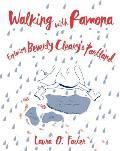
“Walking with Ramona” by Laura O. Foster

July 10, 2016 by Sonia Connolly Leave a Comment

book cover

Subtitle: Exploring Beverly Cleary’s Portland

A 3 mile walking tour of Beverly Cleary’s neighborhood, starting at the statues of Ramona Quimby and Henry Huggins and Ribsy at Grant Park. The directions are easy to follow and the information is carefully researched and entertainingly presented. The neighborhood itself is full of gorgeous old houses and a quirky commercial center.

The only downside is photo captions set on the photos themselves, rather than on the white part of the page where they would be easier to read.

Recommended if you want to learn more about the Hollywood district in Portland now or back in the 30’s.

Available at biblio.com.

Filed Under: nonfiction Tagged With: fun, illustrated

“Uprooted” by Naomi Novik

June 21, 2016 by Sonia Connolly Leave a Comment

book cover

Recommended to me by: Eric Roberts

A fantasy novel based on Eastern European folk tales, but going in a direction all its own. The main character is a young woman, and there are other women with agency in the book. Unfortunately it is still a feudal social structure with a king and a male line of succession. Most of the people in power are men. There is a kickass black woman wizard, however!

There are two kinds of magic, and one of them is a follow-your-nose, do-what-feels-right, stay-in-connection kind of magic that feels as realistic to me as any magic can. I’ve never thought much of cookbook magic.

People care about each other and for each other. There is some attention to the need for rest and healing after wounds, although they do tend to be elided quickly as the action continues.

I found it entirely unbelievable that a 17 year old village girl would be completely sexually ignorant. Farm animals! Older friends! One room cottages! Listening to her own body!

The ongoing helpless suffering at the beginning of the book kicked me out, and I spent the rest of the book muttering about what the author was doing. But I did read the whole thing. There is a *lot* of violence. The narrator comments on it, is sickened by it, but the violence still continues.

I’ve been thinking a lot about evil, and where the responsibility for it lies, and where it originates. Whether there is an independent evil entity sowing evil in people. When and how we have to take responsibility for our own evil actions, and expect others to take responsibility for theirs. The book wrestles with those questions. The conclusion did not feel satisfactory to me.

I was having trouble finding words for this review, and it helped me to read this one. It’s comforting when others respond to the same issues I sensed, and can put words around them.

Recommended if story structure and plot, with some modern improvements on the social justice front, are more important to you than a lot of violence and suffering.

Available at bookshop.org.

Filed Under: fiction Tagged With: fun, young adult

“The Polyvagal Theory” by Stephen W. Porges

June 21, 2016 by Sonia Connolly 1 Comment

book cover

Subtitle: Neurophysiological Foundations of Emotions, Attachment, Communication, and Self-Regulation

Recommended to me by: Joshua Sylvae

This book is a chronological collection of Stephen Porges’ scientific research papers about vagal nerves and their functions, written in technical, medical language. Later papers summarize earlier research and even define some terms, so the book gets easier to read as it goes along.

The vagal nerve, also known as the tenth cranial nerve, originates in the brainstem and branches to the lungs, heart, digestive system, and face, independent of the spinal cord. It makes up most of the parasympathetic nervous system. It has both efferent (motor, from the brain to the periphery) neurons and afferent (sensory, from the periphery to the brain) neurons, creating a system that tends to stay in a given operating range (homeostasis) via negative feedback.

It is bilateral, one on each side of the body, and the two sides have slightly different functions, since we are not internally symmetrical, with the heart tilted to the left and the stomach on the left, etc.

As well as being bilateral, there are also two separate systems, thus “poly vagal theory”, many vagal nerves: an ancient system that all vertebrates have, and an additional newer system that mammals have. When the newer system is active, it suppresses the older system.

The ancient system is dorsal (originating toward the back of the brainstem) and unmyelinated (not sheathed).

Reptiles have this ancient vagal system, and a sympathetic system. They have a low resting metabolic rate. Under stress, their sympathetic system speeds up heart rate and breathing. If that doesn’t fix the problem, the dorsal vagal system puts them into freeze, dropping heart rate (bradycardia) and breathing rate (apnea). This works well to convince predators they are dead, or extend the time they can stay underwater.

The newer vagal system is ventral (originating toward the front of the brainstem) and myelinated (sheathed). It controls facial expressions, vocalizations (speech, singing, and other sounds), and coordinates breathing with vocalizing and swallowing. It tightens the muscles of the middle ear to filter out low frequency sounds that might drown out speech frequencies.

Mammals have a high resting metabolic rate, and a high requirement for a consistent oxygen supply. The newer vagal system is a “brake” on the sympathetic nervous system, gently reducing heart rate and breathing rate and allowing a focus on social signals. Under stress, the brake is removed, giving control to the sympathetic nervous system and instantaneously raising heart and breathing rate. If that does not take care of the problem, control goes to the ancient vagal system, sharply dropping heart rate (bradycardia) and breathing rate (apnea), which can be fatal for mammals.

The vagal brake can be engaged and disengaged at the speed of thought, unlike the sympathetic nervous system which works via adrenal hormones and other circulating chemicals that take a while to clear out of the body.

When the vagal system is busy telling the diaphragm to breathe in, the heart gets less of a “brake” signal and speeds up slightly. The brake is restored on the out-breath, slowing the heart slightly. This is RSA – Respiratory Sinus Arrhythmia. It can be used as a non-invasive indicator of vagal tone. The greater the difference in heart rate while breathing in versus breathing out, the more vagal tone there is.

The ancient vagal system has been partially recruited for pro-social immobility – accepting an embrace, for example.

The ancient vagal system also explains the immobility many people experience during rape. Understanding the neurological basis helps to reduce shame about not fighting back.

Available at bookshop.org.

Filed Under: nonfiction Tagged With: trauma

  • « Go to Previous Page
  • Page 1
  • Interim pages omitted …
  • Page 33
  • Page 34
  • Page 35
  • Page 36
  • Page 37
  • Interim pages omitted …
  • Page 72
  • Go to Next Page »

Primary Sidebar

Recent Books

  • “Untangling” by Barbara McGavin and Ann Weiser Cornell
  • “After Hours at Dooryard Books” by Cat Sebastian
  • “We Belong to the Drum” by Sandra Lamouche and Azby Whitecalf
  • “Atlas of the Heart” by Brene Brown
  • “Life After Cars” by Sarah Goodyear, Doug Gordon, Aaron Naparstek
  • “Tidy First?” by Kent Beck
  • “When You Had Power” and “You Knew the Price” by Susan Kaye Quinn
  • “Taproot” by Keezy Young
  • “The Tower at Stony Wood” by Patricia A McKillip
  • “Hospicing Modernity” by Vanessa Machado de Oliveira

Tags

activism aging anti-racism bodywork business childhood abuse childrens CivicTech communication disability domestic violence fantasy feminism finance Focusing food fun healing health at any size illustrated Judaism leadership lgbt marketing memoir music natural world neurodiversity politics psychology relationship romance science science fiction software spirituality survival story trauma writing young adult

Categories

Archives

Please note: bookshop.org and Amazon links are affiliate links. Copyright © 2026 · Genesis Sample on · WordPress