• Skip to primary navigation
  • Skip to main content
  • Skip to primary sidebar
Curious, Healing

Curious, Healing

Books about healing, business, and fun

  • About Sonia Connolly

Sonia Connolly

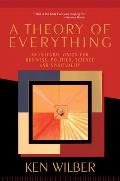
“A Theory of Everything” by Ken Wilber

October 4, 2014 by Sonia Connolly 2 Comments

Subtitle: An Integral Vision for Business, Politics, Science, and Spirituality

Recommended to me by: David Mitchell

I read this book to learn about Spiral Dynamics, a classification of cultures that makes room for change and values all levels, from bare subsistence to military control to cooperative and aware. The levels are labeled with colors and called “memes” (not the usual Internet meme definition).

A “Theory of Everything” includes these levels, mapped onto quadrants of Interior/Individual (“I”), Exterior/Individual (“IT”), Interior/Collective (“WE”), and Exterior/Collective (“ITS”). The quadrants are also described as Intentional, Behavioral, Cultural, and Social.

The book focuses on how to facilitate a cultural transformation to the next level, from green, relativistic and empathic, but narcissistic according to Wilber, to turquoise, truly holistic and less likely to wreak environmental disaster.

The second section describes various disciplines in “all-level, all-quadrant” ways. Medicine, for example, can look at someone’s emotional state, physical symptoms, availability of care, and social support.

Throughout the book, Wilber refers to his other books. In some ways, this is a condensed summary of his life’s work.

This book felt like an interesting intellectual exercise, ungrounded in intuition or the body. I might agree with some of the conclusions about how to lead a “good” life, but I arrive at them by trying different things and sensing what works for me, not constructing grand edifices and then reasoning from there.

Available at bookshop.org.

Filed Under: nonfiction Tagged With: illustrated

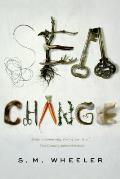
“Sea Change” by S. M. Wheeler

October 4, 2014 by Sonia Connolly Leave a Comment

Recommended to me by: s.e. smith at this ain’t livin’

This wild fantasy felt true to me, true to inner journeys and struggles and transformations. It has violence in it, but not a lot compared to the modern fashion, and deaths are grieved instead of being passed over without comment. Heroes, villains, and monsters alike are complex, whole people. Friendships are important enough to endure loss and hardship for.

Definitely worth spending an afternoon on the porch in the sun with this book!

Available at bookshop.org.

Filed Under: fiction Tagged With: fun, lgbt, young adult

“Core Awareness” by Liz Koch

September 27, 2014 by Sonia Connolly Leave a Comment

Subtitle: Enhancing Yoga, Pilates, Exercise, and Dance

Recommended to me by: David Mitchell

I enthusiastically endorse this book’s focus on awareness, especially in core areas that we often learn to block out. The psoas muscles connects the front of the lumbar spine to the inside of the pelvis to the inner upper femur, all areas we largely ignore. I like the image of telling small children, “Sense yourself!” rather than, “Be careful!” to avoid injury. My own experience supports that the psoas does not like to be deeply palpated, but responds better to gentle invitations to relax.

At the same time, while Part I is nicely poetic, it desperately [needs citation], as well as an editor who knows how to spell muscle names and types of bodywork. The statement that the psoas only contracts eccentrically is simply false. (More information at wikipedia’s psoas article.)

Part II contains carefully described exploratory exercises to connect with and relax the psoas, illustrated with photographs of people with a diversity of body types.

I recommend this book to explore new ideas around internal awareness, as long as the first part is read as metaphorical. It is helpful to look at a good anatomy book such as Trail Guide to the Body to visualize the psoas muscle.

Available at bookshop.org.

Filed Under: fiction Tagged With: bodywork, illustrated

“The Focusing Student’s and Companion’s Manual” by Barbara McGavin and Ann Weiser Cornell

September 21, 2014 by Sonia Connolly Leave a Comment

Recommended to me by: Jael Emberley

I took Focusing classes I and II from Jael Emberley, and bought both parts of the manual, even though the second part is for classes III and IV. Both parts are written in clear, friendly language, and delightfully illustrated by Mary Ferris. Her expressive line drawings of anthropomorphized hares capture the subtleties and humor of Focusing.

Focusing is paying attention inside to an unfolding felt sense about an issue or situation. Somatic Experiencing includes a lot of Focusing. I read Part Two now to learn more about how to be present with merging and exiling of internal “something”s. Suggestions include

  • Use presence language. “I sense something in me that feels overwhelmed.”
  • Turn toward the Something that has Feelings about the Feeling, and might be saying things like, “I don’t want to be scared!” “It’s bad to be angry.”
  • Notice behaviors that come out of Feelings about Feelings, like rushing the process, forcing a choice, analyzing, diagnosing, deciding, fixing, doubting, arguing, and especially criticizing.
  • For critics, sense for what they’re not wanting.
  • Acknowledge parts that are trying to force other parts to Do It Right.
  • Exiling – something is judged as so bad and dangerous it is removed from awareness. As it comes back, the symbols for it might move from inanimate to animate.
  • Exiles need a lot of time and safety to gain trust and come back into inner relationship.

Recommended for learning about Focusing and being amused and touched by the line drawings.

Part One and Part Two are available from FocusingResources.com

Filed Under: nonfiction Tagged With: communication, Focusing, healing, illustrated, psychology

“Getting to the Heart of Interfaith” by Pastor Don Mackenzie, Rabbi Ted Falcon, and Sheikh Jamal Rahman

September 14, 2014 by Sonia Connolly 1 Comment

Subtitle: The Eye-Opening, Hope-Filled Friendship of a Pastor, a Rabbi, and a Sheikh

Recommended to me by: David Mitchell

Somewhere along the way, I acquired the mistaken idea that “interfaith” is a watered-down, lowest-common-denominator version of religion. This book makes clear that interfaith is a vibrant, active process of building connections and understanding.

The book is both a practical guide to interfaith work and the story of how the three men’s friendship developed. It includes their backgrounds, key beliefs from their religions, difficulties they have with their religions, and their descriptions of a challenging group trip to Israel. As each of them write in turn, I come to trust their inclusiveness, openness, and willingness to face difficult truths.

I was interested to notice that despite my Jewish heritage I resonated the most with Jamal’s description of Muslim practices, which are focused on compassion. In writing about Israel, he mentions his sense of Ein Gedi oasis as a sacred place, a sanctuary. I have long described it as my favorite place on the planet. In the middle of the desert, near Masada and the Dead Sea, it feels like a miraculous gift to be enclosed in rustling bamboo with water flowing down the path.

Their suggested steps for interfaith work are

  1. Moving beyond separation and suspicion
  2. Inquiring more deeply
  3. Sharing both the easy and the difficult parts
  4. Moving beyond safe territory
  5. Exploring spiritual practices from other traditions

To me these steps form a bridge across many types of difference, including racial and cultural differences.

Highly recommended.

Rabbi Ted Falcon’s site

Sheikh Jamal Rahman’s site

Pastor Don Mackenzie on the Interfaith Amigos site

Available at bookshop.org.

Filed Under: nonfiction Tagged With: anti-racism, Judaism, memoir, spirituality

“The Anatomy of Self” by Takeo Doi, MD

August 29, 2014 by Sonia Connolly Leave a Comment

Subtitle: The Individual vs. Society

Recommended to me by: David Mitchell

David and I were discussing disclosure vs. silence, and he recommended this book. Rather than addressing the issue in a personal way, the book analyzes Japanese language and culture to address it in a more global way. None of it was immediately applicable, although it is validating to read that everyone struggles with the same issues, across cultures.

The first section analyzes Japanese word pairs that are essential to that culture. Omote and ura mean public, open, or spoken vs. private, hidden, or unspoken. They require each other, the way words require silence to surround them.

Tatamae and honne refer to the formal rules and public face of a group, vs. the unspoken rules and private opinions. Again, there must always be both, public harmony and private dissent. Even when someone intends to fully disclose their heart, the essence remains unspoken.

The second section addresses humans in society and analyzes several different stories.

The third section addresses secrets in the context of mental illness, charm, and love.

I was taken aback by the gratuitous subtle (all stories center on men) and overt (“effeminate” as an insult) sexism in a book published in 1986.

At the end of the book, my sense was that most of the message was unspoken, and I would have to study it in depth to understand the underlying points.

Available at biblio.com.

Filed Under: nonfiction Tagged With: communication, psychology

  • « Go to Previous Page
  • Page 1
  • Interim pages omitted …
  • Page 41
  • Page 42
  • Page 43
  • Page 44
  • Page 45
  • Interim pages omitted …
  • Page 71
  • Go to Next Page »

Primary Sidebar

Recent Books

  • “We Belong to the Drum” by Sandra Lamouche and Azby Whitecalf
  • “Atlas of the Heart” by Brene Brown
  • “Life After Cars” by Sarah Goodyear, Doug Gordon, Aaron Naparstek
  • “Tidy First?” by Kent Beck
  • “When You Had Power” and “You Knew the Price” by Susan Kaye Quinn
  • “Taproot” by Keezy Young
  • “The Tower at Stony Wood” by Patricia A McKillip
  • “Hospicing Modernity” by Vanessa Machado de Oliveira
  • “How We Show Up” by Mia Birdsong
  • “The Enchanted Greenhouse” by Sarah Beth Durst

Tags

activism aging anti-racism bodywork business childhood abuse childrens CivicTech communication disability domestic violence fantasy feminism finance Focusing food fun healing health at any size illustrated Judaism leadership lgbt marketing memoir music natural world neurodiversity politics psychology relationship romance science science fiction software spirituality survival story trauma writing young adult

Categories

Archives

Please note: bookshop.org and Amazon links are affiliate links. Copyright © 2026 · Genesis Sample on · WordPress