• Skip to primary navigation
  • Skip to main content
  • Skip to primary sidebar
Curious, Healing

Curious, Healing

Books about healing, business, and fun

  • About Sonia Connolly

Sonia Connolly

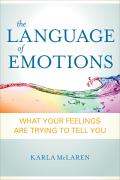
“The Language of Emotions” by Karla McLaren

July 22, 2014 by Sonia Connolly 3 Comments

Subtitle: What Your Feelings are Trying to Tell You

Recommended to me by: a client

I read a couple of books lately that had their good points, but I only got half way through them, and when I started to post about them I had more negative thoughts than positive ones, so I deleted the drafts.

This book was the opposite experience. When it came due at the library and I was only half way through, I went out and bought a copy. While there were aspects that didn’t work for me, overall I encountered a lot of solid, useful insights.

Karla McLaren shares her history as an abuse survivor and an empath, offers simple practices to work skillfully with emotions, and then analyzes how each emotion fits into her framework. All emotions are equally valid, from anger to joy to suicidal urges. Trauma recovery is woven through the book.

Emotions (corresponding with water) are seen as part of an inner village with the intellect (air), body (earth), and spirit/vision (fire). Health is a village in dynamic balance, responding with agility to ongoing events.

The practices she recommends are grounding, defining boundaries, burning contracts, conscious complaining, and rejuvenation.

I’ve found that visualization is a superficial activity for me, so visualizing a grounding cord descending into the earth does not substantially change my energy. Visualizing the destruction of my “contracts” with old behaviors and memories sounds wonderful, but I haven’t seen much effect from cutting cords and similar rituals.

She suggests sending anger into one’s boundary, which sounds like great advice, although I’m not quite sure how to do it. She also says, “People won’t know you’re angry,” which sounds like a bit of judgment about anger sneaking in.

Since these practices form the core of McLaren’s work with emotions, I wish I resonated better with them. I suspect I do some form of them in a more wordless way, sensing rather than visualizing.

The detailed analysis of each emotion includes associated questions to ask or statements to make when the emotion arises, along with gifts the emotion brings and advice on how to integrate the emotion honorably into one’s life.

Emotion Purpose Questions/Statements
Anger Protection and Restoration What must be protected? What must be restored?
Apathy and Boredom The Mask for Anger What is being avoided? What must be made conscious?
Guilt and Shame Restoring Integrity Who has been hurt? What must be made right?
Hatred The Profound Mirror What has fallen into my shadow? What must be reintegrated?
Fear Intuition and Action What action must be taken?
Confusion The Mask for Fear What is my intention? What action should be taken?
Jealousy and Envy Relational Radar What has been betrayed? What must be healed and restored?
Panic and Terror Frozen Fire What has been frozen in time? What healing action must be taken?
Sadness Release and Rejuvenation What must be released? What must be rejuvenated?
Grief The Deep River of the Soul What must be mourned? What must be released completely?
Depression Ingenious Stagnation Where has my energy gone? Why was it sent away?
Suicidal Urges The Darkness Before Dawn What idea or behavior must end now? What can no longer be tolerated in my soul?
Happiness Amusement and Anticipation Thank you for this lively celebration!
Contentment Appreciation and Recognition Thank you for renewing my faith in myself!
Joy Affinity and Communion Thank you for this radiant moment!

There is much more information in the book than I have covered here. Highly recommended!

Available at bookshop.org.

Filed Under: nonfiction Tagged With: childhood abuse, healing, memoir, psychology

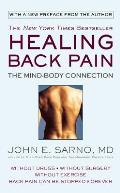
“Healing Back Pain” by John E. Sarno, MD

July 10, 2014 by Sonia Connolly Leave a Comment

Subtitle: The Mind-Body Connection

Recommended to me by: Amy Bennett

What Dr. Sarno tells his TMS patients:

  • Resume physical activity. It won’t hurt you.
  • Talk to your brain: tell it you won’t take it anymore.
  • Stop all physical treatments for your back—they may be blocking your recovery.

DON’T

  • Repress your anger or emotions—they can give you a pain in the back.
  • Think of yourself as being injured. Psychological conditioning contributes to ongoing back pain.
  • Be intimidated by back pain. You have the power to overcome it.

Dr. Sarno defines Tension Myositis Syndrome (TMS) as chronic pain in muscles and tendons of the back, neck, buttocks, and limbs. He asserts that most back pain is not caused by muscle strain or ruptured disks or past car accidents, but rather by the brain depriving an area of sufficient oxygen for the purpose of distraction from anger or other unpalatable emotions.

The book describes his theory and includes many case histories of people who fully recovered from debilitating pain once they understood that it was caused by repressing emotions. In Dr. Sarno’s experience, most people improve simply by achieving that understanding.

Unfortunately, the book doesn’t contain any suggestions for other ways to deal with emotions, although it does strongly imply that acknowledging them and setting clear boundaries can be helpful.

I think the mechanism is slightly different, tension and pain as a result of suppressing emotions rather than as a subconscious distraction. I still highly recommend this book for a refreshing perspective on chronic pain.

Available at bookshop.org.

Filed Under: nonfiction Tagged With: bodywork, disability, healing, psychology

“My Body Politic” by Simi Linton

May 31, 2014 by Sonia Connolly 1 Comment

Subtitle: a memoir

Simi Linton is a Jewish woman, married, a professor and researcher with a Ph.D., who uses a wheelchair. Her memoir starts with the car crash that caused her disability and her slow physical recovery, and continues with her reemergence and engagement with a largely inaccessible world. She moves from gratitude for strangers’ help pulling her wheelchair up curbs and stairs, to the realization that the built environment should be wheelchair-accessible.

She acknowledges the privilege and family’s financial resources that allow her to pursue a college degree, and calls out the tragedy of most disabled people’s lack of access to education. She teaches for several years at a school that mainstreams disabled kids, and publishes articles about disability and society.

She paints loving, detailed word pictures of her disabled friends leading vibrant, connected lives as she describes her own relationships and career.

Highly recommended.

Available at bookshop.org.

Filed Under: nonfiction Tagged With: disability, memoir

“Long Hidden” edited by Rose Fox and Daniel Jose Older

May 3, 2014 by Sonia Connolly 2 Comments

Subtitle: Speculative Fiction from the Margins of History

I expected this book to contain speculative stories about marginalized people, creating worlds where they/we are not marginalized. I did not expect it to be about the experience of marginalization, and thus dripping with violence. Maybe I should have expected that, but I didn’t.

There was a single story that didn’t contain at least one violent death. That story was about Nordic (white) people.

Loved the diversity in this collection. However, reading stories imbued with that much violence feels intense, overwhelming, invasive. Not a good fit for me.

Filed Under: fiction Tagged With: anti-racism, feminism

“Focusing in Clinical Practice” by Ann Weiser Cornell

April 19, 2014 by Sonia Connolly Leave a Comment

Subtitle: The Essence of Change

Recommended to me by: Ann Weiser Cornell’s other books

As a bodyworker who integrated Focusing into my work, it seems that I would be the perfect reader for this book. It contained useful bits of information about Focusing, but my primary experience while reading it was a sense of exclusion.

When I try to put that sense into words, what comes is, “There is a Right Way to do Focusing, and you’re not doing it,” despite disclaimers throughout the book saying that Focusing does not stand alone and each form of therapy has its applications. In the chapter showing how to integrate Focusing with specific types of therapy, the author carefully states that there is nothing wrong with the examples as they stand, before adding Focusing to them.

Ann Weiser Cornell’s first two books emphasize equal partnership in Focusing and acknowledgement of the Focuser’s resilience and resources. That essential respect does not come through when she discusses Focusing in the unequal relationship between therapist and client.

At the same time, Focusing continues to be tremendously useful in my bodywork practice, and I picked up new phrases and understanding of “felt sense” from this book. “How does that whole issue feel now?” “Check in with your body about all of that.” I appreciated the client vignettes and information about types of therapy related to Focusing.

Available at bookshop.org.

Filed Under: nonfiction Tagged With: Focusing, psychology

“The Dance of the Dissident Daughter” by Sue Monk Kidd

March 25, 2014 by Sonia Connolly Leave a Comment

Subtitle: A Woman’s Journey from Christian Tradition to the Sacred Feminine

Recommended to me by: Donna Smith

Sue Monk Kidd describes her awakening to the patriarchal values of the Baptist Church and Christianity in general. She describes her transformation in parallel with the myth of Ariadne as she claims the Sacred Feminine instead of an exclusively male spirituality. The writing is clear, evocative, and rich with references to other works, mostly written by women.

As Donna reminded me, the author isn’t required to get everything right at once. She sees her submissive, secondary position, names it, finds a spirituality grounded in the feminine, and dares to speak truth to power. At the same time, she does not name the privilege that allows her to risk marriage and career (but ultimately lose nothing), and travel to Greece for inspiration.

By the end of the book, she notices a solidity and inner authority born out of her search. I believe this is the goal for each of us, to listen inside for the Sacred.

Available at bookshop.org.

Filed Under: nonfiction Tagged With: feminism, memoir, spirituality

  • « Go to Previous Page
  • Page 1
  • Interim pages omitted …
  • Page 42
  • Page 43
  • Page 44
  • Page 45
  • Page 46
  • Interim pages omitted …
  • Page 71
  • Go to Next Page »

Primary Sidebar

Recent Books

  • “We Belong to the Drum” by Sandra Lamouche and Azby Whitecalf
  • “Atlas of the Heart” by Brene Brown
  • “Life After Cars” by Sarah Goodyear, Doug Gordon, Aaron Naparstek
  • “Tidy First?” by Kent Beck
  • “When You Had Power” and “You Knew the Price” by Susan Kaye Quinn
  • “Taproot” by Keezy Young
  • “The Tower at Stony Wood” by Patricia A McKillip
  • “Hospicing Modernity” by Vanessa Machado de Oliveira
  • “How We Show Up” by Mia Birdsong
  • “The Enchanted Greenhouse” by Sarah Beth Durst

Tags

activism aging anti-racism bodywork business childhood abuse childrens CivicTech communication disability domestic violence fantasy feminism finance Focusing food fun healing health at any size illustrated Judaism leadership lgbt marketing memoir music natural world neurodiversity politics psychology relationship romance science science fiction software spirituality survival story trauma writing young adult

Categories

Archives

Please note: bookshop.org and Amazon links are affiliate links. Copyright © 2026 · Genesis Sample on · WordPress