• Skip to primary navigation
  • Skip to main content
  • Skip to primary sidebar
Curious, Healing

Curious, Healing

Books about healing, business, and fun

  • About Sonia Connolly

Sonia Connolly

“Somebody I Used to Know” by Wendy Mitchell

March 3, 2025 by Sonia Connolly Leave a Comment

book cover
Subtitle: A Memoir
Recommended to me by: a friend

Wendy Mitchell is a vibrant, strong, smart woman, proud of her memory, her home renovations, and her two now-adult daughters whom she raised on her own. At age 57, she starts to feel fatigued and confused, and falls unexpectedly several times while running.

She has what appears to be a small stroke, and is diagnosed with early-onset Alzheimer’s soon afterward at age 58. She is determined to remain independent as long as possible and uses multiple alarms on her iPad throughout her day to remind her to do tasks like make food, and then eat the food she made.

After being forced to retire from her beloved NHS job for ill health, she becomes an activist for people with dementia, participating in research and giving talks on her experience. She has to write out her talks in advance, map out her travels by public transit, and print photos of where she’ll be staying.

The book is absorbing on the level of getting to know Wendy and her story, as well as on the level of learning more about the effects of Alzheimer’s and how to live well after being diagnosed.

Highly recommended.

She wrote two books after this one and kept a blog, Which Me Am I Today.

Available at bookshop.org.

Filed Under: nonfiction Tagged With: aging, disability, memoir, psychology, survival story

“The Serviceberry” by Robin Wall Kimmerer

January 18, 2025 by Sonia Connolly Leave a Comment

book cover
Subtitle: Abundance and Reciprocity in the Natural World
Recommended to me by: Reading Kimmerer’s other books

Robin Wall Kimmerer is an Indigenous scientist, writer, and teacher. She shares the gathered wisdom of her Potawatomi tribe, along with her knowledge of the ins and outs of academia as a botanist.

She compares the Indigenous gift economy, which is in harmony with the natural world, to capitalist economics that try to extract maximum value, wrecking the natural world. The book is small and brief, 100 pages, illustrated with pen and ink drawings.

The serviceberry bush has many names because it is important to many communities and cultures. The berries are eaten fresh, and dried to make pemmican for travel and winter months. Birds also feast on the berries. Their abundant berries lead to gratitude, which leads to reciprocity and paying it forward, which feeds the cycle of life. A specific instance of picking serviceberries described in vivid detail provides a rich scaffold for considering how we can learn from plants and live better.

How can we grow gift economies within and alongside the capitalist system? There are already little free libraries, tool libraries, neighborhood food banks, trash nothing and buy nothing online groups, and neighborhood organizations for mutual aid.

This book is a joyful celebration of all of those, along with a careful, encouraging exploration of a positive direction to replace the negative of capitalism. The more we can each support our local gift economies, the more joy and sustainability we bring into our lives.

Highly recommended.

Available at bookshop.org.

Filed Under: nonfiction Tagged With: activism, finance, food, illustrated, natural world, politics, spirituality

“Bea Wolf” by Zach Weinersmith and Boulet

January 18, 2025 by Sonia Connolly Leave a Comment

book cover
Recommended to me by: gift from a friend

An epic in graphic novel form, aimed at kids but with an adult level of detail and complexity. Divided into sections called fitts, full of sonorous alliteration, the book first introduces a few characters, then sets the background, then describes the conflict between the joyful kids in their treehouse hall and terrible Mr. Grindle who can cast the curse of adulthood with a single touch.

The art along with the story is dark and dramatic. The group of kids is drawn as a wonderful multi-cultural mix, and both boys and girls have agency and can be the king. Young children will love the story’s heaps of freely available candy and soda and games, safe from parental rules. It would be a fun book to read aloud.

Recommended to enjoy with kids!

Available at bookshop.org.

Filed Under: art, fiction Tagged With: childrens, fun, illustrated

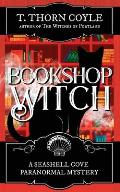
“Bookshop Witch” by T. Thorn Coyle

November 30, 2024 by Sonia Connolly Leave a Comment

book cover
Subtitle: A Seashell Cove Paranormal Mystery
Recommended to me by: T. Thorne Coyle

This is described as a cozy mystery, so there is some tension and action, but the focus is on comforting relationships, shared meals, and respites from danger. The Oregon Coast setting is described with lots of evocative sensory details. The main character is in her late twenties, owns a bookshop, is a witch, and in some ways is still figuring out who she wants to be when she grows up.

Women in this book have a lot of strength and agency. The men are generally in supporting roles, although some of them are powerful as well. The cast of characters is diverse in skin color, sexual orientation, gender (one explicitly non-binary being), age, and species (magical beings too). People are generally inclusive, with some gentle calling in when they are oblivious to differences.

It’s a light, quick read. Recommended if that’s what you’re looking for.

Available at bookshop.org.

Filed Under: fiction Tagged With: fantasy, fun

“Resilient Management” by Lara Hogan

November 30, 2024 by Sonia Connolly Leave a Comment

book cover
Recommended to me by: Allison McMillan

Managers of engineering teams are often software engineers promoted to management without additional training, and without the realization that management is a new job requiring new skills. This is a compassionate and kind book with a lot of practical, actionable advice on how to be better manager of a software team.

It starts with a common description of the stages of a new Agile team:

  • Forming – everyone is politely getting to know each other
  • Storming – conflicts arise from people’s different ways of working and interacting
  • Norming – the team settles into functional ways of working together
  • Performing – the team is a cohesive whole, effectively moving forward and accomplishing their goals

In the section on getting to know team members, Lara Hogan emphasizes that everyone has different needs and preferences, and it works better to be curious than to assume everyone is the same. She offers this list of First 1:1 Questions to get to know each person.

It is important to be mindful of people’s core needs. Paloma Medina describes core needs as:

  • Belonging
  • Improvement/Progress
  • Choice
  • Equality/Fairness
  • Predictability
  • Significance

which spells BICEPS as a memory aid. More at: palomamedina.com/biceps

Managers have many jobs, from keeping the team’s work on track to coaching team members to helping resolve problems and conflicts. Managers can ask themselves what they are optimizing for, and communicate that, to help team members know what to expect and how best to work together.

With each team member, managers can mentor (give advice), coach (ask open questions), sponsor (give a team member opportunities) and give feedback (both positive and negative). Coaching is a skill worth developing to help people grow.

One way to structure feedback is: Observation of behavior + Impact of behavior + Request or Question = Specific, actionable feedback. Observations should be neutral and factual. Impact can relate to feelings, and should also be measurable and understandable by the feedback recipient. For example, emails that are too terse add much more time to the overall process of communicating.

Set clear expectations and assign roles for projects and decisions with RACI – who is Responsible, Accountable, Consulted, and Informed. This prevents committees where everyone is in on the discussions but no one person takes action.

Teams can have a Vision, Mission, Strategy, and Objectives to align toward accomplishing their goals.

Identify and document the team’s meetings, communication channels, and processes, to help new people who are joining, and to have a single point of reference.

Plan carefully for communications about difficult topics that impact the team, for example, reorgs or layoffs. Who needs to know when, what to say, etc.

Communication can have different tones or energies, which can be represented with colors.

  • Red – a bit of anger, frustration, edge, or urgency
  • Orange – cautious, hesitant, tiptoes around topics
  • Yellow – lighthearted, effervescent, cracks jokes
  • Green – in tune with others’ feelings, loving, high emotional intelligence
  • Blue – calm, cool, collected, steady
  • Purple – creative, flow, great at storytelling
  • Brown – adds (and lives in) nuance, complexity, or ambiguity
  • Black – blunt, unfeeling, no nuance, cut and dry

Listen for people’s motivations and connect messages about things you want them to do to things they care about.

Manage your own energy, and delegate more to team members, which helps them grow and lightens your load. Say no to things that aren’t the highest priorities. Develop a support network of other managers, by reaching out for conversations.

Highly recommended for new and existing managers, and also people who are managed. We can acquire new skills on both sides of the management relationship.

Available at bookshop.org.

Filed Under: nonfiction Tagged With: business, communication, leadership, software

“What Every Pianist Needs to Know about the Body” by Thomas Mark

November 16, 2024 by Sonia Connolly Leave a Comment

book cover
Recommended to me by: Reading What Every Singer Needs to Know about the Body

I bought this book around the time I studied piano for a year in 2015, but never got around to reading it. I got rid of it along with two bike trailer loads of books at Powells before leaving Portland. Now in 2024 I’m learning piano again with renewed interest, so I got the book from inter-library loan and gave it a try.

What Every Singer Needs to Know about the Body is very dense and technical. I read it a few pages at a time. I expected the piano book to be similarly dense. Instead, it is more accessibly written and covers some of the same material as What Every Musician Needs to Know about the Body, so I could read it a chapter or two at time.

It was useful to see the general material about balance and alignment in the body again. I’m starting to sense my AO joint that supports the base of my skull, and understand what it might mean to free my neck instead of pulling my head down. I’m still trying to sense the weight-supporting part of my lumbar spine curving up through the center of my body.

This book talks a lot about freeing the arms and integrating their movement with the whole body, since the arms (not just the fingers) play the piano. Most of what we think of as back and chest muscles are really arm muscles, originating on the torso and attaching to the shoulder blade and humerus.

I appreciated the exercise to find balance for the collarbone and shoulder blade position. Pull them up, then slowly allow them to release down until there’s no muscular effort. Pull them down and then slowly release up. Pull them forward and slowly release back. Pull them back and slowly release forward. I want to do that at the beginning of practice sessions. (Described at about 1:15:00 in the video linked below.)

You can think of the forearm and hand having a shallow arch, with the keystone at the wrist. Lead with the head and reach with your whole spine when leaning toward the top or bottom notes of the keyboard.

It also had revelatory material about the piano itself. To play louder, press the keys faster to “throw” the little hammer at the string more strongly. To play softer, press the keys more slowly. I was having trouble figuring out loud and soft, and this explains it. Also, once a key’s descent triggers that hammer throw, continuing to push hard on it will have no effect on the sound. Releasing the key does release the damper to end the sound.

Of all the books I got rid of, this is one I will buy again, because it’s useful to me now, and I’m going to want to come back to the material.

It has material for organists too, which was interesting even though less directly useful to me. I had no idea playing the organ was such an athletic whole-body activity.

Highly recommended for pianists and organists!

I also got rid of the companion video, and I found it again on the Internet Archive! What Every Pianist Needs to Know about the Body (2 hour video) by Thomas Mark. Also highly recommended. It’s illuminating to see his demonstrations of moving in balance, and some of the ways to be out of balance.

Available at bookshop.org.

Filed Under: nonfiction Tagged With: bodywork, illustrated, music

  • « Go to Previous Page
  • Page 1
  • Interim pages omitted …
  • Page 3
  • Page 4
  • Page 5
  • Page 6
  • Page 7
  • Interim pages omitted …
  • Page 72
  • Go to Next Page »

Primary Sidebar

Recent Books

  • “Untangling” by Barbara McGavin and Ann Weiser Cornell
  • “After Hours at Dooryard Books” by Cat Sebastian
  • “We Belong to the Drum” by Sandra Lamouche and Azby Whitecalf
  • “Atlas of the Heart” by Brene Brown
  • “Life After Cars” by Sarah Goodyear, Doug Gordon, Aaron Naparstek
  • “Tidy First?” by Kent Beck
  • “When You Had Power” and “You Knew the Price” by Susan Kaye Quinn
  • “Taproot” by Keezy Young
  • “The Tower at Stony Wood” by Patricia A McKillip
  • “Hospicing Modernity” by Vanessa Machado de Oliveira

Tags

activism aging anti-racism bodywork business childhood abuse childrens CivicTech communication disability domestic violence fantasy feminism finance Focusing food fun healing health at any size illustrated Judaism leadership lgbt marketing memoir music natural world neurodiversity politics psychology relationship romance science science fiction software spirituality survival story trauma writing young adult

Categories

Archives

Please note: bookshop.org and Amazon links are affiliate links. Copyright © 2026 · Genesis Sample on · WordPress