• Skip to primary navigation
  • Skip to main content
  • Skip to primary sidebar
Curious, Healing

Curious, Healing

Books about healing, business, and fun

  • About Sonia Connolly

Sonia Connolly

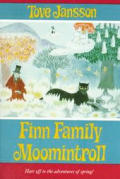
“Finn Family Moomintroll” by Tove Jansson

December 22, 2009 by Sonia Connolly 2 Comments

Recommended to me by: Ursula Le Guin, while reviewing “The True Deceiver”

I stumbled across Finn Family Moomintroll in my elementary school’s library as a child, and didn’t really know what to make of it, but loved the image of the snow falling, and the creatures curling up safely for the winter.

Re-reading it now, I still love the first chapter where everyone is settling in to sleep for the winter. I also noticed and appreciated this unusual beginning which seems like an ending.

“Everyone” includes Moomintroll, a small endearing creature with a round belly and a big nose, his parents Moominmamma and Moominpappa, and a varied assortment of long-term visitors. When spring comes, they have adventures that always turn out well, in part because of their kindness and positive assumptions about everyone they meet.

The complex household personalities and relationships shine throughout the stories, lightly shown in every interaction. Aside from the occasional scuffle over personal agendas, they show each other great care and tolerance for quirkiness, demonstrating the best of communal living.

The book was first published in Finland in 1948, and was translated into English in 1958. For the most part it has aged beautifully, but its treatment of females is archaic. Moominmamma is primarily concerned with feeding everyone and with keeping track of her handbag, which contains “dry socks and sweets and string and tummy-powder and so on.” The only other female character, the Snork Maiden, does not have her own name (she is the Snork’s sister), and her main activities are flirting with Moomintroll, and getting emotional and irrational about her appearance.

On the positive side, the Hemulen is male, but wears a dress, and no one has a problem with that. Interestingly, I clearly remembered the Hemulen as female from reading the book as a child.

Perhaps my memory gave more weight to the author’s detailed pen and ink illustrations than the pronouns. The map of Moomin Valley at the beginning shows tiny objects and events from each chapter’s adventures. The drawings throughout the book complement the multi-sensory descriptions in the text.

I’m looking forward to reading “The True Deceiver,” which is Tove Jansson’s just-published book for adults. I’m hoping that in the intervening years she has changed how she writes about women.

Available at bookshop.org.

Filed Under: fiction Tagged With: childrens, fun, illustrated

“Ask and It Is Given: Learning to Manifest Your Desires” by Esther and Jerry Hicks

December 20, 2009 by Sonia Connolly Leave a Comment

Recommended to me by: Emma McCreary, and Jeannette Maw

This is the original source for the term “Law of Attraction”, as described by “Abraham” (a collective of Non-Physical Beings) and conveyed through Esther Hicks.

The Law of Attraction is defined as:

  1. Ask (we are doing this all the time with our desires)
  2. Source answers immediately
  3. Allow the response (by matching its vibration – this is the hard part)

According to the book, humans are here to experience contrasts that illuminate our preferences, which lead to desires, which lead to manifestation. We are meant to exist in a state of joyous trust and expectation, which allows our desires to manifest.

If desires are not manifesting, it is because either our vibrations/emotions are not allowing them, or because our attention/requests are focusing on what we don’t want. It is easy to interpret this as victim-blaming, although the book tries to avoid that.

At the same time, it is clearly stated that we are here to experience contrasts, so there is nothing wrong with negative experiences.

It is also emphasized that our emotions are signposts for our thoughts and beliefs, so there is nothing to be gained by denying our emotions, and everything to be gained by noticing them. A list of 22 emotions is arranged from highest vibration (joy) to lowest (despair).

Thoughts are said to attract similar thoughts, so improving vibration is a gradual, incremental process.

The second half of the book contains exercises or games to improve our vibration. To my surprise, several of them are already an important part of my life.

  • Express appreciation and gratitude.
  • Notice how you feel, and look for thoughts that feel true and also make you feel slightly better. Repeat.
  • Meditate.
  • Clear clutter, gently and incrementally.
  • Notice the essence and feeling of what’s desired, and look for ways you already have that, or can easily bring it in.

One I plan to add to my toolbox:

  • At each transition in your day, pause and set an intention for the next segment.

I am less engaged by the games that involve pretending, or ignoring what is happening right now.

Before reading Jeannette Maw’s Good Vibe Blog, I was very skeptical about the Law of Attraction, in part because I had heard about it filtered through many layers of interpretation. I’m glad I encountered her non-judgmental take on it, and that Emma McCreary suggested reading the original source.

I still balk at the idea that reality is entirely malleable. I feel very uneasy and ungrounded with that thought, so I will continue to believe that there are essential truths underlying our experiences.

At the same time, I also believe that it is beneficial to notice our internal environment, and seek out thoughts and experiences that feel better. I see a lot of wisdom and power for healing in this book.

I am sitting with the question of whether our desires are all trustworthy. Is there truly enough abundance to accommodate everyone’s desires? What about environmental limitations, and desires which cause harm to others?

I recommend the book if you want clarity on what the Law of Attraction really is, and if you like reading new ideas and keeping the parts that work for you.

Available at bookshop.org.

Filed Under: Uncategorized Tagged With: psychology, spirituality

“Lottery” by Patricia Wood

November 14, 2009 by Sonia Connolly 3 Comments

Recommended to me by: Dave Hingsburger’s blog

The book begins, “My name is Perry L. Crandall and I am not retarded. Gram always told me the L stood for Lucky.” Perry is indeed lucky to be raised by his observant, patient Gram, since the rest of his family is avaricious and self-centered in the extreme.

He is also lucky to be employed at Holsted’s Marine Supply (where he does a great job), and to have a best friend Keith who lives on a sailboat in the harbor.

Perry makes the most of the opportunities that luck brings his way, with hard work, integrity, and the careful attention to detail taught by his Gram. He calls himself an auditor, a listener, as he observes the conversations and behaviors of the people around him. His commentary on their quirks is one of the pleasures of the book.

The dramatic plot, as Perry copes with winning $12 million in the lottery and other life events, is a vehicle for a clear moral about not labeling people. Over and over, Perry says he is not retarded, and that it is wrong to label others as well. His successes demonstrate the point.

In a book bringing such awareness to language, it was jarring to see the repeated use of “gyp” to mean “cheated” without comment or apology. The author may need to gain awareness of the discrimination suffered by the Gypsy/Rom peoples.

Overall, a thought-provoking read.

Available at bookshop.org.

Filed Under: fiction Tagged With: disability

“Will I Ever Be Good Enough? Healing the Daughters of Narcissistic Mothers” by Karyl McBride

October 25, 2009 by Sonia Connolly Leave a Comment

A mix of personal memoir, client stories, and self-help advice, this book compassionately details the effects of having a narcissistic mother and shows a pathway for healing.

Narcissism – extreme self-absorbtion and inability to empathize with others – occurs on a spectrum from a few narcissistic traits to full-blown Narcissistic Personality Disorder. Women with these traits compete with, control, or ignore their children rather than providing unconditional mirroring and acceptance.

Their children grow up questioning their very right to existence, either piling up achievements to become “good enough”, or hiding from their pain in drugs, alcohol, and acting out.

“A daughter who doesn’t receive validation from her earliest relationship with her mother learns that she has no significance in the world and her efforts have no effect. She tries her hardest to make a genuine connection with Mom, but fails, and thinks that the problem of rarely being able to please her mother lies within herself. This teaches the daugther that she is unworthy of love.”

McBride gives three steps for recovery:

  1. Understanding and diagnosing the problem
  2. Processing the grief and other feelings from childhood
  3. Discovering true preferences, values, and ways of being.

I recommend this calm, thorough, and encouraging book to anyone who finds herself struggling to prove that she is good enough to be seen, honored, and valued.

Available at bookshop.org.

Filed Under: Uncategorized Tagged With: childhood abuse, healing, memoir, psychology

“Mister God this is Anna” by Fynn

September 26, 2009 by Sonia Connolly Leave a Comment

I bought this book about 20 years ago for the delightful drawing on the cover. At the time, I read it as a rescue story, set in the 1930’s in London’s East End. 5 year old Anna has run away from an intolerable home life, and is found and adopted by gruff, kind, 19 year old Fynn and his dependable mum.

Fynn makes an effort to educate his new best friend, and finds himself educated at the same time by her headlong explorations of physics and her effervescent ideas about Mister God.

I picked the book up recently and re-read it, and this time it reads more like an allegory, where Fynn and young Anna are vehicles for the Author’s Message about God.

The Wikipedia page about the book reveals that Fynn is a pseudonym for Syndey Hopkins, and gives more information about his life. He did grow up in the East End of London in the 1930’s.

In the book, as Fynn and Anna discuss philosophy and religion, they also explore the East End with all their senses, and share it with the reader. Those details, along with William Papas’ impressionistic line drawings, are my favorite parts of the book.

Available at bookshop.org.

Filed Under: fiction Tagged With: illustrated, spirituality, survival story, trauma

“Purple Cow: Transform Your Business by Being Remarkable” by Seth Godin

September 15, 2009 by Sonia Connolly Leave a Comment

Recommended to me by: Tshombe Brown

Seth Godin specializes in pithy marketing advice for this new era of marketing with permission rather than blanket advertising. In fact, he created the phrase “permission-based marketing,” and Purple Cow‘s mission is to convince marketers that the era of blanket advertising is over.

Seth Godin’s points:

In the old days (a few years ago), TV advertising drove demand, which created profits, which paid for more TV advertising. Now, that channel has been saturated – there are too many marketers competing for consumers’ limited attention.

Even if customers have clear needs and are open to receiving information, they turn to their friends or other trusted sources rather than to media advertising.

The solution is to create a product that is remarkable, like a purple cow, so that people will remark on it to their friends, and it will spread as an “ideavirus”.

While companies previously targeted the large number of mainstream customers with their message, it is now important to target those innovators and early adopters who will spread the word about remarkable products. Godin calls these people “sneezers” of the ideaviruses.

The book includes many brief case studies and suggestions for how to find or create a purple cow.

  • Find the edges of your product or service, and see where you can go further than others
  • Marketing should be part of product creation, not an afterthought
  • People need a clear, short phrase to help them spread the word.
  • Be willing to fail. The “safe route” isn’t safe anymore anyway.

While the book is heavily slanted toward product businesses, I’ll be thinking about how to apply the ideas to my own service business. I’ve noticed that many people have a strong reaction to the word trauma in my tagline “helping sensitive people heal from trauma” and my web address TraumaHealed.com, and I think that’s a step in the right direction.

Read more remarkable marketing ideas at Seth Godin’s blog.

Available at bookshop.org.

Filed Under: nonfiction Tagged With: business, marketing

  • « Go to Previous Page
  • Page 1
  • Interim pages omitted …
  • Page 66
  • Page 67
  • Page 68
  • Page 69
  • Page 70
  • Interim pages omitted …
  • Page 72
  • Go to Next Page »

Primary Sidebar

Recent Books

  • “Untangling” by Barbara McGavin and Ann Weiser Cornell
  • “After Hours at Dooryard Books” by Cat Sebastian
  • “We Belong to the Drum” by Sandra Lamouche and Azby Whitecalf
  • “Atlas of the Heart” by Brene Brown
  • “Life After Cars” by Sarah Goodyear, Doug Gordon, Aaron Naparstek
  • “Tidy First?” by Kent Beck
  • “When You Had Power” and “You Knew the Price” by Susan Kaye Quinn
  • “Taproot” by Keezy Young
  • “The Tower at Stony Wood” by Patricia A McKillip
  • “Hospicing Modernity” by Vanessa Machado de Oliveira

Tags

activism aging anti-racism bodywork business childhood abuse childrens CivicTech communication disability domestic violence fantasy feminism finance Focusing food fun healing health at any size illustrated Judaism leadership lgbt marketing memoir music natural world neurodiversity politics psychology relationship romance science science fiction software spirituality survival story trauma writing young adult

Categories

Archives

Please note: bookshop.org and Amazon links are affiliate links. Copyright © 2026 · Genesis Sample on · WordPress