• Skip to primary navigation
  • Skip to main content
  • Skip to primary sidebar
Curious, Healing

Curious, Healing

Books about healing, business, and fun

  • About Sonia Connolly

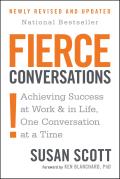
“Fierce Conversations” by Susan Scott

February 24, 2015 by Sonia Connolly Leave a Comment

book cover

Subtitle: Achieving Success at Work & in Life, One Conversation at a Time

Recommended to me by: Jessie Link

Susan Scott is a consultant to corporate CEOs, coaching them in fierce conversations. While the book does include some non-work examples, and carefully mixes or avoids pronouns, it also fails to address the power dynamics and mostly homogeneous demographics of CEOs. I found it difficult to see myself in some of the corporate examples, especially when the focus was on Susan Scott’s consulting business.

At the same time, there was a lot in the book that resonated for me.

“Successful relationships require that all parties view getting their core needs met as being legitimate.”

“There is something within us that responds deeply to people who level with us.”

Fierce conversations are defined as “robust, intense, strong, powerful, passionate, eager, unbridled.” They avoid blame and attack.

7 Principles:

  1. Master the courage to interrogate reality. Reality keeps changing. What are you pretending not to know?
  2. Come out from behind yourself into the conversation and make it real.
  3. Be here, prepared to be nowhere else. Speak and listen as if this is the most important conversation you will ever have with this person.
  4. Tackle your toughest challenge today.
  5. Obey your instincts. Trust your perceptions, but don’t be attached to them.
  6. Take responsibility for your emotional wake. The conversation is the relationship. Share appreciation and praise. Speak with clarity, conviction, and compassion.
  7. Let silence do the heavy lifting.

    I had the most trouble with Principle 4. While some people need encouragement to tackle challenges, others need encouragement to step back, or to take the smallest possible step forward at a time.

    The book includes frameworks for difficult conversations, and exercises for becoming more honest and self-aware.
    Available at bookshop.org.

Filed Under: nonfiction Tagged With: business, communication

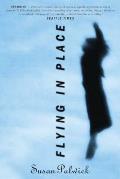
“Flying in Place” by Susan Palwick

February 17, 2015 by Sonia Connolly 1 Comment

book cover

A twelve-year-old girl is being abused by her father, and is ultimately rescued by their next door neighbors. Her older sister had died, and at the end of the book, the neighbor says, “No one can help her. That’s what being dead means.”

Susan Palwick’s blog title is Rickety Contrivances of Doing Good. That does describe this book’s satisfying rescue, and at the same time, the book realistically portrays gaslighting and abuse and the necessary mechanisms for survival.

I’ve had the book long enough that I don’t remember how I first came across it. I went back to it looking for that quote. Highly recommended, if you don’t mind crying at the end.

Available at bookshop.org.

Filed Under: fiction Tagged With: childhood abuse, survival story, trauma

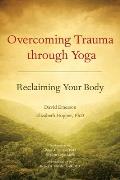
“Overcoming Trauma Through Yoga” by David Emerson and Elizabeth Hopper

February 12, 2015 by Sonia Connolly 1 Comment

Subtitle: Reclaiming Your Body

Recommended to me by: a client

This book is divided into three parts: a general introduction to the history of trauma treatment and PTSD, a suggested yoga practice for traumatized people, illustrated with photographs, and suggestions for offering trauma-sensitive yoga for clinicians and yoga teachers.

Throughout the book, it is clear that these people get it. They emphasize choice, empowerment, and reconnecting with the body. From Stephen Cope’s foreword: “Sometimes we encounter experiences that so violate our sense of safety, order, predictability, and right, that we feel utterly overwhelmed […]. Unable to bear reality. We have come to call these shattering experiences trauma.”

Trauma involves being helpless to avoid pain. In trauma-sensitive yoga, students are repeatedly encouraged to change postures if they are painful, and instructions emphasize choice and control over their own bodies. Students are encouraged to attend to their own experience, rather than trying to get postures “right”.

There were two instructions in the book that seemed less well-attuned to traumatized yoga students. One is to “lift the crown of the head,” without explaining how to find a balanced upright posture for the head. The other is to “hug in and around the lower belly” to activate core muscles. Many traumatized people chronically clench their bellies already.

Trauma-sensitive yoga classes move slowly to give students time to connect with their physical experience. “Physical assists” (touching students) is done rarely, with permission, and with careful attention to possible triggering effects. Thought is given to the props available – many trauma survivors find straps triggering because of having been restrained, so the book suggests not having straps in the room.

“In teaching trauma-sensitive yoga, the job of the yoga teacher is not to create artificial challenges—many of our students have already challenged themselves more than we may ever know just by showing up. The work of the teacher is to cultivate enough safety so that students can challenge themselves as they are ready, and in ways they feel safe.”

Highly recommended for its compassionate approach to anyone dealing with trauma or traumatized people.

Available at bookshop.org.

Filed Under: nonfiction Tagged With: bodywork, healing, illustrated, psychology, trauma

“Religion Gone Astray” by Pastor Don Mackenzie, Rabbi Ted Falcon, Imam Jamal Rahman

January 15, 2015 by Sonia Connolly Leave a Comment

Subtitle: What We Found at the Heart of Interfaith

Recommended to me by: Rabbi Ted Falcon’s website

I felt welcomed into this book right away when the authors say they will address exclusivity, violence, sexism, and homophobia in their three religions. These are the major issues that keep me away from organized religion.

For each section, each author writes in turn about his religion, where it goes astray, and how that can be addressed. They appear in the order that the religions were founded: first Judaism, then Christianity, then Islam. They take full ownership of problematic scriptures, and explain how they can be re-interpreted to support a more inclusive, whole spirituality.

They say the core teaching of Judaism is oneness, of Christianity is unconditional love, and of Islam is compassion.

They address exclusivity as a (misguided) attempt to define each religion in contrast to other options. Violence is defensive, and also a reflection of the human authors and interpreters of scripture. “The more aware I am of the potential for violence within me, the more likely I am to refrain from acting that violence out in my world.”

I was least satisfied with the way they address sexism. Each affirms that men and women [people of all genders] are of equal value and should be treated equally. I did not see them take a step back and acknowledge that the scriptures were written/interpreted by and for men, and that they would be very different if they had been written by women as well.

Their section on homophobia has both the most welcoming and least welcoming passages. Least welcoming is that the exercises at the end are clearly written for straight people, not imagining that LGBT people will be reading as well.

Most welcoming:

The forgiveness we need as a culture and a world is for thinking that homosexuality is anything but natural. And this forgiveness is not needed because we are bad people, but because we need to start over in our thinking about homosexuality.
In effect, we need to be born again to a different and positive and supportive sensibility concerning homosexuality.

The book ends with the comforting idea that both people and institutions go astray in order to grow.  Our mistakes show us where there is more work to be done.

Available at bookshop.org.

Filed Under: nonfiction Tagged With: communication, Judaism, spirituality

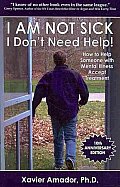
“I Am Not Sick I Don’t Need Help!” by Xavier Amador, PhD

December 25, 2014 by Sonia Connolly Leave a Comment

Subtitle: How to Help Someone with Mental Illness Accept Treatment

Recommended to me by: a friend with a mentally ill relative

This is a book about how to communicate better with people with mental illnesses involving psychosis like schizophrenia or bipolar disorder. The focus is on getting people to accept psychoactive drugs when they don’t believe they are ill.

Rather than assuming non-compliant patients are immature, defensive, stubborn, or oppositional, Xavier Amador documents that poor insight into being mentally ill is a symptom of being ill itself. People carry their self-image from before becoming ill and don’t update it to match their new reality. Anosognosia is the official diagnosis for lacking self-awareness of a disability.

He also presents research that early and consistent use of medications leads to better long-term outcomes than longer periods of untreated psychosis. My intuition says that there may be correlation rather than causation there.

Rather than arguing with someone about whether they are ill and need medications, Amador proposes the LEAP protocol: Listen, Empathize, Agree, Partner. Listen to what the person has to say, ask questions to clarify, and reflect it back, even if it is delusional. Empathize with the underlying emotions. Find places of agreement. Partner to meet common goals, such as avoiding repeated hospitalizations. Be an ally rather than an adversary. Recognize the person’s autonomy.

Reflective listening can be difficult when we have an urgent agenda, especially when we believe someone is delusional. It’s easy to believe we are listening reflectively while being patronizing instead, which undermines all attempts at creating an alliance.

  1. Make it safe – Apologize for past attempts at coercion and indicate an intention to listen. It will take time to rebuild trust.
  2. Know your fears – Many people fear worsening or joining in delusions if they are not immediately contradicted.
  3. Stop pushing your agenda – Drop attempts to be in control. The agenda is to listen and learn.
  4. Let it be – Don’t fan the flames of conflict. Don’t try to impose order on disordered thinking.
  5. Respect what you’ve heard – Reflect back without comment or criticism.
  6. Find workable problems – Find out how they see their problems, and help them address them.
  7. Write the headlines – Listen for what is most important, and underlying themes.

Delay giving opinions, especially about whether the person has a mental illness and needs drugs. Say things like, “I’ll answer that, but first I want to hear more about how you’re feeling.” When giving an opinion, Apologize, Acknowledge, Agree. Apologize for having an opinion that may be hurtful to hear. Acknowledge that it is only an opinion and could be wrong. Agree to disagree. Above all, acknowledge that the person is in charge of their own body and will be making the final decisions about taking meds when not in the hospital.

Recommended for the respectful communication skills, with the caveat that this book emphatically advocates for meds, with one brief paragraph about the benefits of intensive therapy instead.

Available at biblio.com.

Filed Under: nonfiction Tagged With: communication, psychology

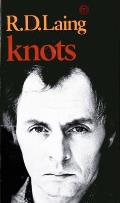
“Knots” by R.D. Laing

December 14, 2014 by Sonia Connolly Leave a Comment

Recommended to me by: David Mitchell

These are the knots of human relationships, stripped down to their raw bones, layered like acrostic puzzles into brief poems. It starts with parent-child relationships, and moves on to (presumably) romantic relationships, indicated by dialogues between Jack and Jill.

There is no untangling in this little book; just knots. I’m not sure these are the sort of knots that are helped by awareness. They may just be pulled tighter. The book came up in the context of complementary schismogenesis, when two people (or groups) get more and more polarized in their roles. That can sometimes be interrupted with awareness and consciously adopting the opposite qualities.

Jill I’m ridiculous
Jack No you are not
Jill I’m ridiculous to feel ridiculous when I’m not.
You must
    be laughing at me
for feeling you are laughing at me
    if you are not laughing at me

Available at bookshop.org.

Filed Under: poetry Tagged With: psychology

  • « Go to Previous Page
  • Page 1
  • Interim pages omitted …
  • Page 38
  • Page 39
  • Page 40
  • Page 41
  • Page 42
  • Interim pages omitted …
  • Page 70
  • Go to Next Page »

Primary Sidebar

Recent Books

  • “How We Show Up” by Mia Birdsong
  • “The Enchanted Greenhouse” by Sarah Beth Durst
  • “What It Takes to Heal” by Prentis Hemphill
  • Kitchens of Hope by Linda S. Svitak and Christin Jaye Eaton with Lee Svitak Dean
  • “Very Far Away From Anywhere Else” by Ursula K Le Guin
  • “Seaward” by Susan Cooper
  • “Surviving Domestic Violence” by Elaine Weiss
  • “The Book of Love” by Kelly Link
  • “Alexandra’s Riddle” by Elisa Keyston
  • “Weaving Hope” by Celia Lake

Tags

activism aging anti-racism bodywork business childhood abuse childrens CivicTech communication disability domestic violence fantasy feminism finance Focusing food fun healing health at any size illustrated Judaism leadership lgbt marketing memoir music natural world neurodiversity politics psychology relationship romance science science fiction software spirituality survival story trauma writing young adult

Categories

Archives

Please note: bookshop.org and Amazon links are affiliate links. Copyright © 2025 · Genesis Sample on · WordPress