• Skip to primary navigation
  • Skip to main content
  • Skip to primary sidebar
Curious, Healing

Curious, Healing

Books about healing, business, and fun

  • About Sonia Connolly

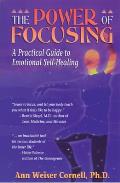
“The Power of Focusing” by Ann Weiser Cornell, Ph.D.

June 2, 2012 by Sonia Connolly 4 Comments

Subtitle: A practical guide to emotional self-healing

Recommended to me by: Nancy Lebovitz

Eugene Gendlin discovered that the difference between successful and unsuccessful therapy lies in the client’s ability to pause and attend to something wordless inside, and get to know it better. He named this skill Focusing and began teaching it, developing a protocol of six steps.

Ann Weiser Cornell learned from Eugene Gendlin and began teaching workshops. She developed a variation called Inner Relationship Focusing which still has steps, but is less concerned with a strict protocol.

In this book, she introduces Focusing through client stories and teaches the skills involved with analogies and detailed instructions. The body’s felt sense is like a shy animal at the edge of the woods. We say hello, and wait. As trust is built, the felt sense comes closer and reveals more information. As it is heard, without judgment, it can change and release.

Focusing can be done alone, or with a Focusing partner who reflects back discoveries with gentle neutrality.
Focuser: “I don’t know what to call this feeling in my throat.”
Listener: “You’re feeling something in your throat.”

When there is a negative reaction to the felt-sense, attention turns to that reaction with interested curiosity.
Focuser: “I’d like to push this away.”
Listener: “Maybe you could say hello to that feeling of wanting to push this away.”

This book and the articles on Ann Weiser Cornell’s website are both highly recommended. This is the work I try to do, and the work I want others to do with me.

One of many articles on Ann Weiser Cornell’s website: The Radical Acceptance of Everything.
Available at bookshop.org.

Filed Under: nonfiction Tagged With: Focusing, psychology

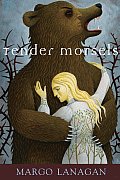
“Tender Morsels” by Margo Lanagan

May 3, 2012 by Sonia Connolly Leave a Comment

Recommended to me by: Meloukhia

This is a fairy tale, but no child’s story. It starts with incest and pregnancy and abortion, and continues with gang rape. Then Liga is magically placed in a world that matches her heart’s desire, peaceful and safe.

While examining the consequences of assault and the consequences of avoiding trauma, the story sings along, full of prickly, kind characters and vivid details.

Recommended, for a true look at life in fairy tale guise.

An interview with Margo Lanagan.

Jody Hewgill (the cover artist)’s portfolio.

Available at bookshop.org.

Filed Under: fiction Tagged With: childhood abuse, domestic violence, survival story, trauma, young adult

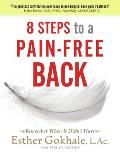
“8 Steps to a Pain-Free Back” by Esther Gokhale, L.Ac. with Susan Adams

April 23, 2012 by Sonia Connolly 1 Comment

Subtitle: Remember When It Didn’t Hurt

Recommended to me by: Rosalind Bell

This book is a beautifully photographed and illustrated step-by-step guide to moving well as a human. It is also a carefully crafted sales brochure for the author’s clinic and method, with testimonials sprinkled liberally through the text.

Esther Gokhale (“Go-clay”) grew up in India, studied biochemistry and acupuncture in the US, and, inspired by her own back pain, conducted research on body mechanics in Burkina Faso, India, Portugal, and elsewhere.

She suggests that we integrate stretchsitting, stretchlying, tallstanding, and glidewalking into our lives to regain our birthright of healthy pain-free movement. The foundation of these movements is to allow the pelvis to tip forward so the top is lower in front and the sacrum protrudes slightly in back. The rest of the back remains relatively straight, with the shoulders settled down and back.

In contrast, many of us learned to tuck the pelvis so that if we had a tail, we’d be sitting on it.

The photographs of babies and adults from around the world are gorgeous and convincing. The book is carefully respectful of traditional cultures and full-figured people. I would have liked to see photos of people of color from the USA, and white people from traditional cultures, rather than the strict divide with only white people from the USA and people of color from traditional cultures.

While there is a lot of discussion about cultural influences on posture, there is no reference to the long-term effects of physical and emotional trauma. For some people there is more to healing than learning to move with a stretched back.

I highly recommend this book for the photos, for new ways of observing movement and posture, and for useful exercises to improve the use of your body.

More information about the Gokhale Method.

Available at bookshop.org.

Filed Under: nonfiction Tagged With: bodywork, healing, illustrated

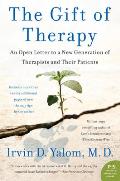
“The Gift of Therapy” by Irvin Yalom, MD

April 14, 2012 by Sonia Connolly Leave a Comment

Subtitle: An Open Letter to a New Generation of Therapists and Their Patients

Recommended to me by: Rachel Manija

This is a collection of short tips about psychotherapy from a longtime practitioner. I loved his tips about creating a warm, safe, positive relationship with the client and processing the here-and-now of the relationship for clues about how to help the client with external relationships. I loved that he starts with the assumption that he is helping to remove obstacles, because everyone naturally grows and develops given the chance. I loved that he sees himself as a fellow traveler with his clients.

This quote early in the book of German philosopher Arthur Schopenhauer expresses our common expectations that life should go well, and that we’ve done something wrong if it doesn’t, and yet it so often doesn’t.

In early youth, as we contemplate our coming life, we are like children in a theater before the curtain is raised, sitting there in high spirits and eagerly waiting for the play to begin. It is a blessing that we do not know what is really going to happen. Could we foresee it, there are times when children might seem like condemned prisoners, condemned, not to death, but to life, and as yet all uncounscious of what their sentence means.

I found the stated assumption that clients are causing their own problems frustrating and condescending. He overtly says he makes that assumption because that is how he can be effective in helping the client. Reminds me of someone looking for lost keys under the streetlight because they can see better there.

Of course it’s true in many cases, and looking at one’s role in a recurring problem can be a fruitful exploration. He seems to say that it is universally true, and does not acknowledge the work a client may already have done in that arena. Some clients need help to stop blaming themselves. I hear an underlying assumption that clients are broken, despite his starting assertion that growth simply requires the removal of blocks.

I think as a white male doctor he has a lot more experience of agency in his life than a lot of his clients, and he would also naturally discuss in his book the clients who benefited most from his approach. It makes me angry that the book made me question myself again on the topic, and I imagine he had that effect on some clients as well.

He repeatedly brings up the damaging effect on psychotherapy of insurance, “managed care,” lower compensation, less training, and “evidence-based” treatments. This book is a defense of long-term therapy toward profound change.

The book is a quick read. I recommend it as a tool to learn about psychotherapy, although I would not personally benefit from a therapist who followed all these practices.

Available at bookshop.org.

Filed Under: nonfiction Tagged With: healing, psychology

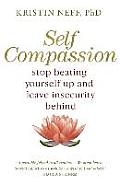
“Self-Compassion” by Kristin Neff, Ph.D.

April 9, 2012 by Sonia Connolly 2 Comments

Subtitle: Stop beating yourself up and leave insecurity behind

Kristin Neff is a psychology professor who focuses on self-compassion. Her book has a lot of helpful information – and also pushed my buttons. I think I’m not in her target audience.

While Kristin Neff talks about some emotional trauma in her life, there is an “us vs. them” feeling when she talks about trauma and mental illness, and an element of blame for self-defeating behaviors that arise from anxiety and self-criticism. It’s hard to read about compassion while feeling the raw edge of judgment.

I think she intentionally simplifies the discussion and examples for her intended audience, and “proves” her ideas by referring to small research studies where she gave questionnaires to college students.

I set the book aside in frustration, but I’m glad I went back to it.

Self-compassion is first compared with self-esteem. Self-esteem is an evaluation of our self-image, where self-compassion is a response to feeling fear, shame, or other painful emotions. Self-esteem depends on comparison and competition with others, where self-compassion reminds us of our common humanity.

To err is human. Better to be human than perfect. Moments of shame and inadequacy feel isolating, but all humans have them. Where do you excel? Where are you average? Where are you less than average?

She suggests gentle caresses, and kind words of acceptance. “Poor darling. This is really hard right now.”

Remember that our actions arise from an interconnected web of genetics, environment, past events, and current resources. Causality and blame are ambiguous. “Judgment defines people as bad vs. good. Discriminating wisdom recognizes complexity and ambiguity.”

Mindfulness helps us notice moments of suffering before (or while) dropping into blame and problem-solving. It helps us respond rather than react. Suffering = pain x resistance.

“One thing we have little power to change is what goes on inside our own heads. […] Thoughts and emotions arise unbidden and often overstay their welcome.”

Notice the experience of painful feelings in the body, and send yourself compassion for feeling that way. “Soften, soothe, allow.”

Three doorways into self-compassion: mindfulness, common humanity, kindness.

“This is a moment of suffering.
Suffering is part of life.
May I be kind to myself in this moment.
May I give myself the compassion I need.
”

Self-compassion can be hard for survivors of childhood abuse because it is sometimes associated with the cycle of alternating kindness and abuse.

Self-compassion doesn’t magically make the negative thoughts and feelings go away.

Self-compassion motivates better than self-criticism, despite what many parents and teachers enact. Love, not fear. “What’s good for you?” instead of “Are you good enough?” Intrinsic vs. extrinsic motivation.

Sympathetic joy – appreciating others’ success and good qualities allows us to appreciate our own as well, and helps us stay aware of the positive in general. Celebrate achievements, which also come from a mix of genetics, environment, etc.

Through the book, Neff talks about how helpful self-compassion has been with her husband Rupert and son Rowan, especially when Rowan was diagnosed with autism. At the end of the book she describes their adventure in Mongolia, combining horseback riding with shamanism to help Rowan, chronicled in the documentary and book, “The Horse Boy.”

Available at bookshop.org.

Filed Under: nonfiction Tagged With: psychology

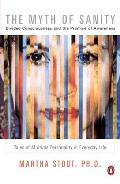
“The Myth of Sanity” by Martha Stout, Ph.D.

April 3, 2012 by Sonia Connolly Leave a Comment

Subtitle: Divided Consciousness and the Promise of Awareness; Tales of Multiple Personality in Everyday Life

Recommended to me by: a client

This book contains a therapist’s compassionate, engaging views on people who have Dissociative Identity Disorder (previously known as Multiple Personality Disorder) and how they can heal. Martha Stout discusses both specific cases and general themes of survival, courage, integrity, and the process of healing.

After trauma, she says the core question is, “Shall I choose to die, or shall I choose to live?” Those who choose to live, live fully, passionately. Anything less would not be worth the struggle and pain of healing.

Healing requires going back and revisiting traumatic memories while the whole nervous system shouts, “No! Danger!” They don’t all have to be revisited, and perfect recall is not required, but at least a few frozen traumatic memories have to be transformed into narrative memory.

The key predictor of healing is a sense of responsibility for one’s actions. Conversely, prioritizing self-protection above responsibility acts to keep dissociative mechanisms in place. A sense of integrity, or the lack of it, shines through all the dissociative fragments of a person.

We see dramatic portrayals of Dissociative Identity Disorder in books and movies and believe it to be very rare, but most people with DID switch quietly, unnoticed, in higher numbers than we believe. Martha Stout says it is because most people aren’t such good actors, and I think people also try to camouflage switching as much as possible. She validates the anger, frustration, and bewilderment of coping with someone’s quicksilver changes and lack of memory for their own recent words and actions.

She also says that we all dissociate to some extent, whether arriving at a destination without remembering the drive, or being absorbed in a movie, or suppressing “inconvenient” emotions.

For trauma survivors she recommends:

  • Find help, a steady witness, whether a therapist or a friend.
  • Be as safe as possible in the present. Provide your nervous system with a calm environment.
  • Buy comforts, keep a pet, fall in love with silence.
  • Separate yourself from difficult, crisis-addicted, rageful, and violent people.
  • Have routines. Make them sacred. Sleep every night.
  • Meditate.
  • Keep a journal. Note your dreams.

This book is unreservedly recommended!

Available at bookshop.org.

Filed Under: nonfiction Tagged With: childhood abuse, healing, psychology, trauma

  • « Go to Previous Page
  • Page 1
  • Interim pages omitted …
  • Page 48
  • Page 49
  • Page 50
  • Page 51
  • Page 52
  • Interim pages omitted …
  • Page 70
  • Go to Next Page »

Primary Sidebar

Recent Books

  • “How We Show Up” by Mia Birdsong
  • “The Enchanted Greenhouse” by Sarah Beth Durst
  • “What It Takes to Heal” by Prentis Hemphill
  • Kitchens of Hope by Linda S. Svitak and Christin Jaye Eaton with Lee Svitak Dean
  • “Very Far Away From Anywhere Else” by Ursula K Le Guin
  • “Seaward” by Susan Cooper
  • “Surviving Domestic Violence” by Elaine Weiss
  • “The Book of Love” by Kelly Link
  • “Alexandra’s Riddle” by Elisa Keyston
  • “Weaving Hope” by Celia Lake

Tags

activism aging anti-racism bodywork business childhood abuse childrens CivicTech communication disability domestic violence fantasy feminism finance Focusing food fun healing health at any size illustrated Judaism leadership lgbt marketing memoir music natural world neurodiversity politics psychology relationship romance science science fiction software spirituality survival story trauma writing young adult

Categories

Archives

Please note: bookshop.org and Amazon links are affiliate links. Copyright © 2025 · Genesis Sample on · WordPress