• Skip to primary navigation
  • Skip to main content
  • Skip to primary sidebar
Curious, Healing

Curious, Healing

Books about healing, business, and fun

  • About Sonia Connolly

healing

“The Dark Side of the Light Chasers” by Debbie Ford

December 21, 2013 by Sonia Connolly 1 Comment

Subtitle: Reclaiming Your Power, Creativity, Brilliance, and Dreams

I first read this book at least 10 years ago and found it life-changing in both positive and negative ways. Yes, it’s useful to look within myself for qualities I struggle with in others. Yes, it’s useful to acknowledge that we include all qualities, both wanted and unwanted.

No, it’s not useful to believe that I can control others through that process. The author says, “We must choose interpretations that move our lives forward rather than leave us feeling alone and helpless.” Years ago, I read that as a command, as well as self-blame if I felt alone and helpless. Now I see the author’s avoidance of the qualities of aloneness and helplessness, as well as the effects of her privilege and wealth, insulating her from events she truly does not control.

This book contains a lot of practical information and exercises about projection. It’s worth reading with caution to see which ideas work for you. The point of acknowledging projection is to reduce internal pain and suffering, not add more because you don’t get the magical external results the author describes.
Available at bookshop.org.

Filed Under: nonfiction Tagged With: healing, psychology

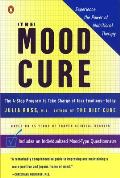
“The Mood Cure” by Julia Ross

October 7, 2013 by Sonia Connolly Leave a Comment

Julia Ross theorizes that deficiencies in certain amino acids cause emotional symptoms, and taking supplements, as well as generally eating more protein, can quickly and completely resolve most mood problems.

The book is clearly and carefully written, with a lot of “if you experience this, try that” advice. It starts with a Mood-Type questionnaire, and continues with a chapter on each type and what helps.

  1. Under a dark cloud: low in antidepressant serotonin
      main solution: 5-HTP in the afternoon and evening

  2. Suffering from the blahs: low in stimulating catecholemines or thyroid
      main solution: L-tyrosine between meals

  3. Overwhelmed by stress: Low in tranquilizing GABA
      main solution: GABA when stressed

  4. Too sensitive to life’s pain: low in pain-killing endorphins
      main solution: DLPA, D- and L-phenylalanine

Julia Ross recommends a hearty serving of protein for each meal: 3 eggs, or 3-4 ounces of meat, or 1.5 cups of beans. Plus plenty of fats and vegetables. She says several times that weight-loss diets do damage, and has a section headed, “Eat Enough.” There is a section of Good-Mood menus and recipes.

There is far more information in this book than I can even summarize here. It seems worth reading it and trying some of the recommended supplements, although I doubt the results are as consistent and dramatic as claimed.

Available at bookshop.org.

Filed Under: nonfiction Tagged With: healing, psychology

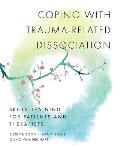
“Coping with Trauma-Related Dissociation” by Suzette Boon, Kathy Steele, Onno van der Hart

July 6, 2013 by Sonia Connolly Leave a Comment

Subtitle: Skills training for patients and therapists

Recommended to me by: A client

This is a useful book packed full of detailed, compassionate information on dissociation. Since it is a group training manual, it is divided into short chapters meant for individual class sessions.

The authors often note that each person’s experience of dissociation and healing will be different, and techniques work for different people at different times. At the same time, there is a whiff of condescension in the training, with over-simplified explanations and implications that if you just work hard enough everything will get better. For example, improve your social skills and you won’t be isolated any more.

I’ve noticed that a feeling of loneliness can be a flashback to earlier isolation. This is the first book where I’ve seen that mentioned. The main suggested tools for healing are empathic observation, finding common ground among dissociative parts, taking small steps, and creating internal safety. There are several creative visualization exercises, for example visiting a store that is perfectly comfortable for you and where you can pick up anything you need to feel safer, for free.

I recommend this book for people who experience and/or work with dissociation. At more than 400 pages, it’s a good book to read gradually or dip into for ideas.

Available at bookshop.org.

Filed Under: nonfiction Tagged With: disability, healing, psychology, trauma

“The Trauma Spectrum” by Robert Scaer

June 23, 2013 by Sonia Connolly Leave a Comment

Subtitle: Hidden Wounds and Human Resiliency

This book is a frustrating mix of interesting theories, solid information, and bigoted rants.

The author leads with some encouraging words about intersectionality and noticing how society’s defaults harm some people, but then devolves into “women returning to work after childbirth causes harm because babies need maternal care” and “fast-food advertising causes harm because traumatized morbidly obese people get triggered into eating even more.”

I am pro infants receiving attuned care and against subliminal advertising for any product, but his conclusions on these topics lack validity as well as compassion. Infants can receive attuned care from many people, not just the mother. Fat people don’t necessarily eat more than thin people.

There is also a lot of matter-of-fact reporting on cruel animal experiments. Perhaps some animal experiments are necessary, but we can at least regret the harm they do.

On the interesting side, keeping me from just discarding the book, he notices that his clients with whiplash show trauma symptoms and are helped by Somatic Experiencing and other trauma-resolution therapies. That sounds obvious when I type it out, but we think of whiplash as a soft-tissue injury (muscles and tendons) rather than a nervous system injury. He notes that severe whiplash in response to relatively minor motor vehicle crashes correlates with a past history of trauma.

He also talks about nervous system kindling, or neurosensitization, where the sympathetic and parasympathetic nervous systems are out of balance and internal triggering keeps them out of balance. This explains, among other things, Multiple Chemical Sensitivity.

He speculates that fibromyalgia correlates with preverbal trauma, and disregulation of the nervous system.

He talks a lot about the structures in the brain that process trauma, and about the sense of being frozen in time that accompanies PTSD. Approach/avoidance dilemmas (double binds) are an obvious source of trauma. He talks about conditioning and trauma-based learning, and the need to extinguish the connections that get created during trauma to be able to come back into the present.

Robert Scaer has worked with many patients in his career and made careful observations along the way. Unfortunately he mixes them in with his personal biases in this book, so it reads more like someone’s personal blog than a trustworthy scholarly work.

Available at bookshop.org.

Filed Under: nonfiction Tagged With: childhood abuse, disability, healing, psychology, trauma

“Waking” by Matthew Sanford

June 15, 2013 by Sonia Connolly Leave a Comment

Subtitle: A memoir of trauma and transcendence

Matt was paralyzed from the chest down at the age of 13 in a winter car crash that also killed his father and older sister. His book chronicles the numbness and dissociation that help him survive his first months and years of recovery, and his later reconnection with his body. The book includes the beautifully functional family relationships that helped sustain him.

The doctors tell him he cannot connect with his legs past his spinal injury. Even though the flesh is connected, with blood circulating in and out of the paralyzed areas, they tell him the energy he senses is just in his imagination, denial, wishful thinking.

He remembers his father doing yoga alone in the basement long before it became popularly accepted in the US. He finds a yoga teacher, Jo Zukovich, with the intuition and imagination to work with him and begins reconnecting with his body. Along the way he experiences the flashbacks and body memories of healing trauma.

He and Jo discover that “alignment and precision increase mind-body integration regardless of paralysis.” Matt writes,

“If I listen inwardly to my whole experience (both my mind’s and my body’s), my mind can feel into my legs. […] It is simply a matter of learning to listen to a different level of presence, to realizing that the silence within my paralysis is not loss. In fact, it is both awake and alive. […] The silence that helped me leave my body and protected me from pain in intensive care is the same silence that helps me energetically connect mind and body.”

Highly recommended for a clear, honest look at trauma, recovery, and living well with disabilities. Prepare to have your unconscious stereotypes about “poor, wheelchair-bound” paraplegics decisively shattered.

Available at bookshop.org.

Filed Under: Uncategorized Tagged With: disability, healing, memoir, survival story, trauma

“Daring Greatly” by Brene Brown

December 29, 2012 by Sonia Connolly 3 Comments

Subtitle: How the Courage to Be Vulnerable Transforms the Way We Live, Love, Parent, and Lead

This book recapitulates Brene Brown’s previous books The Gifts of Imperfection and I Thought It Was Just Me (but it isn’t) and adds material on vulnerability and worthiness as it applies to community, work, and parenting. This book feels more complete and at the same time less academic than the prior books. Her research supports her points rather than distancing from them.

Those who feel lovable, who love, and who experience belonging simply believe they are worthy of love and belonging. They don’t have better or easier lives, they don’t have fewer struggles with addiction or depression, and they haven’t survived fewer traumas or bankruptcies or divorces. (emphasis in the original)

The opposite of scarcity is enough, and we are already enough. Wholehearted living includes showing up and being vulnerable. Vulnerability is not weakness. There is no “get out of vulnerability free” card. Vulnerability is not the same as letting it all hang out.

The Viking-or-Victim worldview divides the world into winners and losers, and has very little room for vulnerability. The worldview is useful in life-threatening or traumatic situations, but prevents connection when the emergency is over.

The book touches on cruelty, how not to be cruel, and how to respond to cruelty. Our culture of narcissism is fed by shaming each other and avoiding vulnerability. As more of us become willing to be vulnerable and authentic, the hope is that bullying will diminish. I wish there were a more concrete, powerful answer.

The book encourages us to dare greatly and be vulnerable despite the fear and shame that arises. Vulnerability is the gateway to joy.

Available at bookshop.org.

Filed Under: nonfiction Tagged With: healing, psychology

  • « Go to Previous Page
  • Page 1
  • Interim pages omitted …
  • Page 9
  • Page 10
  • Page 11
  • Page 12
  • Page 13
  • Interim pages omitted …
  • Page 17
  • Go to Next Page »

Primary Sidebar

Recent Books

  • “How We Show Up” by Mia Birdsong
  • “The Enchanted Greenhouse” by Sarah Beth Durst
  • “What It Takes to Heal” by Prentis Hemphill
  • Kitchens of Hope by Linda S. Svitak and Christin Jaye Eaton with Lee Svitak Dean
  • “Very Far Away From Anywhere Else” by Ursula K Le Guin
  • “Seaward” by Susan Cooper
  • “Surviving Domestic Violence” by Elaine Weiss
  • “The Book of Love” by Kelly Link
  • “Alexandra’s Riddle” by Elisa Keyston
  • “Weaving Hope” by Celia Lake

Tags

activism aging anti-racism bodywork business childhood abuse childrens CivicTech communication disability domestic violence fantasy feminism finance Focusing food fun healing health at any size illustrated Judaism leadership lgbt marketing memoir music natural world neurodiversity politics psychology relationship romance science science fiction software spirituality survival story trauma writing young adult

Categories

Archives

Please note: bookshop.org and Amazon links are affiliate links. Copyright © 2026 · Genesis Sample on · WordPress