• Skip to primary navigation
  • Skip to main content
  • Skip to primary sidebar
Curious, Healing

Curious, Healing

Books about healing, business, and fun

  • About Sonia Connolly

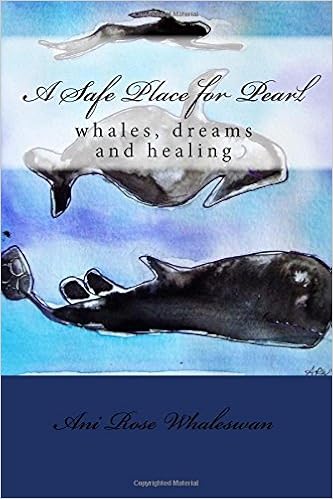
“A Safe Place for Pearl” by Ani Rose Whaleswan

April 27, 2018 by Sonia Connolly Leave a Comment

book cover

Recommended to me by: Ani Rose Whaleswan. I’ve known the author for a long time online, and I contributed an essay to her collection We Have Come Far.

“A Safe Place for Pearl” is a gentle offering of artwork, dreams, and narration, full of hope and inner resources. When there is no human support available, Nature and Spirit step in to support a child going through hard times. (The hard times are not described.) The remembering adult is supported as well. This book powerfully answers the question, “How did you survive? What helped you through?”

Recommended as support for looking inside and trusting what supports you, even if it is not visible to others.
Available at Amazon.

Filed Under: nonfiction Tagged With: healing, memoir, survival story, trauma

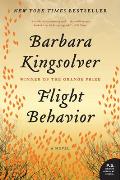
“Flight Behavior” by Barbara Kingsolver

March 29, 2018 by Sonia Connolly Leave a Comment

book cover

Recommended to me by: Reading Barbara Kingsolver’s other books

This book has Barbara Kingsolver’s trademark combination of vivid characters and complex global issues. The issues in this book are climate change and, relatedly, mass production of cheaply made products that end up in landfills or the ocean. We get a clear picture of rural Appalachian life, including the exposure to unwarranted contempt from wealthier, more educated urban folks. Also including their vulnerability to climate disaster.

I was completely absorbed. Highly recommended.

Available at bookshop.org.

Filed Under: fiction Tagged With: fun

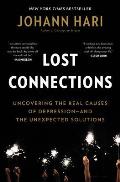
“Lost Connections” by Johann Hari

March 19, 2018 by Sonia Connolly 1 Comment

book cover

Subtitle: Uncovering the real causes of depression – and the unexpected solutions

Recommended to me by: Alice

This is a carefully researched, elegantly written book about depression and its causes. Hari interviewed people doing basic research on depression, its causes, and its solutions. He also shares about his own experiences with depression and meds that only worked temporarily.

Along the way, the idea that depression is caused by a lack of serotonin is thoroughly debunked. Apparently scientists never thought so, but it’s convenient for marketing anti-depressant drugs. Which, by the way, studies show only work for a minority of people to alleviate a small amount of depression. When they work long-term, it is largely through the placebo effect. Which is great as far as it goes, but there are serious “side-effects” (main effects) caused by these drugs.

Careful studies show that depression is not an internal malfunction. Depression is a sane response to external circumstances. Hari explores 9 causes. He notes that there are probably others, and that one of them (childhood trauma) covers a lot of ground.

Depression is caused by disconnection from:

  • meaningful work
  • other people
  • meaningful values (as opposed to pursuing material wealth)
  • [ourselves because of] childhood trauma
  • status and respect
  • the natural world
  • a hopeful or secure future

The last two causes are genes and changes in the brain. Genes can predispose us to depression, but external events trigger it. Changes in the brain happen in response to those external circumstances, and can change back when circumstances improve.

He explores solutions that have helped people reconnect. We can find anti-depressants that are social solutions rather than chemicals taken to “fix” individuals.

  • People coming together in community, extending their sense of home not just to four walls, but to the people around them.
  • Social prescribing: doctors who prescribe group projects when needed, as well as surgery and drugs when those are appropriate to the patient’s problem.
  • Co-ops and other ways to find meaning at work.
  • Exploring meaningful values and getting away from advertising that promotes feelings of inadequacy to make people buy things.
  • Sympathetic joy: shifting from envy and competition to sympathetic joy and cooperation. Also meditation and reconnecting with the self.
  • Overcoming trauma. This is a very short section for a very big topic. Hari mentions overcoming shame by speaking what happened and being heard non-judgmentally.
  • Restoring the future. This is another huge topic. Universal basic income is mentioned as a good start.

The only downside I noticed in this book is some concern-trolling about the “serious medical crisis” of obesity. It was jarring in a book where I didn’t notice other overtly oppressive language. He interviews enough women scientists that I didn’t feel the need to go back and count how many women and men there were. I don’t know how many were people of color.

Highly recommended for everyone who is experiencing our highly disconnected, advertising-saturated, chronically insecure society.

Available at bookshop.org.

Filed Under: nonfiction Tagged With: memoir, psychology

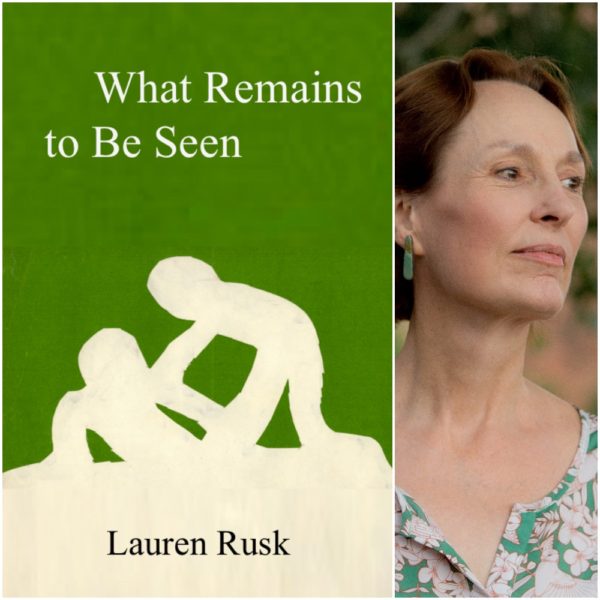
“What Remains to Be Seen” by Lauren Rusk

March 15, 2018 by Sonia Connolly Leave a Comment

book cover

Recommended to me by: Eric Roberts

This is a chapbook of poems about some of the children’s art left behind at the concentration camp Theresienstadt.

Cover art: The image of Kain and Abel by an unknown artist is from the collections of the Jewish Museum in Prague. One of the poems richly describes this piece and the experience of the child making it.

The poems describe both art and artist child, the context of camp around the child, and allusions from the wider world. They are conversational, translucent, including author and reader in the experience of looking at art created in the midst of horror.

Recommended as a tribute to the children artists, as a way to keep their memory alive, as way of bearing witness so we never forget, so it never happens again.

Available at Finishing Line Press.

Filed Under: poetry

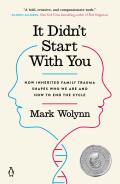
“It Didn’t Start With You” by Mark Wolynn

March 11, 2018 by Sonia Connolly 1 Comment

book cover

Subtitle: How inherited family trauma shapes who we are and how to end the cycle

Recommended to me by: a client

The book starts with Mark Wolynn’s story. He had sudden trouble with an eye and, fearing blindness, traveled in southeast Asia seeking gurus and healers who could help him. Finally, two separate gurus said, “Go home and call your mother and your father.” He went home, healed his relationship with his parents, felt much better, and incidentally his vision returned.

The next section reviews scientific research on epigenetics, how people’s cortisol levels and behaviors are affected by trauma experienced by their parents. When our grandmother is pregnant with our mother, the precursor cell of the egg that will become us is already formed. It makes sense that bodies would be prepared for a dangerous environment if the parents experience danger.

The next section has case histories of how an early break in the maternal relationship can cause ongoing problems. Parents are described as an ongoing source of the flow of life, so being estranged from them interrupts that flow. Since the author solved his problem by reconnecting with his parents, everyone should reconnect with their parents. Bizarrely, for a book about inherited trauma, actively abusive parents are never mentioned.

A person can unconsciously act out a parent’s or other relative’s story, even if they don’t know about the past events. Anything that is hidden can surface inside a relative.

The remedy, in addition to reconciling with your parents “even if you’d rather eat thumbtacks,” is to identify your core sentence and listen for echoes of past stories. Write down your worst fear, and look for phrases that are more intense or resonate with the past. When a family is affected by war or atrocities like the Holocaust, trauma can reverberate through the generations.

We can imagine making contact with past relatives, and respectfully return their feelings to them, and imagine them wishing us well. We can similarly imagine returning parents’ feelings to them if it is not safe to contact them directly.

Accepting our parents is important. As Martha Beck said in (I think) “Leaving the Saints,” it’s possible to accept a rattlesnake exactly as it is and stay respectfully out of range of its fangs.

Recommended as food for thought, as long as you remember that the author’s solution will not be the solution for everyone. Since my family tree has several branches chopped short by the Holocaust, it’s good to see an acknowledgment of the repercussions for later generations.

Available at bookshop.org.

Filed Under: nonfiction Tagged With: healing, memoir, psychology, trauma

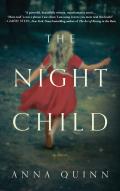
“The Night Child” by Anna Quinn

February 12, 2018 by Sonia Connolly Leave a Comment

book cover

Recommended to me by: Katherine Macomber Millman

A powerful, heartbreaking book about a woman slowly remembering and coming to terms with the childhood abuse she endured.

It reminded me of Susan Palwick’s “Flying In Place” in the way her pain is visible to the people around her, and she receives a lot of skilled, kind help. For many people, the process is less visible and they receive less assistance.

Anna Quinn has skillfully fictionalized her memoir, with lots of present-time sensory details to balance the horror of remembered abuse. The focus is on recovery, not the abuse itself.

Highly recommended if you want to read about an emotionally intense healing process which clearly shows the lasting harm done by abuse and the hard work it takes to recover.

Anna Quinn’s blog post When Your Memoir Wants To Be A Novel

Available at bookshop.org.

Filed Under: fiction Tagged With: childhood abuse, memoir, survival story, trauma

  • « Go to Previous Page
  • Page 1
  • Interim pages omitted …
  • Page 25
  • Page 26
  • Page 27
  • Page 28
  • Page 29
  • Interim pages omitted …
  • Page 70
  • Go to Next Page »

Primary Sidebar

Recent Books

  • “How We Show Up” by Mia Birdsong
  • “The Enchanted Greenhouse” by Sarah Beth Durst
  • “What It Takes to Heal” by Prentis Hemphill
  • Kitchens of Hope by Linda S. Svitak and Christin Jaye Eaton with Lee Svitak Dean
  • “Very Far Away From Anywhere Else” by Ursula K Le Guin
  • “Seaward” by Susan Cooper
  • “Surviving Domestic Violence” by Elaine Weiss
  • “The Book of Love” by Kelly Link
  • “Alexandra’s Riddle” by Elisa Keyston
  • “Weaving Hope” by Celia Lake

Tags

activism aging anti-racism bodywork business childhood abuse childrens CivicTech communication disability domestic violence fantasy feminism finance Focusing food fun healing health at any size illustrated Judaism leadership lgbt marketing memoir music natural world neurodiversity politics psychology relationship romance science science fiction software spirituality survival story trauma writing young adult

Categories

Archives

Please note: bookshop.org and Amazon links are affiliate links. Copyright © 2025 · Genesis Sample on · WordPress