• Skip to primary navigation
  • Skip to main content
  • Skip to primary sidebar
Curious, Healing

Curious, Healing

Books about healing, business, and fun

  • About Sonia Connolly

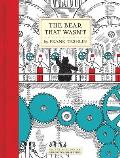
“The Bear That Wasn’t” by Frank Tashlin

March 18, 2012 by Sonia Connolly 2 Comments

Recommended to me by: A client.

This children’s book was written in 1946 about a bear who emerges from peaceful hibernation to find that a factory has been built around his cave. The factory managers tell him to get to work. When he protests that he is a bear, one manager after another tells him he is a silly man who needs a shave and wears a fur coat. Eventually they wear him down and he comes to believe them.

This is a classic example of gaslighting – making someone doubt their own reality.

The book is beautifully illustrated with Tashlin’s line drawings. The only downside to the book is blatant sexism in the illustrations. For example, each (male) factory manager has a series of shapely female secretaries. Aside from that, I wholeheartedly recommend the book, which supports the idea of listening to your own truth and not letting yourself be outvoted by other people’s opinions.

Available at bookshop.org.

Filed Under: fiction Tagged With: childrens, fun, illustrated

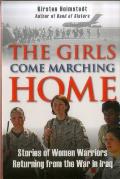
“The Girls Come Marching Home” by Kirsten Holmstedt

March 1, 2012 by Sonia Connolly 1 Comment

Subtitle: Stories of Women Warriors Returning from the War in Iraq

Recommended to me by: A client.

I learned so much from these detailed descriptions of nearly 20 women soldiers, their deployments, and their returns to the US. What it’s like to be a soldier in a modern war. What it’s like in the war zone in Iraq. What it’s like to be a woman in the military. What it’s like to return from war, changed by becoming a solider, by being wounded, by witnessing and experiencing trauma, to find that home doesn’t fit any more.

Some of the women soldiers were wholly accepted into their units with camaraderie and support. Some experienced sexism and sexual harassment. Women of color experienced racism as well. The ones who were arbitrarily harmed by their fellow soldiers and superiors said that caused them more pain and distress than anything else in their tours of duty.

Many of the soldiers are in their late teens and early twenties. A few are closer to forty, and experience age-related harassment for that difference.

On their returns, the women struggle with distinguishing between “normal” difficulties of reintegration and the more severe difficulties of PTSD and traumatic brain injuries. Some fight being diagnosed with PTSD and some fight for the help they need. They miss the structure, enforced closeness, and clear priorities of military life. The transition from skilled soldier to struggling civilian is a difficult one.

This is not an easy book to read, but I highly recommend its forthright, compassionate look at women returning from the war in Iraq.

Available at bookshop.org.

Filed Under: nonfiction Tagged With: survival story, trauma

“Embracing Your Subconscious” by Jenny Davidow

February 11, 2012 by Sonia Connolly Leave a Comment

Subtitle: Bringing All Parts of You Into Creative Partnership: Conscious & Subconscious, Head & Heart, Masculine & Feminine, Adult & Child, Waking & Dreaming

Recommended to me by: Jenny Davidow

Jenny Davidow’s clear, practical, non-judgmental book covers a surprising array of techniques to make friends with your subconscious. Learn to decode your dream symbols, negotiate inner alliances, create positive endings, take fantasy vacations, transform outdated beliefs, heal your inner child, dream lucidly, connect with your creativity, and widen your choices in your waking life. Vivid examples and detailed exercises encourage you to make these techniques your own.

As seen in the parallel paired contrasts in the subtitle, the book emphasizes stereotypical, Jungian ideas about masculine and feminine attributes. In addition to being passive and receptive, femininity is paired with childhood and innocence. In several examples, women resolve relationship issues, while men resolve career issues.

Both outer relationships and the “inner marriage” between (stereotypical) masculine and feminine aspects are heterosexual, with no discussion of other possibilities.

This book safely skirts the realm of “you control external reality with your thoughts” while offering practical tools to negotiate improvements in your internal reality. Recommended, with the noted caveats.

Available at biblio.com.

Filed Under: nonfiction Tagged With: healing, illustrated, psychology

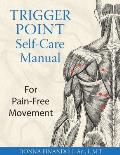
“Trigger Point Self-Care Manual” by Donna Finando

February 6, 2012 by Sonia Connolly Leave a Comment

Subtitle: For Pain-Free Movement

Trigger points are small knots of tension within muscles. They cause local taut bands of muscle fibers and dispersed pain in predictable patterns. Steady, firm but not aggressive pressure helps resolve trigger points and the seemingly intractable pain they cause.

Clear, detailed, and encouraging, this book helps you find and treat your own trigger points. Donna Finando covers each major section of the body, including diagrams of trigger point pain patterns for the relevant muscles. The pain patterns, actions, and stretches are discussed for each muscle.

The full discussion for muscles that affect more than one section of the body is repeated in each section. For example, the scalenes appear three times, since they can cause pain in the neck, shoulder, and down into the arm and hand. Some of the introductory material is also repeated.

The repetition is annoying when reading through the book, but could be useful when using the book as a reference, eliminating the need to flip between sections.

Highly recommended if you have ongoing pain of mysterious origin. Even if the pain has some other underlying source, there may be trigger points involved. You’ll become more familiar with your body as well as reduce pain when you seek out and treat your own trigger points.

Available at bookshop.org.

Filed Under: nonfiction Tagged With: bodywork, healing

“Wishing for Tomorrow” by Hilary McKay

January 30, 2012 by Sonia Connolly Leave a Comment

Subtitle: A sequel to A Little Princess

Recommended to me by: Badgerbag

My copy of A Little Princess (yes, I still have it) is dated 1982, but I think I read it before then from the library. As a young girl grieving, surviving and in need of rescue, I connected deeply with the story of young Sara Crewe and the maid Becky grieving, surviving and being rescued.

This sequel, written not by Frances Hodgson Burnett but by Hilary McKay 100 years later, follows the secondary characters at Miss Minchins Select Seminary for Girls after Sara’s departure. It is a much lighter wish-fulfillment book, plot driven, with one note characters. We are told about their emotions, but they don’t resonate.

The new maid, Alice, takes no nonsense from her employers and refuses to live in the attic, not-so-subtly implying that Becky just needed to stand up for herself. Of course, Alice is in London to “see the sights” and has a loving family to return to if her employment doesn’t work out, unlike Becky who had nowhere to turn.

A Little Princess was about finding resources within and choosing our behavior in hard times. Wishing for Tomorrow, aptly named, seems to be about marking time until everything works out.

Available at bookshop.org.

Filed Under: fiction Tagged With: childrens, fun, illustrated

“Forgive for Love” by Dr. Fred Luskin

January 26, 2012 by Sonia Connolly Leave a Comment

Subtitle: The Missing Ingredient for a Healthy and Lasting Relationship

Recommended to me by: my sister

There are some good ideas in this book, delivered in a patronizing, lecturing tone with a lot of repetition. Yes, people choose each other for a reason, and it’s useful to remember that when times get hard. No, staying with someone when pregnant and later having more children with them is not always an uncomplicated free choice in our misogynist society.

One of the recommended techniques is deep breathing to calm the nervous system. I liked the explicit tie from nervous system activation (stress) to continued struggles, and from nervous system calming to forgiveness. The more we can calm our nervous systems, the better we feel, regardless of how others behave.

I also liked the repeated statement that forgiveness and acceptance are two different things. One can forgive someone for behaving badly, and still get out of range of their bad behavior.

Being forgiving means understanding that you can’t force your lover to change just because you are uncomfortable, inconvenienced, or disturbed. It is up to you to manage your emotional reactions, not the responsibility of your partner. Once you are able to forgive, you can deal with the [original] problem with dignity and openness, not blame.”

Other good advice: Notice what does work, since our attention is often drawn to what doesn’t work. Be grateful for the blessing of being loved. Change “You must …” to “I wish…” and drop unenforceable rules. Grieve the losses when you don’t get what you want. Both recognize that you are flawed, and give yourself a break. Forgive yourself.

Sadly, the example couples are all heterosexual and all painfully adherent to their stereotypical gender roles, except in two examples where the roles are still stereotypical but it looks like the names have been swapped.

Race, ethnicity, and income are not mentioned, but all the names and stories read as white, European-American, and middle class.

There was one great example where, early in Dr. Luskin’s couple’s therapy career, a man came in with a long list of complaints about his wife. The therapist sat stunned, thinking that the wife deserved combat pay for putting up with this, and finally responded, “If she met your standards, why would this superwoman hang out with you?” His main point was that the wife forgave the husband for being critical. To me, that highlights the difficult line between forgiving people for having human failings, and tolerating abuse.

Recommended as a first book about forgiveness for heterosexual gender-role compliant white people in monogamous couples, or for anyone else who can be forgiving of the book’s weak points.

Available at bookshop.org.

Filed Under: nonfiction Tagged With: psychology

  • « Go to Previous Page
  • Page 1
  • Interim pages omitted …
  • Page 51
  • Page 52
  • Page 53
  • Page 54
  • Page 55
  • Interim pages omitted …
  • Page 72
  • Go to Next Page »

Primary Sidebar

Recent Books

  • “Untangling” by Barbara McGavin and Ann Weiser Cornell
  • “After Hours at Dooryard Books” by Cat Sebastian
  • “We Belong to the Drum” by Sandra Lamouche and Azby Whitecalf
  • “Atlas of the Heart” by Brene Brown
  • “Life After Cars” by Sarah Goodyear, Doug Gordon, Aaron Naparstek
  • “Tidy First?” by Kent Beck
  • “When You Had Power” and “You Knew the Price” by Susan Kaye Quinn
  • “Taproot” by Keezy Young
  • “The Tower at Stony Wood” by Patricia A McKillip
  • “Hospicing Modernity” by Vanessa Machado de Oliveira

Tags

activism aging anti-racism bodywork business childhood abuse childrens CivicTech communication disability domestic violence fantasy feminism finance Focusing food fun healing health at any size illustrated Judaism leadership lgbt marketing memoir music natural world neurodiversity politics psychology relationship romance science science fiction software spirituality survival story trauma writing young adult

Categories

Archives

Please note: bookshop.org and Amazon links are affiliate links. Copyright © 2026 · Genesis Sample on · WordPress