• Skip to primary navigation
  • Skip to main content
  • Skip to primary sidebar
Curious, Healing

Curious, Healing

Books about healing, business, and fun

  • About Sonia Connolly

memoir

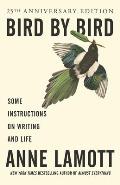
“Bird by Bird” by Anne Lamott

June 21, 2010 by Sonia Connolly 6 Comments

Subtitle: Some Instructions on Writing and Life

Anne Lamott’s writing process seems reassuringly similar to my own, and seems to include just as much struggle. She advises us to write everything that comes to mind, and then later refine it into clarity and grace. A lot of the book is devoted to all the ways we get in our own way, and how sorry she is that there isn’t a more direct route.

“Writing a first draft is very much like watching a Polaroid develop. You can’t – and in fact you’re not supposed to – know exactly what the picture is going to look like until it has finished developing.” Oh good. Maybe I’m doing it right after all.

She emphasizes both looking inside for our own truths, and observing the world around us to flesh out those truths. She reminds to do both with as much detached compassion as we can scrape together.

On character creation: “My friend Carpenter talks about the unconscious as the cellar where the little boy sits who creates the characters, and he hands them up to you through the cellar door. He might as well be cutting out paper dolls. He’s peaceful; he’s just playing.” … “You may want to come up with an image or a metaphor for this other part of you that is separate from your rational, conscious mind, this other person with whom you can collaborate. This may help you feel less alone.” I’ll have to try this – I’d love to feel less alone with my book-writing project!

She keeps a 1 inch square picture frame by her desk to remind her to focus in on one viewpoint and one scene at a time. A whole book is made up of paragraphs. Write the paragraphs, the sentences, the words.

Since I’m struggling with organizing my own book, I noticed that her chapter headings are laconic and her transitions brief. Each chapter meanders among writing class anecdotes, writing advice, snippets of poetry, and life anecdotes. I’m sure she spent many hours crafting each chapter to flow so casually and conversationally. At the same time, it’s good to notice that it reads just fine as it meanders, and my book might be allowed to meander too.

Somehow, at the end of reading this book, I feel less stuck around organizing my own, and more like I’m moving slowly. And that moving slowly is okay, fortunately, since that’s the way it is right now.

Available at bookshop.org.

Filed Under: nonfiction Tagged With: communication, memoir, writing

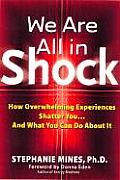
“We Are All in Shock” by Stephanie Mines, Ph.D.

April 1, 2010 by Sonia Connolly Leave a Comment

Subtitle: How Overwhelming Experience Shatter You… And What You Can Do About It

Recommended to me by: Larisa Koehn

In this book, Stephanie Mines introduces and advocates for her approach to healing named Jin Shin Tara. It is derived from Jin Shin Jyutso, a gentle form of acupressure.

She defines shock as severe trauma, and then claims that from conception onward, we are all exposed to shocks (severe traumas). She separates sympathetic shock (stuck in activity) from parasympathetic shock (stuck in passivity).

Anecdotes from her own life and from clients demonstrate dramatic, immediate results from Jin Shin Tara.

Detailed instructions are given for applying Jin Shin Tara to oneself and others. There are correspondences between points on the body and emotional states, chakras, and seasons of the year. Specific points are also recommended for each month of gestation during a pregnancy.

Stephanie Mines’ mission is to increase awareness of the vulnerable time before, during, and just after birth, and minimize shock (severe trauma) at those times in order to reduce the amount of violence in the world.

There is a lot of useful information in this book, and I enthusiastically support the mission of reducing shock and trauma in the world.

At the same time, I am wary of simplified approaches to complex experiences. Jin Shin Tara is presented as being universally applicable with guaranteed results. I prefer a more balanced, nuanced approach. I think it is useful to differentiate between severe trauma and the more daily bumps and shocks we all experience.

Read more about Stephanie Mines’ approach to healing at her website.

Available at bookshop.org.

Filed Under: nonfiction Tagged With: bodywork, healing, illustrated, memoir, trauma

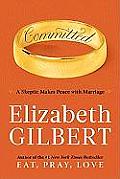
“Committed” by Elizabeth Gilbert

March 28, 2010 by Sonia Connolly Leave a Comment

Subtitled “A Skeptic Makes Peace with Marriage,” this is a sequel to Eat, Pray, Love.

I was expecting an exploration of emotional commitment as detailed as the exploration of transformation, self-discovery, and healing in Eat, Pray, Love. Instead, Committed documents the political institution of marriage.

In Linchpin, Seth Godin mentions that Elizabeth Gilbert printed out the first completed draft of this book, read it, threw it away, and started over. He used it as an example of lacking the commitment to shipping a completed work.

In her introduction to Committed, Gilbert mentions that she had trouble finding her writing voice after Eat, Pray, Love became a bestseller, and that she threw away the first draft because the voice was too distant, not recognizable as her own voice. I’m glad she had the commitment to her own voice and the courage to start over in that case, especially since I still see some distance in the book she did ship.

The book contains engaging personal stories about the author, her extended family, and some of the people she encounters in her travels. It also contains generalizations about “tribal” Hebrews vs. “intellectual” Greeks, and a shallow historical overview of the institution of marriage.

I’m glad to know what happened next in the relationship between Elizabeth and Felipe, and wish them the best in their new home.

Available at bookshop.org.

Filed Under: nonfiction Tagged With: fun, memoir

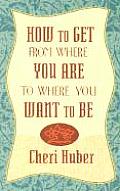
“How to Get From Where You Are to Where You Want To Be” by Cheri Huber

March 4, 2010 by Sonia Connolly 3 Comments

In connection with reading Being Bodies, I tracked down this book. It turns out I’d read it a long time ago and remembered many of the stories, although I’d forgotten their source.

Cheri Huber herself admits that the title is a bit of a trick. Rather than trying to move from Here to There, she advocates giving careful attention to Here, since that’s all there ever is.

She shares harrowing vignettes from her own life with a “that’s just how it is” tone. Her quest for meaning and peace led her to Zen meditation, where she encountered the simple instructions to sit in full lotus and count breaths up to 10, and then begin again.

Desperate for change, she sat in full lotus for hours, and counted breaths no matter what she was doing. After counting breaths during a 10-hour drive, she finally encountered the peace of the present moment. In time, she joined a Zen monastery, started teaching, and went on to found her own Zen center.

Woven with her own journey, she introduces gentle steps for becoming aware of social conditioning and self-hatred, and easing the grip of the resistance they cause. After each exercise, she implores “Please do not allow conditioning to use your awareness against you.”

For example, she introduces meditation by suggesting: Take three full breaths. What did you notice? Do it again. There, you’re meditating! I follow these non-instructions in my own meditation practice. Fortunately, full lotus position is optional!

She summarizes the steps for true, gentle change:

  1. Choose an issue you want to work with.
  2. Sit down, stay still, and be aware of all that goes on.
  3. Notice what belief systems are held in place with this issue.
  4. Notice which subpersonalities [and/or defense mechanisms] are involved.
  5. Listen to what the [internal judging] voices have to say about the issue about who you are for having it.
  6. Become aware of the projections made onto yourself and others because of this issue.
  7. Explore the emotions that keep this issue real.
  8. Find out where the issue is held in your body – where is the epicenter?
  9. Practice disidentifying by moving your focus of attention away from the issue and returning it to the breath.
  10. Remember to do this – and everything you do – in a context of compassionate acceptance of all that is.

She shares stories from her students’ journeys as well. One man at a Zen retreat became angry about a dirty mop bucket left on the steps, and each day muttered to himself, “Someone should do something about that!” Finally he realized that he was “someone” and cleaned the bucket.

This book is full of treasures. I recommend it to anyone looking for compassionate suggestions about how to find center and self-acceptance.

Available at bookshop.org.

Filed Under: nonfiction Tagged With: healing, memoir, psychology, spirituality

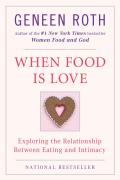
“When Food is Love” by Geneen Roth

February 11, 2010 by Sonia Connolly 1 Comment

Recommended to me by: a client.

Geneen Roth has written several books about overcoming compulsive eating by removing external rules around food and listening to one’s own body instead. She also talks about the source of compulsive eating – not an internal lack of control, but a survival strategy to overcome the lack of external control in childhood.

In this book, she talks about her own history with intimacy, and the connections between how we treat food, and how we treat emotional connections in our lives. She reveals the neglect and emotional and physical abuse of her childhood, and shares stories from her “Breaking Free” workshops as well.

If you deeply explore one area of life, you will find the answers to every area. What you learn as you break free from your obsession with food is what you need to learn about intimacy:

Commit yourself.
Tell the truth.
Trust yourself.
Pain ends and so does everything else.
Laugh easily.
Cry easily.
Have patience.
Be willing to be vulnerable.
When you notice that you are clinging to anything and it’s causing trouble, drop it.
Be willing to fail.
Don’t let fear stop you from leaping into the unknown, or from sitting in dark silence.
Remember that everything gets lost, stolen, ruined, worn out, or broken; bodies sag and wrinkle; everyone suffers; and everyone dies.
No act of love is ever wasted.

The book is full of vivid metaphors and urgent truths. It is a call to turn inside, face one’s demons with gentleness and compassion, and find freedom.

Available at bookshop.org.

Filed Under: nonfiction Tagged With: childhood abuse, healing, health at any size, memoir, psychology, survival story

“Beck House” by Janie Hopwood

January 20, 2010 by Sonia Connolly 4 Comments

Recommended to me by: a friend in Tifton, GA.

Janie Hopwood creates a colorful panorama of characters and events in this historical novel about her grandmother Rena Beck’s boarding house.

When Rena Beck’s husband died, leaving her a house but nothing else, she decided to take in boarders in order to provide for herself and her three unmarried daughters. With courage, perseverance, help from family members, and a lot of hard work, she built a successful business which operated for many years.

I recommend this book for historical details, depth of characterization, laugh-out-loud dialogue, and a sure touch with stories about hard times.

The book is self-published through Indigo Publishing, and this article is all I found online. You’ll need connections in Tifton to get a copy.

Update: Now Available at bookshop.org.

Filed Under: fiction Tagged With: fun, memoir, survival story

  • « Go to Previous Page
  • Page 1
  • Interim pages omitted …
  • Page 13
  • Page 14
  • Page 15
  • Page 16
  • Page 17
  • Go to Next Page »

Primary Sidebar

Recent Books

  • “We Belong to the Drum” by Sandra Lamouche and Azby Whitecalf
  • “Atlas of the Heart” by Brene Brown
  • “Life After Cars” by Sarah Goodyear, Doug Gordon, Aaron Naparstek
  • “Tidy First?” by Kent Beck
  • “When You Had Power” and “You Knew the Price” by Susan Kaye Quinn
  • “Taproot” by Keezy Young
  • “The Tower at Stony Wood” by Patricia A McKillip
  • “Hospicing Modernity” by Vanessa Machado de Oliveira
  • “How We Show Up” by Mia Birdsong
  • “The Enchanted Greenhouse” by Sarah Beth Durst

Tags

activism aging anti-racism bodywork business childhood abuse childrens CivicTech communication disability domestic violence fantasy feminism finance Focusing food fun healing health at any size illustrated Judaism leadership lgbt marketing memoir music natural world neurodiversity politics psychology relationship romance science science fiction software spirituality survival story trauma writing young adult

Categories

Archives

Please note: bookshop.org and Amazon links are affiliate links. Copyright © 2026 · Genesis Sample on · WordPress