• Skip to primary navigation
  • Skip to main content
  • Skip to primary sidebar
Curious, Healing

Curious, Healing

Books about healing, business, and fun

  • About Sonia Connolly

Sonia Connolly

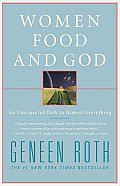
“Women Food and God” by Geneen Roth

May 31, 2010 by Sonia Connolly 2 Comments

Recommended to me by: a client.

The opening scene drew me in immediately. Geneen Roth shows eighty women furious at her because she is not yet letting them eat their tomato soup at a retreat about food and mindfulness. A few women bravely share their process of connecting to old pain and realizing that their adult selves can tolerate the pain without numbing themselves with excessive food.

Roth’s core message is transformative: how we relate to food is how we relate to our image of God. Until we bring conscious awareness to our process, how we relate to food and God is likely to be modeled on how our earliest caretakers related to us, and to themselves.

When we realize that we don’t need fixing, that our core self is already radiantly sacred, our obsessions and addictions fall away.

In my twenties, I hated my body, dieted regularly, and obsessed about food. In my thirties, I declared a moratorium on diets. I make my choices about food and exercise, and my body weighs whatever it’s going to weigh. It did that anyway, even when I counted calories.

Sometime after that, I declared that I don’t need fixing. I had hit bottom with allowing others to tell me what might be wrong with me. The message is spreading through me over time. Some parts of me continue to believe that it’s helpful to criticize or shame myself.

I wonder if Geneen Roth is experiencing something similar. Her overt message is about self-acceptance and compassion. At the same time, the book is sprinkled with half-joking self-denigrating comments.

There is a subtle negativity about being fat as well. One example: In the prologue where eighty women are waiting to eat their soup, one woman’s “tiny body” is described as “delicate, perfectly erect.” No one else’s body is described at all.

I hear the message as, “When you are self-accepting and self-aware, your healthy food and exercise choices will cause you to arrive at your natural weight, which will not be fat.” It is hard to be self-accepting as a fat person, while also believing that healthy, “natural weight” people are not fat.

I love Geneen Roth’s message that our adult selves can handle pain that was overwhelming in childhood. We’re not broken after all. I hope her next book will include more self-acceptance and compassion for compulsive eating and all our other “negative” avoidance behaviors.

I recommend Kate Harding’s blog Shapely Prose for more about fat acceptance. Two relevant articles are But Don’t You Realize Fat is Unhealthy and Why I Still Use the Term Fat Acceptance.

Previously reviewed: “When Food is Love” by Geneen Roth.

Available at bookshop.org.

Filed Under: nonfiction Tagged With: healing, health at any size, psychology, spirituality

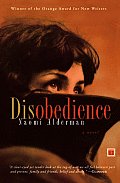
“Disobedience” by Naomi Alderman

May 18, 2010 by Sonia Connolly Leave a Comment

Recommended to me by: Spirituality Bookgroup.

This novel about convention, betrayal, growing up, and finding center is filled with wisdom and grace.

Ronit grew up in a tiny, insular Jewish Orthodox congregation within London. She is the rebellious daughter of their revered Rabbi. Aided by her father’s sending her to an American university, she has escaped to a secular life in New York City.

Now, her father has died, and she returns to encounter her cousin Dovid, the Rabbi’s heir apparent, and his wife Esti. Esti and Ronit were lovers as teen-agers. Despite her marriage and orthodox beliefs, Esti still carries a flame for Ronit.

The characters and the setting drew me in completely while I was reading. Where I expected the triumph of prejudice and small-minded cruelty, I saw instead surprising compassion and open-hearted possibilities. I celebrated that two couples found ways to re-commit to their marriages.

As I thought about the book afterwards, I started to wonder about the emphasis on marriage as sacred, leaving Ronit as the marriage-disturbing lesbian outsider. While I enjoyed the book, I strongly disagree with that (possibly unintentional) underlying message.

Naomi Alderman’s blog: naomialderman.com.

Available at bookshop.org.

Filed Under: fiction Tagged With: fun, Judaism, lgbt, spirituality

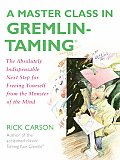
“A Master Class in Gremlin-Taming” by Rick Carson

April 27, 2010 by Sonia Connolly Leave a Comment

Subtitle: The Absolutely Indispensable Next Step for Freeing Yourself from the Monster of the Mind

Rick Carson’s prior book Taming Your Gremlin was transformative for me. “Simply notice” and “Play with options” have become touchstones in my own process.

Based on the title and subtitle of this book, I had high expectations.

Those expectations would have been better met if the title were “A Followup Seminar in Gremlin-Taming.” It gathers a series of informative articles on the topic, offering useful techniques in a commanding style. I would dispense with the subtitle altogether.

Advice for clear communication with yourself or others:

  • Simply Notice
  • Describe
  • Hush
  • Breathe
  • Listen

I like “Hush” as the middle step. It includes an expectant silence, as well as ceasing to speak. It evokes the natural world at evening for me, too.

Some types of disrespectful communication:

  • Overexplaining
  • Talking about someone instead of talking to him/her
  • Rushing to share a parallel experience
  • Interrupting
  • Habitual lateness
  • Not returning phone calls or emails within 24 hours
  • Not acknowledging acts of kindness
  • Avoiding eye contact
  • Mumbling
  • Fidgeting
  • Jumping to conclusions
  • Being phony
  • Sarcasm
  • Doing more than one thing in any breath’s worth of time
  • Asumming tha tthere is an unalterable truth and that you are the bearer of it
  • Huffing, puffing, and rolling of eyes
  • Inflection and intonation that implies that your comment could well end with “Stupid,” even though you’re not saying it
  • Spinning on one’s heels, storming off, and slamming doors and/or cabinets.

Seeing overexplaining at the top of that list was validating for me, since I’d just had several encounters with Overexplainers. At the same time, some of the list reads like a letter from a frustrated parent to a teenager.

The most useful tip for me was to accentuate what is already happening. Make those shoulders even more tight, rather than trying to make them open and relax. It’s a great way to stop fighting what is.

I highly recommend the first book, Taming Your Gremlin. Pick this one up for some extra tips, and a few stories from Rick Carson’s life.

Available at bookshop.org.

Filed Under: nonfiction Tagged With: healing, psychology

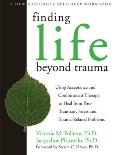
“Finding Life Beyond Trauma” by Victoria Follette, Ph.D. and Jacqueline Pistorello, Ph.D.

April 24, 2010 by Sonia Connolly 3 Comments

Subtitle: Using Acceptance and Commitment Therapy to Heal from Post-Traumatic Stress and Trauma-Related Problems

Acceptance and Commitment Therapy (abbreviated ACT, and pronounced as a whole word) invites clients to observe their own behaviors and let go of strategies which might be keeping them from living their most valued life. It includes a strong emphasis on mindfulness and compassion.

ACT assumes that trying to suppress or escape pain can generate more suffering. Paradoxically, facing pain and accepting it can be the best strategy to ease the pain.

This substantial workbook offers theory, illustrations, stories, metaphors, and exercises to help the reader observe existing strategies around pain, establish values, and choose strategies that move toward those values.

The book assumes that the reader is highly avoidant. Since we all use avoidance in overt or covert ways, it can be helpful for many of us.

My favorite metaphor from the book: You’re blindfolded, and one day you fall in a deep hole. All you have is a shovel, so you start digging. You dig to the right, to the left, and even under your feet, but you’re still in the (enlarged) hole. Eventually, even if someone brought you a ladder, you would think it was a different sort of shovel. Suggestion: put down the shovel and just stop digging.

Putting down the shovel looks different for each person. We all have our favorite strategies that work up to a point, but then we keep depending on them long after they’re just making things worse. The shovel contains all our current working assumptions. Putting down the shovel is a leap of faith into new assumptions.

One of my shovels is wondering what I’m doing wrong in any given situation. Before I put it down, it feels like a radical, risky act. After I put it down, it’s a huge relief.

Another useful metaphor: willingness is like jumping. We can say we’re jumping, we can think about jumping, we can try to jump, but either we’re jumping or we’re not. We can’t half-jump.

Willingness to change is similar. It is important to check whether we’re actually willing to make a change, and choose changes that are small enough that we are willing to risk them.

The book describes unwillingness in willingness’s clothing. One of many examples: “After experiencing a loss, I tried to accept it so that I could stop feeling so sad.”

There are many more useful metaphors and exercises in this book. I highly recommend it for anyone healing from trauma, or helping others heal.

Available at bookshop.org.

Filed Under: nonfiction Tagged With: healing, illustrated, psychology, trauma

“National Velvet” by Enid Bagnold

April 19, 2010 by Sonia Connolly Leave a Comment

I received this book, originally published in 1935, with a childhood gift of six classic Young Adult novels. I’ve carried the set from home to home ever since, but hadn’t reread any of the books in many years.

Before I send the set off to my niece and nephew, I decided to reread “National Velvet,” since the image of Velvet struggling with her unruly stomach had been coming to mind.

I remembered the essence of the book – horse-mad young Velvet rides and wins a steeplechase race – but had forgotten most of the details, including that the story takes place in England.

The writing is gorgeously evocative. Here is the opening paragraph:

Unearthly humps of land curved into the darkening sky like the backs of browsing pigs, like the rumps of elephants. At night when the stars rose over them they looked like a starlit herd of divine pigs. The villagers called them Hullocks.

I paused there in my reading to imagine the Hullocks, reminded of a village I visited in southern England, ensconced in a narrow valley dropping to the sea.

It turns out that Velvet grows up in just such a village with her three older sisters, much younger brother, solid parents, and butcher’s assistant Mi Taylor. Their cramped living quarters are attached to her father’s slaughterhouse. Mi lives in an outbuilding, and their old horse has a rickety barn.

The girls seem young for their ages by modern standards. At fourteen, Velvet prances about pretending to ride paper horses. Her seventeen year old sister has her first beau. The girls can ride alone for miles among the Hullocks, but their mother tells them what to wear to the village fair. The family shares few words but much love.

I recommend reading this book for the layered details of village life and relationships. I was less interested in the wish-come-true plot, although to be fair I’m considerably older than the target audience of the book. There are sub-themes about news and fame and innocence which provide food for thought.

Available at bookshop.org.

Filed Under: fiction Tagged With: illustrated, young adult

“We Are All in Shock” by Stephanie Mines, Ph.D.

April 1, 2010 by Sonia Connolly Leave a Comment

Subtitle: How Overwhelming Experience Shatter You… And What You Can Do About It

Recommended to me by: Larisa Koehn

In this book, Stephanie Mines introduces and advocates for her approach to healing named Jin Shin Tara. It is derived from Jin Shin Jyutso, a gentle form of acupressure.

She defines shock as severe trauma, and then claims that from conception onward, we are all exposed to shocks (severe traumas). She separates sympathetic shock (stuck in activity) from parasympathetic shock (stuck in passivity).

Anecdotes from her own life and from clients demonstrate dramatic, immediate results from Jin Shin Tara.

Detailed instructions are given for applying Jin Shin Tara to oneself and others. There are correspondences between points on the body and emotional states, chakras, and seasons of the year. Specific points are also recommended for each month of gestation during a pregnancy.

Stephanie Mines’ mission is to increase awareness of the vulnerable time before, during, and just after birth, and minimize shock (severe trauma) at those times in order to reduce the amount of violence in the world.

There is a lot of useful information in this book, and I enthusiastically support the mission of reducing shock and trauma in the world.

At the same time, I am wary of simplified approaches to complex experiences. Jin Shin Tara is presented as being universally applicable with guaranteed results. I prefer a more balanced, nuanced approach. I think it is useful to differentiate between severe trauma and the more daily bumps and shocks we all experience.

Read more about Stephanie Mines’ approach to healing at her website.

Available at bookshop.org.

Filed Under: nonfiction Tagged With: bodywork, healing, illustrated, memoir, trauma

  • « Go to Previous Page
  • Page 1
  • Interim pages omitted …
  • Page 62
  • Page 63
  • Page 64
  • Page 65
  • Page 66
  • Interim pages omitted …
  • Page 72
  • Go to Next Page »

Primary Sidebar

Recent Books

  • “Untangling” by Barbara McGavin and Ann Weiser Cornell
  • “After Hours at Dooryard Books” by Cat Sebastian
  • “We Belong to the Drum” by Sandra Lamouche and Azby Whitecalf
  • “Atlas of the Heart” by Brene Brown
  • “Life After Cars” by Sarah Goodyear, Doug Gordon, Aaron Naparstek
  • “Tidy First?” by Kent Beck
  • “When You Had Power” and “You Knew the Price” by Susan Kaye Quinn
  • “Taproot” by Keezy Young
  • “The Tower at Stony Wood” by Patricia A McKillip
  • “Hospicing Modernity” by Vanessa Machado de Oliveira

Tags

activism aging anti-racism bodywork business childhood abuse childrens CivicTech communication disability domestic violence fantasy feminism finance Focusing food fun healing health at any size illustrated Judaism leadership lgbt marketing memoir music natural world neurodiversity politics psychology relationship romance science science fiction software spirituality survival story trauma writing young adult

Categories

Archives

Please note: bookshop.org and Amazon links are affiliate links. Copyright © 2026 · Genesis Sample on · WordPress