• Skip to primary navigation
  • Skip to main content
  • Skip to primary sidebar
Curious, Healing

Curious, Healing

Books about healing, business, and fun

  • About Sonia Connolly

Sonia Connolly

“Committed” by Elizabeth Gilbert

March 28, 2010 by Sonia Connolly Leave a Comment

Subtitled “A Skeptic Makes Peace with Marriage,” this is a sequel to Eat, Pray, Love.

I was expecting an exploration of emotional commitment as detailed as the exploration of transformation, self-discovery, and healing in Eat, Pray, Love. Instead, Committed documents the political institution of marriage.

In Linchpin, Seth Godin mentions that Elizabeth Gilbert printed out the first completed draft of this book, read it, threw it away, and started over. He used it as an example of lacking the commitment to shipping a completed work.

In her introduction to Committed, Gilbert mentions that she had trouble finding her writing voice after Eat, Pray, Love became a bestseller, and that she threw away the first draft because the voice was too distant, not recognizable as her own voice. I’m glad she had the commitment to her own voice and the courage to start over in that case, especially since I still see some distance in the book she did ship.

The book contains engaging personal stories about the author, her extended family, and some of the people she encounters in her travels. It also contains generalizations about “tribal” Hebrews vs. “intellectual” Greeks, and a shallow historical overview of the institution of marriage.

I’m glad to know what happened next in the relationship between Elizabeth and Felipe, and wish them the best in their new home.

Available at bookshop.org.

Filed Under: nonfiction Tagged With: fun, memoir

“Get Clients Now!” by C. J. Hayden

March 25, 2010 by Sonia Connolly Leave a Comment

Despite the intimidating cover, this book is filled with compassionate, practical suggestions for getting a marketing program off the ground.

Getting clients is divided into four stages:

  • Filling the pipeline
  • Following up
  • Getting presentations
  • Closing sales

For the 28 day program, the book recommends focusing on a single stage, and committing to a set of 8-10 daily or weekly actions from a menu of suggestions. The actions include both direct marketing and incremental work on longer-term “Success Ingredients” such as a brochure or website.

There are helpful sections on choosing realistic goals and managing resistance when it inevitably arises. As well as choosing activities, you choose a Special Permission, such as “I have permission to ask for what I want” or “I deserve to be successful.”

Worksheets for choosing a program and tracking progress can be downloaded at the Get Clients Now website.

For myself, I find that I need more flexibility than this intense 28-day program provides, but the structured approach makes marketing seem a lot less mysterious. It is reassuring to see how many of the “success ingredients” I’ve created along the way, and how many of the recommended activities I’ve incorporated into my marketing, even if I don’t do 8 of them per day.

Available at bookshop.org.

Filed Under: nonfiction Tagged With: business

“The Lacuna” by Barbara Kingsolver

March 14, 2010 by Sonia Connolly Leave a Comment

Recommended to me by: Reading Barbara Kingsolver’s past books.

“The Lacuna” is both epic and personal, ranging across countries and decades and historic events, and also documenting the details of a child’s life.

The point-of-view character, Harrison William Shepherd, is unwanted by his father and only haphazardly cared for by his alcoholic self-centered mother. The book starts on a remote Mexican island in 1929, where young “Will” (his mother uses his middle name) and his mother are trapped with a rich man she hopes will marry her.

Will connects with Leandro, the native cook, who happily teaches him cooking skills in exchange for his help in the kitchen. Starting a matter-of-fact theme through the book, Will has a crush on him, but doesn’t reveal it. Leandro is young enough to be called “cook boy”, but old enough to be married with children.

Leandro gives Will swim goggles, and he discovers the wonders of the tropical ocean. He also finds a lacuna – a hole – an undersea tunnel that opens into hidden Aztec ruins. During the full moon, the tides help him get through on one breath.

Will starts keeping a journal, filling notebooks with his observations and stories. In another layer of plot, the book itself is supposedly compiled from the notebooks by “VB”.

Will and his mother escape from the island to Mexico City via another of his mother’s affairs. He spends two years back in a US boarding school, where his father calls him Harry. “Whoever pays the bill names the boy.”

Back in Mexico City, Harry joins the household of Diego Rivera and Frida Kahlo, as cook, secretary, driver, and friend. There, they call him yet a third name, Soli, because they can’t pronounce Harrison. Lev Trotsky, on the run from Stalin, comes to stay with them.

In the aftermath of Trotsky’s assassination, Harry goes back to the US once again, and discovers his father has died, leaving him a car. He simply starts driving, and settles in Asheville, North Carolina, where the Blue Ridge Parkway unceremoniously ended.

He takes up writing at last, successfully publishing two novels set in the Mexican past, but is eventually hounded by the House Un-American Activities Committee and convicted of being a Communist. He escapes back to Mexico.

“VB” is revealed to be his secretary and help-meet in Asheville, Violet Brown.

The book is filled with layers of historical research. I learned about Mexican history, Diego Rivera, Frida Kahlo, Lev Trotsky, the American Depression, and the anticommunist movement.

However, I didn’t engage with the characters. The historical figures feel remote, and even Harry refers to himself in third person as the cook, or driver. He doesn’t make contact with his own emotions. As I read, I wondered what lesson or point I was supposed to be taking in.

Available at bookshop.org.

Filed Under: fiction Tagged With: fun

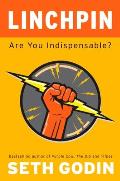
“Linchpin: Are You Indispensable?” by Seth Godin

March 6, 2010 by Sonia Connolly 1 Comment

Recommended to me by: Seth Godin’s blog

Seth Godin brings together several of his ideas about how to survive in our changed economy. His main premise is that non-thinking “factory” work is no longer the road to security. “Factory” is in quotes because he uses it to include any job which involves following the rules and doing what the boss says.

He redefines several other words, including “art” (a gift that changes the recipient), and “artist” (someone who gives such gifts in a business context).

I love his idea of “emotional work”, which is one of the possible ways to make “art.” Emotional work includes both confronting ones own resistance, and creating genuine connections with others. I know I’m much more likely to frequent a shop where the employees or owners give me the gift of emotional connection.

Which brings us to his main definition, “linchpin”: someone who does their emotional work, creates art, gives that little bit extra to both coworkers and customers, and becomes essential to a business.

He talks at length about the importance of “shipping” – completing the art or product and sending out into the world – and the “lizard brain” or resistance that gets in the way. This was the most problematic redefinition for me, because he makes it clear that he’s referring to the amygdala and limbic system, which evolved in mammals, not reptiles.

While it’s useful to think of resistance as a separate voice and notice what it’s saying without letting it take over, I was uncomfortable with the dismissive, combative attitude he seemed to be promoting. I’m more comfortable with the compassionate attitude in Cheri Huber’s How to Get From Where You Are to Where You Want to Be, which I happened to be reading at the same time.

The writing is choppy, reminiscent of his pithy, paragraph-long blog posts. I read his blog with interest every day, but find the style distracting in a full book.

Seth Godin has also published the book’s ideas in a freely available PDF.

Available at bookshop.org.

Filed Under: nonfiction Tagged With: business, marketing, psychology

“How to Get From Where You Are to Where You Want To Be” by Cheri Huber

March 4, 2010 by Sonia Connolly 3 Comments

In connection with reading Being Bodies, I tracked down this book. It turns out I’d read it a long time ago and remembered many of the stories, although I’d forgotten their source.

Cheri Huber herself admits that the title is a bit of a trick. Rather than trying to move from Here to There, she advocates giving careful attention to Here, since that’s all there ever is.

She shares harrowing vignettes from her own life with a “that’s just how it is” tone. Her quest for meaning and peace led her to Zen meditation, where she encountered the simple instructions to sit in full lotus and count breaths up to 10, and then begin again.

Desperate for change, she sat in full lotus for hours, and counted breaths no matter what she was doing. After counting breaths during a 10-hour drive, she finally encountered the peace of the present moment. In time, she joined a Zen monastery, started teaching, and went on to found her own Zen center.

Woven with her own journey, she introduces gentle steps for becoming aware of social conditioning and self-hatred, and easing the grip of the resistance they cause. After each exercise, she implores “Please do not allow conditioning to use your awareness against you.”

For example, she introduces meditation by suggesting: Take three full breaths. What did you notice? Do it again. There, you’re meditating! I follow these non-instructions in my own meditation practice. Fortunately, full lotus position is optional!

She summarizes the steps for true, gentle change:

  1. Choose an issue you want to work with.
  2. Sit down, stay still, and be aware of all that goes on.
  3. Notice what belief systems are held in place with this issue.
  4. Notice which subpersonalities [and/or defense mechanisms] are involved.
  5. Listen to what the [internal judging] voices have to say about the issue about who you are for having it.
  6. Become aware of the projections made onto yourself and others because of this issue.
  7. Explore the emotions that keep this issue real.
  8. Find out where the issue is held in your body – where is the epicenter?
  9. Practice disidentifying by moving your focus of attention away from the issue and returning it to the breath.
  10. Remember to do this – and everything you do – in a context of compassionate acceptance of all that is.

She shares stories from her students’ journeys as well. One man at a Zen retreat became angry about a dirty mop bucket left on the steps, and each day muttered to himself, “Someone should do something about that!” Finally he realized that he was “someone” and cleaned the bucket.

This book is full of treasures. I recommend it to anyone looking for compassionate suggestions about how to find center and self-acceptance.

Available at bookshop.org.

Filed Under: nonfiction Tagged With: healing, memoir, psychology, spirituality

“The No Asshole Rule” by Robert Sutton, PhD

February 24, 2010 by Sonia Connolly Leave a Comment

Recommended to me by: Robert Sutton blog post (via Twitter)

It’s a rare business book that focuses on warmth, kindness, and peaceful, loving environments. This compassionate little book, subtitled Building a Civilized Workplace and Surviving One That Isn’t, does so with clarity and conviction.

In this book, you’ll find:

  • A definition of assholes (also known as jerks, bullies, tyrants, etc.)
  • The costs of employing them
  • How to implement and enforce a “no asshole” rule, including heartening positive examples
  • How to avoid behaving badly ourselves, including a self-test
  • Survival tips for unavoidable asshole-ridden situations
  • What people get out of behaving badly

The main message:

Treat the person right in front of you, right now, in the right way.

I am delighted to discover that some corporations and academic departments value respect and kindness. I highly recommend this book to anyone who wants to follow their example.

Available at bookshop.org.

Filed Under: nonfiction Tagged With: business, communication, psychology

  • « Go to Previous Page
  • Page 1
  • Interim pages omitted …
  • Page 63
  • Page 64
  • Page 65
  • Page 66
  • Page 67
  • Interim pages omitted …
  • Page 72
  • Go to Next Page »

Primary Sidebar

Recent Books

  • “Untangling” by Barbara McGavin and Ann Weiser Cornell
  • “After Hours at Dooryard Books” by Cat Sebastian
  • “We Belong to the Drum” by Sandra Lamouche and Azby Whitecalf
  • “Atlas of the Heart” by Brene Brown
  • “Life After Cars” by Sarah Goodyear, Doug Gordon, Aaron Naparstek
  • “Tidy First?” by Kent Beck
  • “When You Had Power” and “You Knew the Price” by Susan Kaye Quinn
  • “Taproot” by Keezy Young
  • “The Tower at Stony Wood” by Patricia A McKillip
  • “Hospicing Modernity” by Vanessa Machado de Oliveira

Tags

activism aging anti-racism bodywork business childhood abuse childrens CivicTech communication disability domestic violence fantasy feminism finance Focusing food fun healing health at any size illustrated Judaism leadership lgbt marketing memoir music natural world neurodiversity politics psychology relationship romance science science fiction software spirituality survival story trauma writing young adult

Categories

Archives

Please note: bookshop.org and Amazon links are affiliate links. Copyright © 2026 · Genesis Sample on · WordPress