• Skip to primary navigation
  • Skip to main content
  • Skip to primary sidebar
Curious, Healing

Curious, Healing

Books about healing, business, and fun

  • About Sonia Connolly

anti-racism

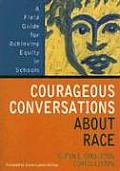
“Courageous Conversations About Race” by Glenn E. Singleton and Curtis Linton

September 16, 2013 by Sonia Connolly 2 Comments

Subtitle: A Field Guide for Achieving Equity in Schools

Recommended to me by: Donna Maxey, at Race Talks.

A carefully crafted, practical how-to manual for school systems to dismantle racism and equitably teach all children well. Co-written by Glenn Singleton, a Black man from Baltimore, and Curtis Linton, a White man from Salt Lake City, this book includes their personal experiences with race and racism as well as materials to implement their program and some historical information on U.S. racism.

Slowly, carefully, clearly, the topic of race and how to talk about it safely is introduced. Each point is supported with studies and stories. Terms are defined and repeated to foster understanding.

Four Agreements:

  1. stay engaged.
  2. speak your truth.
  3. experience discomfort.
  4. expect and accept non-closure.

Six Conditions of Courageous Conversation

  1. Establish a racial context that is personal, local and immediate – speak from your own experience.
  2. Isolate race while acknowledging other factors – don’t avoid the topic of race.
  3. Listen to others’ experiences of race. Expect disagreement in viewpoints.
  4. Notice White Talk vs. Color Commentary. Notice perspective of all participants: intellectual, emotional, moral, or social.
  5. Establish agreement on a contemporary working definition of race.
  6. Examine the presence and role of Whiteness and its impact on the conversation and problem being addressed.

The book advocates passion, practice, and persistence to address the racial achievement gap. It calls on teachers and administrators to take personal responsibility for learning the skills required to reach each student and help them all succeed.

I would love to see this book used in all school systems. The awareness and communication it fosters are healing for the adults involved in the process as well as for the children in their care.
Available at biblio.com.

Filed Under: nonfiction Tagged With: anti-racism, communication

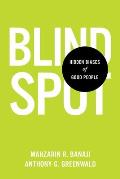
“Blindspot” by Mahzarin Banaji and Anthony Greenwald

July 28, 2013 by Sonia Connolly 1 Comment

Subtitle: Hidden Biases of Good People

Recommended to me by: Patricia Nan Anderson

In clear, accessible language, this book debunks the notion that good people are free of biases. Starting with optical illusions and moving on to creating categories, the authors show that our brains automatically make assumptions about what we perceive based on past input.

We have hidden biases, also called mindbugs, that function like the blind spot in our retinas. We don’t perceive that we are not perceiving accurately.

Implicit associations can reveal some of our biases. You may be surprised, disappointed, or relieved by your results.

The first one, insects and flowers, usually demonstrates a powerful negative association with insects and positive association with flowers. Try the Insects and Flowers Implicit Association Test. I was surprised how much more difficult it was to sort the flowers with the negative words.

I was pleased to get a neutral result for the Race Implicit Association Test but much less happy to see a moderate association between Black people and weapons in the Race and Weapons Implicit Association Test.

I wasn’t happy with my result for the Gender and Career Implicit Association Test either. Relatedly, a 1% difference in the rate of promoting women and men can explain the steep attrition rates of women in technical fields.

More Implicit Association Tests.

Present-day discrimination often takes the form of not helping, rather than actively harming. A woman’s hand was badly cut up in an accident. In the ER, her husband said, “You have to help her, she’s an avid quilter!” The doctor was talking about “quickly stitching her up” until someone greeted her as a Yale professor, whereupon she was whisked off to receive complex hand surgery from an expert in the field. It’s hard to call people out on not helping enough.

There is some discussion of how to circumvent mindbugs and blindspots. Awareness helps. So does exposure to images and ideas that contradict the mindbugs. I think the long-term fix is to change the media, literary, and educational portrayals that continually reinforce discriminatory biases. Without explicitly saying so, the book makes a strong case for affirmative action.

In the appendices, the authors show careful scientific evidence for the effect of present-day racial discrimination, despite the fact that it is less accepted to be overtly prejudiced.

Highly recommended for anyone interested in a readable, in-depth look at social justice and how your brain works.

Available at bookshop.org.

Filed Under: nonfiction Tagged With: anti-racism, feminism, psychology

“Saber es Poder” by Maxine Harris, Fabiana Wallis, Hortensia Amaro

September 2, 2012 by Sonia Connolly 2 Comments

Subtitle: Modelo de Trauma y Recuperación para Mujeres Latinas

Translation: Knowledge is Power: Model of Trauma and Recovery for Latina Women

Recommended to me by: Fabiana Wallis’ bio at Conexiones

This book is a curriculum for a 25-session trauma recovery support group for Latina women. Since I hope to work with Conexiones Center for Trauma Recovery as a practitioner, my goal was to refresh my Spanish language skills and learn the vocabulary associated with trauma and recovery. It served that goal well.

The book also included specific information about Latino/a culture and issues for immigrants.

I read this book as both a practitioner helping people recover from trauma, and as a daughter of immigrants from Latin America who experienced trauma. I fit the target reader in some ways and not in others, especially since the book assumes a sharp separation between facilitators and group members.

The information was very basic, aimed at group participants who had never thought about trauma and its connection to present behaviors. There was recurring emphasis on the issues of drug use, prostitution, and unprotected sex. There was no discussion of the mechanisms of PTSD in the body.

In the various units, I saw identification of the damage wrought by trauma, but less help in building new skills than I expected. I imagine a woman reaching the end of the support group and thinking, “Now what?!” At the same time, I imagine that the opportunity to speak about past trauma and receive support would be healing in itself.

When used by knowledgeable and compassionate group facilitators, I think this book would form the basis for a useful, culturally aware support group for Latina survivors of abuse.

Filed Under: nonfiction Tagged With: anti-racism, domestic violence, feminism, psychology, trauma

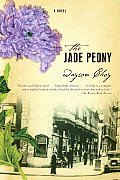
“The Jade Peony” by Wayson Choy

May 27, 2011 by Sonia Connolly Leave a Comment

Recommended to me by: atdelphi

This novel is an intricate work of art, assembled from one precise detail after another, illuminating the lives of a Chinese family of immigrants to Vancouver, B.C. in the 1930s and early 40s.

The story is told in three sections, from the viewpoints of three children. First the girl, then the second-oldest adopted boy, then the youngest boy. Entwined with their intensely pursued hobbies and heartbreaking losses, we learn about the adults around them, especially the women.

Matter-of-factly, Choy focuses his story on those with less privilege instead of those with more. Poor Chinese immigrants rather than established Canadian citizens. Children rather than adults, but not the special First Son. Women of different ages. A disabled, disfigured man.

The characters are vulnerable, grumpy, and real, bearing pain as best they can, sharing what they have to give each other joy. While reading, I felt as if I sat down to dinner with them, hearing about their lives close up.

Read this book!

Available at biblio.com.

Filed Under: fiction Tagged With: anti-racism, survival story

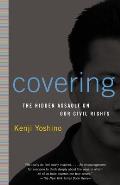
“Covering: the Hidden Assault on our Civil Rights” by Kenji Yoshino

February 9, 2011 by Sonia Connolly Leave a Comment

Recommended to me by: Sanguinity in the 50books_poc community

After several books put aside because I just couldn’t get through them, this book is a delight – both lyrical and informative, both personally detailed and globally applicable.

Kenji Yoshino is a gay Japanese-American man, currently working as a professor of law at Yale Law School. In the first third of the book, he describes his journey from covering his gayness as a youth to defending the civil rights of gay people in court as an out gay lawyer. He also describes his parents’ efforts to make him “100% American in America, and 100% Japanese in Japan.”

The rest of the book formally addresses covering and civil rights.  Covering is concealing evidence of a minority trait by adopting majority appearance, affiliation, activism, and/or association. For example, gay people cover by not holding hands in public, and not displaying photos of a partner at work.

Majority culture continues to discriminate against minorities by demanding covering, even after civil rights have been successfully won. For example, gay parents can lose custody of their children in many states for “flaunting” their gayness by having a same-sex partner, where a heterosexual parent would not be penalized for having a new partner.

The book ends with a call for all of us to take civil rights beyond the courts by celebrating diversity in others, and taking the risk to cover less ourselves.

Available at bookshop.org.

Filed Under: nonfiction Tagged With: anti-racism, lgbt, psychology

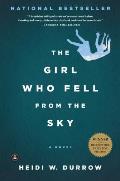
“The Girl Who Fell from the Sky” by Heidi W. Durrow

January 12, 2011 by Sonia Connolly Leave a Comment

I wanted to love and learn from this book, but there were too many jarring inconsistencies with my own knowledge.

As a child, Rachel falls 9 stories and her only lasting injury is to the hearing in one ear. With everything I know about physical and psychological trauma, I wanted at least one sentence explaining that one. Even her hearing disability is only mentioned in passing, as if an editor said, “Hey, whatever happened to that?”

So much trauma and loss, some of it arbitrary and unlikely, and no one in the book grieves. Some of the characters drink, but no one talks about grieving.

I live very near where this book is set, walking distance from Irving Park and its tennis courts, biking distance from Laurelhurst park and its duck pond.

Rachel’s grandma neglects her garden, and the only green is under the bird feeder from fallen seeds. This is Portland. Some plants may die, but any unattended earth is guaranteed to be overrun by verdant weeds.

I wanted to learn about being biracial in Portland in 1982, about racism and anti-racism and one girl’s experience. I wish I trusted the information I received.

Available at bookshop.org.

Filed Under: fiction Tagged With: anti-racism, trauma

  • « Go to Previous Page
  • Page 1
  • Interim pages omitted …
  • Page 4
  • Page 5
  • Page 6
  • Page 7
  • Go to Next Page »

Primary Sidebar

Recent Books

  • “How We Show Up” by Mia Birdsong
  • “The Enchanted Greenhouse” by Sarah Beth Durst
  • “What It Takes to Heal” by Prentis Hemphill
  • Kitchens of Hope by Linda S. Svitak and Christin Jaye Eaton with Lee Svitak Dean
  • “Very Far Away From Anywhere Else” by Ursula K Le Guin
  • “Seaward” by Susan Cooper
  • “Surviving Domestic Violence” by Elaine Weiss
  • “The Book of Love” by Kelly Link
  • “Alexandra’s Riddle” by Elisa Keyston
  • “Weaving Hope” by Celia Lake

Tags

activism aging anti-racism bodywork business childhood abuse childrens CivicTech communication disability domestic violence fantasy feminism finance Focusing food fun healing health at any size illustrated Judaism leadership lgbt marketing memoir music natural world neurodiversity politics psychology relationship romance science science fiction software spirituality survival story trauma writing young adult

Categories

Archives

Please note: bookshop.org and Amazon links are affiliate links. Copyright © 2026 · Genesis Sample on · WordPress