• Skip to primary navigation
  • Skip to main content
  • Skip to primary sidebar
Curious, Healing

Curious, Healing

Books about healing, business, and fun

  • About Sonia Connolly

childhood abuse

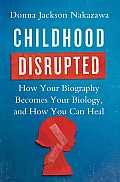
“Childhood Disrupted” by Donna Jackson Nakazawa

November 27, 2015 by Sonia Connolly 1 Comment

book cover

Subtitle: How Your Biography Becomes Your Biology, and How You Can Heal

Recommended to me by: a friend

Science journalist Donna Jackson Nakazawa carefully researches and clearly describes how Chronic Unpredictable Toxic Stress changes the growing brain of a child, pruning neurons and stunting growth in some areas. Because the toxic stress is unpredictable, the fight or flight response remains activated, bathing the body in an ongoing soup of inflammatory chemicals. She covers research that says girls’ brains are more susceptible, although I suspect correlation rather than causation at work there.

Adverse Childhood Experiences (ACEs) are linked as strongly with later auto-immune diseases and other health issues as smoking is linked with cancer, or unprotected sex is linked with pregnancy. Here is the original ACE study. You can go ahead and take the 10-question ACE questionnaire. There is also a resilience questionnaire with some factors that can shield a child from the negative effects of chronic unpredictable toxic stress.

The book contains many people’s stories, and some suggestions for healing as well. Fortunately the brain is plastic, and at least some of the negative effects can be reversed.

The briefly covered suggestions for healing are: take the ACE questionnaire and resilience questionnaire, write to heal, draw it, mindfulness meditation, tai chi and qigong, mindsight (self-awareness/empathy/integration), loving-kindness, forgiveness, mending the body/moving the body (yoga, trauma release exercises, bodywork), managing the mind through the gut, and only connect (supportive relationships).

Professional help is also recommended, with therapy, somatic experiencing, guided imagery and hypnosis, neurofeedback, and EMDR.

For parents who want to protect and help their children as best they can, suggestions include: manage your own “baggage”, look into your child’s eyes, validate and normalize their experience, apologize as needed, amplify the good feelings, name emotions, hug them, have safe and open conversations about what’s happening, bring more safe adults into their lives, teach them mindfulness.

Highly recommended book! The section on trauma’s specific effects was depressingly long, and had a lot of sense of inevitability in it. The “how to heal” section was shorter and less specific. I was both reassured and disappointed to see that I’m doing a lot of the recommendations already. Being on the right track is good, and I guess there’s no magic wand to speed up the process.
Available at bookshop.org.

Filed Under: nonfiction Tagged With: childhood abuse, healing, psychology

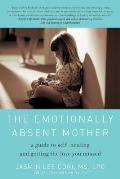
“The Emotionally Absent Mother” by Jasmin Lee Cori, MS, LPC

November 17, 2015 by Sonia Connolly 2 Comments

book cover

Subtitle: a guide to self-healing and getting the love you missed

Recommended to me by: a client

This is a gently enlightening book. It talks about all the different roles a Good Mother plays (“yeah, yeah, I know”) and all the holes that result when those roles are missing (“yeah, yeah, I know”) … “Wait, those holes I’ve been managing all this time?!”

The ten facets of a Good Mother: source, place of attachment, first responder, modulator, nurturer, cheerleader, mentor, protector, home base.

The holes are left behind from missing one or more of these messages: I’m glad you’re here, I see you, you’re special to me, I respect you, I love you, your needs are important to me/I’m here for you, I’ll keep you safe, you can rest in me, I enjoy you/you brighten my heart.

The book has a clear, accessible discussion of attachment styles and attachment wounds. It was odd to see Disorganized Attachment passed over, possibly because this book is written for children of neglectful rather than abusive mothers.

Recommended healing techniques include psychotherapy, archetypes, romantic relationships, and inner child work. One suggested exercise is to trade safe, nonsexual holding with a friend. Just hold the other person for a set time, perhaps as long as 20 minutes, and then swap roles.

There is carefully inclusive language around “mothers and other caretakers (of any gender)”, although it is also clear that this is primarily about mothers.

I’ve recommended this book to a lot of clients in the last couple of weeks! I think it’s an enlightening read for anyone. Even if you had a great mother, odds are some of the people close to you didn’t, and this will help make sense of their experience.

Available at bookshop.org.

Filed Under: nonfiction Tagged With: childhood abuse, healing, psychology, trauma

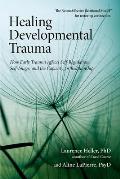
“Healing Developmental Trauma” by Laurence Heller, PhD and Aline LaPierre, PsyD

March 17, 2015 by Sonia Connolly Leave a Comment

book cover

Subtitle: How Early Trauma Affects Self-Regulation, Self-Image, and the Capacity for Relationship

The first section of this book is focused on analysis and categorization. It describes five adaptive survival styles in response to developmental ruptures in connection, attunement, trust, autonomy, and love and sexuality. I found this part dry and off-putting, and skimmed through it.

The second section narrows the focus to the connection adaptive style in response to very early trauma, abuse, and neglect. It describes physiological responses to trauma and shares several transcripts of therapy sessions. This section was much more engaging and useful. The therapeutic style is named NeuroAffective Relational Model, abbreviated NARM throughout.

Therapists are recommended to be non-judgmental, present, authentic, gentle, and attuned with the client. Careful tracking of the client’s responses allows alternation between expansion and contraction, with emphasis on positive expansion. Anger and aggression are recognized as natural, necessary responses to trauma. Unresolved defensive-orienting responses to trauma linger in tension around the eyes and narrowed field of vision, so working with eyes and gaze is useful. Therapeutic touch is a resource to repair early neglect.

Recommended as an introduction to the differences between shock trauma and developmental trauma, with some body-centered and client-centered techniques to help.

Available at bookshop.org.

Filed Under: nonfiction Tagged With: childhood abuse, healing, psychology, trauma

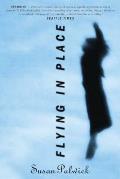
“Flying in Place” by Susan Palwick

February 17, 2015 by Sonia Connolly 1 Comment

book cover

A twelve-year-old girl is being abused by her father, and is ultimately rescued by their next door neighbors. Her older sister had died, and at the end of the book, the neighbor says, “No one can help her. That’s what being dead means.”

Susan Palwick’s blog title is Rickety Contrivances of Doing Good. That does describe this book’s satisfying rescue, and at the same time, the book realistically portrays gaslighting and abuse and the necessary mechanisms for survival.

I’ve had the book long enough that I don’t remember how I first came across it. I went back to it looking for that quote. Highly recommended, if you don’t mind crying at the end.

Available at bookshop.org.

Filed Under: fiction Tagged With: childhood abuse, survival story, trauma

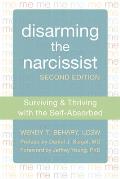
“Disarming the Narcissist” by Wendy T. Behary, LCSW

November 3, 2014 by Sonia Connolly 2 Comments

Subtitle: Surviving and Thriving with the Self-Absorbed

Recommended to me by: Focusing-discussion list

The person recommending this book spoke of narcissistic wounds rather than narcissistic people. I think it’s useful to have compassion, and at the same time it is easy to lose sight of the people hurt by narcissistic behavior.

The author is a therapist who works a lot with narcissists and couples containing a narcissist. She classifies narcissists as spoiled, deprived, dependent, or combinations of these. She describes abusive childhoods which can sometimes lead to narcissistic behavior. She distinguishes between “moderate” narcissists who might reform after a great deal of work, and “perilous” narcissists who are abusive and unreachable.

The reader, assumed to be in a relationship with a narcissist, is encouraged to hold boundaries more strongly, and be more present and aware. On the one hand the author wants to be helpful and give concrete advice, and on the other hand the most helpful advice I’ve found around narcissists is, “You’re already good enough. You’re already trying hard enough. There is nothing wrong with you.”

If the following sounds like new and useful advice, you might want to read this book.

“Putting yourself in the narcissist’s shoes means trying to sense and genuinely feel his inner world. Specific techniques can help you do this. For example, when the narcissist begins to address you sharply, you could superimpose the face of a lonely and unloved little boy over that of the grown man before you.”

Available at bookshop.org.

Filed Under: nonfiction Tagged With: childhood abuse, communication, psychology

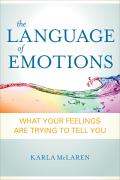
“The Language of Emotions” by Karla McLaren

July 22, 2014 by Sonia Connolly 3 Comments

Subtitle: What Your Feelings are Trying to Tell You

Recommended to me by: a client

I read a couple of books lately that had their good points, but I only got half way through them, and when I started to post about them I had more negative thoughts than positive ones, so I deleted the drafts.

This book was the opposite experience. When it came due at the library and I was only half way through, I went out and bought a copy. While there were aspects that didn’t work for me, overall I encountered a lot of solid, useful insights.

Karla McLaren shares her history as an abuse survivor and an empath, offers simple practices to work skillfully with emotions, and then analyzes how each emotion fits into her framework. All emotions are equally valid, from anger to joy to suicidal urges. Trauma recovery is woven through the book.

Emotions (corresponding with water) are seen as part of an inner village with the intellect (air), body (earth), and spirit/vision (fire). Health is a village in dynamic balance, responding with agility to ongoing events.

The practices she recommends are grounding, defining boundaries, burning contracts, conscious complaining, and rejuvenation.

I’ve found that visualization is a superficial activity for me, so visualizing a grounding cord descending into the earth does not substantially change my energy. Visualizing the destruction of my “contracts” with old behaviors and memories sounds wonderful, but I haven’t seen much effect from cutting cords and similar rituals.

She suggests sending anger into one’s boundary, which sounds like great advice, although I’m not quite sure how to do it. She also says, “People won’t know you’re angry,” which sounds like a bit of judgment about anger sneaking in.

Since these practices form the core of McLaren’s work with emotions, I wish I resonated better with them. I suspect I do some form of them in a more wordless way, sensing rather than visualizing.

The detailed analysis of each emotion includes associated questions to ask or statements to make when the emotion arises, along with gifts the emotion brings and advice on how to integrate the emotion honorably into one’s life.

Emotion Purpose Questions/Statements
Anger Protection and Restoration What must be protected? What must be restored?
Apathy and Boredom The Mask for Anger What is being avoided? What must be made conscious?
Guilt and Shame Restoring Integrity Who has been hurt? What must be made right?
Hatred The Profound Mirror What has fallen into my shadow? What must be reintegrated?
Fear Intuition and Action What action must be taken?
Confusion The Mask for Fear What is my intention? What action should be taken?
Jealousy and Envy Relational Radar What has been betrayed? What must be healed and restored?
Panic and Terror Frozen Fire What has been frozen in time? What healing action must be taken?
Sadness Release and Rejuvenation What must be released? What must be rejuvenated?
Grief The Deep River of the Soul What must be mourned? What must be released completely?
Depression Ingenious Stagnation Where has my energy gone? Why was it sent away?
Suicidal Urges The Darkness Before Dawn What idea or behavior must end now? What can no longer be tolerated in my soul?
Happiness Amusement and Anticipation Thank you for this lively celebration!
Contentment Appreciation and Recognition Thank you for renewing my faith in myself!
Joy Affinity and Communion Thank you for this radiant moment!

There is much more information in the book than I have covered here. Highly recommended!

Available at bookshop.org.

Filed Under: nonfiction Tagged With: childhood abuse, healing, memoir, psychology

  • « Go to Previous Page
  • Page 1
  • Page 2
  • Page 3
  • Page 4
  • Page 5
  • Page 6
  • Go to Next Page »

Primary Sidebar

Recent Books

  • “Brave Truth” by Celia Lake
  • “Breath, Eyes, Memory” by Edwidge Danticat
  • “Untangling” by Barbara McGavin and Ann Weiser Cornell
  • “After Hours at Dooryard Books” by Cat Sebastian
  • “We Belong to the Drum” by Sandra Lamouche and Azby Whitecalf
  • “Atlas of the Heart” by Brene Brown
  • “Life After Cars” by Sarah Goodyear, Doug Gordon, Aaron Naparstek
  • “Tidy First?” by Kent Beck
  • “When You Had Power” and “You Knew the Price” by Susan Kaye Quinn
  • “Taproot” by Keezy Young

Tags

activism aging anti-racism bodywork business childhood abuse childrens CivicTech communication disability domestic violence fantasy feminism finance Focusing food fun healing health at any size illustrated Judaism leadership lgbt marketing memoir music natural world neurodiversity politics psychology relationship romance science science fiction software spirituality survival story trauma writing young adult

Categories

Archives

Please note: bookshop.org and Amazon links are affiliate links. Copyright © 2026 · Genesis Sample on · WordPress