• Skip to primary navigation
  • Skip to main content
  • Skip to primary sidebar
Curious, Healing

Curious, Healing

Books about healing, business, and fun

  • About Sonia Connolly

childhood abuse

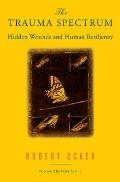
“The Trauma Spectrum” by Robert Scaer

June 23, 2013 by Sonia Connolly Leave a Comment

Subtitle: Hidden Wounds and Human Resiliency

This book is a frustrating mix of interesting theories, solid information, and bigoted rants.

The author leads with some encouraging words about intersectionality and noticing how society’s defaults harm some people, but then devolves into “women returning to work after childbirth causes harm because babies need maternal care” and “fast-food advertising causes harm because traumatized morbidly obese people get triggered into eating even more.”

I am pro infants receiving attuned care and against subliminal advertising for any product, but his conclusions on these topics lack validity as well as compassion. Infants can receive attuned care from many people, not just the mother. Fat people don’t necessarily eat more than thin people.

There is also a lot of matter-of-fact reporting on cruel animal experiments. Perhaps some animal experiments are necessary, but we can at least regret the harm they do.

On the interesting side, keeping me from just discarding the book, he notices that his clients with whiplash show trauma symptoms and are helped by Somatic Experiencing and other trauma-resolution therapies. That sounds obvious when I type it out, but we think of whiplash as a soft-tissue injury (muscles and tendons) rather than a nervous system injury. He notes that severe whiplash in response to relatively minor motor vehicle crashes correlates with a past history of trauma.

He also talks about nervous system kindling, or neurosensitization, where the sympathetic and parasympathetic nervous systems are out of balance and internal triggering keeps them out of balance. This explains, among other things, Multiple Chemical Sensitivity.

He speculates that fibromyalgia correlates with preverbal trauma, and disregulation of the nervous system.

He talks a lot about the structures in the brain that process trauma, and about the sense of being frozen in time that accompanies PTSD. Approach/avoidance dilemmas (double binds) are an obvious source of trauma. He talks about conditioning and trauma-based learning, and the need to extinguish the connections that get created during trauma to be able to come back into the present.

Robert Scaer has worked with many patients in his career and made careful observations along the way. Unfortunately he mixes them in with his personal biases in this book, so it reads more like someone’s personal blog than a trustworthy scholarly work.

Available at bookshop.org.

Filed Under: nonfiction Tagged With: childhood abuse, disability, healing, psychology, trauma

“Poppies on the Rubbish Heap” by Madge Bray

September 1, 2012 by Sonia Connolly Leave a Comment

Subtitle: Sexual Abuse, The Child’s Voice

Madge Bray shares her journey as a child advocate social worker, along with several abused children’s case histories. Woven through the book is the history of recognition and backlash around the sexual abuse of children. Madge Bray pioneered the use of toys and play therapy to elicit children’s stories and help them heal.

The toys include anatomically correct dolls, angry puppets, and a battery-operated rabbit that trembles silently. Madge Bray offers a neutral, welcoming space for the children to interact with the toys and find self-expression. She enters into their world rather than demanding that they communicate in adult ways.

The book is intense and riveting. It tells of catastrophic abuse from the wounded child’s perspective, as the child is heard and helped. It tells of victorious court battles as well as one story about a child whose parents withdrew him from therapy before he could tell his story.

Recommended as a look into social work with children in England, the realities of child sexual abuse, and the healing power of deep listening.

Available at bookshop.org.

Filed Under: nonfiction Tagged With: childhood abuse, domestic violence, healing, memoir, psychology, trauma

“Unlimited…” by Ani Rose Whaleswan

June 30, 2012 by Sonia Connolly Leave a Comment

This is a book of 18 poems and 13 paintings about Ani Rose Whaleswan’s healing from extreme abuse. From the back cover: “She believes too that art is healing, and healing is an art.”

The paintings are colorful, vivid, powerful. Each one is accompanied by a paragraph of background or interpretation.

The poems are concrete, metaphorical, full of truth and clarity.

“Life is abundant in the soft places
The broken spaces between hard things.”

Recommended as a window into individual and universal healing.

Available at CreateSpace.

Filed Under: poetry Tagged With: childhood abuse, illustrated, spirituality, trauma

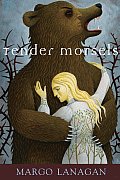
“Tender Morsels” by Margo Lanagan

May 3, 2012 by Sonia Connolly Leave a Comment

Recommended to me by: Meloukhia

This is a fairy tale, but no child’s story. It starts with incest and pregnancy and abortion, and continues with gang rape. Then Liga is magically placed in a world that matches her heart’s desire, peaceful and safe.

While examining the consequences of assault and the consequences of avoiding trauma, the story sings along, full of prickly, kind characters and vivid details.

Recommended, for a true look at life in fairy tale guise.

An interview with Margo Lanagan.

Jody Hewgill (the cover artist)’s portfolio.

Available at bookshop.org.

Filed Under: fiction Tagged With: childhood abuse, domestic violence, survival story, trauma, young adult

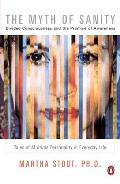
“The Myth of Sanity” by Martha Stout, Ph.D.

April 3, 2012 by Sonia Connolly Leave a Comment

Subtitle: Divided Consciousness and the Promise of Awareness; Tales of Multiple Personality in Everyday Life

Recommended to me by: a client

This book contains a therapist’s compassionate, engaging views on people who have Dissociative Identity Disorder (previously known as Multiple Personality Disorder) and how they can heal. Martha Stout discusses both specific cases and general themes of survival, courage, integrity, and the process of healing.

After trauma, she says the core question is, “Shall I choose to die, or shall I choose to live?” Those who choose to live, live fully, passionately. Anything less would not be worth the struggle and pain of healing.

Healing requires going back and revisiting traumatic memories while the whole nervous system shouts, “No! Danger!” They don’t all have to be revisited, and perfect recall is not required, but at least a few frozen traumatic memories have to be transformed into narrative memory.

The key predictor of healing is a sense of responsibility for one’s actions. Conversely, prioritizing self-protection above responsibility acts to keep dissociative mechanisms in place. A sense of integrity, or the lack of it, shines through all the dissociative fragments of a person.

We see dramatic portrayals of Dissociative Identity Disorder in books and movies and believe it to be very rare, but most people with DID switch quietly, unnoticed, in higher numbers than we believe. Martha Stout says it is because most people aren’t such good actors, and I think people also try to camouflage switching as much as possible. She validates the anger, frustration, and bewilderment of coping with someone’s quicksilver changes and lack of memory for their own recent words and actions.

She also says that we all dissociate to some extent, whether arriving at a destination without remembering the drive, or being absorbed in a movie, or suppressing “inconvenient” emotions.

For trauma survivors she recommends:

  • Find help, a steady witness, whether a therapist or a friend.
  • Be as safe as possible in the present. Provide your nervous system with a calm environment.
  • Buy comforts, keep a pet, fall in love with silence.
  • Separate yourself from difficult, crisis-addicted, rageful, and violent people.
  • Have routines. Make them sacred. Sleep every night.
  • Meditate.
  • Keep a journal. Note your dreams.

This book is unreservedly recommended!

Available at bookshop.org.

Filed Under: nonfiction Tagged With: childhood abuse, healing, psychology, trauma

“The Armless Maiden” edited by Terri Windling

December 15, 2011 by Sonia Connolly Leave a Comment

Subtitle: And Other Tales for Childhood’s Survivors

This is an anthology of fairy tales retold for adults, with the scary bits left in, and also the bits about resilience and survival. Yes, her father cut off her arms, but then the armless maiden rescues herself and her child through quick wits as well as magic.

The stories vary widely from beautifully retold tales, to heart-wrenching realities, to clunky pieces using child abuse for cheap drama. I imagine each reader would put different stories in the three categories.

Some of my favorites are:

  • “The Session” by Steven Gould, where an adult Sleeping Beauty has a therapy session about who, exactly, gave her that poisoned apple.
  • “Knives” by Munro Sickafoose, where a girl is isolated in a tower by her beloved father, and has to learn about the outside world after he dies.
  • Terri Windling’s “The Green Children” about a young girl whose mother killed her abuser, and Terri Windling’s essay about her real mother, who didn’t.
  • “The Little Dirty Girl” by Joanna Russ rings true about what’s needed for healing.

This is a book to read slowly, with time for emotional processing, and plenty of permission to skip the stories that don’t resonate for you, or that resonate too much.

Available at biblio.com.

Filed Under: fiction Tagged With: childhood abuse, healing, memoir, survival story, trauma

  • « Go to Previous Page
  • Page 1
  • Page 2
  • Page 3
  • Page 4
  • Page 5
  • Page 6
  • Go to Next Page »

Primary Sidebar

Recent Books

  • “Brave Truth” by Celia Lake
  • “Breath, Eyes, Memory” by Edwidge Danticat
  • “Untangling” by Barbara McGavin and Ann Weiser Cornell
  • “After Hours at Dooryard Books” by Cat Sebastian
  • “We Belong to the Drum” by Sandra Lamouche and Azby Whitecalf
  • “Atlas of the Heart” by Brene Brown
  • “Life After Cars” by Sarah Goodyear, Doug Gordon, Aaron Naparstek
  • “Tidy First?” by Kent Beck
  • “When You Had Power” and “You Knew the Price” by Susan Kaye Quinn
  • “Taproot” by Keezy Young

Tags

activism aging anti-racism bodywork business childhood abuse childrens CivicTech communication disability domestic violence fantasy feminism finance Focusing food fun healing health at any size illustrated Judaism leadership lgbt marketing memoir music natural world neurodiversity politics psychology relationship romance science science fiction software spirituality survival story trauma writing young adult

Categories

Archives

Please note: bookshop.org and Amazon links are affiliate links. Copyright © 2026 · Genesis Sample on · WordPress