• Skip to primary navigation
  • Skip to main content
  • Skip to primary sidebar
Curious, Healing

Curious, Healing

Books about healing, business, and fun

  • About Sonia Connolly

healing

“Braiding Sweetgrass” by Robin Wall Kimmerer

May 6, 2020 by Sonia Connolly 1 Comment

book cover

Subtitle: Indigenous Wisdom, Scientific Knowledge and the Teachings of Plants

Recommended to me by: Amy Bennett

A set of essays loosely tied together in chronological order, with themes of sweetgrass and braiding all the way through. Each essay braids together personal memoir, Native American (specifically Potawatomi) ways of living, and colonialist ways of living.

Potawatomi ways developed over generations as people saw what works to live in balance with nature, as a part of nature. Humans are considered the young ones, the newcomers, learning from their more experienced plant and animal family members.

Sweetgrass is harvested in specific ways. Not the first plant you find, because that might be the only one. Take only what you need, up to half of the plants there, either by cutting half of each bunch, or taking whole bunches. Robin Wall Kimmerer is a Professor of Botany, and one of her PhD students showed in a set of careful experiments that sweetgrass thrives when harvested this way, and fails to propagate if it is left completely unharvested. Humans and sweetgrass have a cooperative, collaborative partnership.

White colonialists disastrously interrupted Native American ways of living by stealing Native Americans’ lands and pushing them into entirely different ecosystems, and by taking their children to residential schools and forcibly preventing them from speaking their own languages or practicing their spirituality. The Potawatomi people and other tribes are gathering together the fragments of what remains, and braiding them together anew.

The book ends on a hopeful note, that perhaps enough of us will turn toward collaborative, cooperative ways of living that we will not entirely destroy the ecosystems of this green earth. Fitting right in with that hope, the current Great Pause of this pandemic gives us time to consider what we want to add back in to our lives, and what we want to leave behind to allow cleaner skies, safer streets, and more sustainable lives.

I read this as an ebook, because that’s what I can get from the library in this time of pandemic. It’s an odd way to read a book so rooted in physical experience, and I would have much preferred to have a physical book in my hands. This is a long book that wants to be appreciated slowly, essay by essay, section by section, exploring how all the parts fit together to support each other.

Highly recommended!

Robin Wall Kimmerer: ‘People can’t understand the world as a gift unless someone shows them how’ interview by James Yeh, May 23, 2020
Available at bookshop.org.

Filed Under: nonfiction Tagged With: activism, food, healing, memoir, natural world, politics, science, spirituality

“Recovering from Emotionally Immature Parents” by Lindsay C. Gibson, PsyD

February 27, 2020 by Sonia Connolly 1 Comment

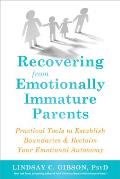
book cover

Subtitle: Practical Tools to Establish Boundaries & Reclaim Your Emotional Autonomy

Recommended to me by: Reading Lindsay Gibson’s previous book

This book repeats some material on emotionally immature parents from the previous book Adult Children of Emotionally Immature Parents, in a way that is more focused on how the adult child feels rather than focusing on the parents. It develops more material on how to resist emotional takeovers and how to develop a more functional relationship with emotionally immature parents in adulthood.

The premise is to be sure of your own value, and relate from that place, rather than hoping the parents will recognize and nurture your value. There are some good detailed suggestions for how to build a trusting relationship with yourself. The process could take a long time, even with therapeutic support.

There were occasional mentions of creating more distance from emotionally immature parents, but for the most part this book focuses on staying in relationship. I would have liked to see more about danger signs that indicate it’s better to stay far away.

I’ve been mentioning this book to lots of clients. Recommended for great analysis and ideas for how to regain autonomy and heal from immature parenting.

Available at bookshop.org.

Filed Under: nonfiction Tagged With: childhood abuse, communication, healing, psychology, trauma

“Adult Children of Emotionally Immature Parents” by Lindsay C. Gibson, PsyD

November 27, 2019 by Sonia Connolly 2 Comments

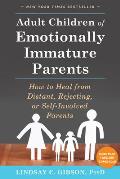
book cover

Subtitle: How to Heal from Distant, Rejecting, or Self-Involved Parents

Lindsay Gibson tells it like it is. There is a lot of clear analysis of the ramifications of dealing with emotionally immature parents, without any waffling about, “Maybe the kid is the problem after all.” Emotionally immature parents are held responsible for falling down on the job.

“Emotionally immature parents fear genuine emotion and pull back from emotional closeness. They use coping mechanisms that resist reality rather than dealing with it. They don’t welcome self-reflection, so they rarely accept blame or apologize.”

“Understanding their emotional immaturity frees us from emotional loneliness as we realize their neglect wasn’t about us, but about them. When we see why they can’t be different, we can finally be free of our frustration with them, as well as our doubts about our own lovability.”

“If they don’t make a solid emotional connection with their child, the child will have a gaping hole where true security might have been.”

Two chapters cover characteristics of emotionally immature people in themselves and as parents. There are some interesting insights here, for example, “They have an inconsistent sense of time,” which leads to issues with accountability, responsibility, and planning. At the same time these chapters feel harsh and angry, very much “them” vs. “us.” Since we all behave in emotionally immature ways at times no matter how hard we try to be considerate, it makes for uncomfortable reading.

The book later notes that we naturally respond with anger at an attachment figure who is non-responsive or abandoning.

Four types of emotionally immature parents are described: Emotional/anxious, driven/perfectionist, passive/avoidant, rejecting/mean. These types are not revisited in later chapters.

Children of emotionally immature parents create healing fantasies about what will finally let them receive the connection, nurturing, and emotional responsiveness they crave. They also create a role-self which is their best effort to get what they need from difficult parents, rather than living as their true self.

Children of emotionally immature parents tend to be either internalizers or externalizers (locus of control, but without using that phrase). There is some lip service here to people combining both styles and balance being the goal, and at the same time a clear preference for internalizers as being more emotionally mature and capable of growth.

To heal, release self-defeating roles, for example being small and self-effacing in an effort to elicit a caring response. Acknowledge true thoughts, feelings, and opinions, whether or not you choose to share them with parents or others.

As an adult, avoid getting hooked by an emotionally immature parent through detached observation and maturity awareness (estimating people’s probable level of emotional maturity). If someone is showing signs of being emotionally immature:

  1. Express boundaries, feelings, etc. and then let it go
  2. Focus on the outcome, not the relationship
  3. Manage the relationship rather than engaging.

Emotionally immature parents may feel safer and respond better to this more distant approach – or not. It is still calmer and emotionally safer for the adult child to alter their expectations to better match the parent’s capacity and skills.

The books answers objections people may have to the maturity awareness approach, and then details how it feels to be in relationship with an emotionally mature person.

In this book’s example stories, on the positive side, the men and women seem like real people, not gendered stereotypes. In the second half of the book, there is some variety of names that includes different cultures. On the negative side, as far as I could tell, there were no same-sex couples nor trans nor non-binary people.

Lindsay Gibson clearly brings a wealth of thought, research, and experience to this book. There is a lot of great information here, and at the same time it can be uncomfortable to read. Recommended.

The publisher New Harbinger has a download available of all the exercises in the book (pdf) which give you a great summary of the content as well.

Available at bookshop.org.

Filed Under: nonfiction Tagged With: childhood abuse, communication, healing, psychology, relationship, trauma

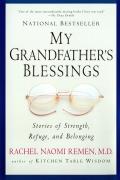
“My Grandfather’s Blessings” by Rachel Naomi Remen, M.D.

September 16, 2019 by Sonia Connolly Leave a Comment

book cover

Subtitle: Stories of Strength, Refuge, and Belonging

Recommended to me by: Robyn Posin

Rachel Naomi Remen writes about wisdom, meaning, connection, grief, compassion, and how to live with authenticity in a series of vignettes from her life and the lives of her patients. She works with people dying of cancer, and their grieving survivors. Some stories are about her childhood conversations with her Orthodox Rabbi grandfather, a wise and gentle man. Some are about her own struggle with Crohn’s disease. She was a pioneer in medical school and in practice as a woman and someone living with chronic illness. She was a pioneer again talking about the mind/body connection and the need for healing rather than (or in addition to) curing people.

Many of the stories touched something in me and made me cry, perhaps out of longing for the kinds of connection and meaning she describes. I like that she says service is between equals, people recognizing and supporting the wholeness in each other, as opposed to helping or fixing, which requires one person to be less than another.

Recommended as a dose of wisdom and hope.

Available at bookshop.org.

Filed Under: nonfiction Tagged With: healing, memoir, spirituality

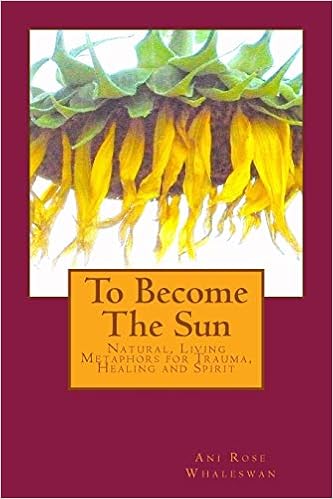
“To Become the Sun” by Ani Rose Whaleswan

July 30, 2019 by Sonia Connolly Leave a Comment

book cover

Subtitle: Natural, Living Metaphors for Truama, Healing and Spirit

Recommended to me by: Ani Rose Whaleswan. I’ve known the author for a long time online, and I contributed an essay to her collection We Have Come Far.

A lyrical, grounded, wise, hopeful book that shares Ani Rose Whaleswan’s connection to nature and positive metaphors for healing.

Each chapter explores a metaphor in depth and ends with questions to think about and a note about non-violence. The metaphors are: Mountain, Pearl, Unfolding Flowers, Stones, Compost, Hummingbird, Wave, Embers, and Shadow. The book is about healing rather than trauma, and while it discusses some of the effects of trauma, it does not have explicit traumatic material.

There are also a lot of quotes and references to other wise people’s work, including one of my favorites from Zora Neale Hurston’s “Their Eyes Were Watching God” (see below). Unfortunately the quote is (presumably accidentally) misattributed to a white man. The book is double spaced and has not been professionally edited.

Highly recommended for new ways to think about the process of healing from profound trauma.

I first encountered this quote on the English AP exam and loved it so much I made sure to remember the author and title to find it later, even in the middle of taking the exam.

When god had made (the man) he made him all out of stuff that sung all the time and glittered all over. Some angels got jealous and chopped him into a million pieces, but still he glittered and hummed. So they beat him down to nothing but sparks but each little spark had a shine and a song. So they covered each one with mud. And the lonesomeness in the sparks made them hunt for one another.—Zora Neale Hurston, “Their Eyes Were Watching God”

Available at Amazon.

Filed Under: nonfiction Tagged With: healing, memoir, psychology, trauma

“Turn This World Inside Out” by Nora Samaran

July 2, 2019 by Sonia Connolly Leave a Comment

book cover

Subtitle: The Emergence of Nurturance Culture

Recommended to me by: Nora Samaran’s online essay The Opposite of Rape Culture is Nurturance Culture

This book contains three of Nora Samaran’s powerful essays (also available on her blog) and dialogues with other writers that expand on the themes of nurturance, attachment, shame, gaslighting, gendered violence, and repairing harm.

It is a short book that can be read quickly, and at the same time there are a lot of chewy ideas to take in over time. There are also references to more reading on these topics by people who are one or more of trans, Indigenous, and Black who have developed skills of sustainable, relational living. The book holds the question: how do we best move forward from and heal from white supremacy, colonialism, capitalism, and patriarchy.

What would it be like to live in a culture where we all could be socially embraced in this way, where we could speak up about harm, could say not to it, without fear, because we know without question that no one in our community will dehumanize another?

I admire Nora Samaran’s insights, and I long for the kinds of communities and relationships she describes. This book brings in more voices to deepen and expand the conversation. Highly recommended.

Available at bookshop.org.

Filed Under: nonfiction Tagged With: activism, anti-racism, communication, domestic violence, feminism, healing, politics, relationship

  • « Go to Previous Page
  • Page 1
  • Page 2
  • Page 3
  • Page 4
  • Page 5
  • Interim pages omitted …
  • Page 17
  • Go to Next Page »

Primary Sidebar

Recent Books

  • “Untangling” by Barbara McGavin and Ann Weiser Cornell
  • “After Hours at Dooryard Books” by Cat Sebastian
  • “We Belong to the Drum” by Sandra Lamouche and Azby Whitecalf
  • “Atlas of the Heart” by Brene Brown
  • “Life After Cars” by Sarah Goodyear, Doug Gordon, Aaron Naparstek
  • “Tidy First?” by Kent Beck
  • “When You Had Power” and “You Knew the Price” by Susan Kaye Quinn
  • “Taproot” by Keezy Young
  • “The Tower at Stony Wood” by Patricia A McKillip
  • “Hospicing Modernity” by Vanessa Machado de Oliveira

Tags

activism aging anti-racism bodywork business childhood abuse childrens CivicTech communication disability domestic violence fantasy feminism finance Focusing food fun healing health at any size illustrated Judaism leadership lgbt marketing memoir music natural world neurodiversity politics psychology relationship romance science science fiction software spirituality survival story trauma writing young adult

Categories

Archives

Please note: bookshop.org and Amazon links are affiliate links. Copyright © 2026 · Genesis Sample on · WordPress