• Skip to primary navigation
  • Skip to main content
  • Skip to primary sidebar
Curious, Healing

Curious, Healing

Books about healing, business, and fun

  • About Sonia Connolly

memoir

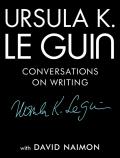
“Conversations on Writing” by Ursula K. Le Guin with David Naimon

December 9, 2018 by Sonia Connolly Leave a Comment

book cover

Recommended to me by: sturgeonslawyer

I read this because I will read anything by Ursula K. Le Guin, and alas there won’t be more wise words from her to read. I feel her loss as an emptiness in the world where her steadiness and integrity used to be.

The book is an edited transcription of radio interviews with David Naimon of KBOO here in Portland, divided into sections for fiction, poetry, and non-fiction. It includes a few excerpts by Le Guin and others that she referred to in their conversations.

A short, choppy book, great for learning little bits about Le Guin and about writing and about reading and about life.

Available at bookshop.org.

Filed Under: nonfiction, poetry Tagged With: memoir, writing

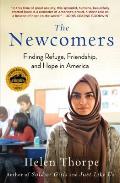
“The Newcomers” by Helen Thorpe

November 13, 2018 by Sonia Connolly Leave a Comment

book coverSubtitle: Finding Refuge, Friendship, and Hope in an American Classroom

Recommended to me by: My friend Linda K.

Helen Thorpe spent a year and a half observing and helping in an ELA (English Language Acquisition) class at South High School in Denver Colorado. Her journalist’s eye is both clear and compassionate as she watches a classroom of newly arrived teen refugees from around the world learn English basics.

I remember when ELA used to be called ESL, English as a Second Language, but it is an apt name change since some of these kids already speak three or four languages, and maybe read and write in three or four alphabets.

Both the school as a whole and the beginning ELA teacher Mr. Williams in particular are dedicated to welcoming kids from around the world and helping them succeed.

I was worried that the book would focus on the tragedy of young refugee lives, or look down on the kids, but the book celebrates them as strong, determined, resilient young people. Difficult circumstances and traumatic stories are described with a light touch, clearly and with compassion.

Helen Thorpe gets to know the kids by interacting with them in class (with the help of Google translate on their phones), interviewing them with hired translators, and visiting a few of them at home to talk with their parents. She also learns about the history of war and oppression that has caused these families (and some unaccompanied minors) to flee their homes, sometimes multiple times.

After the school year, she visits the Democratic Republic of Congo, which is still in crisis, and meets some relatives of one of the families she got to know.

The book was written in 2016. It shows both the dedication of the people who help refugees get oriented and settled in the US, and the worsening effect of Trump’s rhetoric on students who are harassed on city buses for wearing hijab or having dark skin. It ends with Trump’s election and the shock of knowing that refugees need help more than ever, but not having an incoming caseload because of Trump’s Muslim Ban.

Highly recommended! Learn about what refugees’ lives are really like, and how hard the lucky ones who make it into the US work to become established here, while enjoying getting to know this group of teens and the people around them.

Population Mountains – a way to visualize the population and surroundings of some of the cities the immigrants came from (not affiliated with the book).

Available at bookshop.org.

Filed Under: nonfiction Tagged With: activism, anti-racism, childhood abuse, domestic violence, healing, memoir, politics, survival story, trauma

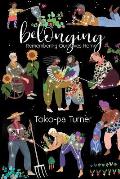
“Belonging” by Toko-pa Turner

October 7, 2018 by Sonia Connolly 4 Comments

book cover
Subtitle: Remembering Ourselves Home

The gorgeous, inclusive cover and introduction/dedication to this book grabbed me.

For the rebels and the misfits, the black sheep and the outsiders. For the refugees, the orphans, the scapegoats, and the weirdos. For the uprooted, the abandoned, the shunned and invisible ones.

May you recognize with increasing vividness that you know what you know.

May you give up your allegiances to self-doubt, meekness, and hesitation.

May you be willing to be unlikeable, and in the process be utterly loved.

May you be impervious to the wrongful projections of others, and may you deliver your disagreements with precision and grace.

May you see, with the consummate clarity of nature moving through you, that your voice is not only necessary, but desperately needed to sing us out of this muddle.

May you feel shored up, supported, entwined, and reassured as you offer yourself and your gifts to the world.

May you know for certain that even as you stand by yourself, you are not alone.

With poetic language and myths and Jungian dreamwork, Toko-pa Turner tells her own story of not-belonging and weaves a wider net of strategies to belong better. There is an Outcast archetype who can visit our dreams, and whose patterns we can follow. We can open our hearts to our own pain, and be willing to be more vulnerable (“woundable”) to others.

Her Black Sheep Gospel resonated for me. Adopt your rejected qualities. Venerate your too-muchness. Send out your signals of originality. Go it alone until you are alone with others.

In a lot of this book, I heard, “Try harder! Work harder! Get out of your own way!” While that may be valid advice, I’ve tried a lot of things it advises. It does also touch on fallow time and letting go of connections that no longer work well.

The author is writing from a place when things are going well for her, so she describes her steps in that direction and then prescribes them for others. While I’m glad she landed where she did, I’m not sure it’s so deterministic as all that. She talks both about divine guidance and about taking action on your own behalf. Yes, when things go well, it looks like a mix of those things led you there. A mix of those things can lead people to any number of places, not all of them positive.

The book was published in 2017, so she does acknowledge increasing environmental and political disaster throughout the book. She advises living closer to the earth, returning to more indigenous ways, without noting that all 7.6 billion of us can’t do that at the same time.

Her description of the problem resonated with me. Her solutions, not as much. Recommended especially if you already do dreamwork.

Available at bookshop.org.

Filed Under: nonfiction Tagged With: activism, disability, healing, memoir, relationship, spirituality

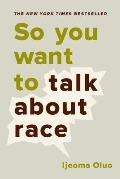
“So You Want to Talk About Race” by Ijeoma Oluo

July 22, 2018 by Sonia Connolly Leave a Comment

book cover

Recommended to me by: Ijeoma Oluo’s twitter feed

Ijeomo Oluo is a writer, speaker, and editor at large at The Establishment. She is also a queer Black woman, the single mother of two boys. Her writing is kind, direct, and clear, with practical suggestions on how to talk about race and dismantle racism.

Through both personal anecdotes and statistics from research studies, she lays out what racism is, how it affects people of color, and what we can do about it.

First, she addresses some of the objections white people have to discussing racism at all. Just because white people don’t see it, doesn’t mean it’s not happening. No, it’s not just about class. Yes, race affects how people are treated in a long-term targeted effort to use Black people’s labor and keep them from competing with white people. Racism is prejudice + systemic power. Calling a white person a cracker does not have the far reaching effects and historic resonance that calling a Black person the n-word does.

With care and clarity, she addresses privilege, intersectionality (don’t leave more marginalized groups behind), police brutality, affirmative action (yes it works, no it’s not a panacea, and sadly it’s being dismantled), school-to-prison pipeline (all kids deserve to be seen in a positive light), cultural appropriation, using the n-word (if you’re not Black, DON’T), touching Black people’s hair (DON’T), microaggressions (when and how to address them), model minorities (still racism), and taking action.

Carefully, at the end of the book, she addresses that we’re all racist (yes me, yes you) because we are all immersed in a racist culture. We can do our best to become aware of our racist thoughts and habits and change them. We are better prepared to have conversations about race with our friends of all races with Ijeoma Oluo’s explanations and detailed advice.

Highly recommended as a no-nonsense, compassionate guide to what white people need to know about racism. I imagine Black people would find it validating as well. Please read this book!

Available at bookshop.org.

Filed Under: nonfiction Tagged With: activism, anti-racism, communication, memoir, survival story

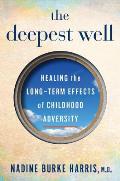
“The Deepest Well” by Nadine Burke Harris, MD

July 10, 2018 by Sonia Connolly Leave a Comment

book cover

Subtitle: Healing the Long-Term Effects of Childhood Adversity

Recommended to me by: listening to Nadine Burke Harris’s TED talk

This is a skillful blend of memoir and scientific information about the effects of trauma, presented for the layperson. Nadine Burke Harris shares how as a newly licensed doctor she founded a pediatric clinic in Bayview, the poorest section of San Francisco with the most at-risk patients, and how that clinic came to focus on trauma as the underlying cause of a lot of medical issues, especially for children. Later she founded the Center for Youth Wellness, also in San Francisco.

She does not dwell on the effects of being a Black woman, but she does not skip over them either. She notes the benefits of networking with other women and offering each other support. While marginalization and racism contribute to people’s load of trauma, trauma is not only a “poor, Black issue.” Privilege does not exempt people from trauma or its long-term effects.

There is a strong correlation between Adverse Childhood Experiences (ACEs) and health issues caused by the body’s ongoing stress response. The stress response can be buffered by strong relationships with caring adults.

Nadine Burke Harris developed a screening tool that asks a parent about the number of a child’s ACEs, but does not ask them to disclose the stories involved. She advocates for this screening tool to be used everywhere, just as infants are now universally screened for hypothyroid and jaundice.

The treatments for a body dysregulated by trauma are sleep, mental health, healthy relationships, exercise, nutrition, and meditation. Schools that help children regulate their nervous systems rather than punishing them for “acting out” enjoy both a more peaceful atmosphere and higher success rates by every measure.

(While screening is catching on in medical offices, I hear from nurses that treatment is catching on less quickly, leaving them in the frustrating position of knowing that people’s issues are caused by trauma, but not having the time and resources to help them.)

Highly recommended both for the information about the effects on trauma, and the memoir of a groundbreaking scientist and doctor who is radically improving how we care for both children and adults affected by trauma.

Available at bookshop.org.

Filed Under: nonfiction Tagged With: activism, anti-racism, childhood abuse, feminism, healing, memoir, psychology, survival story, trauma

“A Safe Place for Pearl” by Ani Rose Whaleswan

April 27, 2018 by Sonia Connolly Leave a Comment

book cover

Recommended to me by: Ani Rose Whaleswan. I’ve known the author for a long time online, and I contributed an essay to her collection We Have Come Far.

“A Safe Place for Pearl” is a gentle offering of artwork, dreams, and narration, full of hope and inner resources. When there is no human support available, Nature and Spirit step in to support a child going through hard times. (The hard times are not described.) The remembering adult is supported as well. This book powerfully answers the question, “How did you survive? What helped you through?”

Recommended as support for looking inside and trusting what supports you, even if it is not visible to others.

Available at Amazon.

Filed Under: nonfiction Tagged With: healing, memoir, survival story, trauma

  • « Go to Previous Page
  • Page 1
  • Interim pages omitted …
  • Page 5
  • Page 6
  • Page 7
  • Page 8
  • Page 9
  • Interim pages omitted …
  • Page 17
  • Go to Next Page »

Primary Sidebar

Recent Books

  • “We Belong to the Drum” by Sandra Lamouche and Azby Whitecalf
  • “Atlas of the Heart” by Brene Brown
  • “Life After Cars” by Sarah Goodyear, Doug Gordon, Aaron Naparstek
  • “Tidy First?” by Kent Beck
  • “When You Had Power” and “You Knew the Price” by Susan Kaye Quinn
  • “Taproot” by Keezy Young
  • “The Tower at Stony Wood” by Patricia A McKillip
  • “Hospicing Modernity” by Vanessa Machado de Oliveira
  • “How We Show Up” by Mia Birdsong
  • “The Enchanted Greenhouse” by Sarah Beth Durst

Tags

activism aging anti-racism bodywork business childhood abuse childrens CivicTech communication disability domestic violence fantasy feminism finance Focusing food fun healing health at any size illustrated Judaism leadership lgbt marketing memoir music natural world neurodiversity politics psychology relationship romance science science fiction software spirituality survival story trauma writing young adult

Categories

Archives

Please note: bookshop.org and Amazon links are affiliate links. Copyright © 2026 · Genesis Sample on · WordPress